Suspenseful Thrillers represent the pinnacle of cinematic tension, forcing your heart to race as you grip the edge of your seat in a darkened theater. You know that feeling when the music swells and the protagonist turns a corner into the unknown? It is a psychological tightrope that only the most skilled directors can walk without falling into cliché. Over the last 50 years, the genre has evolved from simple whodunits into complex explorations of human depravity and survival.
You are about to dive into a curated ranking of films that have mastered the art of the slow burn and the sudden shock. These are not just movies; they are visceral experiences that stay with you long after the credits roll. From the rain-soaked streets of an unnamed city in Se7en to the paranoid landscapes of 1970s San Francisco, these stories define what it means to be truly terrified by the possible.
The craft behind these Suspenseful Thrillers involves more than just jump scares. It requires a deep understanding of pacing, sound design, and the inherent fear of the unseen. As you explore this list, you will see how masters like David Fincher and William Friedkin manipulate your emotions to create lasting cinematic trauma. Let us peel back the layers of these masterpieces to see what makes them tick.

Suspenseful Thrillers Defining Modern Cinema
When you think of the ultimate Suspenseful Thrillers, the name Harrison Ford likely comes to mind for his legendary 1990s run. In The Fugitive (1993), Ford plays Dr. Richard Kimble, a man wrongly accused of his wife’s murder. The film is a masterclass in the cat-and-mouse dynamic, pitting Kimble against the relentless U.S. Marshal Sam Gerard, played by an Oscar-winning Tommy Lee Jones.
The tension never lets up because the stakes are constantly reset. Every time Kimble finds a lead regarding the One-Armed Man, Gerard is only seconds behind him. This relentless pursuit keeps you guessing how Kimble will navigate the next impossible obstacle. It is a perfect example of how a high-concept premise can be elevated by grounded, desperate performances.
Before he was a fugitive, Harrison Ford starred in Frantic (1988), directed by Roman Polanski. This film takes the nightmare of every traveler—the sudden disappearance of a loved one—and turns it into a gritty, realistic search through the Parisian underground. You feel Dr. Richard Walker’s isolation as he battles language barriers and bureaucratic indifference.
The Psychological Hook
- The fear of the unknown drives the narrative forward in every scene.
- Protagonists are often ordinary people thrust into extraordinary, life-threatening circumstances.
- Isolation plays a key role, whether it is physical or emotional.
- The antagonist is often a force that cannot be reasoned with or easily escaped.
In Frantic, the suspense is built through frustration. You watch as Walker becomes increasingly desperate, his professional demeanor crumbling as the reality of his situation sets in. It is a slow-motion car crash of a movie where every clue leads to more danger. The film remains a forgotten gem that deserves a spot in any discussion about Suspenseful Thrillers.
If you enjoy learning about the most influential actors in Hollywood history, you know that Harrison Ford has a unique ability to play the everyman in peril. His vulnerability is what makes the suspense work. You aren’t watching a superhero; you are watching a man who is terrified but refuses to quit.
The David Fincher Era of Dread
No director in the last three decades has mastered the atmosphere of dread quite like David Fincher. His 1995 masterpiece Se7en changed the landscape of the genre forever. By placing Brad Pitt and Morgan Freeman in a city that seems to be literally rotting, Fincher creates a sense of hopelessness that is palpable.
The murders, based on the Seven Deadly Sins, are grotesque, but the real suspense comes from the philosophical battle between the detectives and John Doe. You are kept in the dark about the killer’s identity until the final act, making his eventual reveal even more chilling. The “What’s in the box?” ending is arguably the most famous climax in the history of Suspenseful Thrillers.
Fincher returned to the world of real-life horror with Zodiac in 2007. Unlike the fast-paced gore of Se7en, Zodiac is a procedural nightmare that spans decades. You watch as Robert Graysmith, played by Jake Gyllenhaal, loses his family and his sanity to the obsession of catching a killer who refuses to be found.
Elements of Fincher’s Style
- A muted color palette that emphasizes shadows and grime.
- Rigid, clinical camerawork that makes the viewer feel like an observer of a crime scene.
- An obsession with technical detail and historical accuracy.
- The use of sound to create a constant, low-level anxiety.
The basement scene in Zodiac is a perfect distillation of suspense. There is no blood, no monster, and no weapon in sight. It is simply a man in a dark room realizing he might be in the presence of evil. Fincher understands that what you don’t see is often much scarier than what you do see.
Even the scenes where characters are just talking about the case feel urgent. The film treats the investigation like a descent into a labyrinth with no exit. You feel the weight of every 10-year jump in time as the leads go cold and the obsession grows. It is an exhausting, brilliant piece of cinema that redefined the true-crime subgenre.
Classic Remakes and True Stories
Suspense often works best when it is rooted in a reality you recognize. Argo (2012), directed by Ben Affleck, takes the true story of the 1979 Iranian Hostage Crisis and turns it into a ticking-clock thriller. Affleck plays Tony Mendez, a CIA specialist who creates a fake sci-fi movie production to smuggle Americans out of Tehran.
The brilliance of Argo lies in its editing. You are constantly reminded of the volatile situation outside the safe house. Even though the history books tell you how the story ends, the final sequence at the airport will have your heart in your throat. It is a testament to the power of direction that known history can still feel incredibly suspenseful.
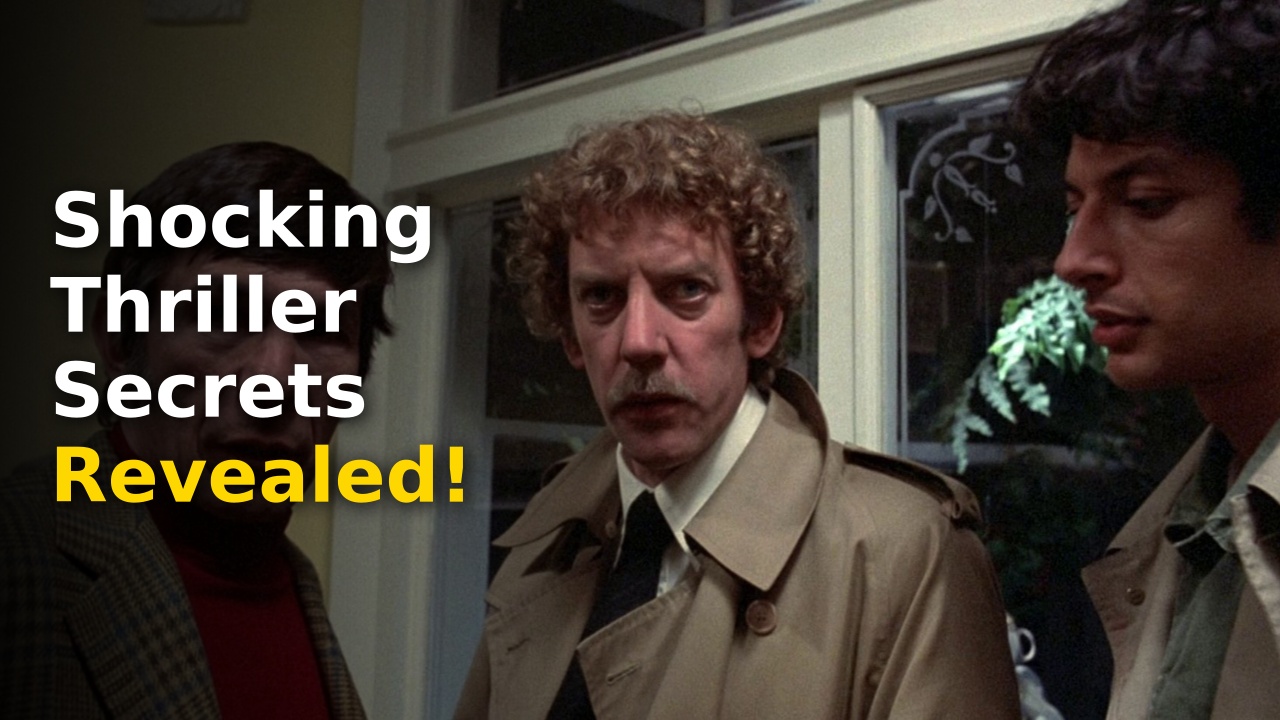
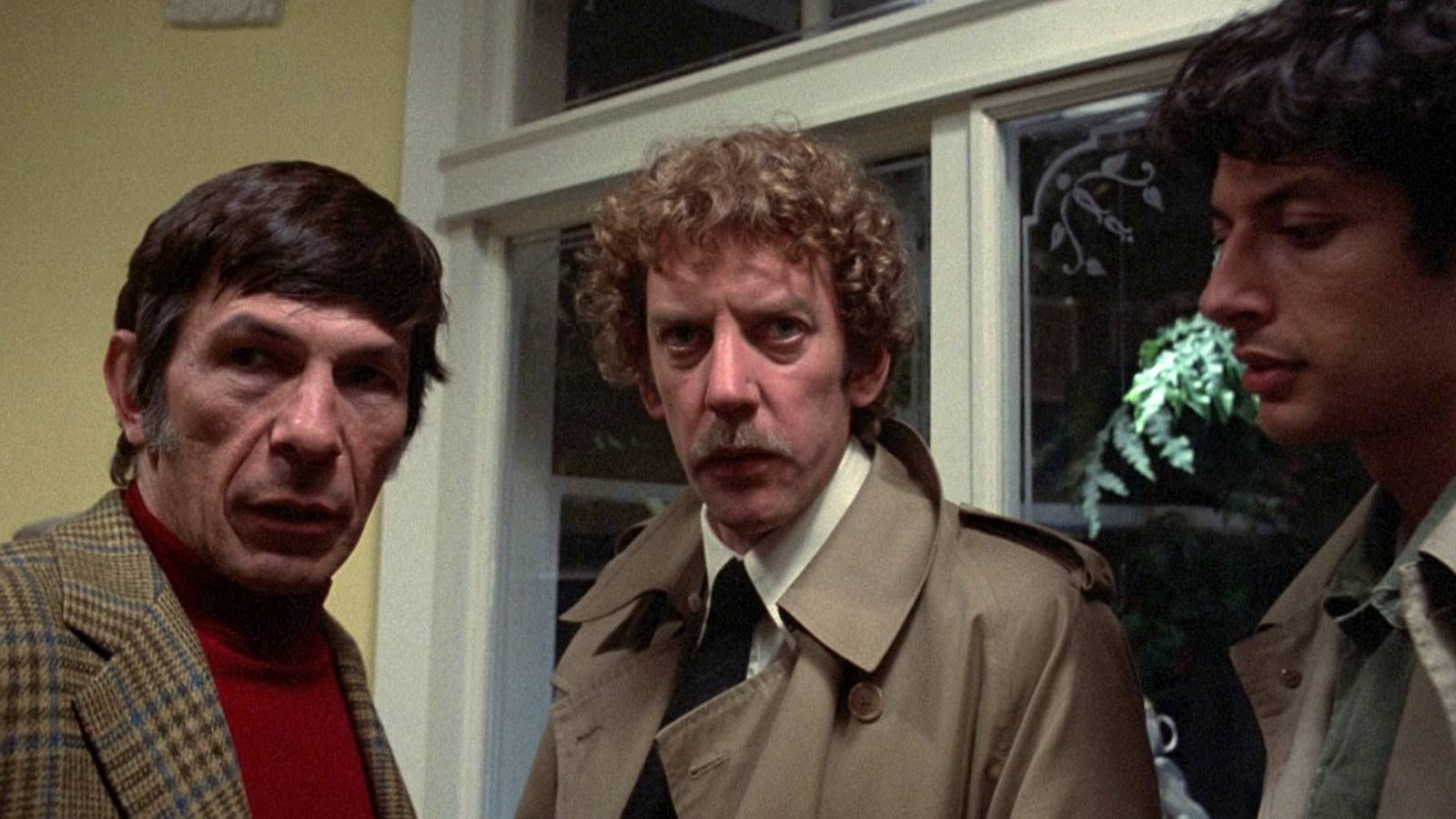
Switching to the sci-fi realm, the 1978 version of Invasion of the Body Snatchers is a masterclass in paranoia. Starring Donald Sutherland, the film modernizes the 1956 classic for a cynical, post-Watergate audience. The idea that your friends and family are being replaced by emotionless clones is the ultimate psychological horror.
The film builds a sense of claustrophobia as the city of San Francisco slowly turns against the protagonists. Every person on the street becomes a potential threat. The ending of this film is legendary for its bleakness, providing one of the most iconic final shots in cinema history. It proves that Suspenseful Thrillers don’t always need a happy ending to be effective.

Why Remakes Sometimes Succeed
- They update the social anxieties of the era to resonate with modern audiences.
- Advanced technology allows for more convincing and visceral practical effects.
- New perspectives from different directors can find layers the original missed.
- They introduce classic stories to a generation that might skip older films.
In the case of Body Snatchers, the 1970s setting added a layer of urban decay and social distrust that wasn’t present in the 1950s original. You feel the breakdown of society in every frame. It is a movie that makes you look twice at your neighbors after the lights come up.
Data Insights on Suspenseful Thrillers
The following table provides a snapshot of the critical and commercial impact of some of the most iconic films in this category. These movies didn’t just win over audiences; they reshaped how studios approached the genre.
| Movie Title | Release Year | Director | Core Theme |
|---|---|---|---|
| The Silence of the Lambs | 1991 | Jonathan Demme | Psychological Profiling |
| Se7en | 1995 | David Fincher | Moral Decay |
| No Country for Old Men | 2007 | The Coen Brothers | Inevitable Fate |
| The Fugitive | 1993 | Andrew Davis | Justice and Pursuit |
| Mystic River | 2003 | Clint Eastwood | Trauma and Revenge |
As you can see, the diversity in directors shows that Suspenseful Thrillers are a playground for different styles. Whether it is the gritty realism of Clint Eastwood or the high-octane energy of Andrew Davis, the core remains the same: keep the audience guessing. These films represent the absolute best of the genre over a 50-year span.
The Darker Side of Human Nature
Some of the most haunting Suspenseful Thrillers focus on the villains as much as the heroes. The Silence of the Lambs (1991) introduced the world to Hannibal Lecter, played by Anthony Hopkins. Despite having less than 20 minutes of screen time, Hopkins created a character that defined cinematic evil for a generation.
The interaction between Lecter and Clarice Starling, played by Jodie Foster, is the heartbeat of the film. It is a battle of wits where every word has a double meaning. The suspense is not just about catching Buffalo Bill; it is about Clarice surviving her psychological encounters with Lecter without losing herself.
Similarly, No Country for Old Men (2007), based on the novel by Cormac McCarthy, features one of the most terrifying villains in history: Anton Chigurh. Javier Bardem portrays Chigurh as a force of nature, an unstoppable killer who decides the fate of his victims with the toss of a coin.
The film is notable for its lack of a traditional musical score. This silence amplifies the suspense, making every footstep and every rustle of wind feel significant. You watch Llewelyn Moss, played by Josh Brolin, try to outrun a man who represents the very concept of death. It is a bleak, beautiful film that challenges the conventions of the genre.

Tragedy and Mystery Intertwined
- Mystic River explores how childhood trauma can explode into adult violence.
- The film uses a murder mystery to dissect the bonds of friendship in a working-class neighborhood.
- Suspense is generated through the viewer’s knowledge that the wrong man is being targeted.
- The tragic ending leaves you questioning the nature of justice and closure.
Clint Eastwood’s direction in Mystic River is restrained and heavy. Starring Sean Penn, Tim Robbins, and Kevin Bacon, the movie is a somber look at how the past never truly stays buried. The suspense builds not through action, but through the escalating tension between three men who can no longer trust each other.
Finally, we must discuss Sorcerer (1977). This film by William Friedkin is perhaps the most physically intense thriller ever made. It follows four men who must transport leaking dynamite across a South American jungle in two decaying trucks. One bump in the road means instant death.
The sequence involving a bridge made of rotting wood during a rainstorm is a miracle of filmmaking. You can almost feel the humidity and the smell of diesel. It is pure, unadulterated suspense that relies on practical effects and sheer directorial audacity. It remains a high-water mark for what can be achieved in the genre when a director is willing to push their cast and crew to the limit.
The Final Verdict on Suspenseful Thrillers
The evolution of Suspenseful Thrillers over the last 50 years shows that our appetite for tension is never-ending. We want to be challenged, we want to be scared, and we want to see characters pushed to their absolute limits. Each movie on this list provides a unique window into the darker aspects of our world while providing top-tier entertainment.
Whether it is the haunting ending of Se7en or the desperate chase in The Fugitive, these films have left an indelible mark on culture. They remind us that the line between safety and danger is often thinner than we think. You can return to these classics time and again, and the suspense will never fade.
As new filmmakers enter the arena, they look to these ten masterpieces as the gold standard. The techniques used in Silence of the Lambs and Zodiac continue to influence modern cinema, ensuring that the legacy of these Suspenseful Thrillers lives on. Keep your eyes on the screen, but maybe keep the lights on just in case.
More Like This
For more updates, check out our latest entertainment and sports news.