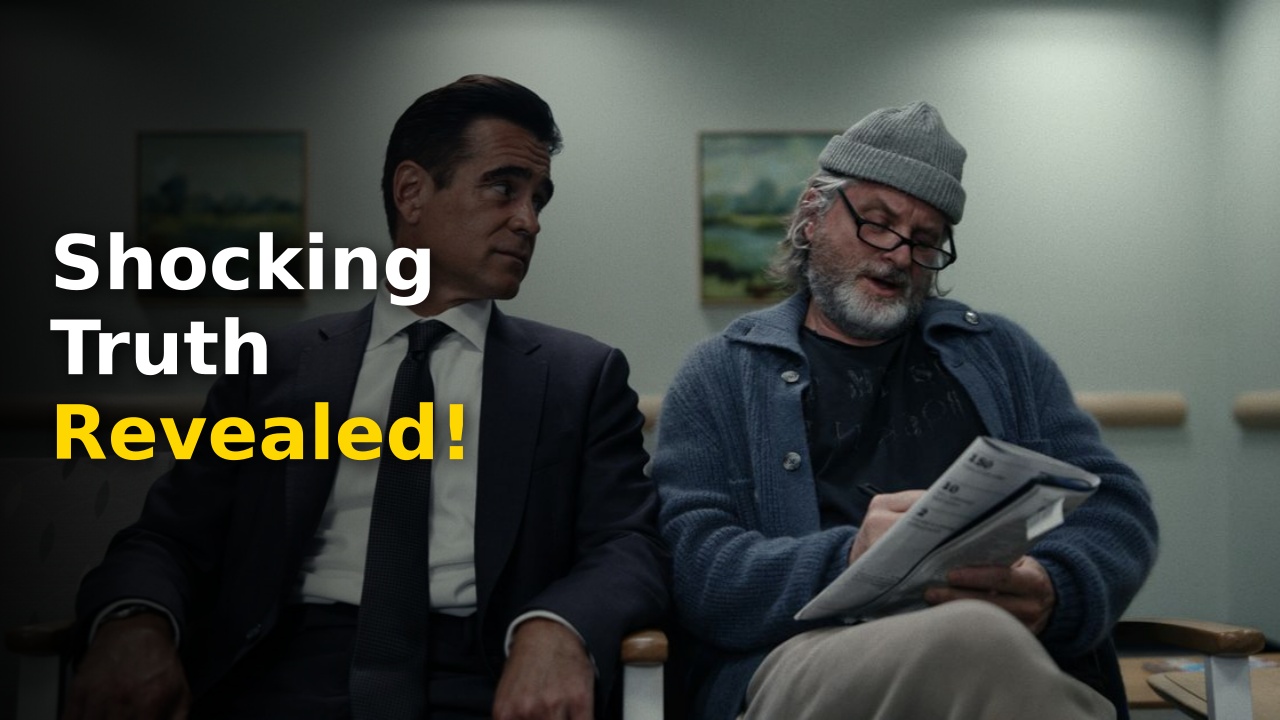
Sugar Finale viewers are still reeling from the cosmic revelation that turned a gritty Los Angeles noir into a mind-bending intergalactic conspiracy. Did you ever imagine that the search for a missing girl would lead to a plot involving atmospheric manipulation and alien refugees? You are not alone in your shock as the Apple TV+ series delivered a conclusion that completely subverts the private investigator genre.
The series has successfully blended the hard-boiled detective tropes of Raymond Chandler with the philosophical science fiction of the mid-20th century. By the time the credits rolled on the eighth episode of the second season, the stakes had shifted from local corruption to the very survival of the human spirit. You are left questioning everything you thought you knew about John Sugar and his mission on Earth.
This episode, titled “The Sirens of Titan,” takes its name from a seminal Kurt Vonnegut novel, signaling a deep dive into themes of free will and manufactured purpose. As you navigate the wreckage of the protagonist’s psyche, the parallels between the show and Vonnegut’s satirical masterpiece become impossible to ignore. The Sugar Finale serves as a bridge between the neon-soaked streets of Hollywood and the cold reality of a distant home.

Sugar Finale Parallel Visions
The choice of “The Sirens of Titan” as a title is a masterstroke of literary foreshadowing that rewards the most observant viewers. In the novel, human history is revealed to be the result of a “big grift” orchestrated by aliens, a theme that mirrors the betrayal John Sugar faces. You see John Sugar grappling with the realization that his sister, Djen, has been pulling the strings all along.
The protagonist of the novel, Malachi Constant, finds himself caught in a staged Martian attack designed to unite humanity. Similarly, the Sugar Finale reveals that the Acalica project was a way to force a new environmental reality upon the planet. It is a cynical view of progress that suggests humanity is incapable of saving itself without external, and often deceptive, interference.
You see the character’s world-weary cynicism clashing with his inherent desire to find goodness in the people of Earth. Much like the characters in Kurt Vonnegut’s fiction, our hero must decide if a life built on a lie is still worth living. The Sugar Finale emphasizes that even if our origins are a trick, our capacity to love remains our most authentic trait.
The Vonnegut Connection
- Exploration of the “Acalica project” as a tool for global manipulation.
- The reveal of Djen as the architect of a new world order.
- How the Sugar Finale utilizes pulp sci-fi imagery from the 1950s.
- The psychological breakdown of John Sugar in the face of truth.
The connection to the 1950s pulp aesthetic isn’t just visual; it’s emotional, tapping into the paranoia of the Cold War era. You feel the weight of John Sugar‘s isolation as he realizes that his entire mission might have been a distraction from his sister’s true goals. This shift from detective work to existential dread is what makes the Sugar Finale so uniquely haunting.
Every shot in this episode feels deliberate, designed to evoke the feeling of a man losing his grip on reality while simultaneously finding his true self. The Dutch angles and warped walls during the confrontation scenes reflect a fracturing human psyche. You are invited to witness the death of an old identity and the painful birth of a new, more human one.

Djen’s Deadly Acalica Project
The introduction of Mireille Enos as Djen provides the emotional anchor for the season’s massive betrayal. For years, you were led to believe that Djen was a victim, a lost sibling that John Sugar needed to rescue to find peace. The flashback to the Atacama Desert in Chile reveals a much darker reality where Djen is the predator, not the prey.
The “four circles,” which Professor Stanley identified as tropospheric nodes, are more than just scientific curiosities. They represent a technology capable of sprouting strawberries in the barren sand, a literal terraforming of our world. You see Djen making the cold calculation that the secret must be kept at any cost, leading to the murder of a human witness by Henry Thorpe.
This revelation in the Sugar Finale recontextualizes every interaction John Sugar had with his peers. Ruby and the others were not just observers; they were pieces on a chessboard controlled by someone they trusted. The Sugar Finale shows us that Djen believed she was saving the planet, fulfilling the classic trope that the best villains always believe they are the heroes.
Master Plan Details
- Terraforming the Atacama Desert to test atmospheric control.
- Manipulating the “observe and report” prime directive for personal gain.
- The recruitment of Henry Thorpe as an enforcer for the new regime.
- Drugging John Sugar to prevent him from interfering with the elite demonstration.
John Sugar’s realization that his sister has become the very horror she claimed to fight is the episode’s most heartbreaking moment. You watch as his idolized version of Djen crumbles, replaced by a woman whose eyes flash a menacing blue with the weight of her power. It is a masterclass in acting that highlights the thin line between savior and tyrant.
The Sugar Finale doesn’t shy away from the political implications of this technology, showing a group of elite observers gathered to watch the demonstration. These humans think the technology is for their benefit, but Djen makes it clear it is for “us.” This cryptic statement suggests a future where the planet is no longer controlled by the people who were born on it.

The Noir Legend Lives
Despite the sci-fi pivot, the Sugar Finale remains deeply rooted in the traditions of film noir. You see John Sugar confronting the corrupt assemblywoman at a ceremonial funeral, a classic setting for a detective to deliver his final judgment. It is a moment of pure cinematic justice that feels both satisfying and hollow, given the systemic corruption involved.
The series addresses the naivety of the “honest policeman” myth, showing that even the best intentions can be swallowed by a broken system. Jonathan Siegel’s praise of John Sugar as a defender of the defenseless rings true on a personal level, but it cannot fix the world. You are forced to confront the idea that justice is often just a small bandage on a massive, festering wound.
If you want to stay updated on the latest entertainment news and celebrity deep dives, check out the reports on brightcelebrity.com for more insights. The Sugar Finale excels at blending these gritty, grounded themes with the infinite possibilities of the stars. It is a balancing act that few shows would dare to attempt, let alone execute with such flair.
Noir Elements Present
- The use of black-and-white flashbacks and dream sequences.
- The “Third Man” reference regarding unrequited love and waiting.
- The cynical worldview of Flybjerg and his “cowboy wisdom.”
- The makeshift mausoleum of film-noir memorabilia in Sugar’s room.
The relationship between John Sugar and Charlotte provides the emotional color in an otherwise monochromatic world. Their date at the beach, transitioning into the ambiguously Technicolor hues, suggests a hope that John Sugar can find a human connection. However, the Sugar Finale quickly undercuts this hope when it is revealed Charlotte was part of the setup.
Is their romance real, or was it just another part of Djen‘s elaborate game? Charlotte’s final words to a fading John Sugar suggest that while her mission was assigned, her feelings were true. This ambiguity is a hallmark of the genre, leaving you to wonder if John Sugar will ever be able to trust anyone again.

Sugar Finale Cast Statistics
The performance of the cast in this final episode has been widely praised by critics and fans alike. Colin Farrell brings a vulnerability to the role that makes the Sugar Finale feel deeply personal despite its grand scale. The addition of Mireille Enos late in the season provided the perfect foil for his character’s inherent optimism.
| Actor Name | Character Role | Fate in Season 2 |
|---|---|---|
| Colin Farrell | John Sugar | Remains on Earth |
| Mireille Enos | Djen | Revealed as Mastermind |
| James Cromwell | Jonathan Siegel | Spiritual Mentor |
| Amy Ryan | Melanie | Ally and Friend |
As you look at the trajectory of these characters, the Sugar Finale sets up a fascinating dynamic for a potential third season. The shift in power from the human characters to the alien visitors creates a new world order that John Sugar must navigate. He is no longer just a private investigator; he is a man without a country, caught between two worlds.
The return of James Cromwell as Jonathan Siegel provides a much-needed sense of continuity. His conversation with John Sugar in the empty movie studio is one of the most poignant scenes in the Sugar Finale. It serves as a reminder that even as everything changes, the essence of who we are—the “Sugar” inside—remains constant.
Choosing Earth Over Home
In the end, the Sugar Finale is about the choice to stay and fight for a world that isn’t yours. John Sugar decides to remain on Earth, settling into his hotel room and preparing to “love whoever’s around to be loved.” It is a beautiful, quiet conclusion that mirrors the ending of The Sirens of Titan.
The blinking space-communication box at the very end of the Sugar Finale leaves the door open for future conflict. Whether it is a message from his home planet or another trap from Djen, John Sugar is ready to face it. He has traded his naive faith in law and order for a more complex, human understanding of the world.
You are left with the image of a man stepping out into the bright light of a new day, no longer a visitor but a resident. The Sugar Finale completes the character’s journey from a cold observer to a deeply feeling participant in the human experience. It is a transformation that justifies the strange, winding path the series took to get here.
Ultimately, the Sugar Finale proves that the most interesting mysteries aren’t about who committed a crime, but who we become when we discover the truth. John Sugar has landed on solid ground, and while the future is uncertain, he is no longer lost. This conclusion ensures that the series will be remembered as one of the most ambitious television experiments of the decade.
More Like This
For more updates, check out our latest entertainment and sports news.