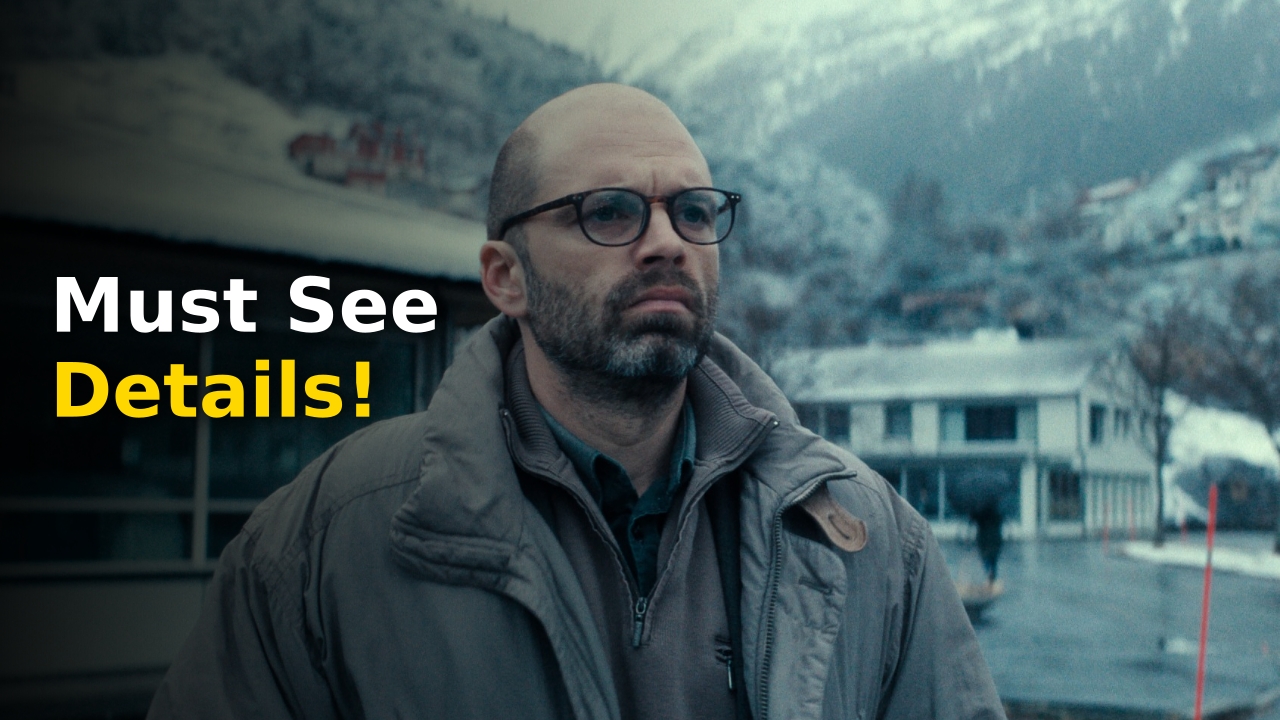
Key Takeaways
| Winner of the 2026 Palme d’Or at the Cannes Film Festival. |
| Inspired by the true 2015 Bodnariu case involving Norway’s social services. |
| Stars Marvel veteran Sebastian Stan and breakout star Renate Reinsve. |
| Official New York Film Festival screening begins October 4, 2026. |
You probably think you know where the line between parental rights and state protection lies, but the Sebastian Stan Fjord Movie 2026 is here to shatter that certainty. This cinematic powerhouse from Romanian director Cristian Mungiu challenges your internal compass by presenting a narrative where every character believes they are the hero. By the time the credits roll, you will find yourself questioning if true objectivity is even possible in our hyper-polarized modern age.
The film follows the Gheorghiu family, led by Sebastian Stan and Renate Reinsve, as they navigate a nightmare scenario in rural Norway. After immigrating from Romania, the couple finds their five children seized by the Barnevernet, Norway’s child protection agency. What begins as a localized legal dispute quickly spirals into an international firestorm involving religious freedom, cultural clashes, and the fundamental right to family integrity.
Audiences attending the New York Film Festival this year are already calling it a masterpiece of tension and moral ambiguity. Mungiu, a master of the Romanian New Wave, uses his signature long takes and clinical observation to place the viewer directly into the middle of the conflict. The Sebastian Stan Fjord Movie does not provide easy answers; it provides a mirror to our own biases and preconceived notions of justice.
Sebastian Stan Fjord Movie Cast and Themes
In a performance that marks a significant departure from his blockbuster roles, Sebastian Stan delivers a masterclass in restrained agony as Mihai Gheorghiu. Opposite him, Renate Reinsve portrays Lisbet with a nuanced blend of stoicism and simmering desperation. Their chemistry is the bedrock of the film, anchoring a story that could easily have devolved into a simple melodrama without their grounded presence.
The casting of Sebastian Stan is a stroke of genius, leveraging his global recognition to draw attention to a deeply intellectual and challenging work. Fans who follow Sebastian Stan’s evolution as an actor will recognize this as the definitive role of his mature career. He sheds the armor of a superhero to inhabit a man whose world is dismantled by a system he barely understands, yet must respect to survive.
The Duality of Grace
A recurring motif throughout the film is the classic hymn “Amazing Grace,” which opens the movie in a soft, deceptive piano arrangement. In the world of the Gheorghius, grace is a spiritual necessity, but in the eyes of the Norwegian government, it is a clerical impossibility. This thematic collision highlights the gap between the family’s Evangelical faith and the secular progressivism of their new home.
Director Cristian Mungiu meticulously crafts each scene to ensure that neither the parents nor the government officials are portrayed as villains. The agency workers are not heartless bureaucrats but individuals genuinely concerned for child safety. Conversely, the Gheorghius are not fanatics but loving parents whose disciplinary methods clash with modern Norwegian law. This refusal to take sides is what makes the Sebastian Stan Fjord Movie so profoundly unsettling.
Visual Language and Directorial Precision
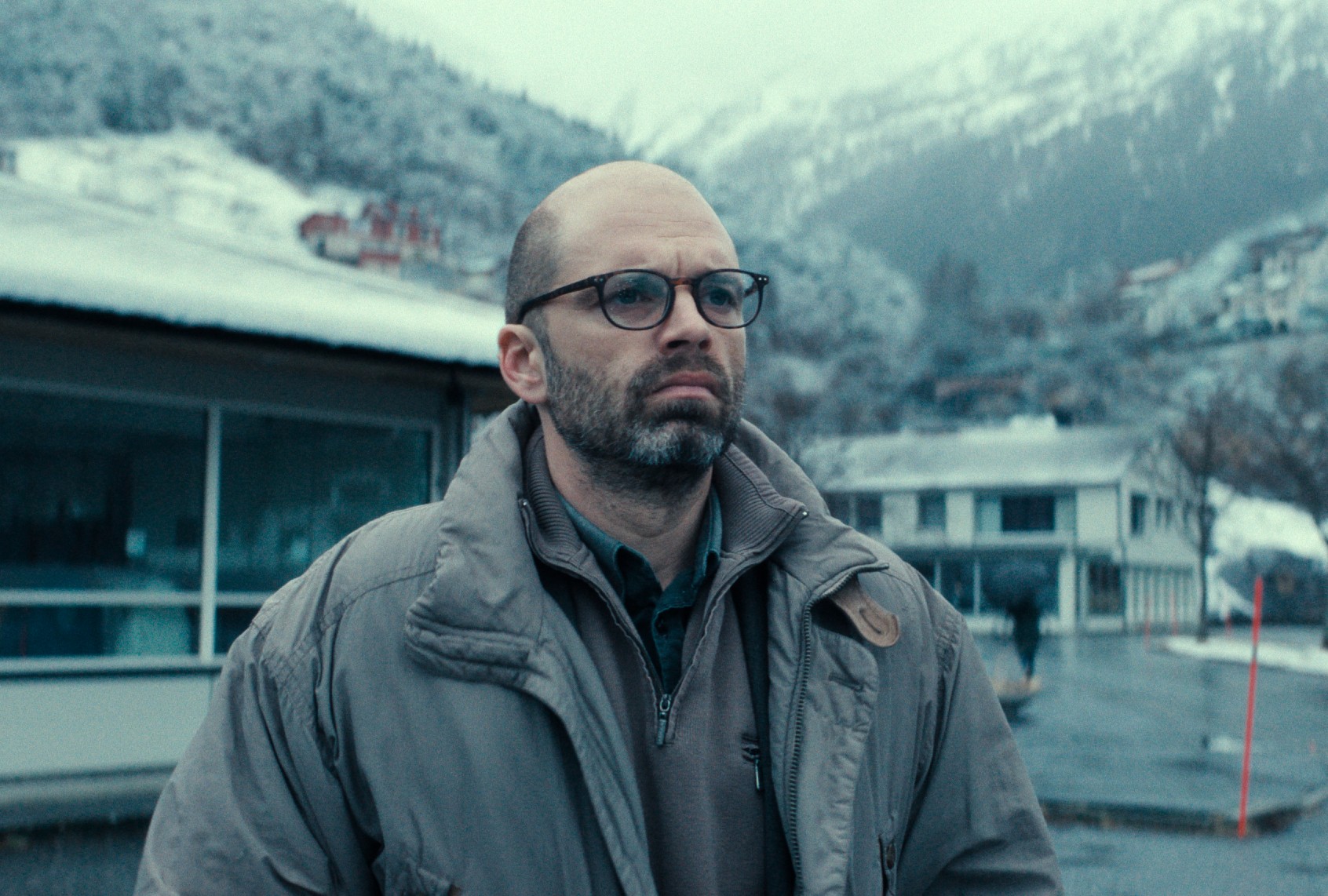
Cinematographer Tudor Panduru captures the cold, imposing beauty of the Norwegian fjords, mirroring the isolation felt by the central family. The camera often lingers on the minutiae—the stacks of paperwork, the sterile interview rooms, and the distance between the parents during their supervised visits. These visual details are essential to the puzzle Mungiu has constructed for his audience.
By forcing the viewer to notice the small things, Mungiu creates a high-stakes game of observation. Every word spoken and every glance shared between the characters becomes a potential piece of evidence. This level of detail ensures high engagement, as you must stay alert to every frame to fully grasp the layers of the narrative. This is not just a movie; it is an exercise in perception.
Real Bodnariu Case Inspiration
To understand the gravity of the Sebastian Stan Fjord Movie, one must look at the real-life events that inspired it. In 2015, the Bodnariu case dominated headlines across Europe and North America. Ruth and Marius Bodnariu, a Pentecostal couple, had their five children removed by the Barnevernet following allegations of physical discipline. The case sparked protests from Christian groups worldwide, who saw it as an attack on religious freedoms.
The parallels between the Bodnariu family and the Gheorghius in the film are unmistakable. Mungiu uses this historical foundation to explore how a private family matter can be weaponized by political and religious factions. To the Christian right, the Bodnarius were martyrs; to the Norwegian state, they were a case study in necessary intervention. The film sits uncomfortably in the center of these two narratives.
Expert Take: The Legal Conflict
Legal analysts often point to the Barnevernet’s strict adherence to the “best interests of the child” principle as a source of friction with immigrant populations. While Norway consistently ranks as one of the best places in the world to raise a child, its zero-tolerance policy on physical discipline—including minor smacking—can lead to severe interventions. By the numbers, the Barnevernet oversees thousands of cases annually, with a significant percentage involving families from diverse cultural backgrounds who may have different parenting philosophies.
The Sebastian Stan Fjord Movie captures this systemic tension perfectly. It illustrates how a government’s desire to protect can inadvertently cause irreparable trauma. The film doesn’t argue against child protection; rather, it questions the lack of flexibility within these institutions when faced with cultural nuances. This deep-dive into international social policy is a hallmark of Mungiu’s commitment to realism and complexity.
Data Comparison: Fact vs Fiction
Understanding the differences between the cinematic adaptation and the historical reality is crucial for a complete analysis of the work. The following table breaks down the key elements of the Sebastian Stan Fjord Movie compared to the 2015 Bodnariu case.
| Feature | Real Bodnariu Case (2015) | Fjord Movie (2026) |
|---|---|---|
| Lead Couple | Marius and Ruth Bodnariu | Mihai and Lisbet Gheorghiu |
| Number of Children | Five Children | Five Children |
| Primary Conflict | Religious & Physical Discipline | Cultural Erasure & Objectivity |
| International Outcry | Global Christian Protests | Social Media Polarization |
| Director’s Goal | N/A (Historical Event) | Artistic Objectivity |

Mungiu’s Search for Artistic Objectivity
In a world where algorithms feed us content that reinforces our existing beliefs, Cristian Mungiu has attempted something radical with the Sebastian Stan Fjord Movie: true neutrality. Mungiu famously avoids using a musical score to manipulate the audience’s emotions, relying instead on the natural sounds of the environment. This “cold” style of filmmaking is intended to let the viewer come to their own conclusions without being spoon-fed a moral lesson.
However, the director himself admits that staying truly objective is nearly impossible. In a recent press conference, he noted that every choice—from where to place the camera to which lines are kept in the edit—is an act of selection. Even so, the Sebastian Stan Fjord Movie pushes the boundaries of impartial storytelling further than almost any other film in recent memory. It is a bold experiment in a time of fundamentalist thinking.
The “Brainrot Device” Controversy
One of the most talked-about scenes in the film involves a debate between the social workers and the parents regarding technology. The Norwegian officials are horrified that the Gheorghiu children do not have smartphones or YouTube access, viewing it as a form of social deprivation. Mungiu writes this scene with a subtle wink, suggesting that the state’s definition of a “healthy childhood” is inextricably linked to digital consumption.
This moment has already become a lightning rod for debate among early viewers. Does Mungiu believe the parents are right to shield their children from “brainrot devices,” or is he highlighting their parochialism? By presenting the argument through the lens of well-meaning but tech-obsessed officials, he makes the audience question the values of modern progressivism. It is a moment of deceptive nuance that rewards multiple viewings.
People Also Ask
What happened with the Sebastian Stan Fjord Movie today?
Today, critics from the New York Film Festival released their initial reviews, praising the film for its uncompromising objectivity and the powerful performances of Sebastian Stan and Renate Reinsve.
Why is the Fjord movie trending right now?
The film is trending due to its recent Palme d’Or win at Cannes and the controversy surrounding its depiction of the Barnevernet, which mirrors the real-life 2015 Bodnariu case.
How does this movie affect Sebastian Stan’s career?
This role solidifies Stan as a serious contender for Best Actor in the 2026 awards season, marking a successful pivot from franchise blockbusters to high-prestige international cinema.
When is the wide theatrical release for Fjord?
Fjord will have a wide theatrical release across the United States on October 9, 2026, following its limited premiere screenings at major film festivals.
Awards Season and Global Impact
As we head into the thick of the year, the Sebastian Stan Fjord Movie is already being hailed as a frontrunner for multiple Academy Awards. Beyond the acting categories, Mungiu’s direction and Panduru’s cinematography are virtually guaranteed nominations. The film captures the zeitgeist of 2026, touching on themes of state overreach and cultural identity that resonate far beyond the borders of Norway or Romania.
For those looking for Oscar predictions for 2026, this film is the one to watch. It is a rare piece of art that manages to be both timely and timeless, addressing the immediate concerns of our era while grounded in the eternal struggle between the individual and the collective. Whether you view it as a warning against government interference or a defense of child welfare, the film’s impact is undeniable.
Ultimately, the success of the Sebastian Stan Fjord Movie will be measured by the conversations it starts. In a world of black-and-white certainties, Mungiu has given us a massive, beautifully rendered gray area. It is a film that demands your attention, your patience, and above all, your honesty. Don’t miss this cinematic landmark when it hits theaters this October—it might just change the way you see the world.
Keep an eye on the top indie dramas of 2026 for more updates on this and other prestige releases. For more information on the director’s vision, you can visit the New York Film Festival official site or check out IMDb listing for Cristian Mungiu for his full filmography.
More Like This
For more updates, check out our latest entertainment and sports news.