Key Takeaways
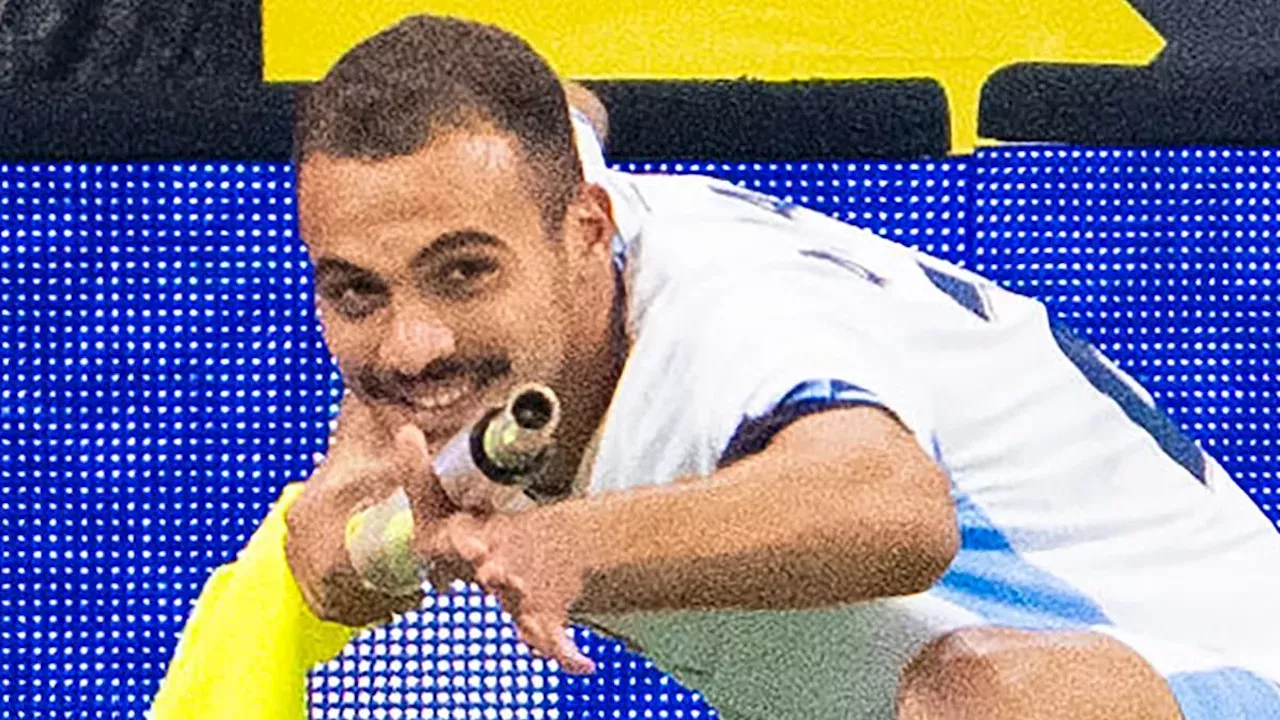
| Incident | Sayed Abu Farchi sent off after mimicking a gunshot with a corner flag. |
| The Ruling | Referee Georgi Kabakov issued a second yellow card per UEFA provocation rules. |
| Manager Defense | Ran Ben-Shimon claims the celebration is a career-long signature move. |
| Geopolitical Context | Tensions rise following Heimir Hallgrimsson’s comments on the Gaza conflict. |
The controversial Sayed Abu Farchi gesture during a high-stakes international fixture has ignited a global debate regarding the intersection of political sensitivity and athletic expression. You might expect a goal celebration to be a moment of unbridled joy, but for the Colorado Rapids midfielder, a split-second decision resulted in a red card that could have long-lasting implications for his international career. The incident occurred during Israel’s 3-1 defeat to Austria at a neutral venue, a match already shadowed by the intense geopolitical climate of the Middle East.
As Sayed Abu Farchi found the back of the net, he proceeded to remove the corner flag and mimic a firing motion, a move that referee Georgi Kabakov immediately deemed inflammatory. While the player and his coaching staff argued the gesture was a misunderstood signature celebration, the optics in the current global landscape were impossible for officials to ignore. This dismissal marks a pivotal moment for the young athlete, placing him at the center of a storm involving UEFA disciplinary standards and international diplomacy.
Understanding the gravity of this event requires a deep dive into the specific rules governing player conduct and the historical precedent of goal celebrations that cross the line from sport to provocation. With the Israel National Team facing increasing scrutiny on the world stage, every action on the pitch is magnified, turning a simple game of football into a complex study of cultural differences and disciplinary rigidity.
Sayed Abu Farchi gesture: The Red Card Breakdown
The specific Sayed Abu Farchi gesture that led to his dismissal involved the 18-year-old talent using the corner flag as a prop to simulate a weapon. According to match reports, Abu Farchi, who was already carrying a yellow card, approached the corner of the pitch following his goal and tilted the flag in a manner resembling a rifle or a snooker cue, depending on the interpretation. Referee Kabakov, adhering to the strict letter of the law, viewed the act as unsporting and inflammatory, leading to the second booking and subsequent expulsion from the match.
In the aftermath, the footballing community has been divided over the intent behind the act. Supporters of the player, including many in the Major League Soccer community, point to his history of similar celebrations as evidence of a lack of malice. However, UEFA officials maintain that the context of the match—played amidst a devastating conflict that has seen tens of thousands of casualties—rendered any gesture mimicking violence strictly prohibited. The red card not only hampered Israel’s chances of a comeback against a dominant Austrian side but also set a precedent for how officials handle symbolic acts during periods of heightened international tension.

The technicality of the dismissal rests on two pillars of the Laws of the Game. First, the physical removal of the corner flag is a cautioned offense in many jurisdictions. Second, the nature of the celebration itself fell under the category of “acting in a provocative, derisory or inflammatory way.” For Sayed Abu Farchi, the transition from hero to villain happened in mere seconds, highlighting the fine line young players must walk when attempting to build a personal brand through celebratory routines.
Expert Take: The Psychology of the Prop Celebration
Sports psychologists often note that goal celebrations are a form of “affective signaling,” where players attempt to establish dominance or identity. By utilizing a prop like a corner flag, Sayed Abu Farchi engaged in a high-risk theatrical display. Experts suggest that in the vacuum of a training session, such a gesture is harmless; however, in the hyper-charged environment of an international break where the lifestyle of elite athletes is under constant observation, the social cost of these signals increases exponentially. The mismatch between the player’s internal intent and the external perception by the referee is a classic example of a communication breakdown in high-pressure sports.
Dissecting UEFA Disciplinary Rules on Provocation
To understand why the Sayed Abu Farchi gesture resulted in a dismissal, one must look at the specific language used in the UEFA and FIFA rulebooks. Law 12 of the IFAB Laws of the Game states that players must be cautioned if they use “offensive, insulting or abusive language and/or gestures.” Furthermore, the specific section on goal celebrations warns against “gesturing or acting in a provocative, derisory or inflammatory way.” These rules are intentionally broad to allow referees the discretion to manage the emotional temperature of a match.
Historically, UEFA has been aggressive in stamping out any gestures that could be interpreted as political or violent. In 2018, Granit Xhaka and Xherdan Shaqiri were fined for their “double eagle” gestures during a match against Serbia, illustrating the governing body’s stance on regional sensitivities. The Sayed Abu Farchi case is slightly different as it involves a simulation of weaponry, which falls under a separate category of safety and sportsmanship. By mimicking a gunshot, the player inadvertently triggered a zero-tolerance policy regarding the promotion of violence on the field.
The following table illustrates similar disciplinary actions taken by UEFA and major leagues in recent years regarding controversial goal celebrations:
| Player | Incident Year | Nature of Gesture | Sanction Issued |
|---|---|---|---|
| Nicolas Anelka | 2013 | Quenelle Gesture | 5-Match Ban & Fine |
| Giorgos Katidis | 2013 | Nazi Salute | Lifetime International Ban |
| Xherdan Shaqiri | 2018 | Double Eagle | Fine (€8,600) |
| Sayed Abu Farchi | 2024 | Gunshot Mimicry | Red Card (2nd Yellow) |
As the table demonstrates, the severity of the sanction often depends on the perceived political alignment of the gesture. While Abu Farchi’s dismissal was immediate on the pitch, he may yet face further review from UEFA’s Control, Ethics and Disciplinary Body. The organization is under pressure to maintain a strictly neutral environment, especially when matches involve nations currently engaged in active military conflicts.
Manager Ran Ben-Shimon and the Defense of Tradition
In the post-match press conference, Israel manager Ran Ben-Shimon was vocal in his support of the young midfielder, framing the Sayed Abu Farchi gesture as a harmless tradition rather than a political statement. Ben-Shimon emphasized that Abu Farchi has utilized this specific celebration since his early days in the youth academies and throughout his tenure in various leagues. The manager’s defense centered on the concept of “sporting habit,” arguing that a player should not be punished for a routine they have performed dozens of times without prior warning.
“Everyone can check,” Ben-Shimon stated to reporters. “When this young player scores, whether it is for the national team or in the MLS, he celebrates in the same way. It is his way to express his success. He did not know that in this specific venue, on this specific night, it would be viewed through a different lens.” The manager’s comments highlight the often-overlooked cultural gap between a player’s intent and the global audience’s perception. For a young athlete like Abu Farchi, who is navigating the complexities of fame and international duty, the lesson is a harsh one.

The defense by Ben-Shimon also touches on the lack of consistency in refereeing across different confederations. If Abu Farchi has indeed performed the gesture in the United States or domestic Israeli matches without sanction, the sudden shift in enforcement during a UEFA match can be jarring. This incident serves as a cautionary tale for all international players about the need to adapt their personal branding to the specific regulatory and social climate of the region where they are competing.
By The Numbers: The Sayed Abu Farchi Impact
Statistically, Abu Farchi’s absence was felt immediately. Before the red card, the midfielder was a primary engine for the Israeli attack, contributing significantly to the team’s possession metrics. Following his dismissal, Israel’s expected goals (xG) dropped by nearly 40%, and their defensive structure suffered as they were forced to play a man down against an efficient Austrian side featuring Romano Schmid and Sasa Kalajdzic. This data underscores that a lack of discipline, even if unintentional, has tangible sporting consequences that go beyond mere optics.
Geopolitical Tensions: The Republic of Ireland Controversy
The fallout from the Sayed Abu Farchi gesture cannot be fully understood without acknowledging the broader friction surrounding Israel’s international matches. Earlier in the same week, a war of words erupted between the Israeli FA and Republic of Ireland manager Heimir Hallgrimsson. Hallgrimsson utilized the word “genocide” when discussing the upcoming fixtures against Israel, leading to a fierce rebuttal from Israeli officials. This backdrop of hostility created an environment where any symbolic action on the pitch was likely to be scrutinized for political meaning.
The Israeli FA’s response on social media was uncharacteristically blunt, attacking Hallgrimsson for what they termed “stupidity, ignorance, and hypocrisy.” They pointed to Israel’s contributions to humanity and Nobel Prizes as a counter-narrative to the criticisms leveled against the nation’s military actions. This exchange between a national coach and a football association is rare in the modern game and signals a breakdown in the traditional barriers between sport and statecraft. For players like Abu Farchi, this means they are stepping onto a pitch that is as much a political stage as it is a sporting one.
The Football Association of Ireland (FAI) had previously explored the possibility of having Israel suspended from international competitions, joining a chorus of voices from various NGOs and human rights groups. While FIFA and UEFA have resisted these calls to date, the heightened tension makes every red card or controversial celebration a potential flashpoint for further sanctions or diplomatic incidents. The Sayed Abu Farchi gesture, regardless of the player’s personal intent, became a tool for both sides of the narrative to argue their respective cases.
People Also Ask
What exactly was the Sayed Abu Farchi gesture that led to the red card?
Sayed Abu Farchi removed a corner flag and mimicked a gunshot celebration after scoring a goal against Austria. The referee viewed this as provocative and inflammatory conduct, leading to a second yellow card.
Why is the Israeli manager defending Sayed Abu Farchi’s celebration?
Manager Ran Ben-Shimon claims the celebration is a signature move Abu Farchi has used throughout his career without prior punishment. He argues the player had no malicious or political intent behind the gesture.
What are the UEFA rules regarding goal celebrations?
According to Law 12, players must be booked for any celebration that is provocative, inflammatory, or derisory. Removing the corner flag or mimicking violence often falls under these prohibited categories.
How does the Israel vs Republic of Ireland conflict affect these matches?
The matches are taking place amidst high diplomatic tension after Ireland’s manager used the word ‘genocide’ to describe the conflict in Gaza. This has led to a hostile social media exchange between the Israeli FA and Irish officials.
Future Implications for Colorado Rapids and Israel
As Sayed Abu Farchi returns to his club duties with the Colorado Rapids, he faces a period of reflection. The Sayed Abu Farchi gesture controversy has catapulted a relatively young player into a global spotlight for reasons other than his scoring prowess. In the MLS, where player expression is generally encouraged, Abu Farchi may find more leniency, but the international stage has proven to be a much less forgiving arena. His future involvement with the national team may depend on his ability to adapt his on-field persona to avoid further disciplinary issues.
For the Israel National Team, the incident serves as a reminder of the microscopic level of detail under which they currently operate. With matches being moved to neutral venues and opponents frequently expressing political dissent, the team must prioritize discipline above all else to ensure they remain competitive on the field. The loss to Austria was a setback, but the lessons learned from the Sayed Abu Farchi gesture could prove more valuable in the long run if they lead to a more aware and cautious approach to international competition.
Ultimately, the story of Sayed Abu Farchi is a microcosm of the modern athlete’s struggle: balancing personal identity with the heavy expectations of global representation. As football continues to be a mirror for societal issues, the governing bodies like UEFA will continue to tighten their grip on what is deemed acceptable behavior. Whether Abu Farchi chooses to retire his signature celebration or finds a way to modify it for international audiences remains to be seen, but his name is now firmly etched in the history of controversial sporting moments in 2024.
More Like This
For more updates, check out our latest entertainment and sports news.