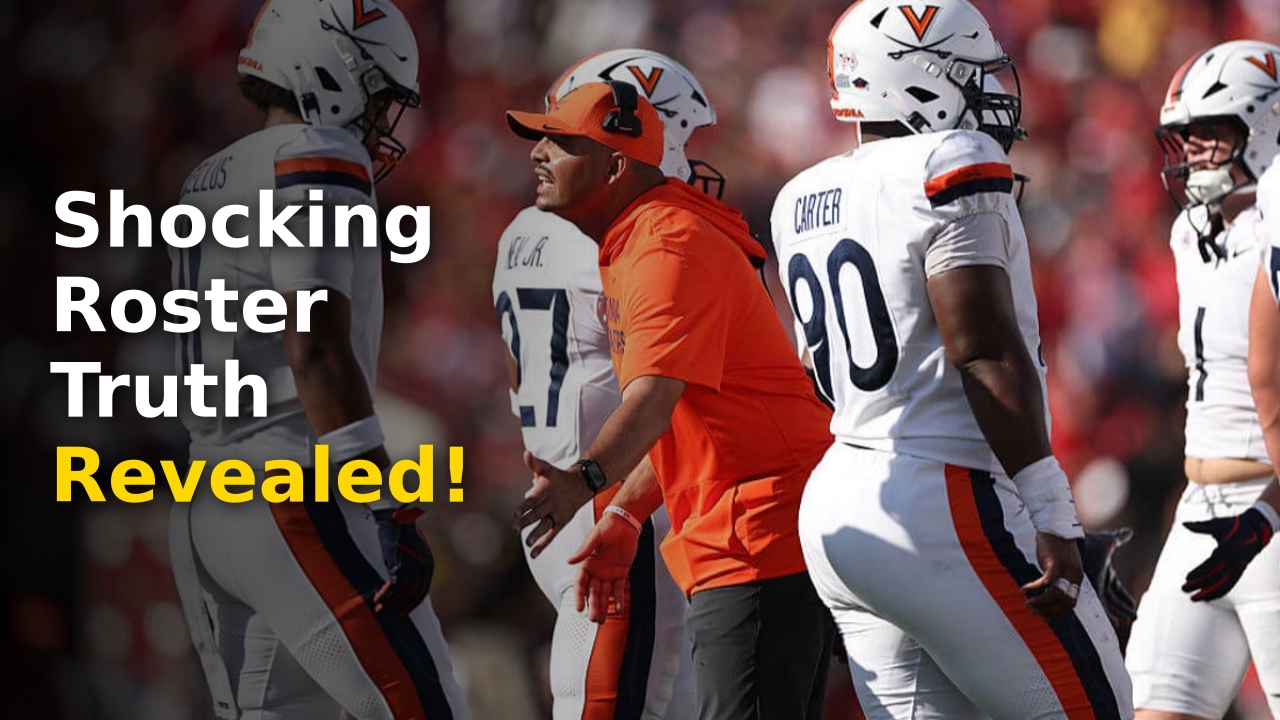
Roster experience has become the ultimate currency in modern college athletics, with top-tier programs now prioritizing proven veterans over raw, unrefined potential. You are witnessing a tectonic shift where seasoned snap counts carry more weight than high-school star rankings in the pursuit of a national championship.
Last year, Indiana proved that a collection of battle-hardened upperclassmen could dismantle even the most talented rosters to claim a national title. This year, teams like Virginia are leveraging the transfer portal to import massive amounts of career snaps, hoping to replicate the Hoosiers’ path to glory.
The Value Of Roster Experience In 2026
In a sport currently populated by fifth, sixth, and even eighth-year athletes, the definition of a “youth movement” has fundamentally changed. Coaches across the Power 4 landscape are obsessed with identifying players who possess not just skill, but deep institutional knowledge of the field.
The current landscape rewards programs that successfully retain their core starters while simultaneously integrating high-level transfers. The strategy is simple: why spend three years developing a freshman when you can acquire a multi-year starter via the portal? This shift has forced every recruiting department to reconsider their standard operating procedures.
Top-flight coaches are constantly auditing their roster depth, specifically looking for players with established Division I experience. This trend isn’t just about winning games; it’s about mitigating the massive risks associated with a young, inconsistent starting lineup. A veteran quarterback with 20+ starts provides a stability that money simply cannot buy.
Consider the logistical complexity of managing a 105-man roster under the current House v. NCAA settlement guidelines. Coaches must now balance veteran retention with the necessity of maintaining a developmental pipeline of younger, cost-effective talent. It is a high-stakes balancing act that defines the tenure of many modern head coaches.
As you analyze the data, notice how schools that prioritize veteran production tend to outperform their talent-index rankings. Programs that rely heavily on freshmen often face a steep learning curve that frequently manifests in early-season losses against experienced, disciplined opponents.
Ultimately, the search for the perfect roster balance is an ongoing arms race. As ESPN has documented, the integration of veteran leadership into the locker room provides a cultural foundation that is nearly impossible to replicate with incoming recruits alone.

Understanding The Metrics
- Total Career Snaps: The primary indicator of a player’s real-world readiness.
- Transfer Integration: How quickly a newcomer adapts to a new coaching scheme.
- Retention Rate: The percentage of starters who opted to stay rather than enter the portal.
- All-Conference Accolades: A proxy for on-field consistency against top-tier competition.
Comparative Data And Roster Analytics
The gap between the most experienced teams and those in rebuilding phases is staggering. While top-tier programs are fielding squads with over 500 career snaps per player, the bottom-feeders are struggling to break the 250-snap threshold.
| Team Category | Average Snaps Per Player | Strategic Focus |
|---|---|---|
| Elite Veteran Heavy | 410-520 | Immediate Win-Now |
| Mid-Tier Rebuilding | 300-400 | Hybrid Growth |
| Youth Development | 220-300 | Long-term Recruiting |
As you look at these numbers, remember that Iowa currently sits at the bottom of the spectrum with 222.4 snaps. This indicates a significant reliance on incoming talent rather than veteran transfers. Conversely, programs like Virginia are at the top, having aggressiveley recruited transfers to maximize their immediate window of opportunity.
It is worth noting that elite programs like Georgia and Alabama are often outliers on this list. Their ability to recruit top-10 classes annually allows them to sustain high-level performance despite having lower average snap counts. They replace experience with raw, blue-chip talent.
However, the risks of the youth-first model are becoming increasingly apparent. When injuries hit a team with low snap counts, the lack of depth can cause a season to derail rapidly. Veteran teams generally demonstrate higher resilience in the face of such adversity.
The financial investment in these rosters is also worth considering. Teams are spending millions to entice players to stay or transfer, fundamentally altering the economics of the Power 4 conferences. You can find more industry insights on the future of these financial models at Bright Celebrity.
We must also look at the impact of coaching changes on these metrics. When a new coach arrives, they often bring a wave of transfers with them to install their scheme instantly. This “transplant” strategy is a high-variance move that can lead to quick success or disastrous locker-room friction.
Data continues to confirm that production beats potential. The programs that ignore this truth are finding themselves left behind in a rapidly accelerating landscape. Expect the transfer portal activity to continue rising as coaches try to game these metrics in their favor.
The Future Of Roster Construction
As we look toward the future, the reliance on high-school recruiting will likely be further supplemented by hyper-targeted transfer portal acquisitions. This hybrid model is the only way to maintain the depth required for an expanded playoff schedule.
Players now have more agency than ever. They are looking for environments that offer them the best chance to maximize their personal brand and professional development. For more context on the career paths of these athletes, you can visit Wikipedia.
Recruiting top-tier talent is no longer just about the high school pipeline. It is about scouting players who have already proven they can perform on Saturdays. This shift changes everything from how coaches evaluate prospects to how fans perceive their team’s long-term outlook.
You should keep a close watch on how the House v. NCAA settlement continues to influence roster limits. If those limits fluctuate, we may see a massive contraction in the number of players schools are willing to carry, further cementing the premium placed on experienced, high-snap-count veterans.
The era of the four-year starter is not extinct, but it is becoming a rarity. Instead, we are entering the era of the “mercenary veteran” who moves from program to program, seeking the best fit and the best opportunity to showcase their skills for professional scouts.
Keep in mind that Deion Sanders at Colorado has already shown the blueprint for rapid transformation. By shifting focus from raw recruits to high-snap-count transfers, he forced a paradigm shift that every major program has now adopted to stay relevant in the Power 4.
[INJECT_IMAGE_2_HERE]
Final Thoughts On Roster Experience
The obsession with roster experience is not merely a statistical trend; it is the fundamental strategy for the modern era of college football. By prioritizing proven production, schools are hedging against the volatility of the transfer portal and the unpredictable nature of freshman development.
If you are a fan, look beyond the shiny star rankings of a incoming freshman class. Start looking at the aggregate career snaps of the incoming transfer class. That is where the real story of the season is being written.
As we move deeper into the 2026 season, the divide between the experienced powerhouses and the youth-reliant squads will only sharpen. Keep an eye on how these rankings evolve, as they provide the most accurate window into who will be holding the championship trophy come winter.
The lessons from Indiana are clear. If you want to win, get old, stay old, and don’t be afraid to utilize every tool the portal provides to ensure your locker room is seasoned and ready for the grind of a championship run.
More Like This
For more updates, check out our latest entertainment and sports news.