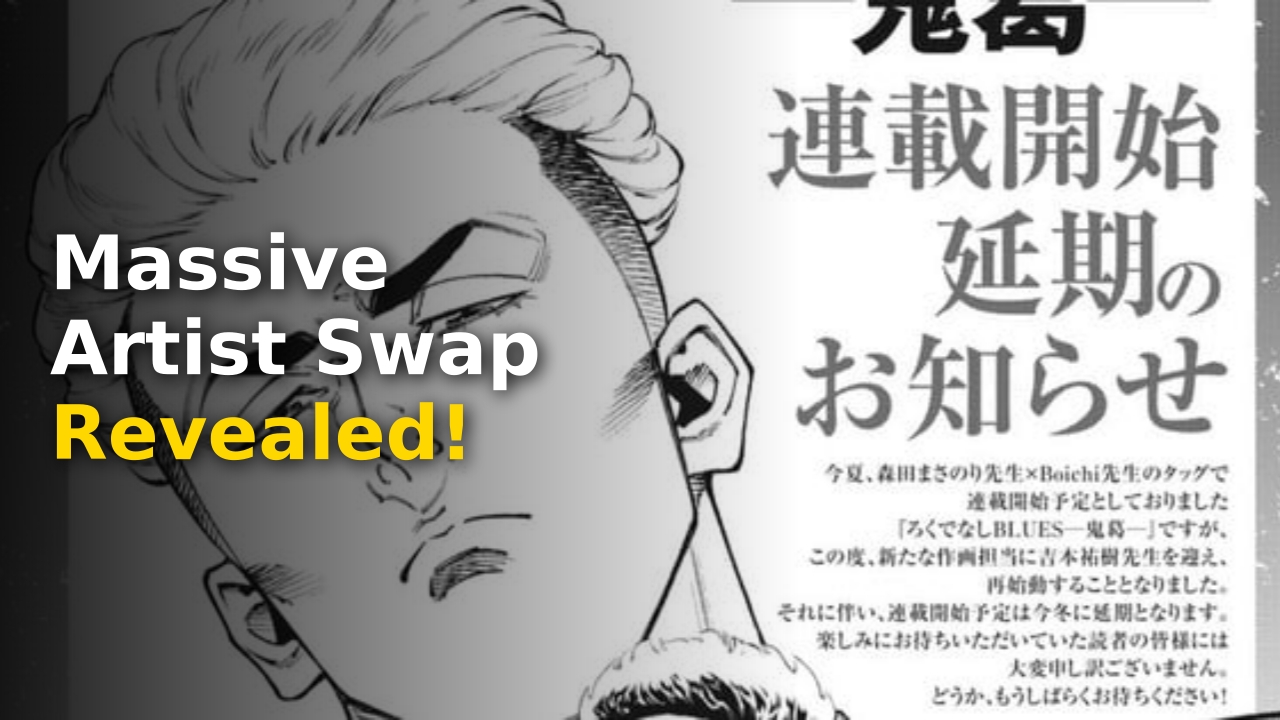
You likely thought your summer was going to be dominated by the return of the world’s most iconic high school boxing saga, but Shueisha just dropped a bomb on your schedule. The upcoming Rokudenashi Blues spin-off, titled Onikazura, has officially been delayed from its expected summer window to a cold winter release. This isn’t just a simple scheduling shift; the entire creative leadership of the project has undergone a seismic transformation that changes everything you know about the series. Originally, the industry was buzzing about Boichi taking the reins, but the torch has now been passed to the visionary Yuki Yoshimoto. This pivot ensures that the legendary delinquent world created by Masanori Morita will have a completely different visual flavor than fans initially anticipated.
The core of this news revolves around the 18th issue of Shueisha’s Grand Jump magazine, which confirmed the delay of Rokudenashi Blues Gaiden: Onikazura on August 19. This story is not a sequel but a prequel of sorts, focusing on a fight between two of the four heavenly kings that was never shown in the original run. Specifically, the narrative centers on Onizuka and Kasai during the early 1990s, offering a raw look at the power struggle in Tokyo. While the wait might be frustrating, the transition to Yuki Yoshimoto suggests a deep respect for the gritty, detailed aesthetic required for such a classic franchise. For more updates on entertainment news, you can check out Bright Celebrity for the latest scoops on your favorite creators.
The Shocking Rokudenashi Blues Shift
The announcement that the Rokudenashi Blues spin-off would miss its summer debut came as a massive surprise to the veteran manga community. Shueisha has high stakes in this project because the original series is a cornerstone of the delinquent genre, having sold millions of copies. The decision to move the launch to winter suggests that the editorial team is prioritizing quality over a rushed release window. It also gives the new artist, Yuki Yoshimoto, enough breathing room to master the character designs of Onizuka and Kasai. These characters carry a heavy legacy, and fans expect nothing less than perfection from their visual representation.
Switching artists mid-development is a rare move for a franchise of this magnitude, especially when the initial artist was a superstar like Boichi. Boichi, famous for his work on Dr. Stone and Sun-Ken Rock, was expected to bring his trademark anatomical precision to the boxing matches. However, the move to Yoshimoto indicates a potential shift toward a style that might align more closely with the 1990s vibe. Yoshimoto recently concluded the Ghost in the Shell: The Human Algorithm manga, proving his ability to handle complex, pre-existing intellectual properties with grace. This artist swap is arguably the most discussed aspect of the delay among the hardcore Japanese readership.
The delay also allows the marketing machine at Shueisha to build more hype through the autumn months. They are likely planning a series of promotional campaigns that will highlight the “unseen fight” between Onizuka and Kasai. This specific plot point has been a mystery for nearly thirty years, making it a gold mine for nostalgia-driven sales. By pushing the release to winter, the publisher can capitalize on the lucrative end-of-year holiday market in Japan. Fans are already speculating that this could lead to a massive physical volume release by mid-2027.
The Evolution of Shueisha’s Grand Jump
Grand Jump has become a sanctuary for legendary manga properties that are looking for a more mature, refined audience. The magazine frequently hosts spin-offs and sequels to Weekly Shonen Jump classics, catering to readers who grew up in the 80s and 90s. This strategic placement of the Onikazura story ensures that it reaches the demographic most likely to appreciate the 1990s setting. The editorial standards at Grand Jump are notoriously high, which further explains why the delay was necessary to accommodate the artist change.
The magazine’s decision to pivot to Yuki Yoshimoto might be rooted in the artist’s ability to depict urban environments. Since the story is set in the first half of the 1990s, capturing the specific atmosphere of Tokyo during that era is crucial. Yoshimoto’s previous work demonstrates a keen eye for architectural detail and technological aesthetics, which will serve the gritty streets of the story well. This focus on environmental storytelling is a hallmark of the delinquent genre that Morita originally perfected.

Diving into the Onikazura Mystery
Masanori Morita first teased the world with this project on X/Twitter back in January, sparking a wave of speculation about the timeline. He clarified that the story would take place in the early 90s, effectively filling a gap in the original manga’s chronology. This is a brilliant move because it avoids the pitfalls of a sequel where characters are aged up beyond their prime. Instead, it places us back in the high-stakes world of high school rivalries and brutal boxing matches that defined an entire generation. The focus on the “four heavenly kings” ensures that the narrative tension is built-in from the very first chapter.
The choice of Onizuka and Kasai as the primary focus is a dream come true for many long-term fans. In the original series, these two were often overshadowed by the main protagonist, Taison Maeda, yet they held immense charisma. Exploring the specific friction between them during a period that was “never depicted” allows Morita to expand the lore without retconning established facts. It’s a delicate balancing act that requires a deep understanding of the character motivations he created decades ago. This story promises to answer questions about their rivalry that have lingered since the series ended in 1997.
Morita’s involvement as the creator ensures that the spirit of the original remains intact despite the artist change. While Yuki Yoshimoto will be handling the pen, the storyboards and narrative direction are likely closely monitored by the master himself. This collaboration between a legendary creator and a rising star in the art world is a common practice in modern manga. It allows for a fresh visual perspective while maintaining the thematic consistency that fans demand. The winter release will be the ultimate test of whether this partnership can capture the magic of the Kichijoji boxing scene.
Exploring the Four Heavenly Kings
- Taison Maeda: The undisputed central figure of the series, a boxing prodigy at Teiken High School.
- Onizuka: A formidable leader from Shibuya known for his terrifying strength and iron-fisted rule.
- Kasai: The powerhouse from Ikebukuro whose fighting style is as brutal as his personality.
- Yakushiji: The sophisticated yet deadly fighter from Asakusa who rounds out the legendary quartet.
The dynamics between these four characters formed the backbone of the series’ most intense arcs. By isolating Onizuka and Kasai for a dedicated spin-off, Morita is leaning into the fan-favorite “power struggle” tropes. These characters didn’t just represent different schools; they represented different philosophies of strength and honor in the Tokyo underground. The new manga will likely delve into the origins of their mutual respect or the catalysts of their deepest animosities. This deep character study is what separates this series from standard fighting manga.
Legendary Rokudenashi Blues Historical Data
To understand the weight of this delay, one must look at the immense history of the franchise since its 1988 debut. The original manga ran for nearly a decade, producing 42 volumes of high-intensity boxing and delinquent drama. It wasn’t just a comic; it was a cultural phenomenon that defined the “furyo” (delinquent) subculture in Japan. Its influence can still be seen today in modern hits like Tokyo Revengers. You can find more about the series’ historical impact on its official Wikipedia page.
The franchise’s success wasn’t limited to the printed page, as it quickly expanded into multiple media formats. From anime films in the early 90s to live-action television series in 2011, the story of Taison Maeda has remained relevant. The consistency of these adaptations shows that the core themes of friendship, boxing, and honor are timeless. The new spin-off is simply the latest chapter in a story that refuses to stay down. The transition of the art style from Morita’s original hand to Yoshimoto’s modern touch is a significant milestone in this timeline.
| Category | Original Series Details | New Spin-off (Onikazura) |
|---|---|---|
| Primary Author | Masanori Morita | Masanori Morita |
| Lead Artist | Masanori Morita | Yuki Yoshimoto |
| Original Run | 1988 – 1997 | Winter 2026 (Launch) |
| Total Volumes | 42 Tankobon | TBA |
| Setting | Kichijoji, Tokyo | Tokyo (Early 1990s) |
The Impact of the Artist Swap
Losing an artist of Boichi’s caliber would usually be a death sentence for a spin-off, but Yuki Yoshimoto is a stellar replacement. Yoshimoto’s experience with the Ghost in the Shell franchise suggests he is capable of handling the heavy responsibility of a legacy title. His art style is characterized by a sleekness that modernizes older designs without losing their core identity. This is exactly what a series from the late 80s needs to survive in the competitive market of 2026. The shift from summer to winter gives Yoshimoto the time to perfectly replicate the iconic fashion and atmosphere of the 90s.
Fans are particularly curious about how Yoshimoto will handle the kinetic energy of a boxing match. Morita’s original work was famous for its heavy lines and the tangible sense of impact during fights. Boichi would have brought a hyper-realistic, muscular approach to these scenes. Yoshimoto, on the other hand, might focus more on the flow of the combat and the psychological intensity of the fighters. This subtle change in visual storytelling could redefine how we perceive the combat within the franchise’s universe. It is a bold experiment by the editorial team at Shueisha.
Furthermore, the collaboration between Morita and Yoshimoto might open doors for more spin-offs in the future. If Onikazura is a success despite the delay and the artist change, we might see stories centered on other characters like Yakushiji. The manga industry is currently in an era of revivals and deep-dives into classic lore. This project serves as a litmus test for how much appetite there is for the Rokudenashi Blues brand in the modern age. The winter release will likely be accompanied by massive digital marketing campaigns to ensure a wide reach.
Analyzing Yuki Yoshimoto’s Previous Work
Yuki Yoshimoto is best known for his work on Ghost in the Shell: The Human Algorithm, which launched in 2019. In that series, he demonstrated an incredible ability to draw detailed urban landscapes and expressive character faces. These skills are directly transferable to the world of delinquent manga, where the setting is just as important as the characters. The ability to render the grittiness of Tokyo streets will be essential for the Onizuka and Kasai story. His work on the Comic Days app has also shown that he can maintain a high-quality output on a consistent schedule.
Yoshimoto’s style is often described as being very clean yet capable of conveying immense depth. This contrasts with the rougher, more traditional delinquent style of the original 1980s manga. This contrast might be exactly what the franchise needs to appeal to younger readers who are accustomed to modern digital art. By blending Morita’s classic character concepts with Yoshimoto’s contemporary execution, the project aims to bridge the generational gap. This artistic fusion is one of the most exciting aspects of the upcoming winter launch.

The Enduring Legacy of Masanori Morita
Masanori Morita is more than just a mangaka; he is a chronicler of Japanese youth culture. His works like Rookies and Beshari Gurashi have consistently explored the themes of ambition, failure, and redemption. With the return of Rokudenashi Blues, Morita is revisiting the world that first made him a superstar. Even though he isn’t drawing the new series, his DNA is present in every plot point and character beat. He has a unique talent for creating flawed, relatable protagonists who find meaning through struggle and physical competition.
The 1990s setting of Onikazura is a tribute to the era where Morita’s influence was at its peak. During this time, the “furyo” genre was a dominant force in Japanese entertainment, influencing fashion and social attitudes. By returning to this time period, Morita is tapping into a profound sense of nostalgia. However, he is also challenging himself by telling a story that fits perfectly within the existing timeline. This requires a level of narrative precision that only a veteran creator can manage after so many years away from the characters.
As we look toward the winter release, the excitement for this project continues to grow despite the initial disappointment of the delay. The change in artist and the extended development time suggest that everyone involved is dedicated to making this a masterpiece. Whether you are a fan of the original 42 volumes or a newcomer curious about the legends of Teiken High, this is a must-watch event. The Rokudenashi Blues saga is finally coming back, and the fight between Onizuka and Kasai promises to be worth the wait. This winter, the streets of Tokyo will once again belong to the kings of the delinquent world.
Why This Delay Might Be a Blessing
In the world of manga, a delay often signifies that the creators are taking the time to fix issues that would have otherwise ruined the launch. Whether it was creative differences or the need for more research into the 90s setting, the extra months are invaluable. Yuki Yoshimoto now has the opportunity to fully immerse himself in the world Morita built. This ensures that when the first chapter finally hits the pages of Grand Jump, it will meet the astronomical expectations of the fan base. A rushed project rarely survives the scrutiny of hardcore enthusiasts.
The winter launch also places the series in a prime position for high-visibility promotions at major events like Jump Festa. This could lead to announcements of further adaptations or special merchandise that wouldn’t have been ready for a summer release. Strategic delays often lead to more robust ecosystem support for a new title. In the long run, fans will remember the quality of the art and story far longer than they will remember a few months of waiting. The countdown to winter has officially begun for the return of this legendary boxing titan.
More Like This
For more updates, check out our latest entertainment and sports news.