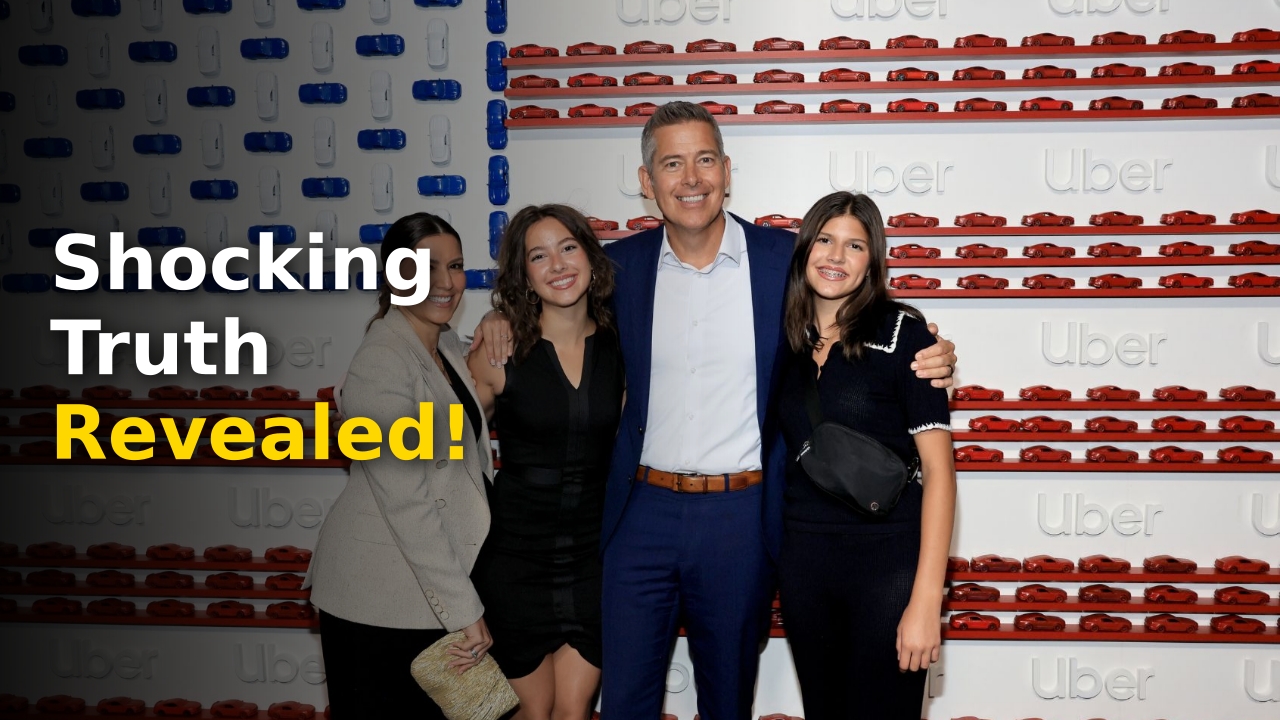
Road Grift has officially arrived on your screens, masquerading as a patriotic travelogue while serving up a masterclass in political optics and corporate synergy. Have you ever wondered if the high-profile tour of an American government official is actually a thinly veiled marketing campaign designed to appease billionaire financiers and private interests? As Transportation Secretary Sean Duffy traverses the country with his family in The Great American Road Trip, viewers are left to question whether they are watching a documentary or a taxpayer-funded infomercial for the modern political establishment.
This series, which aims to celebrate the 250th anniversary of the nation’s founding, feels less like an educational journey and more like a carefully curated reality show production. You are invited to follow the Duffy clan as they visit iconic landmarks, yet the underlying message frequently shifts toward the agenda of the current administration. For the discerning observer, this is a glaring example of how political branding now functions in the digital age, prioritizing perception over actual historical context.
Road Grift Exposed: Reality TV Cabinet
When you tune in to watch Sean Duffy, you aren’t just seeing a family vacation; you are witnessing the calculated performance of a Trump administration official. The premise of the show is simple on the surface, but the financial structure beneath it reveals a much more complex story. With corporations like United Airlines, Chase Travel, Toyota, and Boeing listed as sponsors, the line between government service and corporate advertising has all but vanished.
The logistical maneuvering behind The Great American Road Trip involves a 501(c)(4) entity known as Great American Road Trip, Inc. By routing funds through a nonprofit, the producers avoid the transparency typically required for government-linked projects. You have to ask yourself why a public servant would feel the need to hide behind such corporate barriers while claiming to tell an authentic story of American heritage. It is a bold play in a landscape where public trust is already at a fragile breaking point.

The spectacle of Sean Duffy name-dropping hedge fund billionaire Ken Griffin at the National Constitution Center is perhaps the most bizarre highlight of the entire series. When Duffy praises Griffin for purchasing a copy of the Constitution, he isn’t just speaking to his family; he is broadcasting a message of gratitude to the donor class. It creates an jarring disconnect for any viewer who understands the history of the Continental Congress, whose members certainly didn’t operate with the backing of hedge fund titans.
You might find it ironic that a show celebrating the roots of American democracy feels so disconnected from the average citizen’s reality. By framing a billionaire’s transaction as a patriotic act, the show attempts to redefine modern virtue in the eyes of its audience. This is exactly the kind of media manipulation that creates a Road Grift narrative, where the goal isn’t historical literacy but the preservation of a very specific, wealthy, and powerful political image.
Why The Audience Should Care
- The show is sponsored by companies that are directly regulated by the U.S. Department of Transportation.
- The narrative ignores the real-world struggles of families, focusing instead on a curated, patriarchal viewpoint.
- Ethical concerns regarding the use of public platforms for private, sponsored content remain largely unaddressed.
- The show’s exclusion of critical historical perspectives leaves a gaping hole in its educational value.
Corporate Sponsorships and Financial Disconnect
The financial backing of this venture reads like a Fortune 500 board meeting roster. Beyond the massive contributions from companies like Royal Caribbean and Google, there is the lingering question of the Politico-exposed pitch deck. With sponsorship tiers ranging from $100,000 to $1 million, the pressure to deliver a ‘pro-America’ product that avoids any conflict is immense. You aren’t watching history; you are watching a heavily edited advertisement that avoids the messy, complicated, and beautiful reality of our country.
The administrative costs are equally startling when you consider the scope of the 250th anniversary prep work. While the government siphoned roughly $90 million from National Parks visitor fees—including funds intended for the maintenance of Yellowstone—the production team treats these parks as mere backdrops for their reality show narrative. It is a stunning display of misplaced priorities that leaves the average taxpayer footing the bill while the Duffy family enjoys a luxury travel experience.
| Category | Impact |
|---|---|
| Corporate Sponsorship | High influence on production narrative |
| Taxpayer Oversight | Non-existent due to 501(c)(4) structure |
| Public Education | Limited to ahistorical, curated viewpoints |

Cultural Critique and Media Analysis
Beyond the politics, the show fails on a creative level. By attempting to sanitize the American experience, the producers have managed to make one of the most vibrant, diverse, and chaotic nations on Earth seem boring. Contrast this with the genuine appreciation found in social media content created by international travelers during the World Cup. These independent creators find joy in the mundane—the fast-food culture, the music scenes, and the authentic interactions that define us—while the Duffy show remains trapped in a bubble of neutral tones and ideological rigidity.
You deserve better than a manufactured reality that tells you who to love, what to fear, and how to view your own history. When Sean Duffy suggests that an Ivy League university like Harvard is a place designed to ‘corrupt’ young minds, he is engaging in a culture war tactic that serves to isolate the audience rather than educate them. It is a classic move designed to keep the viewer distracted from the systemic failures occurring within the administration itself. Check out current celebrity news updates to see how other figures are handling the shifting landscape of media accountability.
The show’s obsession with Rachel Campos-Duffy and their children serves as a humanizing layer, but even that feels orchestrated. From the medical scare in the Wyoming episode that turned out to be common constipation to the elaborate gender reveal for a future grandchild, the personal moments feel like content filler. They aren’t living a life; they are performing a script designed to reinforce a very specific version of the ‘American dream’—one that is strictly devout, patriarchal, and insulated from the actual struggles of the working class.
Ultimately, the show is a disservice to the intelligence of its audience. By ignoring the complexities of our history, the production team has erased the contributions of millions and replaced them with a sanitized, corporate-friendly version of events. You can learn more about the true, gritty history of the United States through resources like The National Archives, which offer a far more nuanced and honest account than any reality series produced by a government-aligned entity ever could.
The Final Verdict on Road Grift
In the final assessment, the project is a testament to the blurring lines between governance and entertainment. The Road Grift strategy is effective in creating memes and social media engagement, but it fails to build a lasting legacy. For those of you looking for a show that truly reflects the spirit of the American road trip, you are much better off looking at the classics or contemporary documentaries that actually engage with the landscape and the people living on it, rather than a show designed to push a political agenda.
As the sun sets on this 250th anniversary, we should demand more from those in power. We should expect transparency, historical honesty, and a respect for the institutions that define our republic. Until then, we are left to rubberneck at this terrible accident of a show, wondering how much further the influence of corporate power will stretch into our living rooms. Stay vigilant, keep questioning the narrative, and always look past the gloss of the screen.
More Like This
For more updates, check out our latest entertainment and sports news.