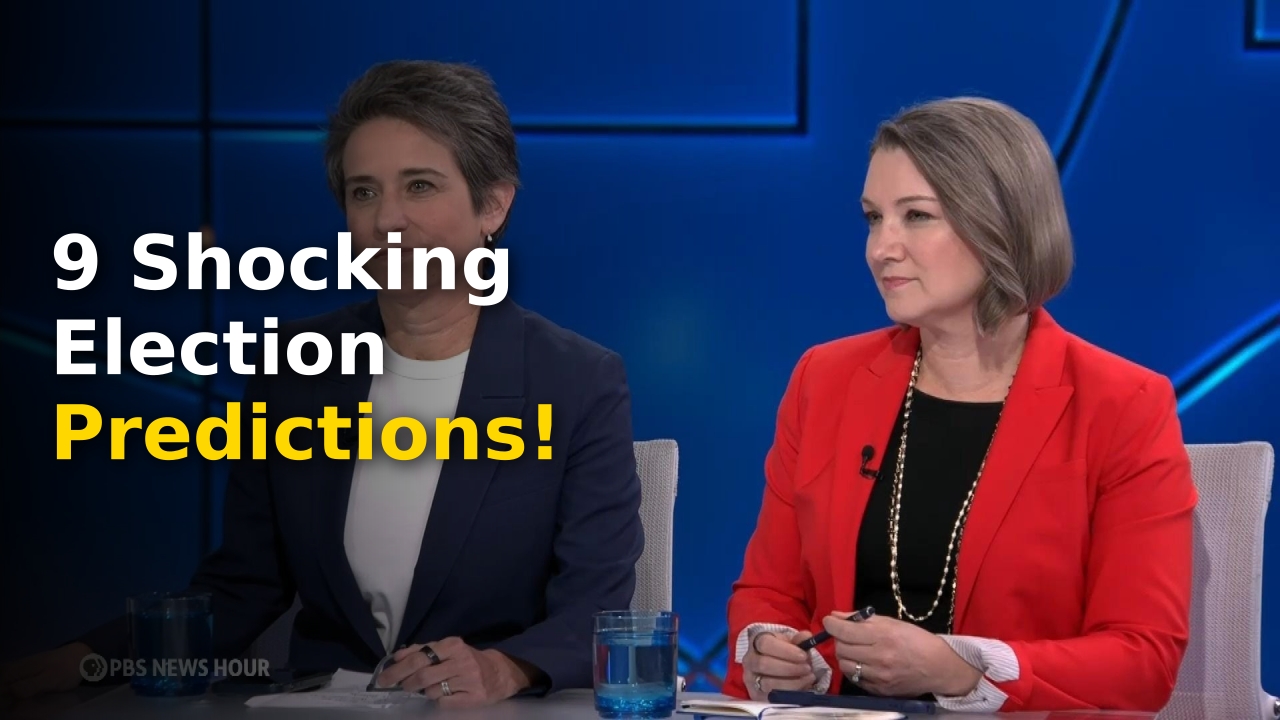
Do you realize that a handful of votes in a local primary can shift the entire trajectory of the United States for decades? Primary Races represent the ultimate gatekeeper of American democracy, determining who actually gets a shot at the big stage and who fades into political obscurity. When political heavyweights like Tamara Keith and Amy Walter sit down to discuss the stakes, you know the landscape is about to shift significantly.
Understanding the nuances of these internal party battles is the only way to predict the future of the nation. Most voters focus solely on the November finish line, but the real power plays happen months earlier in high-school gyms and local community centers. You need to look closer at the data to see the underlying fractures within the Democratic and Republican parties that will define the next decade of governance.
As the nation looks toward the March 4, 2025 joint session of Congress and the projected 2026 State of the Union, the groundwork is being laid right now. The experts at Reuters confirm that primary turnout often predicts general election enthusiasm, making these early contests the most reliable crystal ball we have. Let’s dive into the mechanics of these political machines and see what is really happening behind the scenes.
Keith and Walter Predictions
When Tamara Keith of NPR and Amy Walter of the Cook Political Report team up on PBS NewsHour, they bring a level of analytical depth that is rare in modern media. Their weekly “Politics Monday” segment has become a staple for anyone trying to navigate the choppy waters of American elections. They don’t just look at the polls; they look at the “why” behind the numbers, focusing on candidate quality and fundraising prowess.
Tamara Keith has spent years covering the White House, giving her a front-row seat to how executive power influences local contests. She often points out that a President’s endorsement can be a double-edged sword in certain districts. While it solidifies the base, it can also alienate the very moderates needed to win a general election. This tension is the primary engine of modern political drama.
Amy Walter, on the other hand, is the master of the electoral map. She tracks demographic shifts with surgical precision, noting how suburban voters are moving away from traditional alignments. Her insights into the “swing factor” help identify which Primary Races are merely ceremonial and which ones are a fight for the party’s very soul. You cannot understand the current political climate without monitoring her seat-by-seat breakdowns.

The duo recently analyzed the fallout of the 2024 Presidential Election, specifically how Kamala Harris addressed her supporters after the loss. This moment created a vacuum in the Democratic Party, leading to a surge of new contenders. These emerging leaders are now testing their messages in early contests, hoping to capture the energy of a base that is looking for a fresh direction.
They also keep a close eye on the Republican side, where the influence of Donald Trump remains the single most important factor. Whether it is an impeachment trial or a State of the Union address, every move the former President makes ripples through the GOP. His ability to pick winners and losers in a primary remains an unprecedented phenomenon in American history.
Finally, these experts remind us that politics is ultimately about people. Whether it is Bruce Springsteen finding America in song or a novelist like Margaret Atwood finding meaning through words, the cultural narrative shapes the political one. The candidates who can tell the most compelling story are usually the ones who emerge victorious from the grueling primary process.
Key Analysis Points
- The impact of high-profile endorsements on local voter enthusiasm.
- Shifting demographics in the Sun Belt affecting traditionally safe seats.
- The role of small-dollar donations in bypassing traditional party leadership.
- How social media algorithms prioritize polarizing primary candidates.
- The historical trend of the incumbent party losing ground in mid-term cycles.
Analyzing Key Primary Races
In the current cycle, certain Primary Races have taken on a life of their own, drawing national attention and massive amounts of out-of-state funding. These contests are no longer local affairs; they are proxy wars for the national ideological struggle. You can see this most clearly in districts where a moderate incumbent is facing a well-funded challenge from the further left or right.
The PBS NewsHour team has highlighted that these battles are often more expensive than the general elections that follow. This is because winning the primary in a “safe” district is effectively winning the seat. For many candidates, the primary is the only race that matters, leading to aggressive campaigning and sharp negative advertising that can leave a party divided.
We are seeing a particular focus on states like Montana and Alabama, where local issues like childhood trauma and criminal justice reform are taking center stage. While national media focuses on Washington D.C., these regional battles are where policy is actually forged. The candidates who win here will bring these specific local concerns to the national floor in 2025 and 2026.
One of the most fascinating aspects of these Primary Races is the “celebrity” factor. As detailed on brightcelebrity.com, the line between entertainment and politics is blurring faster than ever. We see activists, business moguls, and even media personalities jumping into the fray, betting that their name recognition can overcome a lack of traditional political experience.
This trend has led to some of the most Shocking upsets in recent memory. When a political newcomer unseats a twenty-year veteran, it sends shockwaves through the Capitol. It forces party leadership to rethink their entire strategy and often leads to a shift in the legislative agenda. These are the moments where the future is truly written.
Furthermore, the Primary Races are the first real test of new voting laws and district maps. Following the 2020 Census, many states redrew their lines, creating entirely new political realities. Voters are often surprised to find themselves in a new district with a completely different set of candidates, leading to confusion and lower-than-expected turnout in some areas.
Primary Success Factors
- Candidate ability to connect with rural and urban voters simultaneously.
- The mastery of digital town halls and virtual campaigning.
- Direct engagement with grassroots organizers and local activists.
- Clear policy platforms regarding healthcare and economic recovery.
- Navigating the legacy of past administrations and their policy failures.
Data and Strategic Metrics
To truly understand Primary Races, you must look at the hard data. The numbers don’t lie, and they often tell a different story than the pundits on cable news. By examining fundraising totals, early voting numbers, and polling trends, we can see which candidates are gaining genuine momentum and which are merely coasting on name recognition.
The cost of entry for a competitive primary has skyrocketed. In some high-profile districts, a candidate needs to raise millions just to be taken seriously. This financial barrier to entry is a major point of contention, leading many to call for campaign finance reform. However, for now, the ability to raise cash remains a primary indicator of a candidate’s viability and organizational strength.
We also have to consider the role of Super PACs. These organizations can spend unlimited amounts of money to support or oppose a candidate, often flooding the airwaves with ads in the final weeks of a campaign. This outside influence can drastically alter the trajectory of a race, sometimes turning a sure-win into a nail-biting loss overnight.

| Candidate Archetype | Primary Strategy | Key Risk | Potential Impact |
|---|---|---|---|
| The Establishment Incumbent | Focus on experience and stability | Seen as “out of touch” with base | Maintains party status quo |
| The Ideological Firebrand | Energize the extremes of the party | Unpalatable to general voters | Shifts the national conversation |
| The Business Outsider | Run on private sector efficiency | Lack of political machinery | Disrupts traditional alliances |
Voter turnout in these Primary Races is another critical metric. Historically, primary voters are older, more partisan, and more politically engaged than the general electorate. This means that a candidate must cater to the most passionate members of their party to survive. This “pull to the edges” is why we see so much polarization in Washington today.
Polling in primaries is notoriously difficult. Unlike general elections where partisan leanings are clear, primary voters are choosing between members of the same party. This makes the results highly volatile and prone to late-breaking shifts. A single gaffe in a debate or a viral moment on the campaign trail can completely reset the race in a matter of hours.
The influence of early voting and mail-in ballots cannot be overstated. In many states, a significant portion of the electorate has already cast their vote before the final campaign blitz. This requires candidates to sustain their momentum over a longer period, rather than just peaking on election day. It’s a marathon, not a sprint, and the ones who manage their resources best usually come out on top.
Future Election Cycle Trends
Looking ahead, the 2026 cycle is already casting a long shadow over current events. The Primary Races occurring now will determine the bench of talent for the next presidential contest. We are seeing a younger generation of leaders emerging, many of whom were shaped by the social movements of 2020 and the economic disruptions of the pandemic.
The Republican National Convention and Democratic National Convention schedules are already being finalized, with cities competing to host these massive media events. But the real work is happening in the trenches. In every state, party organizers are identifying the next wave of candidates who can carry their banner into the future.
One of the biggest trends to watch is the rise of “non-partisan” primaries in some states. These systems put all candidates on a single ballot, with the top two vote-getters moving on to the general election regardless of party. This experiment in California and Alaska is being watched closely as a potential solution to the extreme polarization driven by traditional Primary Races.
We are also seeing a shift in how candidates use technology. From AI-generated campaign ads to sophisticated data-mining operations, the tools of the trade are evolving at a breakneck pace. The Primary Races of the future will be won as much in the digital cloud as they are on the physical doorsteps of voters. You should expect to see more personalized and targeted messaging than ever before.
The State of the Union addresses in 2025 and 2026 will likely be used as platforms to set the national primary agenda. Presidents have long used these speeches to signal their priorities and challenge their opponents. For a primary challenger, these high-profile moments provide an opportunity to offer a counter-narrative and build their own national profile.
Ultimately, the health of American democracy depends on the quality of these contests. When Primary Races are competitive and focused on substantive issues, they produce better leaders and more engaged citizens. When they descend into personal attacks and misinformation, they erode the foundations of the system. The stakes couldn’t be higher, and the world is watching.
The Ultimate Primary Summary
In the end, you must realize that the outcome of these Primary Races is not just about who wins a seat in Congress. It’s about the soul of the country and the direction of our collective future. Tamara Keith and Amy Walter continue to provide the essential context we need to make sense of it all, but the final decision rests with the voters.
As we head into the next several months of campaigning, keep your eyes on the data and the demographics. Don’t get distracted by the noise and the Shocking headlines that are designed to provoke rather than inform. Look for the candidates who are offering real solutions to the complex problems we face, from the cycle of childhood trauma to the challenges of criminal justice reform.
The road to 2026 is long and winding, but it starts with the Primary Races. Whether you are a political junkie or a casual observer, staying informed is your most powerful tool. The experts at PBS NewsHour will be there to guide us, but the power is in your hands to decide which path the nation will take next.
More Like This
For more updates, check out our latest entertainment and sports news.