Have you ever wondered how much political pressure is applied behind closed doors at the highest levels of the federal government? A stunning complaint detailing systemic political pressure within administrative probes has recently surfaced. This explosive development has forced legal experts and academic leaders to completely re-evaluate the integrity of federal civil rights enforcement.
The critical details of this whistleblower report point to a highly coordinated campaign orchestrated by a special task force. It suggests that administrative actions were deeply influenced by partisan objectives rather than objective legal facts. You will find that the implications of these revelations stretch far beyond the walls of elite universities.
Political pressure unmasked
The whistleblower, a former Justice Department lawyer, details how political pressure dictated administrative decisions. This professional worked directly within the civil rights division during the crucial oversight period. The individual decided to speak out after witnessing what they described as a total abandonment of standard investigative protocols.
According to the document, intense political pressure was placed directly on career attorneys. Investigators were repeatedly instructed to find violations even when the factual record did not support those conclusions. This forced-march approach created immense friction between career civil servants and political appointees in Washington.
Secret DOJ motives
- The primary goal was to secure rapid, high-profile settlements before the upcoming election cycle.
- Officials aimed to use the prestigious reputation of Ivy League schools to generate massive media coverage.
- Career attorneys were told to minimize the collection of exonerating evidence from the school files.
- The task force sought to establish a precedent of federal intervention in private university administration.
This relentless political pressure bypassed normal evidence collection. Investigators who requested more time to conduct thorough interviews were systematically denied. Instead, the focus remained entirely on drafting settlement demands that could be leaked to the press.
Many legal experts believe these actions compromised the neutral arbiter role of the Justice Department. By predetermining the outcomes of these complex investigations, the administration risked long-term legal damage. The whistleblower emphasizes that this pattern of behavior was not an isolated incident but a deliberate strategy.
Under mounting political pressure, civil servants were forced to draft settlement terms. These terms often included heavy financial penalties and intrusive federal monitoring programs. The schools were given almost no time to review the findings or present a formal defense.

Targeted Ivy League giants
The investigations did not target random institutions but focused heavily on the nation’s most prestigious academic centers. Places like Harvard University and Yale became the central battlegrounds for this aggressive policy. By targeting these iconic brands, officials knew they would capture the attention of the entire nation.
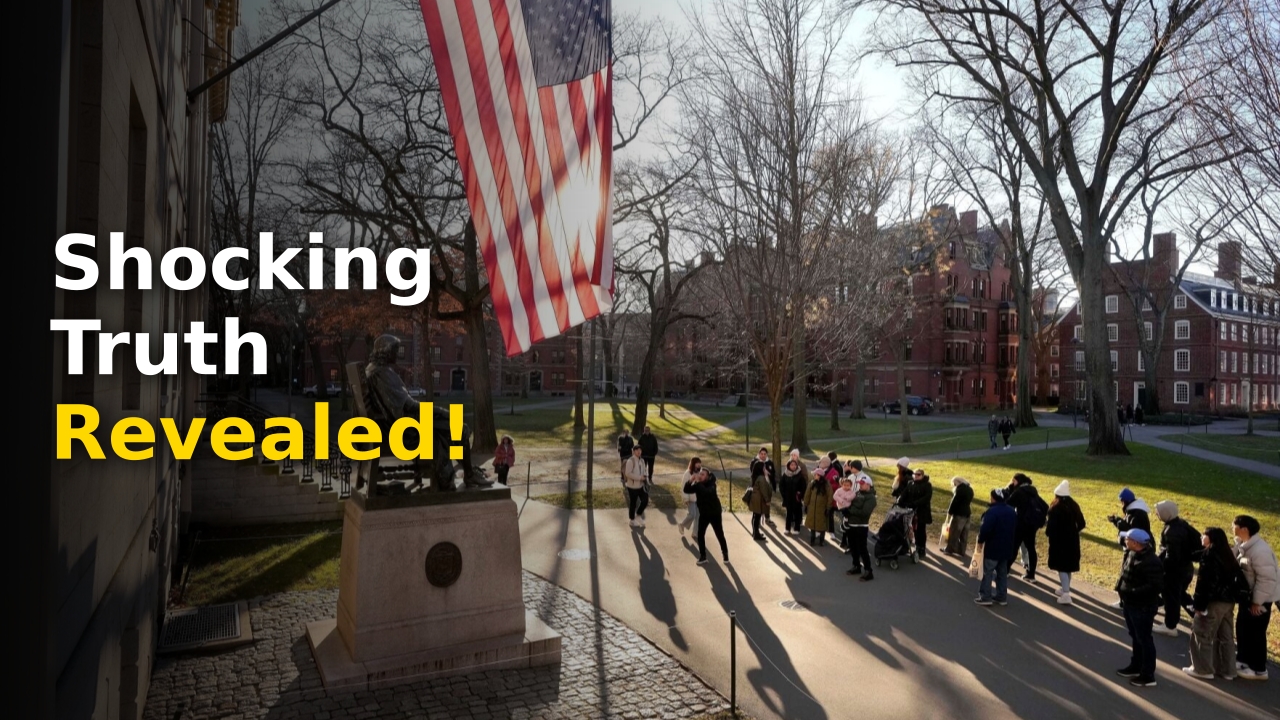
Administrators realized that the political pressure aimed to force immediate compliance. On January 2, 2024, crowds gathered near the John Harvard statue in Cambridge, Mass. as news of the federal probe spread. The intense public scrutiny made it incredibly difficult for the university to mount a standard legal defense.
Harvard campus tension
- Students and faculty experienced a highly polarized environment as federal investigators arrived on campus.
- The university administration had to balance compliance requests with their duty to protect academic freedom.
- Internal legal teams worked around the clock to address the rapidly evolving federal demands.
- The public relations damage began to impact donor relations and future research partnerships.
The whistleblower details how federal agents used the ongoing campus tension to accelerate their demands. They reportedly threatened the university with immediate funding freezes if they did not sign the proposed settlements. This leverage was incredibly powerful, given the billions of dollars in federal research grants at stake.
Many academic leaders felt that the federal government was using their institutions as political props. The rushed nature of the probes left no room for genuine dialogue or cooperative problem-solving. This created a highly defensive posture that hindered real progress on campus.
Financial freeze threats
- Federal officials threatened to freeze hundreds of millions of dollars in vital scientific research grants.
- The administrative threats bypassed the standard warning periods typically required by federal law.
- University financial officers warned that even a temporary freeze could disrupt critical medical studies.
- The aggressive tactics successfully forced several schools to consider settlements they otherwise would have fought.
The financial leverage wielded by the government was unprecedented in modern civil rights enforcement history. By targeting the core funding of these institutions, officials ensured they had complete attention. The whistleblower highlights this tactic as a clear abuse of administrative power designed to bypass the court system.
Federal probe outcomes
The final reports produced by the task force were highly criticized by career staff for their lack of substance. Many of the allegations could not be verified through standard investigative techniques. Yet, the pressure to publish negative findings remained incredibly strong throughout the process.
Critics argue that applying political pressure to legal investigations damages overall credibility. When federal agencies prioritize headlines over facts, the public lose faith in the rule of law. This case serves as a warning sign for how easily administrative power can be diverted from its original purpose.
Predetermined legal targets
- A list of target schools was allegedly compiled before any formal complaints had been received.
- Investigators were instructed to search for specific infractions that fit a pre-packaged narrative.
- The legal theories used to justify the investigations were highly aggressive and untested in court.
- Career staff warnings about the lack of evidence were systematically scrubbed from final memos.
The reverse-engineered nature of these probes shocked many veteran investigators within the department. They noted that standard procedures require a complaint to trigger an investigation, not the other way around. This irregularity is a central pillar of the whistleblower’s formal disclosure.
When federal agencies yield to political pressure, the integrity of the civil rights process is compromised. The whistleblower argues that this compromise has lasting effects on how future administrations will handle similar cases. It establishes a dangerous precedent where legal standards are treated as secondary to political outcomes.
Civil rights overreach
- The enforcement of Title VI of the Civil Rights Act of 1964 was heavily politicized during this period.
- Standard definitions of discrimination were expanded far beyond established legal precedent.
- The administrative overreach created confusion among compliance officers at universities nationwide.
- Legal scholars warned that the aggressive tactics could lead to a significant backlash against civil rights laws.
The twisting of civil rights laws for partisan gain is perhaps the most damaging aspect of this controversy. It undermines the very laws designed to protect vulnerable students from discrimination. The whistleblower hope that their disclosure will prompt a return to objective, evidence-based enforcement.
Key investigation data
To understand the sheer speed of these administrative actions, one must look at the data. The task force operated at a pace that left career staff completely unable to conduct standard due diligence. This expedited timeline is a clear indicator of the unusual nature of these investigations.
In several cases, the administrative data highlights how political pressure accelerated the standard timeline. Investigations that typically take years were wrapped up in a matter of weeks. This rush to judgment left many critical questions unanswered and created significant legal vulnerabilities.
| Investigation Phase | Standard Timeline (Days) | Expedited Timeline (Days) |
|---|---|---|
| Initial Case Review | 90 to 180 Days | 15 to 30 Days |
| On-Site Evidence Gathering | 120 to 240 Days | 20 to 45 Days |
| Legal Finding Preparation | 90 to 120 Days | 10 to 15 Days |
| Settlement Negotiation | 180 to 360 Days | 30 to 60 Days |
This stark contrast in timelines demonstrates how the traditional legal process was systematically dismantled. The speed of these actions prevented universities from fully cooperating, as they were often presented with demands before they could gather their own data. This lack of due process is a central theme of the whistleblower’s complaint.
As the public parses this data, the calls for systemic reform are growing louder. Congressional committees are reportedly planning hearings to investigate the methods used by the task force. They want to ensure that future investigations are conducted with the highest standards of fairness.
To stay updated on how these ongoing governmental shifts impact academic institutions and wider societal trends, check out the latest reports from independent celebrity news and cultural shifts.

Political pressure fallout
Ultimately, the alleged political pressure raises serious questions about federal oversight. The revelations have sparked a massive debate among legal scholars, policymakers, and university administrators. Many are calling for immediate legislative fixes to protect federal agencies from political interference.
The whistleblower’s disclosure serves as a powerful reminder of the importance of administrative independence. Without clear firewalls between political appointees and career staff, the integrity of federal investigations is always at risk. This case will likely be studied by legal scholars for decades to come.
The lessons learned from this era of extreme political pressure will guide future reformers. It is clear that the current safeguards are not sufficient to prevent the weaponization of civil rights laws. Stronger protections for career staff and whistleblowers are desperately needed.
Academic institutions are also taking steps to better protect themselves from future federal overreach. They are investing heavily in compliance programs and building stronger legal coalitions. This cooperative approach will help them withstand future administrative storms.
Ensuring that federal oversight remains free from partisan political pressure is a crucial task ahead. The health of our democracy depends on the fair and objective application of the law. This whistleblower has taken a brave first step, but the work of restoring integrity to our federal systems has only just begun.
More Like This
For more updates, check out our latest entertainment and sports news.