Key Takeaways
| Passing: Iconic Argentine-Italian singer-songwriter Piero passed away at age 81 at Hospital Italiano in Buenos Aires. |
| Cultural Impact: Best known for anthems like ‘Mi Viejo’ and ‘Soy Pan, Soy Paz, Soy Más,’ defining Latin American protest and folk music. |
| Exile & Activism: Forced into European exile following Argentina’s 1976 coup before returning in 1981 to spearhead eco-social initiatives. |
| Ecological Legacy: Established over 200 organic community farms across Argentina supporting vulnerable youth during the 1990s. |
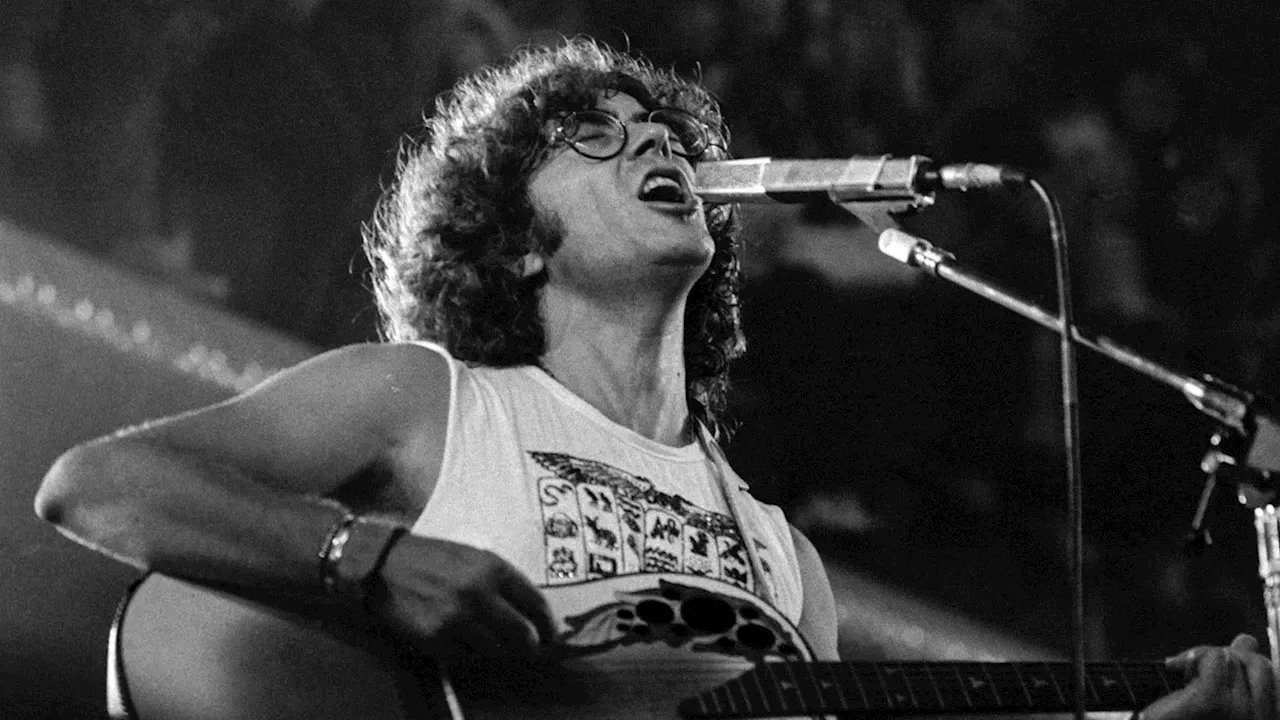
If you have ever listened to the defining voices of Latin American social consciousness, you know that Piero dead at 81 marks the heartbreaking end of a transcendent musical era. The legendary singer-songwriter, full name Piero Antonio Franco De Benedictis, died on October 7 at the Hospital Italiano in Buenos Aires, surrounded by his loved ones. His family officially confirmed the solemn news across social media, sparking an immediate outpouring of international grief from fellow musicians, political historians, and millions of devoted listeners across the globe.
For over five decades, Piero served as the poetic conscience of the Americas, crafting acoustic narratives that confronted authoritarian oppression, honored everyday working-class struggles, and championed unshakeable community solidarity. From the immortal fatherly tribute of ‘Mi Viejo’ to the unifying peace hymn ‘Soy Pan, Soy Paz, Soy Más,’ his melodies provided comfort during military dictatorships and societal transitions. Explore more about unforgettable music milestones at brightcelebrity entertainment updates as the world pays tribute.
News of Piero dead at 81 resonates across multiple generations who grew up viewing his lyrics not simply as artistic expression, but as practical anthems of survival and resistance. His creative output bridged the gap between raw folk traditions and modern socially conscious songwriting, establishing a gold standard across the Southern Cone.
Piero Dead at 81: Musical Legacy Explained
Born in Gallipoli, Apulia, Italy, in 1945, Piero emigrated to Argentina with his family when he was just three years old, fleeing the immediate aftermath of post-World War II Europe. By the time he reached his mid-twenties, his deep vocal resonance and keen observational lyricism transformed him into a household name across South America. His creative synergy with renowned poet and journalist José Tcherkasky became one of the most prolific songwriting partnerships in modern Hispanic music history, chronicling urban poverty and human vulnerability.
The duo struck an immediate chord with ‘Mi Viejo’ (1969), an introspective ballad inspired by aging fathers that became a massive international phenomenon across Colombia, Mexico, Spain, and Chile. Orchestrated by celebrated maestro Jorge López Ruiz, Piero’s records balanced refined instrumentation with an unflinching street-level authenticity. To track how timeless icons shape modern culture, check out brightcelebrity music features covering pivotal artistic shifts.
Yet it was his political defiance that solidified his iconic status. Anthems like ‘Los Americanos’ and ‘Para El Pueblo Lo Que Es Del Pueblo’ criticized imperialist aggression and defended ordinary laborers, making him a prime target for military censors. The authoritative profile available via Piero De Benedictis on Wikipedia documents how his courageous compositions routinely challenged censorship boards.

The Repression Era and European Exile
Following the brutal Argentine military coup of March 24, 1976, state surveillance and severe threats against dissenting voices forced Piero into harrowing overseas exile. Seeking safety away from authoritarian persecution, the singer resettled first in Italy and subsequently outside Madrid, Spain, where he briefly left touring behind to work as a farm laborer. Despite physical displacement, his artistic output never ceased, preserving cultural memory during dark geopolitical periods.
- Forced Departure: Escaped political persecution under the Argentine military junta in 1976 after blacklisting.
- European Grounding: Cultivated agricultural routines near Madrid while writing reflective acoustic tracks.
- Latin Solidarity: Deepened creative and humanitarian networks across Colombia, nurturing lifelong creative ties.
- Repertoire Expansion: Reinterpreted regional folk standards like Víctor Jara’s timeless ‘Te Recuerdo, Amanda’.
These intense periods of separation sharpened Piero’s lyrical intent, demonstrating that distance could not break his emotional ties to Latin American working families. Learn more about influential entertainment journeys through brightcelebrity arts coverage.
Historical Timeline of Piero Career Milestones
Piero maintained an exceptionally versatile career spanning over five decades. From underground folk cafes to historic stadium concerts alongside cultural powerhouses like Mercedes Sosa, his trajectory mirrors the complex modern political history of Latin America. The data below traces his essential milestones across key eras.
| Year | Career Milestone | Historical Significance |
|---|---|---|
| 1945 | Birth in Gallipoli, Italy | Emigrated to Argentina at age 3, blending Italian origins with Argentine folk identity. |
| 1969 | Release of ‘Mi Viejo’ | Achieved massive commercial and critical acclaim across the entire Spanish-speaking world. |
| 1976 | Exile to Spain & Italy | Forced out following Argentina’s military coup; spent half a decade organizing overseas. |
| 1981 | Return & Formation of Prema | Pioneered acoustic rock fusion; participated in Mercedes Sosa’s Ópera Theater comeback. |
| 1995 | Eco-Farm Network Launch | Established over 200 ecological farms in Campana supporting marginalized teenagers. |
| 2026 | Passing in Buenos Aires | Concluded a legendary 81-year life leaving behind an extensive musical and social archive. |

The Return, Prema, and Social Reform
As the Argentine military dictatorship began to fracture in 1981, Piero prepared his triumphant return home. He assembled the band Prema alongside gifted musicians he encountered during European exile, including guitarists Amadeo Álvarez and Daniel Manzini. The ensemble soon expanded to feature keyboard maestro Babu Cerviño and dynamic drummer Juan Carlos ‘El Negro’ Tordó, creating a rich hybrid of progressive folk and melodic rock.
This resurgence coincided with iconic public celebrations. Piero joined Mercedes Sosa on stage for her historic residency at the Teatro Ópera in Buenos Aires, an event that permanently revitalized the Argentine spirit following years of state silence. He also shared bills with legendary Cuban Nueva Trova icons Silvio Rodríguez and Pablo Milanés, highlighting regional solidarity across Latin borders as documented in Rolling Stone music journalism archives.
Transition to Direct Community Activism
By the mid-1980s, Piero shifted emphasis away from conventional protest anthems toward hands-on community regeneration. In Campana, Argentina, he acquired land to establish self-sustaining organic farms designed explicitly to train and educate teenagers from at-risk socioeconomic environments.
By the mid-1990s, this visionary project blossomed into an interconnected network of 200 organic community centers. For Piero, food sovereignty, sustainable agriculture, and ecological preservation were direct continuations of the peace themes he championed on stage. The artist proved that social justice could be sown into the earth just as effectively as into musical notes.
Expert Take: The Sonic Politics of Resistance
Music historians emphasize that Piero’s genius lay in disarming listeners with pastoral tenderness while delivering incisive political critiques. Rather than relying on shrill sloganeering, compositions like ‘Valdemar, El Brasilero’ humanized macroeconomic turmoil through singular biographical storytelling. This delicate balance influenced countless modern songwriters across Bogotá, Havana, and Santiago.
Family Legacy and Lasting Cultural Impact
The De Benedictis artistic spirit thrives through subsequent generations. Piero’s son, Juan De Benedictis, made substantial contributions as frontperson for the rock collective Mulan before becoming lead guitarist for acclaimed Uruguayan singer-songwriter Ana Prada. Their family home remained an open salon for creative collaboration, fostering mutual mentorship across distinct genres.
In 2022, his daughter Fiorella De Benedictis released a collaborative EP featuring Piero, celebrating timeless Argentine folklore arrangements. These recordings showcased Piero’s gravelly, mature timbre, embodying decades of wisdom while passing the torch forward. Across South America, cultural centers, community gardens, and folk academies continue to celebrate his expansive catalog.
Musicians throughout Colombia and Argentina have organized spontaneous candlelight vigils, performing acoustic renditions of his beloved anthems in public plazas. Piero’s passing is felt not as an absence, but as a reaffirmation of the timeless truths he sang: peace requires active participation, and communal hope can withstand authoritarian darkness.
People Also Ask
What caused Piero death at age 81?
Piero passed away on October 7 at Hospital Italiano in Buenos Aires, Argentina, due to health complications associated with his advanced age, surrounded by his immediate family.
What are the most famous songs composed by Piero?
His most renowned international anthems include ‘Mi Viejo,’ ‘Soy Pan, Soy Paz, Soy Más,’ ‘Los Americanos,’ and ‘Para El Pueblo Lo Que Es Del Pueblo,’ written alongside José Tcherkasky.
Why was Piero exiled from Argentina in 1976?
Following the March 1976 military coup, Piero faced intense state censorship, surveillance, and political persecution due to his socially conscious protest music, prompting his exile to Italy and Spain.
What was Piero’s organic farm project in Argentina?
Beginning in the mid-1980s in Campana, Piero established a community initiative that grew into 200 ecological farms providing agricultural training and educational support to vulnerable youth.
Honoring the Immense Legacy of Piero
The somber reality of Piero dead at 81 reminds music lovers everywhere that genuine art outlasts political regimes, geographical borders, and the passage of time. Through harrowing exile, political resurgence, and decades of environmental activism, he remained steadfast in his service to ordinary citizens. His melodies will continue providing solace, inspiration, and courage across Latin America and the world for generations to come.
More Like This
For more updates, check out our latest entertainment and sports news.