Key Takeaways
| Phil Hansen established himself as a dominant force in 1989, recording 8 sacks and earning National Player of the Week honors. |
| The Hansen brothers famously claimed different hometowns (Oakes and Ludden) to forge separate identities. |
| Phil overcame a traumatic hand injury involving a plate-glass door to become a Buffalo Bills legend. |
| NDSU’s 1989 season served as a critical launchpad for Phil’s 11-year NFL career and three Super Bowl appearances. |
You probably recognize the name because of the three Super Bowl appearances and the Buffalo Bills Wall of Fame, but the legend of Phil Hansen NDSU dominance truly took root in the mud and grit of the 1989 season. It was a time when North Dakota State University was not just a program, but a perennial powerhouse in NCAA Division II football, churning out athletes who played with a distinct farm-grown ferocity. In 1989, the narrative surrounding the Bison was not just about winning championships, but about the unique dynamic of the Hansen brothers—Phil and Steve—as they navigated the complexities of sibling rivalry and personal identity.
Standing as a junior at the time, Phil Hansen was already a terrifying prospect for opposing quarterbacks, having led the team in sacks the previous year. However, his younger brother Steve was entering the fray, determined to ensure he wasn’t just seen as “Phil’s little brother.” This internal family competition fueled a season that is still talked about in the halls of the Fargodome today. The 1989 campaign was more than a series of games; it was the definitive moment where the Hansen family name became synonymous with defensive excellence in the upper Midwest.
Understanding the impact of **Phil Hansen NDSU** requires looking at the statistical anomaly he represented during this era. While many defensive linemen relied on pure bulk, Phil combined 6-foot-5 frame with a high-motor agility that baffled offensive coordinators. His journey from a small farm near Ludden to the pinnacle of professional football is a testament to the development system at NDSU, which has consistently produced legendary college athletes with the mental toughness to succeed at any level.
Phil Hansen NDSU: The 1989 Sibling Identity Shift
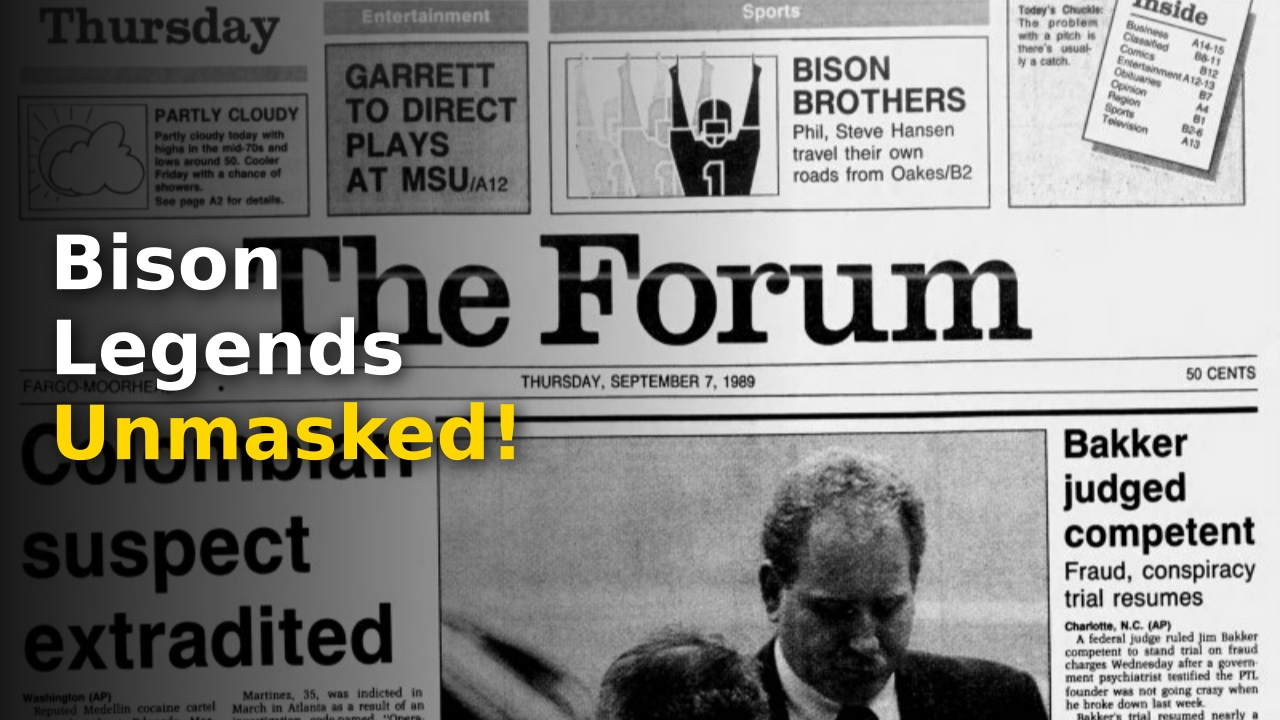
The 1989 season kicked off with a peculiar incident that perfectly captured the spirit of the Hansen brothers. During a Team Makers booster lunch, Phil introduced himself as being from Oakes, North Dakota. Minutes later, Steve took the microphone and proudly declared he was from Ludden. The room went silent as boosters wondered if a blood feud had erupted within the roster. In reality, the Hansen farm sat exactly one mile from Ludden and eight miles from Oakes; Phil simply chose the larger town to avoid explaining where Ludden was, while Steve wanted to claim his own territory.
Steve Hansen’s desire for a separate identity was not born of animosity but of a fierce competitive drive. In high school, Steve was actually considered the “meaner” of the two on the field, often overwhelming opponents with a raw intensity that even Phil admired. As a redshirt in 1989, Steve spent his days on the scout squad, mimicking the movements of future opponents to test Phil and the starting offensive line. This daily trench warfare in practice sharpened the skills of both brothers, creating a feedback loop of improvement that benefited the entire Bison defense.

Coach Wade Kuehl, who mentored both boys at Oakes High School, noted that Steve’s reluctance to follow in Phil’s footsteps was exactly why he eventually chose NDSU. He didn’t want the easy path; he wanted to compete against the best, even if the best was his own brother. This psychological dynamic is a staple of historic athletic careers where siblings push each other to break past perceived physical limits. The 1989 season served as the foundation for Steve to eventually build his own reputation, while Phil focused on recovering from a lingering nerve injury in his hand.
Phil’s 1989 season was almost derailed before it began. During his senior year of high school, he had accidentally put his arm through a plate-glass door, resulting in a massive laceration that nearly severed his hand. Even as a star at NDSU, he lacked full feeling in several fingers. This physical handicap only seemed to make him more resourceful on the field. Instead of relying on a traditional grip, he developed a series of clubbing moves and hand-swiping techniques that became his trademark in both the collegiate ranks and later in the NFL.
Expert Take: The Psychology of Sibling Rivalry
Sports psychologists often point to the Hansen brothers as a prime example of “positive differentiation.” When a younger sibling enters an environment where the older sibling is already a star, they typically either shy away from the spotlight or overcompensate. Steve Hansen chose a third path: technical precision. By focusing on his foot speed—which coaches noted was actually superior to Phil’s—he carved out a niche as a potential linebacker/defensive end hybrid. This specialized focus allowed him to develop an identity that wasn’t reliant on his brother’s shadow.
Phil Hansen NDSU Defensive Statistics 1988-1989
The numbers from this era tell the story of a defensive unit that was virtually impenetrable. Phil Hansen wasn’t just a participant; he was the primary disruptor. In 1988, he earned National Player of the Week honors for his playoff heroics, and he carried that momentum into the 1989 season. His ability to collapse the pocket from the defensive tackle position was a rarity in Division II football at the time.
| Metric | Phil Hansen (1988/89) | Steve Hansen (1989) |
|---|---|---|
| Status | Junior Starter | Freshman Redshirt |
| Total Sacks (1988) | 8.0 (Team Lead) | N/A |
| Hometown Claim | Oakes, ND | Ludden, ND |
| Weight (lbs) | 260 | 210 |
| Primary Strength | Lateral Movement | Foot Speed |
Phil’s dominance in 1989 was a key factor in NDSU’s ability to maintain their status as a national powerhouse. The Bison coaching staff, led by defensive coordinator Leo Ringey, utilized Phil as a “student of the game.” He was tasked with diagnosing blocking schemes in real-time, often checking into different gap assignments at the line of scrimmage. This high-level football IQ is what eventually caught the eyes of NFL scouts from the Buffalo Bills and other franchises.
The Oakes-Ludden Legend: A North Dakota Heritage
To truly understand the 1989 Hansen story, one must understand the geography of North Dakota farming. The Hansen farm was a sprawling operation managed by Allen and Mary Hansen. Growing up as the fourth and fifth of six children, Phil and Steve learned that nothing was given; everything was earned through labor. This “farm boy strength” is a recurring theme in NDSU lore, but for the Hansens, it was simply a way of life. The daily chores of moving equipment and handling livestock translated directly to the explosive power needed on the defensive line.
While Phil was the established star, the 1989 season was a pivotal developmental year for Steve. Being redshirted allowed him to add nearly 30 pounds of muscle in the NDSU weight room, transforming him from a lanky 210-pound athlete into a 240-pound force by the following spring. The coaching staff marveled at his ability to “keep his feet” during heavy contact, a trait he shared with Phil. The brothers’ wrestling matches on the farm had clearly paid dividends in terms of balance and leverage.

The 1989 season also highlighted the importance of the Oakes community to the NDSU program. Small towns across North Dakota lived and breathed Bison football, and the Hansen brothers were local heroes. Whenever they returned home, the debate of Oakes vs. Ludden continued, serving as a lighthearted reminder of their roots. However, on the field, there was no joking. Phil’s performance against programs like Northern Michigan and Millersville solidified his status as a first-ballot NDSU Hall of Fame profile for Phil Hansen candidate.
By The Numbers: The Defensive Dynasty
In the late 1980s, NDSU’s defense was colloquially known as the “Green Wall.” During Phil Hansen’s tenure, the unit frequently held opponents to under 100 yards of rushing per game. The 1989 season was particularly notable for its third-down efficiency. With Phil occupying double-teams, linebackers were free to roam and make plays in space. According to historical NDSU coaching logs, Phil’s “pressure rate”—a metric not commonly tracked in 1989—was estimated to be nearly 25% on passing downs, an elite number for a defensive tackle.
The Path to Buffalo: How 1989 Shaped an NFL Icon
While this article focuses on the 1989 season, it is impossible to ignore what that year did for Phil Hansen’s professional prospects. The tenacity he showed in playing through hand nerve damage and the technical skill he developed while mentoring his brother Steve caught the attention of Bill Polian and the Buffalo Bills. By the time Phil finished his career at NDSU, he was a two-time All-American and was ready to jump into one of the most successful eras in AFC history.
Phil Hansen went on to be drafted in the second round of the 1991 NFL Draft. He played his entire 11-year career in Buffalo, becoming a staple of the defensive line during their run of four consecutive Super Bowls. His transition from Division II to the NFL was seamless because of the pro-style discipline instilled in him during those formative years at NDSU. Fans of top sports icons often forget that the foundation of greatness is built in the years when no one is watching, such as a scout-squad practice in 1989.
Today, the Hansen legacy at NDSU remains a benchmark for all incoming defensive players. The story of the two brothers from “different” towns serves as a reminder that identity is something you create for yourself through hard work and performance. Whether it was Phil’s 8 sacks or Steve’s relentless effort on the scout team, the 1989 season was a masterclass in the Hansen way of doing things: quiet, humble, and absolutely dominant.
People Also Ask
What were Phil Hansen’s stats at NDSU?
Phil Hansen was a dominant defensive tackle at NDSU, notably leading the team with 8 sacks in 1988 and continuing his dominance in 1989. He was a two-time All-American and helped lead the Bison to two NCAA Division II national championships during his collegiate career.
Why did the Hansen brothers claim different hometowns?
Phil and Steve Hansen claimed Oakes and Ludden respectively to forge their own identities on the team. While their family farm was located between the two towns, the choice was a lighthearted way for Steve to ensure he wasn’t just seen as following in his older brother’s footsteps.
Who did Phil Hansen play for in the NFL?
Phil Hansen played his entire 11-year NFL career for the Buffalo Bills after being drafted in 1991. He was a key member of the team during their four consecutive Super Bowl appearances and was eventually inducted into the Buffalo Bills Wall of Fame.
What injury did Phil Hansen suffer at NDSU?
Phil Hansen suffered from nerve damage in his right hand, stemming from an accident in high school where his arm went through a plate-glass door. Despite having partial feeling in his fingers, he remained one of the most effective defensive players in NDSU history.
The Lasting Legacy of the Hansen Brothers at NDSU
As we look back at the 1989 season, the impact of Phil Hansen NDSU remains clear. He wasn’t just a great player; he was a standard-bearer for a program that demanded excellence. The brothers’ journey from the farm to the stadium is the quintessential North Dakota story, proving that geographic isolation is no barrier to becoming a national sensation. Steve Hansen eventually found his own success, but that 1989 season remains the unique intersection where both brothers were on the same field, charting different courses toward the same goal of greatness.
For modern fans of the Bison, the 1989 team represents a bridge between the historical dominance of the 80s and the modern dynasty of the 2010s. The discipline, the grit, and the refusal to be outworked are traits that Phil Hansen carried with him to the NFL, where he became one of the most respected defensive ends of his generation. You can still see the influence of his playing style in today’s NDSU defenders, who continue to play with the same “Ludden-Oakes” tenacity that defined the Hansen era. You can track his professional journey through Phil Hansen’s NFL career stats to see how that 1989 foundation led to a decade of pro excellence.
More Like This
For more updates, check out our latest entertainment and sports news.