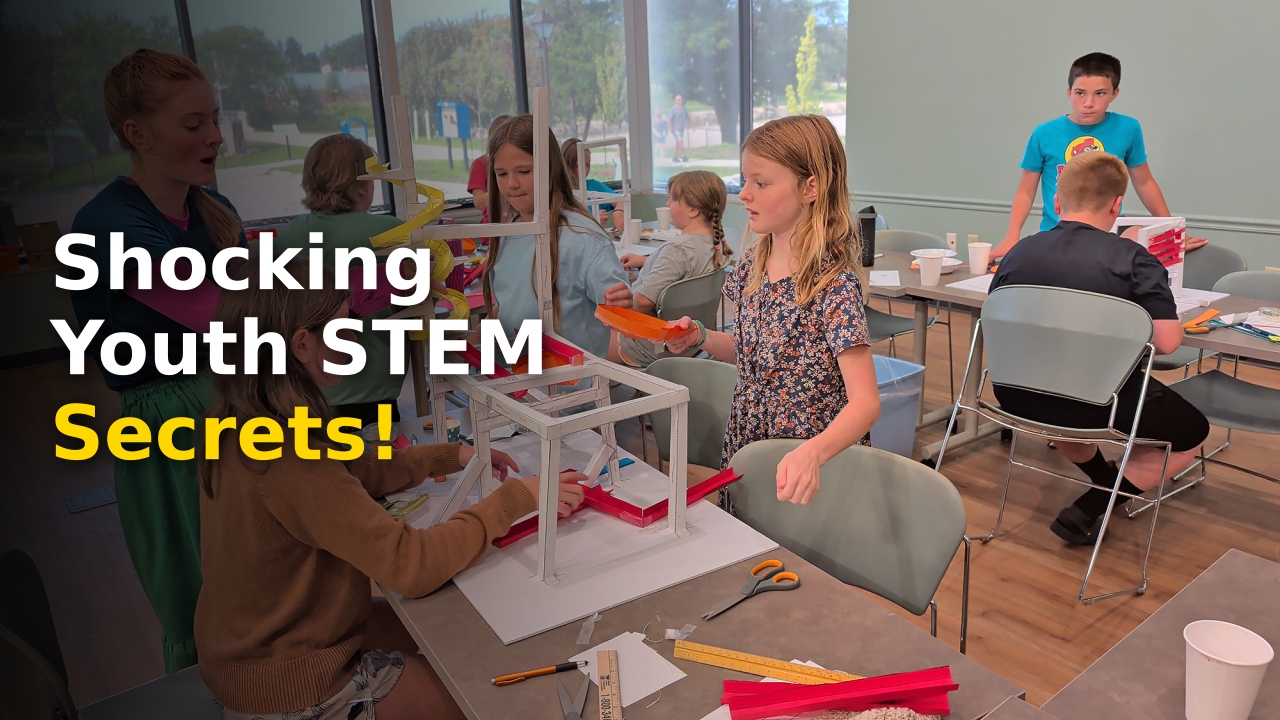
The groundbreaking Paper Coaster initiative at the Charles City Public Library proves that high-flying physics learning does not require a massive tech budget. On Saturday, Aug. 8, local teens and tweens gathered for an action-packed workshop centered on structural engineering and kinetic design. Children’s Librarian Stacey Leerhoff spearheaded the morning gathering to offer local youth an engaging screen-free educational adventure.
Divided into three energetic teams, young participants spent the morning building intricate track systems out of basic folded paper templates. “I thought it would be a fun thing to try,” Leerhoff remarked as enthusiasm spread across the workroom floor. The workshop successfully demonstrated how public libraries serve as modern launching pads for youth scientific discovery.
Paper Coaster Thrills in Iowa
The energy inside the Charles City Public Library was electric as participants unpacked their basic building supplies. Scissors, tape rolls, measuring tools, and precision paper strips covered every table across the workshop area. Each group immediately faced the complex task of engineering load-bearing columns capable of standing tall without collapsing.
Working with paper requires patience, structural understanding, and careful attention to weight distribution. Small flaws in a column base can cause an entire multi-foot track system to sway or crash completely. Local youth quickly learned how to fold standard paper into triangular beams to maximize structural rigidity.
As the morning hours ticked by, participants expanded their creations with steep drops, wide bank turns, and daring vertical loops. Tweens tested marble velocity across varying angles to prevent off-track derailments during test runs. Every successful run prompted loud cheers from adult observers and library team members.

This hands-on workshop highlighted the incredible versatility of accessible physical craft engineering. Instead of using expensive prefabricated plastic toys, kids discovered how basic geometry turns paper into mechanical architecture. Watching a glass marble complete a loop-de-loop provided immediate satisfaction for every young designer in attendance.
Community leaders praised the library staff for providing high-impact educational programming during weekend hours. Parents noted that activities like this offer essential social opportunities for kids during summer breaks. The event stands as a stellar model for small-town community enrichment programs across Iowa.
Furthermore, the collaborative environment allowed kids across different age brackets to build strong peer bonds. Mentoring occurred naturally as older teens showed younger tweens how to align paper seams cleanly. Stacey Leerhoff noted that watching kids help each other solve physical problems was the highlight of the event.
Physics Principles That Drive Design
Building a working miniature track is a practical crash course in classical mechanics and kinetic energy conversion. Before a marble can traverse a track successfully, young designers must analyze kinetic drag and potential energy equations. Understanding classic roller coaster mechanics helps students translate theoretical science into real-world physical builds.
Gravity acts as the primary motor for every non-powered track structure created during these workshops. Participants must design high starting hills to store sufficient gravitational potential energy for subsequent track elements. Without enough initial summit height, marbles lack the energy required to carry momentum through loops and turn banks.
Friction remains the single biggest challenge in paper mechanical engineering. Rough paper joints and loose tape strips create unwanted surface friction that halts rolling objects rapidly. Tweens spent extra time smoothing out paper track joints with ruler edges to guarantee continuous marble motion.
Key Engineering Fundamentals
- Potential Energy Conversion: Elevating top starting hills to power lengthy track elements downhill efficiently.
- Centripetal Acceleration: Shaping loop curves correctly so gravity and inertia keep marbles pinned safely to the track.
- Frictional Drag Reduction: Taping paper seams flat to prevent friction from stealing kinetic momentum during runs.
- Structural Base Bracing: Anchoring vertical support beams with wide triangular bases to absorb rolling vibrations.
Calculating proper drop angles requires rapid trial-and-error experimentation throughout the assembly phase. Extremely steep drops generate rapid marble acceleration but can cause sharp corner crashes if bank angles are improper. Participants quickly adjusted sidewall heights to contain lateral acceleration forces created during high-speed turns.
Structural integrity presented another key engineering obstacle for the three builder groups. Taller paper towers naturally sway when marbles rush down long elevated drops. Kids counteracted this kinetic wobble by cross-hatching diagonal paper supports between vertical columns.
Through continuous testing, participants gained deep intuitive knowledge regarding mechanical dynamic principles. Abstract ideas that appear dry in school textbooks came alive through instant physical feedback. The iterative process proved to young builders that structural failure is simply a stepping stone toward successful engineering.
Why Modern Libraries Are Changing
Public libraries across the United States are undergoing a massive physical and educational transformation. No longer strictly designated for quiet book storage, modern facilities function as active community makerspaces. The workshop at Charles City Public Library reflects a nationwide movement toward interactive science and art experiences.
Community institutions now prioritize hands-on science, technology, engineering, and math (STEM) workshops for local youth. Offering access to creative design tools fosters intellectual curiosity long before high school or college career planning begins. Programs like this democratize technical education by providing equal access regardless of family income.
Librarians like Stacey Leerhoff act as vital educational innovators within smaller regional towns. Conceptualizing unique weekend activities keeps public institutions deeply relevant to younger generations growing up in digital environments. These events bring families together inside supportive public spaces dedicated to lifelong learning.
Funding for small-town library programming relies on municipal support, grants, and community donations. Low-cost activities like a standard Paper Coaster design challenge maximize every dollar spent by utilizing affordable paper craft supplies. A single bulk box of paper and tape rolls can keep dozens of kids intellectually engaged for hours.
Moreover, these interactive weekend workshops generate positive social benefits that extend across entire school districts. Kids discover that scientific engineering can be thrilling, social, and personally rewarding. Parents frequently check library event calendars to find enriching activities that stimulate brain development outside traditional school hours.
Public facilities also partner with local academic leaders to reinforce classroom science standards through weekend projects. Interactive physical builds prevent summer learning loss and keep critical thinking skills sharp year-round. The Charles City event provided a perfect mix of weekend fun and rigorous structural physics education.
As public spaces evolve, reader interest in community enrichment programs continues to reach record highs. Visitors searching for innovative cultural trends often explore exclusive community entertainment features to stay ahead of modern family educational movements. The remarkable success of the Charles City workshop guarantees more interactive events soon.
Paper Coaster Construction Benchmarks
To evaluate the efficiency and impact of hands-on physical engineering activities, organizers track specific performance metrics. The quantitative data outlined below details key operational variables observed during typical library mechanical design challenges.
| Workshop Metric | Average Value | Target Goal |
|---|---|---|
| Material Cost Per Builder | $1.85 USD | Under $3.00 USD |
| Build Session Duration | 2.5 Hours | 2.0 to 3.0 Hours |
| Average Structure Height | 3.2 Feet | 3.0+ Feet |
| Participant Engagement Rating | 98% Positive | 90%+ Positive |

Analyzing these operational metrics helps public libraries optimize future project budgets and resource distribution. Keeping material costs exceptionally low ensures facilities can host recurring youth workshops throughout the calendar year. High satisfaction ratings demonstrate the immense value local families place on tactile physical challenges.
Time allocation strategy plays a crucial role in maintaining high energy levels across youth age groups. Designers spend roughly forty percent of their time cutting and folding vertical support beams securely. The remaining time focuses on track geometry, friction reduction, and thrilling marble testing runs.
How Hands-On STEM Shapes Brains
Developmental psychologists strongly support tactile engineering exercises for growing children and teenagers. Constructing three-dimensional objects from flat paper sheets stimulates rapid development of spatial visualization faculties. Youth who master spatial reasoning early frequently excel in future advanced mathematics and architectural fields.
Trial-and-error building mechanics build psychological resilience and problem-solving mindsets in young minds. When a marble flies off a curve, kids must diagnose the structural flaw calmly and logically. This diagnostic process transforms temporary builder frustration into intense intellectual focus and determination.
Teamwork dynamics build essential communication skills that modern professional environments demand daily. Participants must negotiate track pathways, divide folding labor, and respect differing design perspectives. Resolving artistic differences under session time limits prepares tweens for future real-world workplace cooperation.
Tactile motor activities also strengthen long-term memory retention compared to passive digital screen viewing. Physical manipulation of paper forms neural pathways linked to physical intuition and mechanical principles. Kids retain abstract concepts like acceleration and momentum much longer when experienced firsthand.
Furthermore, completing a complex physical construction delivers a massive boost to youthful self-esteem. Watching a glass marble complete a long, winding track creates immense pride and personal satisfaction. That feeling of accomplishment stays with young participants long after the event concludes.
Female involvement in physical STEM activities is also climbing steadily thanks to welcoming library setups. Creating low-pressure, supportive environments encourages young girls to explore structural engineering concepts freely. Equal early access to technical design tools plays a vital role in closing future gender gaps in technology careers.
The Bright Future of STEM
The success achieved at Charles City Public Library highlights the vast potential hidden inside ordinary paper craft supplies. Small-town municipal libraries can host world-class educational experiences without requiring massive grant money or high-tech facilities. Visionary leadership, simple paper supplies, and curious young minds are all that is required.
Looking toward the future, public interest in interactive STEM programming will continue to expand rapidly across the country. Workshops centered on structural mechanics, basic robotics, and creative physics serve as essential stepping stones for future engineers. The young participants who folded paper on Saturday may one day design real skyscraper towers or suspension bridges.
Parents and community leaders are urged to support their local public libraries through attendance and volunteer drives. Engaging young people in creative physical problem-solving builds stronger, more resilient local communities for future generations. Public libraries remain priceless assets for towns seeking innovative educational opportunities.
Ultimately, the Paper Coaster program proves that meaningful learning knows no price tag or structural limits. With enthusiasm, patience, and basic cardstock paper, Charles City youth crafted an unforgettable weekend of scientific discovery. The momentum created by this single workshop will surely inspire many creative triumphs across Iowa in the years ahead.
More Like This
For more updates, check out our latest entertainment and sports news.