Key Takeaways
| Robbie Ray named Game 1 starter over Walker Buehler for the NLDS. |
| Ray finished 2026 with a 3.59 ERA but struggled with a 5.09 mark in San Diego. |
| Michael King and Nick Pivetta are slated for Games 2 and 3 respectively. |
| Manager Craig Stammen emphasizes a highly aggressive bullpen strategy. |
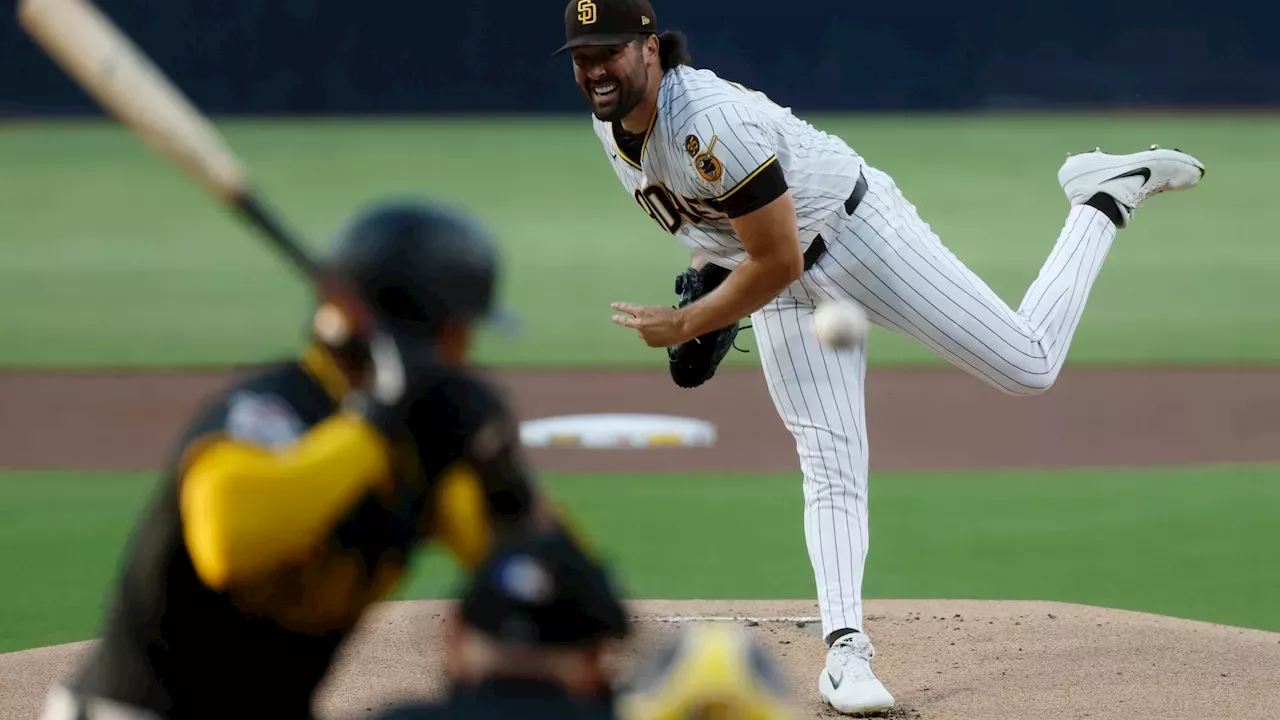
You probably did not see this coming as the San Diego Padres Robbie Ray has been officially tapped to lead the rotation for the start of the 2026 National League Division Series. In a move that has sent shockwaves through the baseball analytics community, manager Craig Stammen is bypassing established postseason veterans for the high-upside, albeit volatile, left-hander.
The decision to start the Padres Robbie Ray in such a pivotal opening contest against the Milwaukee Brewers highlights a growing trend in modern postseason management. Stammen is prioritizing specific matchup data and internal metrics over traditional rotation hierarchies, a gamble that could define the franchise’s trajectory this October.
Entering his third career postseason start, Ray carries the weight of a city that has seen its team sweep through the Wild Card round with clinical precision. While many expected the ball to go to Michael King or even the playoff-hardened Walker Buehler, the Padres are betting on Ray’s veteran savvy and left-handed delivery to stifle the Brewers’ powerful core.
Strategic Shift: The Padres Robbie Ray Decision
The choice of the Padres Robbie Ray for Game 1 is deeply rooted in the specific geometry of the Milwaukee Brewers’ lineup. Milwaukee relies heavily on the left-handed bats of Jake Bauers and Brice Turang to spark their offensive rallies. By throwing a veteran southpaw immediately, Stammen hopes to disrupt the rhythm of a lineup that has feasted on right-handed pitching throughout the 2026 campaign.
However, the data suggests a more nuanced reality than a simple lefty-versus-lefty advantage. Interestingly, Ray has actually been more effective against right-handed hitters this season, while Bauers has maintained respectable splits against lefties. This suggests that the Padres coaching staff sees something in Ray’s specific pitch tunnel or spin rate that matches up perfectly against Milwaukee’s high-velocity swing profiles.

Expert Take: The High-Variance Gamble
By the numbers, Robbie Ray is one of the most polarizing pitchers in the National League. His 2026 season was a tale of two halves: a dominant start that saw him rank 14th in the NL with a 3.59 ERA, followed by a rocky transition to San Diego where his ERA ballooned to 5.09. Analysts at MLB’s statistical headquarters note that Ray’s walk rate and slugging percentage allowed jumped significantly after the trade deadline.
Craig Stammen is fully aware of these inconsistencies. “We know with Robbie, he can be erratic at times,” Stammen admitted during the pre-game press conference. “If he’s throwing strikes, I feel good about Robbie being in there.” This suggests that the leash will be incredibly short, with the Padres’ elite bullpen ready to take over at the first sign of a command lapse.
Comparative Stats: Ray vs The Brewers Lineup
To understand why the Padres are taking this risk, we must look at the comparative data from the 2026 regular season. The Brewers possess a patient offense that excels at driving up pitch counts, much like the Los Angeles Dodgers. Ray’s success will depend entirely on his ability to find the zone early and often, forcing the Brewers into defensive swings rather than allowing them to work deep counts and hunt for walks.
| Metric | Robbie Ray (Total 2026) | Ray (With Padres) | NL Average |
|---|---|---|---|
| Earned Run Average (ERA) | 3.59 | 5.09 | 4.12 |
| Walks Per 9 Innings (BB/9) | 3.1 | 4.4 | 3.3 |
| Strikeout Rate (K%) | 27.4% | 24.1% | 22.5% |
| Batting Average Against | .231 | .268 | .245 |
Despite the concerning trend in his San Diego tenure, Ray’s final start of the regular season provided a blueprint for success. Against a formidable Dodgers lineup, Ray navigated 3.1 innings of one-run ball, walking only one batter. This performance signaled to the front office that Ray has rediscovered the “strike-throwing” mentality required for high-stakes baseball.
Managing the Bullpen and Walker Buehler
A major subplot of this rotation announcement is the role of Walker Buehler. Long considered one of the premier big-game pitchers of his generation, Buehler was many fans’ choice to start the opener. His quality start against the Brewers in August seemed to make him the logical candidate, but the Padres are instead choosing to hold his “playoff pedigree” in reserve.
Stammen was quick to point out that Buehler remains a vital part of the plan. “Walker will play a big role in this series at some point,” Stammen noted. By starting the Padres Robbie Ray in Game 1, the team keeps Buehler available for a potentially decisive Game 4 or as a high-leverage long reliever should the early starters falter. This flexibility is a luxury afforded by the team’s depth.

The Professional Out-Getter
Ray himself is embracing the role of the tone-setter. Having turned 35 just days before this start, he represents the veteran bridge in a rotation otherwise defined by young power arms. Ray’s approach is simple: trust the defense and make the Brewers put the ball in play. He described his philosophy as a “very similar attack” to his successful late-season outings where he prioritized efficiency over pure velocity.
The Padres’ bullpen, which ranks among the best in the 2026 MLB National League standings, allows for this type of starting pitcher usage. In the modern postseason, the “starter” is often more of an “opener plus,” tasked with navigating the lineup twice before the manager turns to the flamethrowers. Ray’s ability to get through 12-15 outs without a meltdown is the primary goal.
Historical Context of the 2026 Trade Deadline
To fully appreciate the Padres Robbie Ray era, one must look back at the Padres trade deadline moves that brought him to San Diego. At the time, the acquisition was seen as a insurance policy for a rotation plagued by minor injuries. Ray’s struggles initially made the trade look like a rare miss for the Padres’ front office, but his resurgence in September changed the narrative entirely.
San Diego’s path to this NLDS has been marked by bold decisions. From shifting Seiya Suzuki into the cleanup spot during the Wild Card series against the Cubs to this current rotation shuffle, the team has been anything but predictable. This unpredictability has made them a nightmare for opposing scouts, as the Brewers now have to prepare for a completely different look than they saw in the regular season.
The Padres are currently leveraging their status as a deep-market contender to out-maneuver smaller-market teams like the Brewers. By having three or four legitimate “Game 1” options, San Diego can play the matchup game in a way that few other teams can. Ray is simply the first piece of a complex tactical puzzle that Stammen is assembling to reach the World Series.
People Also Ask
Why is Robbie Ray starting Game 1 for the Padres?
Manager Craig Stammen chose Robbie Ray for Game 1 of the NLDS due to his veteran experience and his specific ability to match up against the Brewers’ left-handed hitters like Jake Bauers and Brice Turang.
Who is starting Game 2 for the San Diego Padres?
The Padres have confirmed that Michael King will take the mound for Sunday’s Game 2, following Robbie Ray’s Game 1 start in Milwaukee.
What was Robbie Ray’s ERA in the 2026 regular season?
Robbie Ray finished the 2026 season with a cumulative 3.59 ERA, though he struggled with a 5.09 ERA in nine starts after being acquired by the Padres at the trade deadline.
Will Walker Buehler pitch in the 2026 NLDS?
Yes, despite not starting Game 1, manager Craig Stammen confirmed that Walker Buehler will play a significant role in the series, citing his extensive playoff pedigree as too valuable to leave out.
San Diego Postseason Outlook
As the first pitch of the NLDS approaches, the focus remains squarely on whether the Padres Robbie Ray can justify the faith placed in him. This series represents more than just a set of games; it is a validation of the Padres’ aggressive organizational philosophy. If Ray succeeds, the front office will be hailed as geniuses for their deadline maneuvering. If he fails, the decision to sit Walker Buehler will be scrutinized for years to come.
The Brewers will counter with Jacob Misiorowski, a hard-throwing right-hander who presents a stark contrast to Ray’s veteran style. This clash of pitching philosophies—youthful power versus veteran precision—will set the stage for what promises to be an epic five-game struggle. Fans can expect a heavy dose of bullpen activity from both sides as they navigate the pressure of October.
For the San Diego faithful, the hope is that Ray can channel his Cy Young-caliber form one more time. The MLB postseason rotation analysis suggests that momentum is everything in short series, and a strong Game 1 from a “surprising” starter could be the psychological edge San Diego needs to advance. In the high-stakes world of playoff baseball, the Padres are doubling down on experience and matchups, and the veteran Robbie Ray is the man they want on the hill.
Stay tuned to National League Division Series predictions as we follow every pitch of this 2026 postseason journey. The Road to the World Series is never easy, but with a staff this deep and a manager this bold, San Diego is as well-positioned as any team in recent memory to bring a championship to Petco Park.
More Like This
For more updates, check out our latest entertainment and sports news.