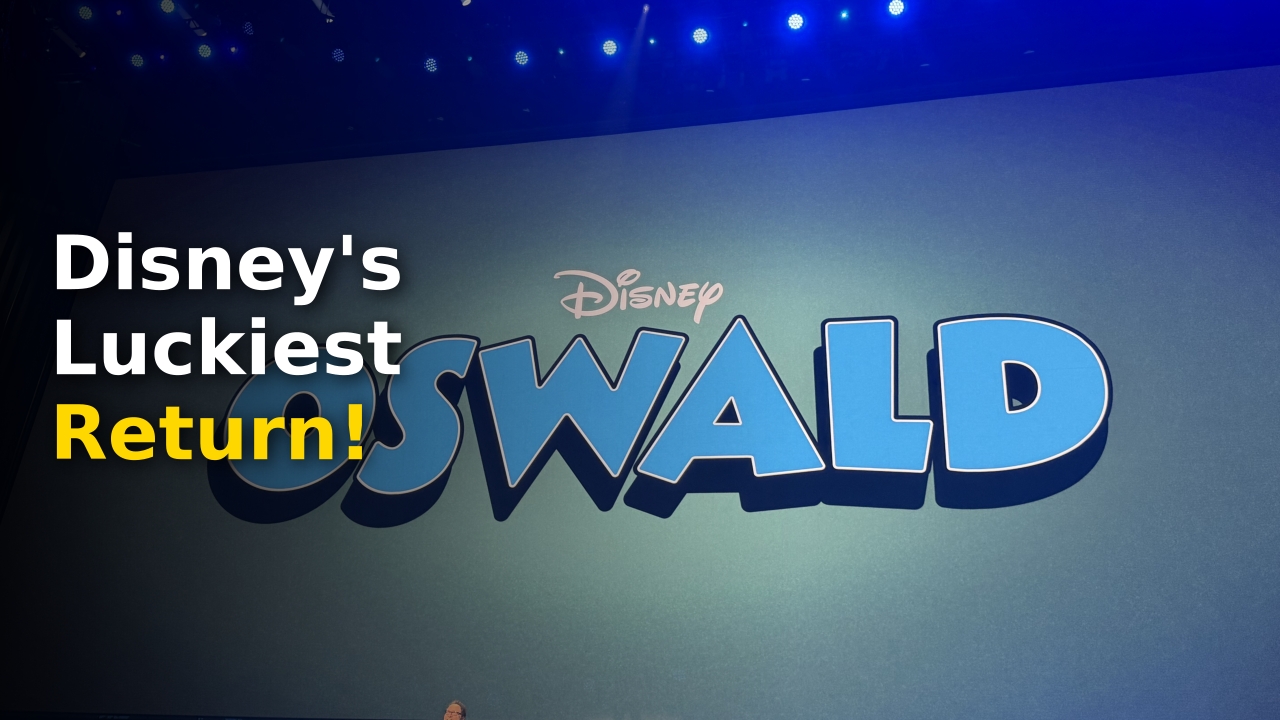
The Oswald Series is finally making its grand debut, and you won’t believe the historic lengths Disney is going to for this comeback. During the high-energy Disney Entertainment Showcase at D23 in August 2025, the legendary Jon Favreau took the stage at the Honda Center to drop a bombshell. He officially confirmed that the character who started it all is returning to the spotlight in a groundbreaking new format.
You probably know Mickey Mouse as the face of the company, but before the mouse, there was a rabbit. This upcoming three-part miniseries is more than just another streaming show; it is a high-stakes restoration of Disney’s original DNA. To stay ahead of the curve, you should check out the latest entertainment news updates for more D23 coverage and industry leaks.
Oswald Series Rebirth
The Oswald Series represents a monumental shift in how The Walt Disney Company views its own legacy. Jon Favreau, the mastermind behind The Mandalorian and the Iron Man films, is spearheading this project with a deep sense of reverence. He originally teased the concept in early 2025, but the full scope of the project was kept under tight wraps until now.
Filming for this ambitious project took place throughout late 2025 and into 2026. One of the most exciting details is that a significant portion of the production occurred right in the heart of Disneyland. Imagine walking through the park and seeing a film crew capturing the magic of the original 1920s aesthetic in real-time.
Favreau confirmed that the series will utilize a unique blend of live-action cinematography and traditional hand-drawn 2D animation. This is a massive deal for animation purists who have long begged the studio to return to its roots. It marks the first time in decades that the company is putting significant resources back into the art form that built the studio.
The Oswald Series isn’t just about moving forward; it’s about looking back at the foundation laid by Walt Disney and Ub Iwerks. These two visionaries created Oswald the Lucky Rabbit in 1927, never knowing the roller coaster journey the character would take. You can see the passion in Favreau’s eyes when he speaks about honoring those early animators who were masters of the pencil and paper.
Wait until you hear about the talent involved in this revival. Favreau noted that he personally reached out to veteran Disney animators who hadn’t touched 2D projects in years. These artists were brought back from retirement or moved from other departments to ensure the Oswald Series felt authentic to the 1920s style.
By blending these traditional techniques with modern live-action technology, the show promises a visual experience unlike anything else on Disney+. It creates a bridge between the analog past and the digital future of entertainment. You are looking at a project that has been nearly a century in the making.

Favreau’s Creative Vision
Favreau has always been a fan of technical challenges and cinematic history. He sees this rabbit as the missing link in the Disney timeline that deserves a proper conclusion. His goal was to make the series feel like a discovered artifact from the vault that somehow looks brand new.
The director mentioned that he spent hours in the Disney Archives researching the original 1927 shorts. He wanted to capture the exact “rubber hose” style of animation that made the early cartoons so expressive. This attention to detail is why fans trust him with such a sensitive piece of corporate history.
The 2D Animation Revival
- Disney is officially returning to hand-drawn animation for this project.
- Veteran animators were recruited specifically for their expertise in 2D techniques.
- The series will feature a hybrid look, placing animated characters in real-world historic locations.
- This follows the success of the 2022 centennial Oswald short film.
Historic Filming Sites
One of the most mind-blowing aspects of the Oswald Series is where the cameras actually rolled. Jon Favreau revealed that the story takes place in locations of immense historical importance to the company. This isn’t just a studio backlot production; it’s a tour through the ghosts of Disney’s past.
The production visited the original site of Hyperion Studios in Silver Lake. This is where the magic truly began before the company moved to its current Burbank headquarters. Seeing Oswald return to the place of his birth, even in a fictionalized narrative, is enough to give any true fan chills.
Furthermore, the crew was granted rare access to Walt Disney’s private office, specifically Office 36 on the Disney lot. This space has been meticulously preserved for years as a museum-like tribute to the founder. Bringing a modern production into such a hallowed space shows how much weight this series carries for the executive team.
You will also see Disneyland featured prominently in the series. The park serves as a backdrop for various live-action segments, further grounding the animated character in the real world. It creates a sense of “Disney inception” that celebrates the entire ecosystem of the brand.
The Oswald Series uses these locations to tell a story that is effectively a love letter to the company’s resilience. By filming at the Hyperion site, Favreau is acknowledging the struggles and triumphs of the early days. It’s a narrative choice that adds layers of depth to what could have been a simple cartoon reboot.
Fans who visit Disneyland during the series release window can expect special tie-ins at the park. There are already rumors of Oswald becoming a permanent fixture in the character meet-and-greet rotations. The synergy between the Disney+ content and the physical parks is reaching a new peak with this release.
Rights Trade Legend
To understand why the Oswald Series is such a miracle, you have to understand the history of Oswald the Lucky Rabbit and the legal battle that almost ended Walt’s career. In 1927, Walt Disney and Ub Iwerks were under contract with Universal Pictures via executive Charles Mintz. When Walt asked for a budget increase, Mintz instead cut his pay and revealed he had poached most of Walt’s animators.
Because Universal owned the rights to the character, Walt had to walk away from his creation entirely. This devastating blow was the catalyst for the birth of Mickey Mouse on a train ride back to California. For nearly 80 years, Oswald remained the property of Universal Pictures, appearing in various shorts but largely fading from the public consciousness.
Everything changed in 2006 in one of the most bizarre corporate trades in history. Bob Iger, then CEO of Disney, wanted to bring Oswald home. He traded legendary sports broadcaster Al Michaels from ABC/ESPN to NBC Universal in exchange for the rights to the lucky rabbit. It was a deal that left the sports world and the entertainment industry stunned.
Since that trade, Oswald has been used sparingly, appearing in the Epic Mickey video games and various cameos. However, the Oswald Series marks the first time since 1927 that the character is the undisputed star of a major production. It is the ultimate homecoming for a character that was lost for almost a century.
The story of the trade has become a legend within the halls of Disney. It proves that the company never truly lets go of its history, no matter how long it takes to reclaim it. Al Michaels himself has joked about being traded for a cartoon rabbit, but for Disney fans, the trade was worth every penny.
This miniseries will likely delve into these themes of legacy and lost identity. By acknowledging the history within the show itself, Favreau is giving Oswald the closure he deserves. It’s a high-stakes move that cements the rabbit’s place in the modern Disney pantheon alongside Mickey and Donald.
Series Data Breakdown
The Oswald Series is structured as a premium event, meaning it isn’t your standard 22-episode sitcom. The production values are rumored to be on par with the biggest blockbusters in the Marvel or Star Wars universes. Below is the essential data you need to know about the upcoming release.
| Category | Detail |
|---|---|
| Series Title | Oswald |
| Executive Producer | Jon Favreau |
| Release Window | February 2027 |
| Episodes | 3-Part Miniseries |
| Format | Live-Action / 2D Hybrid |
As seen in the table above, the Oswald Series is designed to be a tight, focused narrative. By keeping it to three parts, Favreau can ensure that every single frame of animation is perfect. You won’t find any filler content here; every minute is dedicated to the rabbit’s historic journey.
The February 2027 release window is strategic. It places the launch during a period when the studio can maximize viewership without the clutter of the summer blockbuster season. It also aligns with the anniversary of the 2006 rights re-acquisition, bringing the story full circle.
Expect the marketing campaign to ramp up in late 2026. Disney is planning a massive push that includes limited-edition merchandise and perhaps even a theatrical screening of all three parts. The hype for this show is already reaching a fever pitch among the “Disney Adult” community and animation historians.
Future Lucky Rabbit
The Oswald Series is just the beginning of what could be a massive franchise expansion for the character. If the show performs as expected, there is already talk of a full-length feature film or a recurring series. Bob Iger has hinted that Oswald is a “cornerstone” character that has been underutilized for too long.
Think about what this means for the future of 2D animation at the studio. If this series is a hit, it could signal a permanent return to hand-drawn projects. It would prove that audiences still crave the warmth and charm of a pencil-sketched character in an increasingly CGI world.
You can see how much the industry has changed just by looking at this announcement. A decade ago, a 2D hybrid show about a 99-year-old rabbit might have been seen as too risky. Today, it is the most anticipated project on the Disney+ slate for 2027.
The Oswald Series isn’t just about nostalgia; it’s about correcting a historical wrong. It gives the character his rightful place in the sun after decades of being a footnote. For Jon Favreau, this is a legacy project that will likely define the next stage of his storied career.
As we approach the release, keep your eyes on the official Disney channels for more footage. The snippets shown at D23 were just a taste of the visual feast to come. The rabbit is finally home, and he is bringing the magic of 1927 back into the modern era.
In summary, the Oswald Series is a masterclass in brand management and creative risk-taking. It honors the past while pushing the boundaries of what streaming content can be. Get ready, because the luckiest rabbit in Hollywood is about to take over your television screen.
More Like This
For more updates, check out our latest entertainment and sports news.