Key Takeaways
| Walmart and Amazon have slashed prices by $10 for physical copies. |
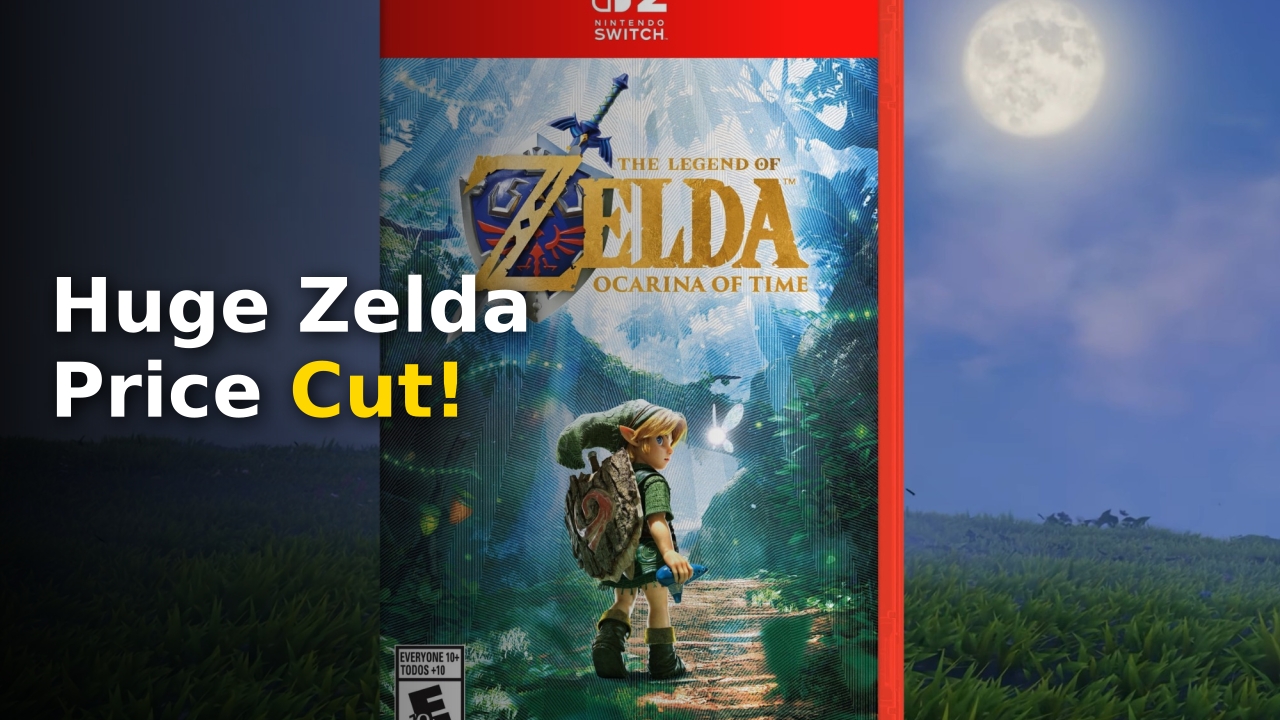
| The first print run features exclusive textured foil cover art for collectors. |
| Nintendo’s new pricing tier sets the digital version at $59.99 and physical at $69.99. |
| The remake officially launches for the Nintendo Switch 2 on November 5, 2026. |
You have waited decades for the definitive return to Hyrule, and **Ocarina of Time Remake Pre-orders** are finally here to reward your patience with unexpected savings. Following a massive Nintendo Direct showcase, the gaming world stood still as the legendary N64 classic was confirmed for a complete ground-up reconstruction on the upcoming Nintendo Switch 2 hardware. While the standard retail price was set at a premium tier, early shoppers are already finding massive discounts at major US retailers.
Retail giants Walmart and Amazon have triggered a pre-order price war, dropping the cost of the boxed cartridge to match the digital eShop price. This move effectively negates the $10 physical premium Nintendo introduced in early 2026, allowing fans to own the physical collectible for just $59.99. With the November 5, 2026, release date approaching, securing these **Ocarina of Time Remake Pre-orders** has become the top priority for millions of nostalgic gamers and new adventurers alike.
The excitement surrounding this project is not just about the price point but the technical leap it represents for the Zelda franchise. This isn’t a mere remaster; it is a full-scale reimagining that leverages the increased power of the Switch 2 to deliver Hyrule in a fidelity never seen before. From the lush greenery of Kokiri Forest to the haunting depths of the Shadow Temple, every asset has been meticulously rebuilt while preserving the soul of the 1998 masterpiece.
Ocarina of Time Remake Pre-orders Pricing Strategy
The financial landscape for Nintendo’s first-party titles shifted significantly in May 2026. The company officially moved toward a tiered pricing model where physical cartridges often carry a manufacturing and distribution premium. For the Zelda: Ocarina of Time remake, this meant a base MSRP of $69.99 for the boxed version. Many fans expressed concern that the “remake tax” was becoming a permanent fixture of the Switch 2 era.
However, Walmart disrupted this strategy by listing the physical game at $59.99 almost immediately after the Nintendo Direct. This $10 discount serves as a massive incentive for those who prefer tangible media over digital downloads. Amazon followed suit within hours, price-matching the offer to maintain its competitive edge in the gaming market. You can explore more about the gaming industry retail trends to understand why these price wars are becoming more frequent during major console transitions.
For collectors, the physical edition is particularly enticing because of the limited first-print bonus. Nintendo confirmed that early batches of the game will feature textured foil cover art, reminiscent of the classic gold cartridges of the nineties. Supplies for this specific variant are expected to be limited, making early **Ocarina of Time Remake Pre-orders** essential for those looking to flip or keep a piece of gaming history. The secondary market for sealed Zelda titles has historically exploded, and this foil variant is poised to be a future high-value item.
Despite the discounts, some critics argue that a remake should not exceed the $60 threshold. They point to previous remasters that offered significant upgrades at a lower cost. However, Nintendo’s internal development team has clarified that the scale of this project rivals their largest open-world titles. The investment in new engine technology specifically for the Switch 2 suggests that the $69.99 MSRP is intended to reflect a “next-gen” development budget.

Walmart vs Amazon: The Race for the Best Deal
When it comes to securing the lowest price, Walmart currently holds a slight psychological edge due to its history of in-store discounts for physical Switch games. While Amazon offers the convenience of release-day delivery, Walmart’s consistency in matching digital pricing for physical pre-orders has made it the go-to destination for many Zelda fans. Both retailers offer a pre-order price guarantee, meaning if the price drops further before November 5, you will only pay the lowest amount.
Alternative marketplaces like Best Buy and GameStop are currently sticking to the $69.99 price point for physical copies. These retailers often try to compete by offering exclusive physical pre-order bonuses, such as posters, keychains, or steelbooks. If you are a die-hard collector, you might find that a $10 premium is worth it for a GameStop-exclusive enamel pin set, though the general public seems to be gravitating toward the $59.99 Walmart deal.
The Digital eShop Alternative
For those who have moved entirely to a digital library, the Nintendo eShop offers the game for a steady $59.99. This version does not require a cartridge swap and benefits from the Switch 2’s improved internal SSD speeds, potentially reducing load times even further than the physical media. However, the lack of a physical foil cover art and the inability to resell the game are significant trade-offs for many long-term fans of the series.
Technical Overhaul on Nintendo Switch 2
The technical specifications of the Ocarina of Time remake have been a point of intense discussion within the community. During the September 8th showcase, Nintendo revealed that the game runs on a modified version of the engine used for recent Zelda titles, but with a specific focus on high-resolution textures and advanced lighting. The transition from the low-poly aesthetic of the N64 to the hyper-detailed world of the Switch 2 is nothing short of breathtaking.
One of the most controversial yet welcomed additions is the dedicated jump button. In the original 1998 release, Link would jump automatically when approaching a ledge. The developers have now given players manual control over movement, making exploration feel more modern and less scripted. This change necessitated a slight redesign of certain platforming segments, but the developers insist it remains 100% faithful to the original level layouts. You can see where this ranks among the best Legend of Zelda titles as the community begins to re-evaluate the classic.
Graphics have been overhauled with a focus on realism while maintaining the iconic art style of the original concept art. Character models for Zelda, Ganondorf, and Sheik have been reimagined with intricate detail, showing individual strands of hair and realistic fabric physics. The draw distance in Hyrule Field has been massively expanded, allowing players to see Death Mountain and Lon Lon Ranch from the gates of Hyrule Castle without any fogging or pop-in.
| Feature | Original N64 (1998) | Switch 2 Remake (2026) |
|---|---|---|
| Resolution | 240p / 320p | 4K (Docked) / 1080p (Handheld) |
| Frame Rate | 20 FPS | 60 FPS (Stable) |
| Control Method | Single Analog Stick | Dual Analog + Gyro Aiming |
| Movement | Auto-Jump | Manual Jump Button |
Expert Analysis: The Economics of Nostalgia
From a financial perspective, Nintendo’s decision to remake Ocarina of Time for the Switch 2 launch window is a calculated masterstroke. According to market analysts, the Legend of Zelda brand has never been stronger following the record-breaking success of Breath of the Wild and Tears of the Kingdom. By returning to the series’ most critically acclaimed entry, Nintendo is bridging the gap between old-school fans and the massive new audience they captured over the last decade.
Expert Take: “The $10 price discrepancy between digital and physical is a litmus test for the industry,” says financial analyst Marcus Thorne of Global Gaming Insights. “Nintendo knows that physical collectors will pay a premium for a shelf piece, but by allowing retailers like Walmart to cut that price, they ensure maximum day-one adoption. They aren’t just selling a game; they are selling the primary reason to upgrade to the Switch 2 hardware. If **Ocarina of Time Remake Pre-orders** hit the projected 5 million mark before launch, it will be the most successful remake in history.”
The inclusion of quality-of-life improvements, such as an iron boots toggle and an expanded inventory system, shows that Nintendo is listening to long-term feedback. The original game was often criticized for its clunky menu-swapping during the Water Temple. By streamlining these mechanics, Nintendo ensures that the game remains accessible to a generation of players who are used to the fluid gameplay of modern titles. For more on how the new hardware supports these features, check out our deep dive into the Nintendo Switch 2 hardware specs.
By the numbers, the Legend of Zelda franchise has generated over $4 billion in lifetime revenue. Ocarina of Time alone accounts for nearly 10% of that through its various re-releases on GameCube, Wii, and 3DS. This remake is expected to double that figure within its first 24 months. The sheer volume of **Ocarina of Time Remake Pre-orders** currently being processed suggests that consumer demand for high-quality remakes has not yet reached its saturation point.

The Legacy of Hyrule: Why This Remake Matters
To understand the fervor around these **Ocarina of Time Remake Pre-orders**, one must look back at the impact the original had on the industry. In 1998, Ocarina of Time defined 3D action-adventure gaming. It introduced the world to Z-targeting, a mechanic that is still the foundation of almost every third-person combat system today. The story of Link’s journey through time resonated with millions, creating a deep emotional connection that has lasted for nearly thirty years.
This remake is more than just a graphical update; it is a preservation project. As original N64 hardware becomes rarer and CRTs disappear, having a modern, accessible version of the most important game ever made is crucial for gaming history. Nintendo’s commitment to staying faithful to the narrative and characters, while upgrading the world, strikes a delicate balance that few developers manage to achieve.
The developers at Nintendo have hinted that while the map remains largely the same, certain areas have been “densified.” This means more NPCs in Hyrule Castle Town, more interactive elements in the lost woods, and hidden secrets that weren’t possible due to the storage limitations of the 1990s. The core experience is preserved, but the world feels alive in a way the original developers could only dream of. According to a report by Forbes’ gaming contributors, this project could set a new standard for how classic IP is handled in the 4K era.
The cultural footprint of Ocarina of Time extends beyond gaming. Its musical score, composed by Koji Kondo, is regularly performed by orchestras worldwide. The remake features a fully orchestrated soundtrack, replacing the MIDI-based audio of the N64 with live recordings. This auditory upgrade is a significant part of why fans are willing to invest in **Ocarina of Time Remake Pre-orders** so early—they want to experience the Song of Storms and Zelda’s Lullaby in cinematic quality.
People Also Ask
What happened with Ocarina of Time Remake Pre-orders today?
Today, major retailers like Walmart and Amazon officially dropped the price of physical pre-orders to $59.99. This matches the digital price and offers a $10 discount compared to the standard $69.99 MSRP for physical Switch 2 games.
Why is the Zelda Ocarina of Time remake trending right now?
The game is trending due to a recent Nintendo Direct that revealed a November 5, 2026, release date and showcased significant graphical improvements. Fans are also buzzing about the exclusive textured foil cover art available for the first print run.
How does the Switch 2 hardware affect the Ocarina of Time remake?
The Switch 2 allows for 4K resolution, 60 frames per second, and advanced lighting effects that weren’t possible on previous consoles. It also introduces a manual jump button and drastically reduced loading times thanks to its modern internal architecture.
When is the Ocarina of Time remake release date?
The Legend of Zelda: Ocarina of Time remake is scheduled to launch globally on November 5, 2026. This launch is timed to coincide with the holiday season and the early lifecycle of the Nintendo Switch 2.
Final Thoughts on the Return to Hyrule
As the gaming community prepares for the next generation, the frenzy surrounding **Ocarina of Time Remake Pre-orders** proves that some legends truly are timeless. Whether you are a veteran who knows every secret of the Forest Temple or a newcomer ready to pick up the Master Sword for the first time, this remake offers the perfect entry point. The $10 price cut at Walmart and Amazon is a welcome bonus for a title that is already shaping up to be the most important release of 2026.
Securing your copy now ensures you receive the limited foil cover art and the best possible price. With the technical prowess of the Nintendo Switch 2 backing it, Hyrule has never looked more inviting. The journey through time is about to begin again, and this time, it will be in glorious 4K. Make sure your **Ocarina of Time Remake Pre-orders** are locked in before the first print run disappears into the annals of history.
More Like This
For more updates, check out our latest entertainment and sports news.