Key Takeaways
| 500 residents gathered in Grand Forks on September 6, 1996, to dance the Macarena. |
| The event was organized by local radio station XL 93 to set a North Dakota record. |
| Dancers performed in 90-degree heat and 30-mph winds on South Washington Street. |
| The Macarena craze was a cultural juggernaut that dominated 1996 music charts. |
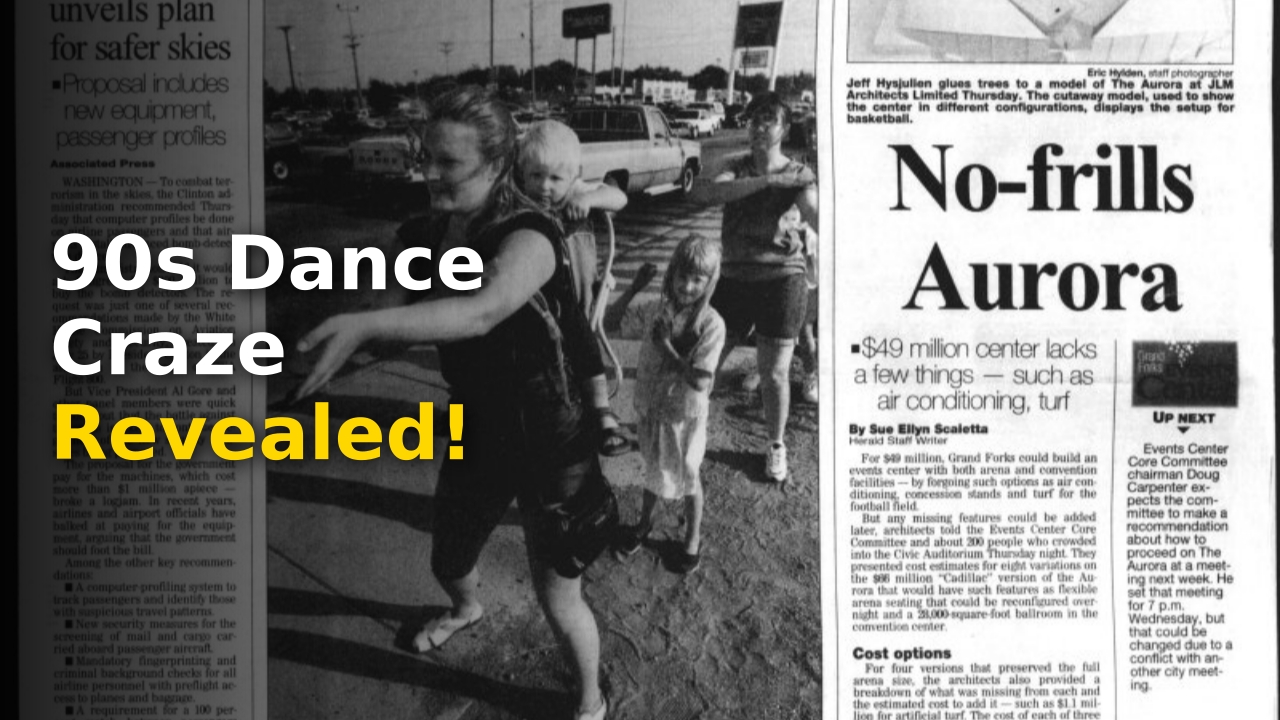
You might think the Macarena was just a fleeting fad, but the North Dakota Macarena record attempt on September 6, 1996, proves it was a seismic cultural phenomenon. On that sweltering Friday, approximately 500 students, parents, and grandparents descended upon South Washington Street in Grand Forks to cement their place in local history.
While global records set at major venues like Dodger Stadium dwarfed this local turnout, the North Dakota Macarena record became a symbolic moment for a community caught in the grip of the era’s biggest dance craze. It serves as a time capsule for mid-90s suburban life and the unifying power of pop culture at the turn of the decade.
The North Dakota Macarena Record Breakdown
The event was orchestrated by local station XL 93, led by disc jockey Rockin’ Rick. The challenge was simple: mobilize the community to perform the song three times back-to-back. Despite facing 90-degree temperatures and punishing 30-mph wind gusts, the turnout of 500 people was viewed as a resounding success for the city.
The location, stretching from B & N Oil Co. to the Italian Moon, turned a standard stretch of urban infrastructure into an impromptu dance floor. Passers-by and commuters were met with the sight of hundreds of locals moving in synchronized fashion. It was a bizarre, yet undeniably collective expression of 90s enthusiasm.

As noted by local media at the time, the appeal of the dance was its low barrier to entry. Critics often dismissed it as a mindless trend, comparing participants to lemmings, yet that lack of complexity was exactly why it became a global sensation. It required no specialized training or natural rhythm, allowing anyone from a toddler to a grandparent to join the ranks.
Why The Craze Dominated 1996
The Macarena was arguably the most significant cultural export of the year. Following the massive success of Los del Río’s track, schools across the country integrated the dance into music classes. This created a generation of youth who could perform the routine perfectly without a second thought.
For more historical context on how pop culture trends shaped the 90s, check out the evolution of 90s dance crazes on Bright Celebrity. These trends often served as a social lubricant, bridging the gap between generations who might otherwise have very little in common.
Statistical Analysis of the Event
| Metric | Observation |
|---|---|
| Estimated Attendance | 500 participants |
| Location | South Washington, Grand Forks |
| Temperature | 90 Degrees Fahrenheit |
| Wind Speed | 30 MPH Gusts |
By comparing this to the massive records set at stadiums during the same year, one realizes the scale of the national obsession. While the Grand Forks event didn’t touch the tens of thousands seen in major US cities, it achieved local dominance. You can find more data on cultural impact metrics at Forbes’ entertainment archives.
Historical Context and Cultural Legacy
The year 1996 was a turning point for global media. The internet was in its infancy, yet the Macarena spread with the efficiency of a modern viral video. It was a time when radio stations still held immense sway over local community activities and event planning.

Rockin’ Rick’s defense of the dance—claiming they had been playing it for two years prior to the 1996 boom—highlights the delay between regional interest and national saturation. For more insights into how local media shapes community identity, visit our guide on historical media influence.
Expert Perspective on 90s Trends
Sociologists often point to the Macarena as the ultimate ‘low-commitment’ social event. It required participants to stand in place, move their arms, and rotate, ensuring that even the most reluctant individual could participate. Unlike complex dance trends of the modern era, the Macarena was egalitarian, which was key to its longevity.
This event in Grand Forks was not just about the dance; it was about the act of assembly. In an era before social media, physical presence was the only metric of success. The 500 people standing on Washington Street proved that local radio still possessed the power to activate a community in real-time.
People Also Ask
What happened with the North Dakota Macarena record today?
On September 6, 1996, roughly 500 residents gathered in Grand Forks to set a state record for the largest group dance. The event was sponsored by radio station XL 93.
Why was the Macarena so popular in 1996?
The Macarena became popular because of its simple, repetitive steps that required no prior dance skill. It became a staple at schools, sporting events, and social gatherings throughout that year.
Did the Grand Forks event set a world record?
No, the Grand Forks event was for a state-level record. The world record at the time was held by crowds at Dodger Stadium, which numbered into the tens of thousands.
How did local residents react to the Macarena craze?
While many students and families embraced the trend enthusiastically, some locals viewed the dance with cynicism, labeling it as repetitive and lacking in creativity.
Reflecting on the 1996 Phenomenon
The North Dakota Macarena record serves as a vibrant piece of 90s Americana that continues to fascinate. It reminds us that pop culture is not just what happens on global stages, but how individuals interpret and perform those trends in their own backyards. For more deep dives into pop culture history, explore our digital archives at Bright Celebrity.
Whether you remember the arm movements or simply recall the song’s ubiquity, the dance remains a hallmark of 1996. It was a summer of intense heat and even more intense, synchronized hip-swinging that left an indelible mark on the history of Grand Forks.
More Like This
For more updates, check out our latest entertainment and sports news.