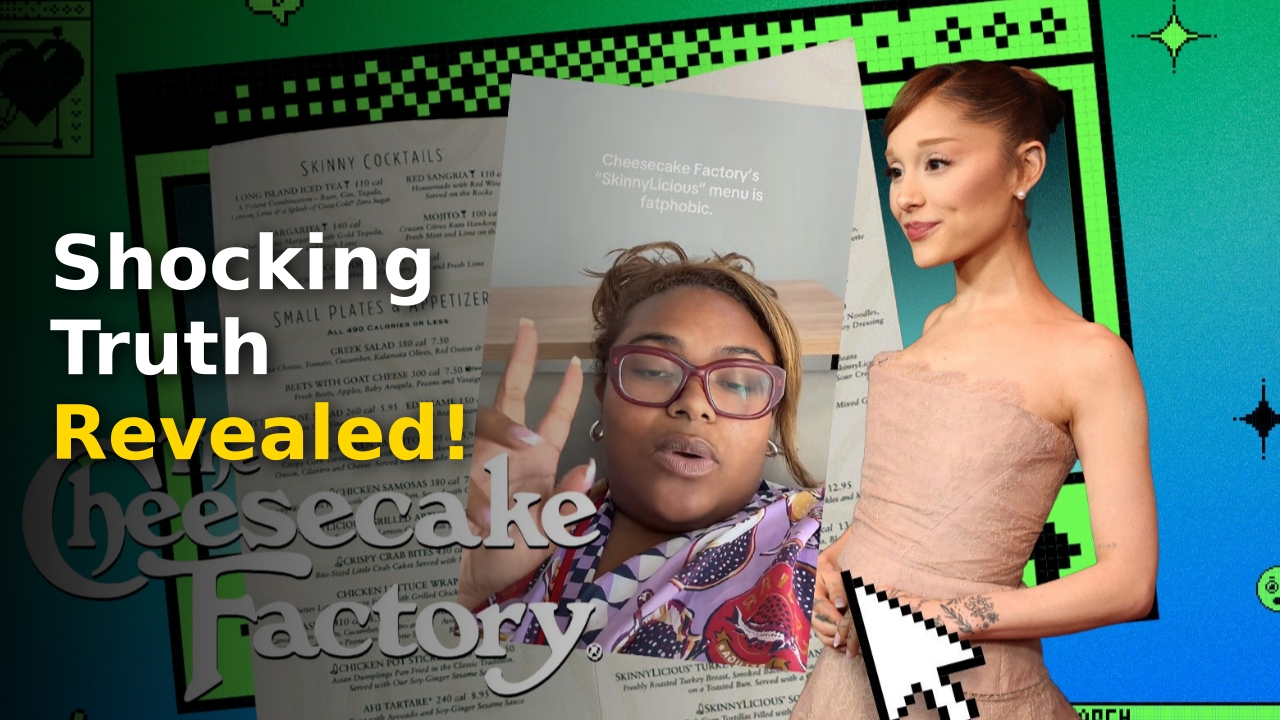
The internet can’t be normal about weight, and your daily feed proves that our collective digital consciousness has fractured into a bizarre, judgmental landscape. You have likely witnessed the intense whiplash that occurs when a high-profile creator or celebrity dares to exist in the public eye, only to be dismantled by a swarm of anonymous critics. This digital environment has turned the simple, human reality of body maintenance into a volatile battlefield where no one is allowed to just exist without external commentary.
Consider the recent controversy surrounding Samyra, a TikTok creator who dared to point out that the Skinnylicious menu at The Cheesecake Factory might carry underlying fatphobic implications. Instead of a nuanced debate about marketing language and accessibility, she was greeted with an avalanche of vitriol targeting her personal appearance. It seems that when an average person addresses systemic issues, the mob immediately pivots to ad hominem attacks, proving that internet discourse regarding health and beauty standards has completely lost its moral compass.
The Internet Can’t Be Normal About Weight
The cultural obsession with dissecting bodies has reached a fever pitch, creating a double standard that fluctuates wildly depending on the individual under the lens. When Ariana Grande faces public scrutiny regarding her weight, the narrative shifts from “health awareness” to an immediate, protective demand for privacy. This inconsistency exposes a fundamental problem: we are not actually concerned with health, but rather with the performative act of evaluating others based on arbitrary standards that change overnight.

We find ourselves stuck in a cycle of constant litigation against the bodies of others. Experts like Sesali Bowen, author of Bad Fat Black Girl, have pointed out that this behavior is deeply rooted in our inability to view fatness as anything other than a moral failing. The internet amplifies this bias, allowing users to project their own insecurities onto public figures under the guise of concern. You see this everywhere from Instagram comments to viral threads on X, where the goal isn’t empathy but the reassertion of a narrow beauty hierarchy.
This isn’t just about influencers; it is a systemic issue that impacts how we interact with our own reflections. The constant exposure to “body-checking” content and weight-loss marketing creates a feedback loop that rewards toxic commentary. When you engage with this content, you are indirectly fueling the machine that treats bodies as public property rather than individual, autonomous beings. This is why you must understand the current trends in celebrity culture and how they reshape our self-perception daily.
The irony is that as we become more vocal about inclusivity, the actual methods of policing bodies have become more sophisticated and subtle. We hide behind the vocabulary of “wellness” and “longevity” to mask deep-seated prejudices that haven’t changed in decades. By labeling certain foods or body types as “wrong” or “problematic,” the online community maintains a rigid social structure that keeps everyone in a state of hyper-vigilance. It is a exhausting, never-ending game of control.
To navigate this landscape, you must recognize that your engagement on these platforms has a direct impact on the algorithms that push this content. By choosing to ignore the rage-bait and focusing on voices that advocate for body neutrality, you can reclaim your digital experience. The path forward involves rejecting the premise that a stranger’s body is a topic for debate, regardless of their status or the context of their appearance.
Patterns of Online Harassment
- The shift from content critique to personal appearance attacks.
- The weaponization of medical jargon to justify bullying.
- The hypocrisy of defending A-list stars while attacking everyday creators.
- The role of algorithmic rage in boosting visibility for toxic threads.
- The psychological impact of perpetual body-policing on younger users.
Data and Cultural Trends
The following table illustrates the stark disparity in how body-related discourse is handled across different digital archetypes, showing how the internet reacts differently to established power structures versus individual creators.
| Category | Reaction Intensity | Primary Defense Mechanism |
|---|---|---|
| A-List Celebrities | High (Protective) | Privacy Advocacy |
| Content Creators | Critical (Hostile) | Debunking & Satire |
| Corporate Brands | Medium (Mixed) | Marketing Ethics |
We are observing a massive shift in how public sentiment is manufactured. When The Cheesecake Factory‘s branding is challenged, the discourse quickly devolves from corporate accountability to individual weight-shaming. This tactic serves to silence the original critique by shifting the focus onto the messenger’s physical form. As noted in major global news reporting, these tactics have become a staple of modern online culture wars, particularly as we approach 2026. You are seeing the weaponization of “concern trolling” at an unprecedented scale, where the primary objective is to render the critic irrelevant by pathologizing their body.
This manipulation is not accidental. Tech platforms thrive on high-arousal emotions like anger and disgust. By framing body-related debates as moral crises, the algorithms ensure you stay glued to your screen, debating the validity of a stranger’s diet or aesthetic choices. When you understand that these interactions are being monetized, you can begin to distance yourself from the manufactured outrage that defines this era.
Look at the language used during these incidents. It often centers on “health” or “fitness” as an objective truth, ignoring the vast diversity of human biology and socioeconomic factors that dictate body shape. This reductionist approach is a hallmark of the modern digital landscape. We have traded nuanced understanding for quick, high-energy insults that provide a temporary sense of moral superiority for the commenter.
You deserve better than a digital environment that forces you to constantly measure yourself against these impossible benchmarks. True progress will only happen when we collectively decide to stop participating in the public trial of bodies. By moving toward a culture of neutrality, we can reclaim the digital space from the toxic forces that thrive on our collective insecurity. This is the only way to break the cycle and find a more human way to exist online.
The future of online culture depends on our ability to distinguish between valid health discussions and performative bullying. We must challenge the platforms that monetize this hate and the influencers who benefit from the division. If you want to change the narrative, you have to stop rewarding the rage-bait. The power to shift the conversation rests entirely with the individual user and the choices they make regarding their own digital participation.
Reflections on Our Future
We have reached a breaking point where the digital obsession with physical form has effectively blinded us to the reality of the human condition. The internet, in its current state, cannot be normal about weight because it is built on a foundation of comparison and commodification. To move beyond this, we must prioritize humanity over aesthetic perfection, fostering spaces that honor diversity and reject the impulse to categorize others based on superficial metrics.
Remember that you are more than a data point or a set of physical traits. The next time you find yourself caught in an online debate about someone’s size, take a step back and question the intent behind the discourse. Ask yourself if this conversation is productive or if it is merely feeding an industry of judgment that thrives on your distress. By choosing to disengage from the noise, you regain your agency in a world that is obsessed with taking it away.
The evolution of our digital behavior depends on the quiet resistance of users like you. As we look ahead to the challenges of the coming years, the goal is to cultivate an environment where bodies are simply bodies—not political statements, not marketing tools, and not objects for public consumption. Whether it’s the influence of celebrities or the rise of new digital trends in 2026, the power to define our own worth remains, ultimately, in your own hands.
More Like This
For more updates, check out our latest entertainment and sports news.