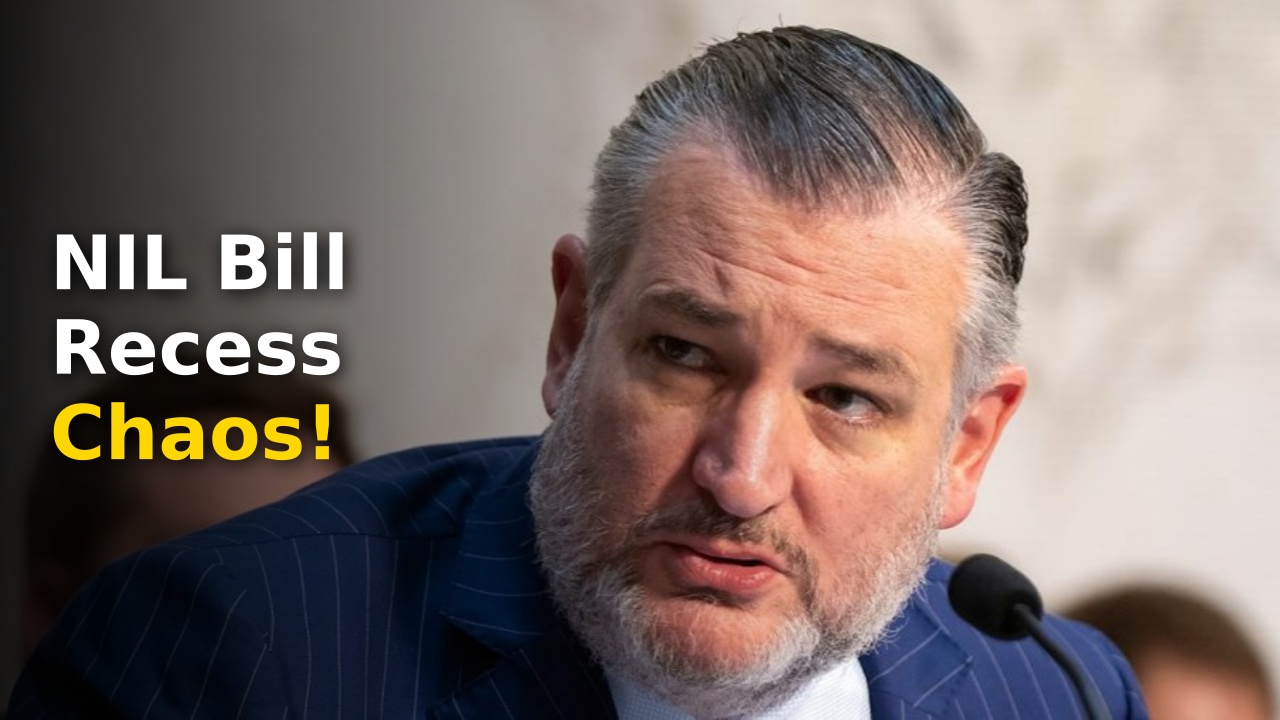
The NIL bill is currently acting as a massive legislative chokepoint, forcing a tense standoff that threatens the Senate’s summer vacation. You might think college athletics and federal funding are worlds apart, but in the halls of the Capitol, they are now inextricably linked. Senate Republicans have made it clear that without movement on this specific legislation, the path to the August recess remains completely blocked.
You are witnessing a high-stakes game of political chicken where amateur sports regulations have become the ultimate leverage. Sen. Jerry Moran (R-Kan.) warned his colleagues that this measure, officially known as the Protect College Sports Act, is the primary hurdle for the continuing resolution. If a deal is not reached quickly, the planned five-week break for lawmakers could evaporate before your eyes.
This legislative logjam affects more than just football and basketball players across the country. It is currently holding up the confirmation of Todd Blanche as Attorney General and stalling essential government funding. The frustration in Washington is palpable as the 2026 legislative calendar faces its most significant test yet, leaving the future of student-athlete compensation in a state of total flux.
NIL bill gridlock factors
The NIL bill has moved from a niche sports issue to a national priority that has effectively paralyzed Senate operations. Sen. Jerry Moran identified the bill as a “chokepoint” during a private GOP lunch, emphasizing that it must be addressed to move forward. The core of the problem lies in the approximately 10 holds placed on the bill by various senators who are unhappy with specific provisions.
You should understand that this legislation aims to set national standards for how college athletes are recruited and paid for their name, image, and likeness. Without a federal law, a messy patchwork of state regulations continues to govern the industry, creating an uneven playing field. Major universities are begging for clarity, but the political price for that clarity has become incredibly high this August.

Rules for compensation
- The bill establishes a clear framework for how student-athletes can sign endorsement deals without losing their eligibility.
- It seeks to prevent “pay-for-play” schemes that masquerade as legitimate NIL opportunities.
- The legislation would provide a safe harbor for schools, protecting them from certain antitrust lawsuits.
- Standardized contracts would become mandatory for all high-value deals involving collegiate stars.
Recruitment standards
- New rules would govern how boosters and third-party collectives interact with prospective recruits.
- The NIL bill aims to bring transparency to the transfer portal, reducing the chaotic bidding wars currently seen in 2026.
- It mandates financial literacy programs for athletes to ensure they aren’t exploited by shady agents.
- Federal oversight would replace the current NCAA enforcement mechanisms, which many consider toothless.
The tension surrounding the NIL bill is exacerbated by the fact that it is bipartisan in theory but controversial in practice. While both sides agree that the current system is broken, they disagree on the level of control the federal government should exert. Some senators believe the bill gives too much power to the NCAA, while others think it doesn’t go far enough to protect the athletes themselves.
The “hotline” alert circulated by Senate GOP leaders on Friday afternoon proposed a series of votes to break the fever. This included amendments to the continuing resolution to remove a controversial hemp provision. However, even these procedural moves are contingent on finding a path forward for the sports legislation that everyone seems to be fighting over.
Senate recess timing crisis
The NIL bill is now the primary obstacle to the traditional August recess, a period when lawmakers return home to meet with constituents. Senate Majority Leader John Thune (R-S.D.) has a packed to-do list that is currently gathering dust. You can feel the urgency in his recent statements, where he acknowledged that getting clarity on NIL is the essential “endgame” for this session.
Lawmakers are desperate to avoid the optics of a government shutdown or a failed confirmation for the Attorney General. Yet, the NIL bill remains the stubborn piece of the puzzle that won’t fit into the frame. The five-week recess is meant to start immediately, but the “Augtober” weather—the early arrival of autumn-like temperatures—finds them still trapped in D.C.

Recess traditions
- The August recess has been a staple of the Congressional calendar since the 1970 Legislative Reorganization Act.
- It allows senators to escape the brutal Washington humidity and focus on local re-election efforts.
- Many legislative staffers rely on this time for their only significant break of the year.
- Missing the start of the recess is seen as a sign of major dysfunction within the leadership.
The funding deadline
- The continuing resolution is required to keep the federal government running past the current fiscal deadline.
- A failure to pass this funding would lead to a partial government shutdown in the middle of summer.
- Republicans are also trying to confirm Todd Blanche, a key ally of the Trump administration, to lead the Justice Department.
- Every day spent debating the NIL bill is a day lost for these critical administrative priorities.
While you might be following the latest updates on star athlete earnings, the senators are more worried about the political fallout of a delayed vacation. The Protect College Sports Act has essentially hijacked the legislative process. It is a rare instance where sports policy has the power to sink a federal budget and an Attorney General confirmation simultaneously.
Sen. Raphael Warnock (D-Ga.) has been one of the most vocal critics of rushing the process. He argues that the regulations for college sports are far too “complicated” to be rammed through in a late-night session. His willingness to wait has put him at odds with Republicans who are eager to check the final boxes on their list and leave town.
The drama isn’t just about the bill itself, but how it is being used as a bargaining chip. Warnock previously held up a Russia sanctions bill until he received assurances regarding President Trump’s expanded tariff authority. This pattern of using popular or necessary bills to extract concessions is precisely what is happening with the NIL bill right now.
Key legislative data points
To understand the sheer scale of the legislative pile-up, you have to look at the numbers. The Senate isn’t just dealing with one bill; it’s managing a waterfall of high-priority items. The NIL bill sits at the very top of this waterfall, and until it moves, nothing else can flow through to completion. It is the ultimate bottleneck in a town famous for its traffic jams.
Leadership had hoped to have everything settled by Friday afternoon, but those hopes are fading as Saturday approaches. The hotline proposed by John Thune includes a test vote on a Senate budget resolution, which most insiders expect to fail. This is a common tactic to show that certain paths are closed, forcing the opposition back to the negotiating table.
| Legislative Item | Primary Sponsor/Lead | Status |
|---|---|---|
| NIL Bill (Protect College Sports Act) | Jerry Moran / Ted Cruz | Stalled (10 Holds) |
| Attorney General Confirmation | Todd Blanche | Awaiting Vote |
| Continuing Resolution | John Thune | Pending Amendments |
| Photo ID Voting Measure | Jon Husted | Scheduled |
Another major factor in the delay is the measure sponsored by Sen. Jon Husted (R-Ohio). This controversial bill would require photo identification to vote in federal elections. While it has strong support within the GOP, it faces fierce resistance from Democrats, adding another layer of complexity to the NIL bill negotiations.
According to reports from Reuters and other major outlets, the Senate is also dealing with internal squabbles over a hemp-related provision. This provision was tucked into the continuing resolution and has become a point of contention for several Republicans. Stripping it out requires a unanimous consent agreement that has proven elusive.

The data shows a Senate that is trying to do too much with too little time. You can see how one small issue, like college athlete recruiting, can create a ripple effect that touches every part of the federal government. The NIL bill is no longer just about sports; it is about the ability of the United States Senate to function as a legislative body in 2026.
Heavy hitters in DC
The faces behind this NIL bill drama are some of the most powerful people in America. Ted Cruz (R-Texas), the chairman of the Senate Commerce Committee, has been the primary engine pushing for a vote. He sees this as a signature achievement that would bring order to the chaos of NCAA sports, and he isn’t willing to let it go easily.
On the other side of the aisle, Raphael Warnock represents the skepticism of many Democrats. He is not necessarily against the NIL bill, but he refuses to be rushed into a decision that could have long-term consequences for Black and brown athletes who make up a huge percentage of the collegiate sports workforce. His stance has turned him into the primary obstacle for Cruz.
Ted Cruz’s push
- Cruz has spent months building a coalition to support the Protect College Sports Act.
- He believes a federal standard is the only way to save the traditional college sports model.
- The Texas senator is known for his aggressive legislative tactics and is using the recess deadline as a weapon.
- He has threatened to block other priorities if his NIL bill doesn’t get a fair hearing on the floor.
Raphael Warnock’s delay
- Warnock is focused on the “labor” aspect of college sports, viewing athletes as workers with rights.
- He wants stronger health and safety protections included in any federal NIL legislation.
- The Georgia senator is also using his leverage to ensure the USTR Jamieson Greer limits tariff authorities.
- He has proven that a single senator can hold up the entire recess if their concerns are not met.
John Thune, meanwhile, is stuck in the middle. As the Majority Leader, his job is to keep the trains running on time. He has to balance the demands of his firebrand chairmen like Cruz with the tactical delays of the Democratic minority. The NIL bill has become his biggest headache as he tries to navigate his first year in this leadership role.
Then there is Todd Blanche, whose professional fate is currently tied to a sports bill. As the nominee for Attorney General, he is the Trump administration’s top priority for the Justice Department. The fact that his confirmation is being delayed by debates over NIL is a testament to how strange D.C. politics has become in 2026.

You have to admire the sheer audacity of the strategy being used here. By making the NIL bill the “chokepoint,” Senate leaders are forcing every member to take a side. There is no room for neutrality when your plane ticket home is on the line. The pressure on Warnock and other holdouts will only increase as the August heat continues to rise.
The NIL bill future
What happens next for the NIL bill will set the stage for the next decade of American sports. If it passes, you will see a massive shift in how money flows through universities like Alabama, Ohio State, and Texas. If it fails, the NCAA may face an existential crisis that could lead to the total professionalization of college athletics.
The Protect College Sports Act is more than just a set of rules; it is a statement of values. It asks whether student-athletes are students first or employees. This fundamental question is why the NIL bill is so difficult to pass. There is no easy consensus when billions of dollars in revenue and the education of thousands of young people are at stake.
Impact on schools
- Smaller schools fear that a federal NIL bill will favor elite programs with deeper pockets.
- The legislation could lead to a massive increase in compliance costs for athletic departments.
- Title IX implications remain a major concern, as most NIL money currently goes to male athletes.
- A national standard would at least provide athletic directors with a single rulebook to follow.
National standards
- A federal law would end the “race to the bottom” where states pass increasingly lax rules to attract recruits.
- It would provide a centralized database for all NIL contracts, making it easier to spot corruption.
- The Federal Trade Commission would likely take over enforcement, giving the rules real teeth.
- Athletes would have a clear path to appeal eligibility decisions made by the NCAA.
As the clock ticks down toward the August recess, the NIL bill remains the eye of the storm. Whether the Senate stays through the weekend or finds a last-minute compromise, the impact of this standoff will be felt long after the lawmakers finally reach the beach. You can bet that every college coach in the country is watching these proceedings with bated breath.
In the end, the NIL bill has proven that in modern Washington, nothing is simple. A bill meant to help athletes has become the anchor holding back the entire federal government. As the sun sets on another long day in the Capitol, the only thing that is certain is that the world of college sports will never be the same again. Keep your eyes on the Senate floor, because the final play of this game is about to be called.
The NIL bill saga is a reminder that even the most well-intentioned legislation can become a victim of political maneuvering. You might be frustrated by the delay, but this is how the system works when the stakes are this high. Hopefully, by the time the August recess finally begins, a fair and balanced deal will be in place for every student-athlete in the nation.
More Like This
For more updates, check out our latest entertainment and sports news.