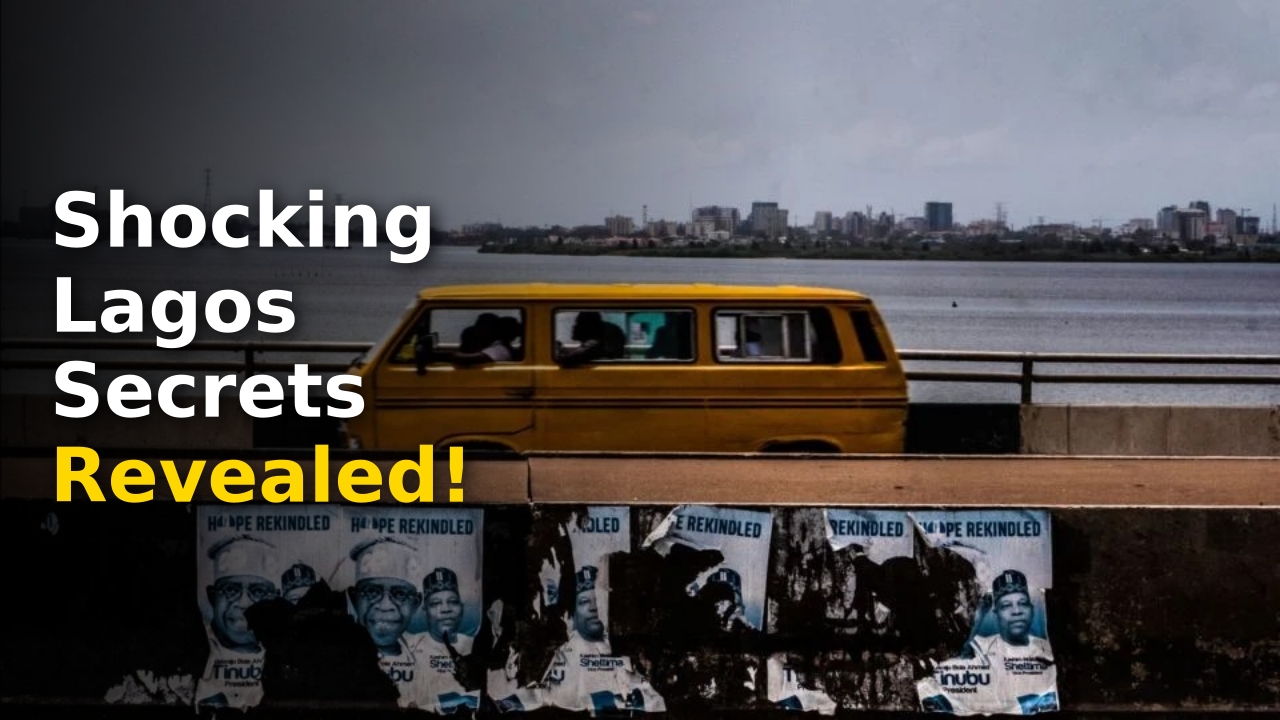
The Nigerian Dream represents a glittering mirage of wealth that often masks a gritty reality of survival and systemic inequality in Africa’s most populous city. You might think you know the story of urban migration, but director Ugochukwu Azuya is about to shatter every stereotype you hold about life in Lagos.
His latest project, I Live in V.I., recently captured the spotlight at the 2026 Locarno Film Festival within the prestigious Open Doors platform. This film isn’t just a movie; it is a visceral examination of how far one young woman will go to maintain the illusion of success.
You are invited to journey through a landscape where grief meets gentrification and where the lines between reality and fantasy blur. As Florence navigates the treacherous waters of the hospitality industry, she discovers that the price of belonging is often higher than anyone can afford.
Nigerian Dream Realities
The Nigerian Dream starts for Florence in the quiet corners of Akwa Ibom before she is thrust into the neon-lit chaos of Lagos. Following the sudden death of her father, the 23-year-old protagonist moves to the city seeking a fresh start and financial stability.
Lagos promises a world of luxury and high-rise dreams, yet the reality Florence finds is a crumbling apartment and a soul-crushing commute. You see her transition from a hopeful dreamer to a survivor who must confront the harsh truth of the city’s class divide.
The Illusion of Victoria Island
- Victoria Island (V.I.) serves as the ultimate symbol of Nigerian wealth and corporate power.
- Living in V.I. suggests a social status that grants immediate respect and perceived security.
- The film explores the “fake it till you make it” culture prevalent in high-pressure urban environments.
To keep her job, Florence resorts to squatting in a decaying, abandoned government construction project from the 1980s. This setting provides a haunting backdrop for her spiral into exhaustion and psychological distress as she struggles with insomnia.
She tells her colleagues a elaborate lie about living with a famous, forgotten aunt in a posh neighborhood. This fabrication allows her to keep her dignity while her physical environment slowly erodes her sense of self.
The script uses a “möbius-strip-esque” structure to mirror the repetitive and inescapable cycle of poverty in the city. You will feel the claustrophobia of her situation as the narrative loops through her daily struggles and mental unraveling.

Navigating Lagos Streets
Lagos is portrayed not just as a location but as a living, breathing character with its own unpredictable temperament. Director Ugochukwu Azuya emphasizes that every resident is essentially a reflection of the city’s chaotic energy.
The film captures the stark contrast between the “one percent” and the millions of workers who keep the city running. You will witness the “eccentricities and bravado” that define the Nigerian spirit in the face of infrastructure failure.
Mapping The Urban Jungle
- The narrative spans from the academic hubs of Yaba to the bustling transport centers of Oshodi.
- It touches on the coastal beauty of Elegushi and the historic density of Obalende.
- Locations like Ojo and Gbagada highlight the vast geographic and social span of the Lagos metropolis.
The cinematography aims to showcase the “poetry of the city,” which the director describes as both brutal and magical. You will see Florence moving through these spaces as a surrogate for millions of young people dealing with the constraints of capitalism.
Survival in Lagos requires a specific type of ingenuity and a very particular sense of humor. The film lean into the “gleefully sardonic texture” of Nigerian comedy to tell a story that would otherwise be purely tragic.
As you explore the latest entertainment trends, you realize that stories of urban alienation are becoming increasingly vital. I Live in V.I. taps into a global sentiment where people feel displaced even within their own hometowns.
Locarno Success Stories
The 2026 edition of Open Doors provided the perfect launchpad for this ambitious social satire. This program focuses on regions where artistic expression is often at risk, providing a platform for “equity-seeking communities.”
Produced by Olubunmi Ogunsola of Ensemble, the project was recognized for its unique vision and potential for international impact. The team’s efforts culminated in winning the Tabakalera-San Sebastian Film Festival Residency Award.
Developing African Cinema
- Open Doors serves as a co-production platform and talent development hub for emerging directors.
- The residency award offers a dedicated development cycle to ensure the film reaches its highest potential.
- Collaboration between Nigerian filmmakers and European festivals strengthens global cultural exchange.
Azuya’s previous work, the 2023 short film Swimming in Sea of Trauma, already hinted at his interest in psychological landscapes. This new feature-length project allows him to expand those themes into a broader social commentary.
The Locarno Film Festival, which you can read more about on Wikipedia, has a long history of championing independent cinema. By showcasing I Live in V.I., the festival reaffirms its commitment to diverse storytelling from the African continent.
The production company, Ensemble, is focused on giving the film the time it needs to mature. This careful development process is rare in an industry that often rushes content to market, ensuring a high-quality final product.
Satire And Capitalism
At its heart, I Live in V.I. is a scathing critique of how capitalist structures dictate human behavior and identity. You see Florence being stripped of her vulnerability as she attempts to fit into a system that values material wealth above all else.
The director notes that we are all, in some way, “just a city,” implying that our internal states are shaped by the environments we inhabit. The Nigerian Dream becomes a trap when the society is constructed around rigid class strata and gender expectations.
Psychology Of The City
- Materialistically driven societies often force individuals to suppress their genuine emotions for the sake of survival.
- Classism in Lagos manifests in every interaction, from the workplace to the streets.
- The “spirit of adapting” can sometimes be a double-edged sword that leads to further exploitation.
The film explores how the collective psyche of a city is formed by the constant friction between different social groups. You will see characters who use bravado as a shield against the crushing weight of their economic reality.
Ugochukwu Azuya draws from personal experience to illustrate the mechanisms of life in a society obsessed with status. His perspective as a young person living in Lagos provides an authentic lens through which to view these complex issues.

The narrative doesn’t shy away from the “insomnia and unprocessed grief” that many urban dwellers experience. It asks you to consider what happens to the human soul when it is constantly forced to perform for the benefit of a “good life” illusion.
Global Urban Alienation
While the setting is uniquely Nigerian, the themes of the film resonate far beyond the borders of Lagos. Anyone who has ever left their hometown for a major city will find a piece of themselves in Florence.
Whether it is New York City, Tokyo, or São Paulo, the promise of the “cosmopolitan city” is a universal draw. You understand the hope of changing your material conditions and the crushing loneliness that can follow when that hope fails.
Cities are described as “unique milieus” with a rhythm that can be overwhelming to outsiders. The massive concrete backdrops of modern metropolises often lead to a profound lack of human connection despite the density of people.
| Film Feature | Details and Description |
|---|---|
| Original Title | I Live in V.I. |
| Project Genre | Social Class Satire / Surrealism |
| Primary Setting | Lagos, Nigeria (Victoria Island) |
| Protagonist | Florence (23), Hospitality Worker |
| Key Themes | Gentrification, Urban Alienation, Grief |
| Award Won | Tabakalera-San Sebastian Residency Award |
The film challenges the viewer to look past the “fantasies of wealth” and see the displaced people living in the shadows of failing infrastructure. It is a call for empathy in a world that often prizes efficiency over humanity.
The “Nigerian sense of humor” acts as a bridge, allowing audiences from different cultures to engage with difficult topics. You will find yourself laughing at the absurdity of the situations, even as the tragedy of the situation sinks in.
Future Nigerian Dream
The Nigerian Dream as depicted in I Live in V.I. is a complex, multi-layered concept that refuses to offer easy answers. As the project moves into its next phase of development, the anticipation continues to grow within the film community.
With the support of the Tabakalera-San Sebastian residency, the team is poised to create a film that will leave a lasting mark on world cinema. You should keep a close eye on Ugochukwu Azuya as he emerges as a powerful new voice in African storytelling.
This film is more than just a story about one woman; it is a mirror reflecting the struggles of an entire generation. Whether you live in a skyscraper in V.I. or a small apartment in a distant town, the story of Florence will haunt you.
The Nigerian Dream may be elusive, but through cinema, we can begin to understand the forces that shape our lives and our cities. Look out for the release of I Live in V.I. as it prepares to take the world by storm in the coming years.
Ultimately, the film serves as a reminder that the poetry of the city is found in its people, not its buildings. You are part of the constellation, and your story matters in the grand, chaotic design of the urban world.
More Like This
For more updates, check out our latest entertainment and sports news.