Key Takeaways
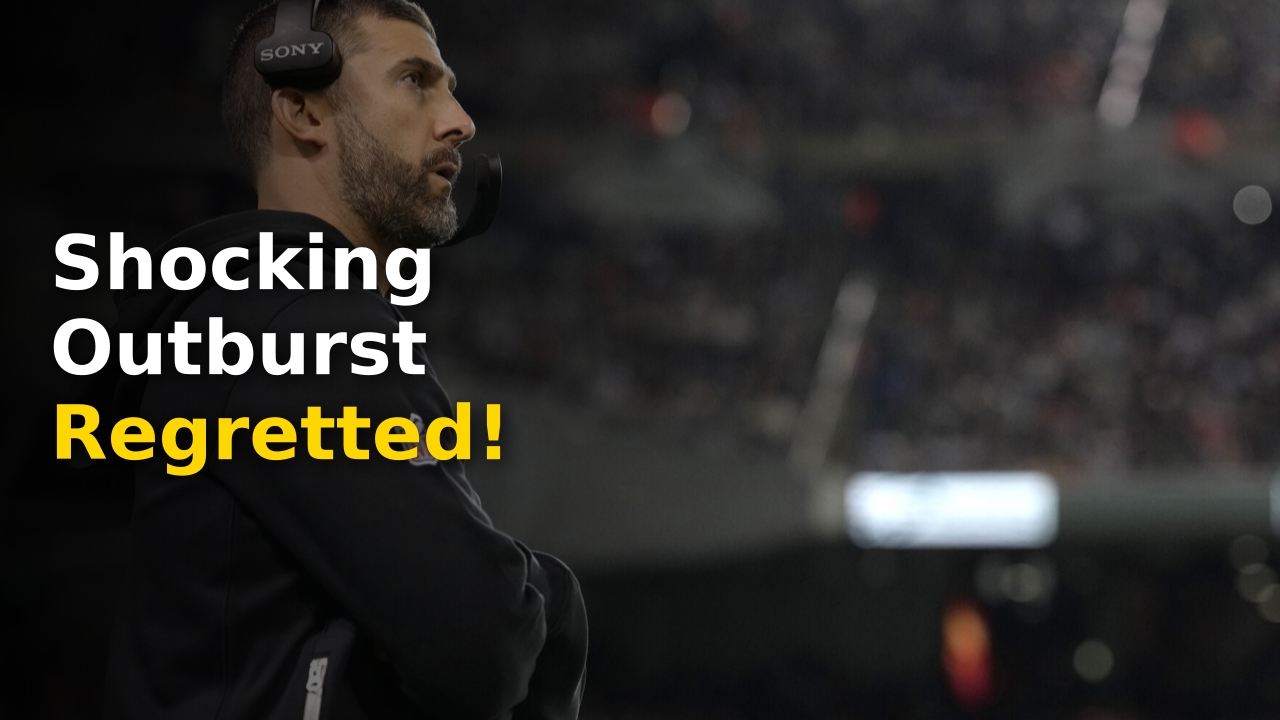
| Outburst Regret: Head coach Nick Sirianni publicly apologized for his highly emotional, NSFW reaction directed at Bears linebacker D’Marco Jackson. |
| Injury Scare: Franchise quarterback Jalen Hurts temporarily exited the game to undergo mandatory NFL concussion testing following a violent sideline collision. |
| Costly Penalty: The critical unnecessary roughness penalty against the Bears was neutralized by an offensive holding call on right tackle Lane Johnson. |
| Game Outcome: The Eagles struggled significantly without offensive rhythm, ultimately falling to a disappointing 27-7 defeat against Chicago at Soldier Field. |
You might think a seasoned professional football coach would keep his cool during a high-stakes gridiron clash, but the latest Nick Sirianni Reaction proved that raw emotion still dominates the modern game. When star quarterback Jalen Hurts took a brutal sideline hit against the Chicago Bears, the emotional dam broke for the Philadelphia head coach. This explosive moment quickly overshadowed the actual game, igniting a massive debate across the sports world regarding decorum, player safety, and coaching leadership. Our exclusive sports updates suggest that this specific outburst marks a critical turning point in how the media evaluates the volatile coach’s sideline demeanor.
The shocking scene unfolded on live television as cameras caught the animated coach screaming explicit phrases directly toward the opposing sideline. Fans and analysts watched in disbelief as the high-strung leader lost his composure while his backup quarterback prepared to enter a critical red-zone situation. This immediate outburst set off a chain reaction of criticism, forcing the coach to address his behavior in a highly anticipated postgame press conference. The fallout has raised serious questions about the fine line between defending your franchise player and maintaining the professional standard expected of an NFL head coach.
As the Philadelphia franchise processes this frustrating loss, the conversation has shifted from tactical execution to the psychological state of its leadership. The incident highlights the intense pressure modern coaches face under the constant glare of broadcast cameras and social media scrutiny. In a league where composure is often equated with competence, such public displays of anger can either galvanize a locker room or serve as an unwelcome distraction. Understanding the mechanics of this sideline confrontation requires a deep dive into the play itself, the aftermath on the field, and the historical context of coaching temperaments.
Explaining Nick Sirianni Reaction
The sequence that triggered the volatile Nick Sirianni Reaction began midway through the second quarter at Soldier Field. Trailing 7-0, the Philadelphia offense was desperate for a spark, orchestrating a drive that pushed deep into Chicago territory. On second down, Jalen Hurts was forced to scramble out of the pocket, executing a standard play-extension maneuver toward the right boundary. As he approached the first-down marker near the 13-yard line, Bears linebacker D’Marco Jackson closed in rapidly, delivering a powerful blow just as the quarterback was crossing the white sideline marker. The sheer force of the impact sent Hurts tumbling backward, landing awkwardly on the hard turf.
The immediate reaction from the officiating crew was a flag for unnecessary roughness, acknowledging the late nature of the hit. However, any tactical advantage for Philadelphia was instantly neutralized when the referees announced an offsetting offensive holding penalty on veteran right tackle Lane Johnson. This officiating decision left the Eagles with nothing to show for the play except a bruised quarterback who was visibly shaken. On the sideline, Sirianni lost all semblance of restraint, directing a barrage of profanities toward the Bears defense, specifically targeting Jackson. The broadcast cameras captured every syllable of his NSFW tirade, leaving no doubt about the coach’s intense fury.
The Medical Intervention
While Sirianni was expressing his rage, the medical staff immediately intervened to assess the health of their franchise quarterback. Under the strict protocols established by the NFL, independent concussion spotters mandated that Hurts head to the medical tent for comprehensive evaluation. This sudden departure forced backup quarterback Andy Dalton into the game without the benefit of a warm-up sequence. The transition was abrupt, leaving the offense in a state of administrative chaos during a crucial red-zone possession.
The loss of Hurts, even temporarily, changed the entire strategic approach of the drive. Dalton was tasked with executing handoffs to star running back Saquon Barkley, who fought courageously to gain yardage down to the 2-yard line. Despite the ground game’s success, the drive ultimately stalled, culminating in a devastating turnover that shifted the momentum entirely. This sequence demonstrated how quickly an emotional distraction on the sideline can precede a catastrophic failure of execution on the playing field.
The Strategic Breakdown
With third-and-goal looming at the 2-yard line, the pressure was immense for the backup unit to deliver points. Dalton attempted a quick pass to receiver Dontayvion Wicks, but the timing was visibly off. Chicago defensive back Dillon Thieneman anticipated the route perfectly, undercutting the pass in the end zone to secure a crucial interception. This turnover not only denied the Eagles much-needed points but also vindicated the Bears’ aggressive defensive approach.
The interception was a direct consequence of the disrupted offensive flow caused by the sudden quarterback change. Had the starting quarterback remained in the game, the play-calling and execution might have yielded a vastly different outcome. Instead, the Eagles found themselves heading back to the sideline with zero points and an increasingly agitated head coach. This failure highlighted the vulnerability of a team that allows emotional chaos to dictate its focus during high-pressure moments.
Expert Take: Sports analysts from major publications argue that coaching reactions during sudden-change situations serve as a barometer for team discipline. When a head coach focuses his energy on officiating or opposing players rather than organizing his backup quarterback, it creates a systemic vulnerability. The failure to secure points in the red zone during Hurts’ brief absence was a direct byproduct of this organizational disarray. To remain competitive among elite gridiron competitors, a coaching staff must exhibit emotional control, transforming chaotic moments into structured opportunities rather than public spectacles.

Analyzing Key Game Metrics
To fully comprehend the magnitude of this defeat, we must analyze the structural statistics that defined the afternoon. The Eagles entered the contest expecting to dominate the line of scrimmage, but instead found themselves thoroughly outmatched in almost every major statistical category. The offense struggled to sustain drives, while the defense could not get off the field against a highly efficient Chicago offensive attack. The following table provides a comprehensive comparison of the team performances, highlighting the areas where Philadelphia fell short.
| Statistical Category | Philadelphia Eagles | Chicago Bears |
|---|---|---|
| First Downs | 14 | 22 |
| Total Net Yards | 210 | 385 |
| Rushing Yards | 88 | 165 |
| Passing Yards | 122 | 220 |
| Turnovers | 3 | 0 |
| Penalty Yards | 85 | 40 |
| Time of Possession | 24:12 | 35:48 |
The statistical disparity clearly demonstrates that the Eagles were thoroughly dominated in physical execution and operational discipline. Recording only 14 first downs compared to Chicago’s 22, the Philadelphia offense simply could not sustain drives or establish any sort of geographic rhythm on the field. This lack of consistency placed immense pressure on a defensive unit that was already struggling to contain the Bears’ multi-faceted ground game. The resulting discrepancy in time of possession further fatigued the defense, leading to late-game breakdowns.
Furthermore, the three turnovers committed by Philadelphia proved to be the ultimate self-inflicted wounds that prevented any hope of a comeback. In professional football, winning games with a minus-three turnover differential is an statistical anomaly, particularly on the road in hostile environments. When combined with 85 penalty yards, many of which were pre-snap infractions or emotional discipline flags, it becomes clear that the team’s struggles on the field mirrored the emotional instability displayed by their head coach on the sideline.
Contextualizing Sirianni Coach History
To understand why this specific outburst generated such a massive media firestorm, one must examine the career arc and public persona of the Philadelphia head coach. Since his hiring, Sirianni has built a reputation as one of the most animated and emotionally expressive leaders in the NFL. While this passion has endeared him to a notoriously intense fan base during winning streaks, it has also drawn significant criticism from national commentators during periods of struggle. The coach has frequently been involved in sideline shouting matches with opposing players, fans, and even officials, creating a polarizing narrative around his leadership style.
Historically, coaches who operate with this level of emotional volatility are highly dependent on positive results to justify their behavior. When the team is winning, these outbursts are often framed as competitive fire and authentic leadership that motivates players to perform at their highest levels. However, when the team suffers embarrassing defeats like the **27-7 loss** to Chicago, that same passion is viewed through a critical lens, categorized as a lack of professionalism and self-control. This dynamic has created an environment of heightened scrutiny around every gesture and word uttered by the coach during game days.
The Postgame Press Conference remorse
In the quiet aftermath of the locker room, a visibly subdued head coach took the podium to address his actions and express deep regret. He acknowledged that his emotions got the better of him during a highly charged moment, recognizing that his primary responsibility is to remain a steadying force for his players. His apology was direct, reflecting an understanding that his behavior did not meet the standards of the organization or the league. This public display of humility was an attempt to defuse the growing controversy before it could further disrupt the team’s focus.
“I always come away when I have a moment like that with remorse,” Sirianni explained to the gathered media. He added that he must learn to be more steady in those highly tense situations, echoing the advice he constantly gives to his players about moving on to the next play. This admission of personal failure was a necessary step in rebuilding credibility with both his players and the public. Whether this apology will lead to a permanent change in sideline behavior remains a subject of intense speculation among team insiders.
The Impact on Team Culture
The relationship between a head coach’s demeanor and the overall culture of a locker room is complex and highly scrutinized. Players often mirror the emotional state of their leader, meaning that a chaotic sideline can easily translate into erratic play on the field. Many veteran players have expressed support for their coach’s passion, appreciating his willingness to stand up for them in hostile environments. However, others quietly acknowledge that a more measured approach might help the team maintain its focus during critical moments of adversity.
Establishing a culture of disciplined intensity is the ultimate goal for any coaching staff in professional sports. When the head coach struggles to control his own emotional responses, it becomes significantly more difficult to hold players accountable for their own on-field discipline. The challenge for the organization moving forward is to find a balance between encouraging authentic passion and enforcing the professional boundaries required for sustained success. This delicate balance will define the trajectory of the franchise over the coming months.
Expert Take: According to veteran league executives, a head coach’s primary duty during an injury crisis is to project absolute calm and organizational control. When a star player goes down, the entire sideline looks to the head coach for reassurance and direction. If the coach is engaged in an emotional conflict with the opposition, it sends a message of panic and distraction to the rest of the roster. This dynamic was clearly visible in the immediate aftermath of Hurts’ departure, as the team struggled to execute simple plays under the guidance of a backup quarterback. Maintaining composure is not just about public relations; it is a fundamental requirement for operational efficiency in the NFL.

Locker Room Aftermath Deep-Dive
The reaction within the visitor’s locker room at Soldier Field was a mixture of frustration, disappointment, and quiet determination. Players dressed in relative silence, processing a defeat that exposed significant vulnerabilities in their offensive game plan and overall execution. The primary focus of media inquiries was naturally the health of Jalen Hurts and his perspective on both the hit and his coach’s passionate defense. Hurts, known for his stoic demeanor, maintained his characteristic composure while expressing frustration over the medical delays that kept him off the field.
Hurts made it clear that he felt entirely fine and wished the independent medical spotters could have expedited the evaluation process. This sentiment is common among elite athletes who are eager to return to the field to help their team, but the NFL’s strict protocols are designed to prioritize long-term health over immediate game situations. The quarterback’s quick clearance and subsequent return to the game provided some solace to fans, but it could not erase the damage done during his absence. The disconnect between the player’s perceived physical state and the official protocol continues to be a point of contention across the league.
The Opponent’s Perspective
In the home locker room, Bears linebacker D’Marco Jackson was defensive yet respectful when questioned about the controversial hit that sidelined Hurts. Speaking to reporters, Jackson insisted that his actions were entirely clean and born out of a desire to prevent the athletic quarterback from securing a first down. He explained that in the high-speed environment of an NFL game, split-second decisions must be made, and his focus was solely on executing a legal tackle within the boundaries of the play.
Jackson also acknowledged receiving some vocal feedback from the Eagles sideline but dismissed it as standard competitive banter in the heat of battle. His perspective highlights the fundamental challenge of modern defensive play, where defenders must balance intense physicality with increasingly strict safety regulations. The fact that the penalty was offset by an offensive infraction further complicated the narrative, leaving both teams feeling somewhat justified in their respective positions.
The Quarterback Dynamic
The brief insertion of Andy Dalton into the lineup underscored the critical importance of backup quarterback preparation in the modern NFL. Dalton, a veteran with years of starting experience, was thrust into a high-pressure red-zone situation without the benefit of active preparation on the sideline. The resulting interception was a sobering reminder of how quickly a promising drive can disintegrate when the primary offensive catalyst is temporarily removed.
This dynamic will undoubtedly force the coaching staff to re-evaluate their practice distributions and backup readiness protocols moving forward. Ensuring that the backup quarterback is mentally and physically prepared to execute the game plan at a moment’s notice is vital for survival in a highly competitive league. The failure to secure points during this critical sequence was a collective breakdown that extended far beyond a single player’s execution. It was a failure of preparation, communication, and emotional management under pressure.
People Also Ask
What happened with Nick Sirianni’s sideline outburst today?
During the second quarter of the game against the Chicago Bears, head coach Nick Sirianni had an explosive, NSFW verbal reaction toward Bears linebacker D’Marco Jackson. The outburst was triggered by a hard sideline hit delivered to quarterback Jalen Hurts, which forced Hurts into concussion protocol. Sirianni later expressed deep remorse for letting his emotions get the better of him during his postgame press conference.
Why did Jalen Hurts leave the game against the Bears?
Jalen Hurts was forced to temporarily exit the game after receiving a hard hit near the sideline from Bears defender D’Marco Jackson. Per NFL safety guidelines, independent spotters required Hurts to undergo evaluation under the league’s strict concussion protocol. He was cleared shortly after and returned to lead the offense, though the brief absence disrupted the team’s offensive rhythm.
How does Andy Dalton’s performance affect the Eagles quarterback room?
Andy Dalton’s brief appearance resulted in an intercepted pass in the end zone, highlighting the challenges of sudden quarterback transitions. While Dalton remains a respected veteran backup, this critical mistake emphasizes the team’s absolute dependence on Jalen Hurts’ health and availability. The coaching staff will likely focus on improving backup integration during weekly practices to avoid similar breakdowns in future games.
Will the NFL fine Nick Sirianni for his NSFW reaction?
While the NFL routinely reviews sideline conduct and language directed at opposing players, no official announcement regarding a fine has been made. The league has strict policies regarding unsportsmanlike behavior and professional conduct on the sideline. Sirianni’s prompt postgame apology and public expression of remorse may influence how league officials choose to handle any potential disciplinary actions.
Future of Eagles Leadership
As the Philadelphia franchise moves past this dramatic weekend, the ultimate focus must return to consistent on-field performance and disciplined leadership. The latest Nick Sirianni Reaction has served as a powerful reminder of how quickly emotional distractions can derail a team’s focus and execution. Moving forward, both the coaching staff and the players must work in unison to establish a more stable, resilient identity that can withstand the intense pressures of professional football. For more insightful analysis on team dynamics and leadership, explore our sports culture analysis to see how other organizations manage high-stress environments.
Ultimately, the success of the season will be determined by the team’s ability to learn from these high-profile mistakes and execute under pressure. With a demanding schedule ahead, there is simply no room for self-inflicted wounds, whether they occur in the form of emotional outbursts on the sideline or costly turnovers on the field. If Sirianni can successfully channel his undeniable passion into a structured, disciplined force, the Eagles possess the talent necessary to compete at the highest level of the sport. The coming weeks will provide a definitive answer as to whether this painful lesson has been truly integrated into the team’s operational philosophy.
More Like This
For more updates, check out our latest entertainment and sports news.