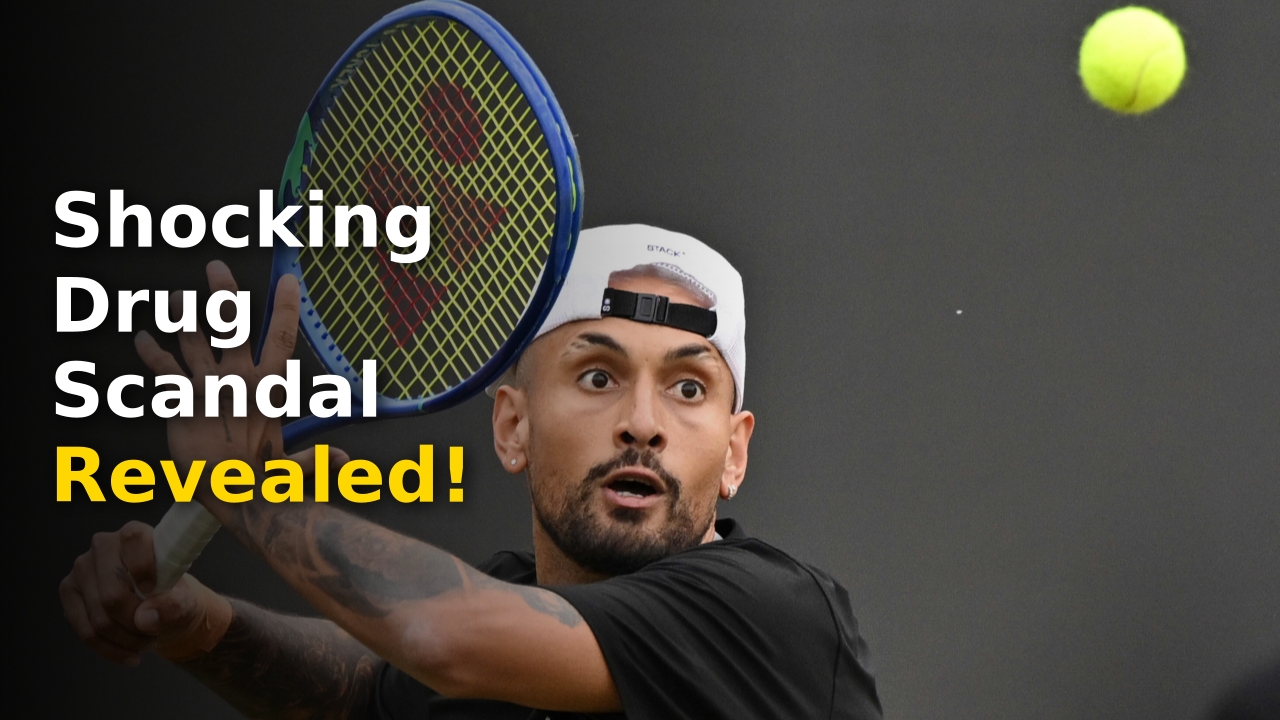
Nick Kyrgios has just sent shockwaves through the sporting world by admitting he tested positive for cocaine during a challenging period in his professional career. You might know him as the volatile genius of the court, but this latest revelation paints a far more somber picture of a man struggling with his identity. The Australian star is currently facing a provisional suspension that could potentially end his time at the top of the game.
This isn’t just another headline about a broken racket or a verbal spat with an umpire. This is a story about the grueling reality of professional sports and the mental toll that injuries take on elite performers. As you read through the details, you will see a side of the former Wimbledon finalist that rarely makes it into the highlight reels.
The suspension comes at a time when the tennis world was already questioning if the 31-year-old would ever return to his 2022 form. With his ranking plummeting to 919th, the road back looks steeper than ever. Let’s dive into the specifics of what happened in Mallorca and what it means for the future of one of tennis’s most polarizing figures.
Nick Kyrgios and the Mallorca Test
The Positive Result
The incident occurred in June during a lower-tier grass-court event in Spain, a surface where the Australian usually thrives. Nick Kyrgios was attempting to find his rhythm after months of being sidelined by a series of physical setbacks. However, a routine drug test conducted on June 22 revealed the presence of cocaine in his system.
You have to understand that cocaine is classified as a ‘substance of abuse’ under the World Anti-Doping Agency (WADA) rules. When detected during a competition, the penalties are significantly harsher than if the substance was used out-of-competition. The International Tennis Integrity Agency (ITIA) confirmed the positive sample on July 17, shortly after his appearance at Wimbledon.
By the time the mandatory provisional suspension was applied on August 4, the player chose not to appeal the decision. This lack of appeal suggests an acceptance of the situation and a desire to move forward rather than fight the science. It marks a rare moment of public compliance from a player often known for his rebellious streak.
Kyrgios took to his Instagram account to address his millions of followers directly about the mistake. He admitted that he made a huge error and expressed a willingness to take full responsibility for his actions. This public confession is the first step in what many hope will be a successful rehabilitation process.
The timing of the test is particularly heartbreaking for fans who watched him struggle through just 10 singles matches since 2022. Winning only two of those matches, his confidence was clearly at an all-time low before the Mallorca event. It seems the pressure of maintaining a high-profile career while being physically compromised became too much to bear.
While the ITIA continues to prosecute the case, the tennis community is left wondering how a talent so bright could fall so far. The legal proceedings will determine the length of the ban, which could range from a few months to four years. Most experts expect a lighter sanction given the circumstances and his admission of guilt.

The Psychology of Failure
Why would a top-tier athlete turn to a substance like cocaine while trying to save their career? For Nick Kyrgios, the answer seems to lie in the feeling of being ‘helpless and alone’ as his body betrayed him. When you spend your life defining yourself by your physical prowess, losing that ability can be devastating.
He mentioned that his body simply hasn’t been able to do what his mind expects it to do anymore. This disconnect often leads to severe mental health struggles, which the Australian has been vocal about in the past. The ‘party drug’ usage appears to be a symptom of a deeper crisis rather than a performance-enhancing strategy.
Athletes often live in a bubble of high expectations and intense public scrutiny that few of us can truly imagine. When the wins stop coming and the injuries mount up, that bubble can quickly become a prison. Kyrgios described the toll as both physical and mental, highlighting the holistic nature of his current struggle.
The feeling of being near the end of a career at just 31 is a heavy burden to carry. While some players like Novak Djokovic seem to defy age, others find their joints and muscles giving out much earlier. This realization can lead to reckless behavior as a way to cope with the impending loss of a lifelong dream.
Kyrgios has always been a ‘fiery’ personality, but this specific incident suggests a level of despair we haven’t seen before. It wasn’t about winning or losing a match; it was about losing himself in the process of trying to return. His fans are now rallying behind him, hoping this ‘wake-up call’ leads to a permanent change in perspective.
Taking a 28-day break from social media and public life is his first major move toward recovery. By stepping away from the digital noise, he can focus on getting himself right without the constant judgment of the internet. It is a necessary retreat for someone whose every move has been dissected by the media for a decade.
Career Statistics and Financial Reality
To understand the magnitude of this fall, we need to look at the numbers that defined his peak. In 2022, he was arguably the most dangerous unseeded player in the world, reaching the Wimbledon final and pushing the greats to their limit. His career has been a rollercoaster of high-profile wins and puzzling defeats.
| Metric | Statistical Highlight |
|---|---|
| Career Singles Titles | 7 (Most recent: Washington 2022) |
| Highest Ranking | World No. 13 |
| Current Ranking | 919th |
| Grand Slam Best | Wimbledon Finalist (2022) |
| 2025 Match Record | 1 Win – 4 Losses |
The 2022 Peak Season
Everything changed for him during that magical summer of 2022 when he proved he belonged among the elite. His victory over Yoshihito Nishioka in Washington was a masterclass in power serving and baseline aggression. It seemed like the ‘Bad Boy’ had finally found the discipline required to win a major.
Shortly after that, he reached the U.S. Open quarterfinals, where he lost a heartbreaker to Karen Khachanov. Even in defeat, his talent was undeniable, and many predicted a Grand Slam title was inevitable in 2023. Unfortunately, a knee injury in Tokyo during October 2022 sparked the beginning of the end for his physical prime.
You can see how the lack of consistent play since that Tokyo injury has eroded his match fitness and mental edge. Playing only once in two years is a death sentence for a professional tennis player’s rhythm. The wrist injury that forced him to miss Wimbledon in 2023 was just another blow in a long line of misfortunes.
By the time the 2025 season arrived, he was a shadow of his former self, skipping three out of four Grand Slams. His first-round exit at the Australian Open was particularly painful, as his home crowd watched him struggle to move. This lack of competitive success often leads athletes to look for escapes in the wrong places.
The financial impact of such a decline is also significant for any professional. While many fans check the latest celebrity net worth updates, the reality for an athlete ranked 919th is very different from a top-10 star. Endorsement deals and appearance fees vanish when you aren’t on the court competing for titles.
Despite the current scandal, his legacy as a box-office draw remains intact for now. Fans still flock to see him play because they never know what they are going to get. Whether it’s an underarm serve or a 140mph ace, he brings an element of theater that the ATP Tour often lacks.
Struggles with Mental Health
The Isolation of Injury
Being an injured athlete is one of the loneliest experiences in professional sports. While your peers are traveling the world and winning trophies, you are stuck in a gym or a physical therapy clinic. For Nick Kyrgios, this isolation was compounded by a ‘checkered disciplinary record’ that often made him a target for criticism.
He has spoken candidly about the ‘dark places’ he has visited during his career, even when he was winning. Imagine how much darker those places become when the wins are gone and the pain is constant. This latest mistake with cocaine is a cry for help that many saw coming but few knew how to prevent.
The physical toll mentioned in his statement refers to the surgeries and rehab stints that have defined his last 24 months. Chronic pain can change a person’s personality, making them more irritable and prone to impulsive decisions. It is a cycle of frustration that often requires professional intervention to break.
You might remember his ‘Battle of the Sexes’ win over Aryna Sabalenka in Dubai last December. Even during that exhibition, he seemed to be searching for the joy he once found in the sport. It was a rare high point in a year filled with medical appointments and missed opportunities.
Mental health is no longer a taboo subject in tennis, thanks to players like Naomi Osaka and Kyrgios himself. However, talking about it and living through a substance-induced crisis are two very different things. The next few months will be crucial for him to find a support system that prioritizes his well-being over his return to the court.
His doubles partner Alexander Bublik, with whom he lost in the first round at Wimbledon recently, remains one of his few close friends on tour. Having a peer who understands the unique pressures of the game is vital for someone in his position. However, even the best friends can’t fix a problem that requires deep personal reflection.

The Dan Evans Precedent
The tennis world has seen this story before, most notably with British player Dan Evans back in 2017. Evans tested positive for cocaine at the Barcelona Open and was subsequently handed a one-year ban. Like Kyrgios, Evans took full responsibility and used the time away to rebuild his life and career.
Evans eventually returned to the top 30, proving that a cocaine-related suspension doesn’t have to be a career-ending event. This provides a glimmer of hope for Nick Kyrgios as he begins his own period of reflection. If he can use the next year to heal his body and mind, a comeback isn’t out of the question.
The International Tennis Federation (ITF) and ITIA take these cases seriously because they want to maintain the integrity of the sport. Even if cocaine isn’t a traditional performance enhancer, it is a banned substance that carries significant reputational risk. The rules are clear, and the consequences are designed to be a deterrent.
Comparing the two cases, Evans was 27 at the time of his ban, whereas Kyrgios is now 31. The age difference makes a comeback slightly more difficult for the Australian, but his raw talent is superior to almost anyone’s. If he can get his body right, his game will likely follow quickly.
The ‘wake-up call’ he mentioned in his post is exactly what the authorities hope to achieve with such suspensions. It forces an athlete to stop the downward spiral and evaluate what truly matters. For some, it’s the end of the road; for others, it’s the start of a legendary second act.
Public opinion remains divided on whether the sanctions should be different for ‘party drugs.’ Some argue that as long as it doesn’t help you win a match, the punishment should be minimal. Others believe that professional athletes have a responsibility to act as role models and avoid illegal substances entirely.
Future of Nick Kyrgios
As we look toward the future, the primary question is whether we have seen the last of Nick Kyrgios on a professional court. He has signaled that his career is not over, but the road to redemption is paved with challenges. A 28-day social media blackout is a good start, but the real work happens in the months of quiet training that follow.
His fans will be waiting to see if he can reclaim the magic of that 2022 Wimbledon run. Tennis is a better sport when he is in the draw, providing a spark of unpredictability that keeps everyone on their toes. Whether you love him or hate him, you can’t deny that he is one of the most compelling figures the game has ever seen.
The ITIA’s final ruling will be the next major milestone in this saga. Once the length of the ban is confirmed, he can begin circling a date on the calendar for his return. Until then, he must focus on the ‘mental and physical’ healing he so desperately needs.
You can expect to see a different version of him if and when he returns to the ATP tour. Perhaps the ‘Bad Boy’ will be replaced by a more mature, grateful athlete who understands the fleeting nature of success. Only time will tell if this suspension was the tragedy that ended his career or the catalyst that saved it.
In the meantime, the tennis world moves on, but the shadow of his talent remains. Every time a young player hits a ‘tweener’ or argues with an official, they are channeling a bit of the energy that made him a superstar. We can only hope that his next headline is about a trophy rather than a toxicology report.
Ultimately, Nick Kyrgios is a human being who made a mistake under immense pressure. As he steps away from public life to ‘get himself right,’ we should remember the joy he brought to millions of fans. The game is poorer without him, but his health and happiness must come first.
More Like This
For more updates, check out our latest entertainment and sports news.