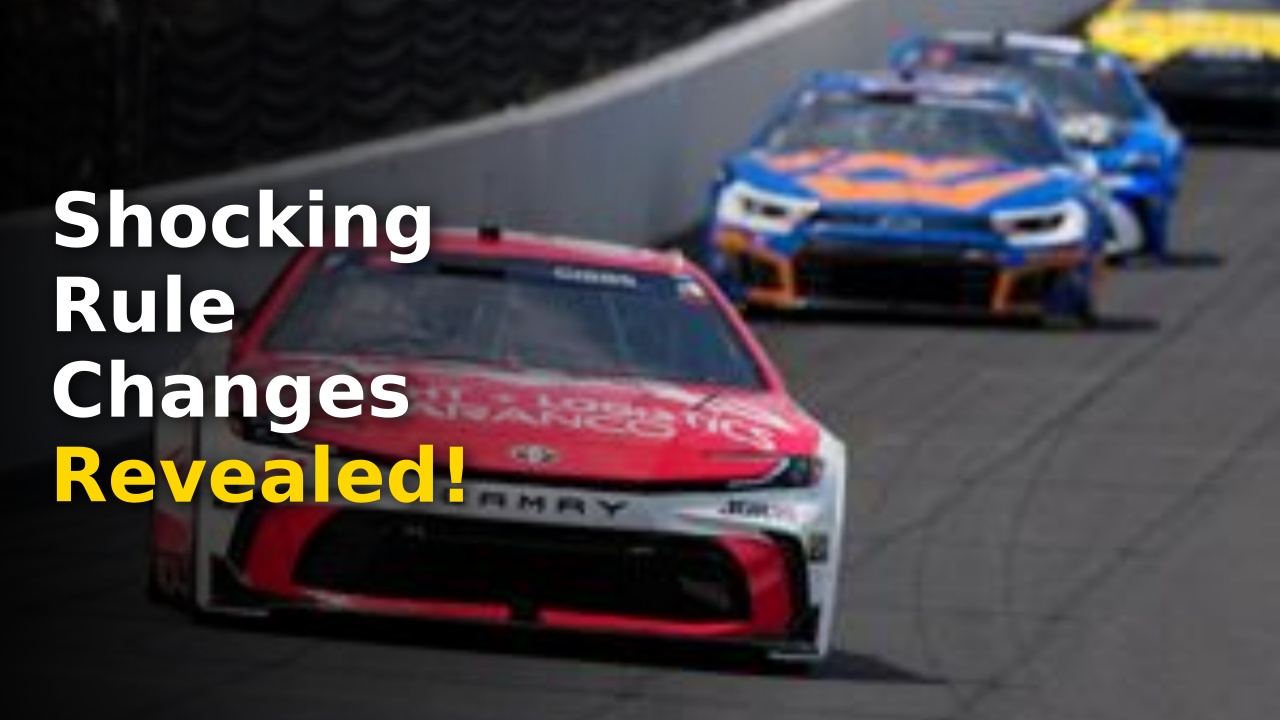
NASCAR rules are undergoing a seismic shift this weekend at Iowa Speedway, fundamentally changing how you experience the thrill of professional stock car racing. Have you ever found yourself checking your watch while the field crawls around the track under caution flags? That frustration ends now.
For years, the structure of stage breaks has been a point of contention among the sport’s most dedicated followers. By prioritizing green flag action over stagnant caution laps, the organization is betting big on the idea that you deserve more wheel-to-wheel intensity.
NASCAR rules: The New Reality

The core of this update centers on how stage breaks are handled when a yellow flag appears near the end of a segment. Under the new protocol, if a natural caution arises with 10 or fewer laps remaining in Stage 1 or Stage 2, the segment will be declared complete immediately. This effectively eliminates the dreaded double-caution scenario that has plagued recent broadcasts.
You are witnessing a direct response to feedback from fans and drivers alike, as voiced by NASCAR CEO Steve O’Donnell. Following the drama of the Brickyard 400 in Indianapolis, the leadership team realized that the momentum of a race was being stifled by excessive pacing. The goal is simple: maximize the time the field spends at full throttle.
This isn’t just a minor administrative tweak; it is a fundamental philosophy shift in motorsport competition. By forcing the end of the stage under the caution flag, officials are removing the redundant laps that often served no purpose other than burning fuel and testy patience. You can expect tighter racing restarts and less predictability for the teams.
Drivers like Ty Gibbs, who have navigated these complex track environments, are now tasked with adjusting their strategies on the fly. The unpredictability of these new rules will surely spice up the Cup Series rankings as the season winds down. For more updates on the latest changes to the grid, check out exclusive insights on rising stars shaping the future of the sport.
The impact on team strategy will be immense, as crew chiefs can no longer bank on a predetermined number of caution laps to conserve fuel or set up specific tire changes. You will see more improvisation at every single stop. This is high-stakes gaming at 200 miles per hour.
The Data Behind The Shift
Analyzing the transition from old to new rules requires a look at how race distance and scoring interact. The following table illustrates the shift in how the field is scored during these critical moments of race transition.
| Category | Old Procedure | New Procedure |
|---|---|---|
| Caution Timing | Full Stage Length | Truncated at Warning |
| Restart Type | Scheduled | Immediate |
| Stage Points | Top 10 Scoring | Top 10 Scoring |
These adjustments ensure that while the physical duration of the yellow flag is reduced, the integrity of the point system remains intact. The precision of scoring loops and high-definition video replay serves as the digital referee for these tight calls. This is where global sports news coverage has noted a significant pivot toward fan-centric entertainment models.
Every team in the garage is currently recalculating their race-day models to account for these fewer caution laps. The math is simple: fewer laps under yellow means more fuel consumption over the total race distance. This could lead to wilder finishes, as teams might be forced to gamble on pit road much earlier than they anticipated.
If you are watching from the stands or from your couch, expect the intensity to ramp up significantly during the final laps of each stage. There will no longer be a “breather” period where cars simply cruise around waiting for the green flag. The pressure on the leaders will be constant.
The integration of the green-and-white checkered flag signifies the immediate end of the stage. This creates a psychological shift for the drivers as they transition from a tactical battle for position to an immediate restart scenario. It is a faster, more volatile, and ultimately more rewarding format for the spectator.
Historical Context And Legacy

The evolution of stage racing, introduced several years ago, was designed to keep the field bunched together and ensure that mid-race moments felt as important as the finish. However, the accumulation of caution laps at the Brickyard 400 clearly crossed a line for many viewers. When the pace car leads the pack for what feels like an eternity, the audience loses engagement.
History tells us that sport only thrives when it listens to its audience. By removing the “elongated caution laps” mentioned by Steve O’Donnell, the organization is proving that they value your time. This move echoes other major sporting leagues that have introduced clocks or accelerated rule sets to keep the action moving at a blistering pace.
Remember the early days of racing where strategy was entirely about fuel preservation? That era was different, but today’s consumer demands action. You are part of the most demanding fanbase in sports, and this policy shift is a direct reflection of that demand.
Some analysts might argue that this reduces the ability for back-of-the-pack drivers to recover, but the data suggests that aggression on the track is the only way to win. The new rule set will force every driver to be at their absolute peak performance from the very first lap to the last.
As we move into the final stretch of the season, the volatility of these changes will be the ultimate test for veteran teams. Will they adapt or will they fall behind? The answer will be determined on the asphalt, right before your eyes.
Keep an eye on how these NASCAR rules translate to shorter tracks compared to the superspeedways. The physics of shorter tracks often mean that even a single extra lap under yellow can change the entire complexion of the race. This is why you need to pay close attention to every single caution period for the remainder of the year.
The Future Of Competition

Looking ahead, it is clear that the sport is trending toward a “no-downtime” model. Whether it is through reduced pit crew sizes or more efficient staging, every element of the broadcast is being optimized for you. The days of 10-minute yellow flag sessions are effectively numbered.
What does this mean for your betting strategy or your office pool? It means that you should favor drivers who are experts at quick restarts and maintaining high speeds immediately after a reset. The advantage goes to the aggressive, not the conservative.
As you watch the race this Sunday at Iowa Speedway, look for how the pit crews react when the caution lights blink on. Their reaction time will be the difference between a podium finish and a mid-pack frustration. It is a new world for the teams, and it is a better world for you.
The partnership between NASCAR and its fans is stronger than ever because of this level of transparency. When the leadership team admits that a previous strategy failed to meet expectations, it breeds trust. Trust is the foundation upon which long-term viewership is built.
We are excited to see how this plays out in the final laps of the championship. The intensity is guaranteed to be at an all-time high, and the strategies will be more creative than we have seen in years. Make sure you don’t blink, or you will miss the turn that changes the race.
In the final analysis, this change proves that NASCAR rules are not set in stone; they are living, breathing entities designed to provide you with the best possible show on earth. Keep your eyes on the track, because the future of racing is being written right now.
More Like This
For more updates, check out our latest entertainment and sports news.