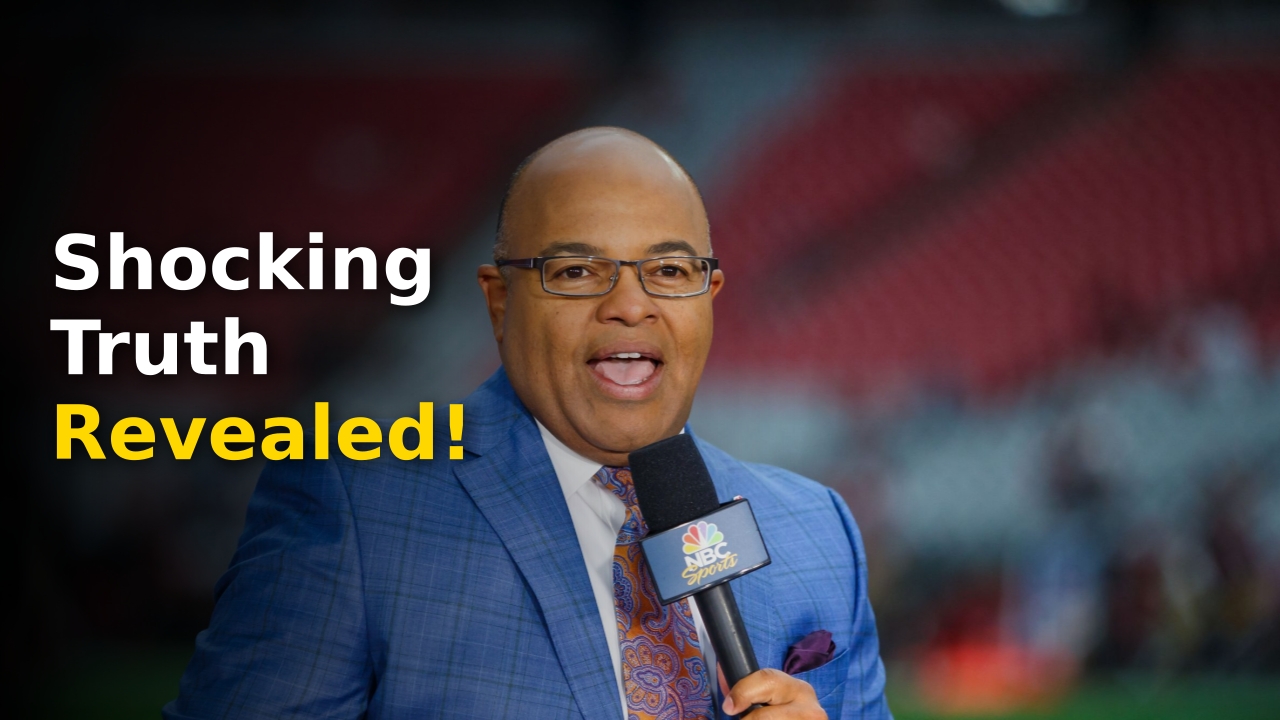
Mike Tirico became the face of a massive industry controversy a decade ago when the NFL flatly rejected NBC’s plan to have him lead the network’s Thursday Night Football coverage. Imagine moving your entire life, switching your professional identity from the legendary ESPN booth to the bright lights of NBC, only to be told by a league executive that you simply aren’t the right fit for the marquee assignment you were promised.
This wasn’t just a scheduling conflict; it was a power move by the 800-pound gorilla of American sports that left the industry stunned. You have to wonder how such a seasoned professional, who had called everything from the FIFA World Cup to The Masters, found himself navigating such an unexpected hurdle in his prime years.
Mike Tirico and the NFL Clash
When Mike Tirico departed ESPN in 2016, the move was described as seismic. He was supposed to be the crown jewel of NBC Sports‘ expansion into Thursday Night Football, a new product designed to dominate the mid-week primetime landscape. NBC envisioned a polished, high-energy booth featuring Tirico and Cris Collinsworth, a pairing that theoretically offered a fresh perspective for a younger, tech-savvy audience.
However, the league office had other ideas. Brian McCarthy, the NFL‘s VP of Communications, made it crystal clear: the league demanded the prestige of their “A-team” on every major broadcast. They wanted the brand equity of Al Michaels and Collinsworth to stretch from Sunday night to Thursday night, regardless of the workload concerns expressed by Mark Lazarus and the NBC executive suite. It was a cold, calculated decision that effectively benched a star talent during one of the most pivotal transitions of his career.
The impact on Tirico was immediate and profound. He was stripped of his marquee assignment just weeks before the season opener, leaving him to wonder if his move to NBC had been a tactical error. He spent that period searching for footing in a network already stacked with icons, finding himself in the position of a “B-team” commentator despite his legendary credentials. 
Yet, looking back, the friction actually created the perfect environment for his evolution. He wasn’t just a football guy; he was a master of the craft. By accepting the Notre Dame football assignments, he pivoted away from the pressure of the NFL booth into a role that allowed him to demonstrate his versatility across high-stakes collegiate environments.
This period of professional uncertainty forced the industry to reconsider what Mike Tirico actually brought to the table. He wasn’t just a play-by-play guy; he was the future of the network. His ability to handle the Indianapolis 500 and the Triple Crown of horse racing proved he was the ultimate utility player for a network that needed a steady hand for the Olympics and beyond.
Defining the Shift
- The NFL’s strict “A-Team” policy dictated broadcasting standards.
- Internal friction between NBC and the NFL led to a temporary pivot.
- Tirico’s adaptability allowed him to dominate in niche sports markets.
- The ultimate resolution saw the league backtrack, proving Tirico’s undeniable market value.
Broadcasting Power Dynamics Analysis
The internal politics of professional sports broadcasting often escape the viewer’s eye, but the 2016 ordeal involving NBC and the NFL provides a rare window into the power structure of major media deals. The network executives at NBC Sports, including Mark Lazarus, were clearly operating under the assumption that they possessed the autonomy to assign their own talent. They failed to account for the league’s ability to exert contractual leverage to protect its product quality.
At the time, the sentiment within the NFL offices was focused on brand consistency. The league wanted to mimic the success of Sunday Night Football in every window it occupied. By forcing Al Michaels and Cris Collinsworth to carry the load, they sought to ensure that every primetime viewer felt like they were watching the “main event.” [INJECT_IMAGE_2_HERE]
This approach highlights a recurring theme in modern media: the tension between corporate ambition and league oversight. While NBC wanted to maximize their new talent’s potential, the league focused on the bottom line of viewership consistency. This led to a brief, awkward period where Tirico found himself in a professional limbo, unsure of his future status in the primetime booth.
Those of you following the trajectory of broadcast icons can find more insights on the shifting landscape of entertainment journalism at Bright Celebrity. Understanding these power shifts is crucial to grasping why certain voices dominate our screens while others, despite their immense talent, face unexpected roadblocks in their climb to the top.
The irony is that the forced delay in Tirico’s primetime takeover likely made him a better broadcaster. His work with Notre Dame football provided him with a new fan base and a deeper respect for the collegiate game. This diversity of experience is exactly what eventually allowed him to secure the lead role for the Olympics and the Super Bowl.
Success in this field is never linear. It requires a specific type of patience, a quality Tirico demonstrated throughout this entire saga. When the league finally relented in 2017 and opened the door for him to take over Thursday Night Football, he was more prepared, more experienced, and ultimately more polished than he would have been had he started a year earlier.
Comparison of Broadcast Talent Assignments
| Role | 2016 Plan | Actual Outcome |
|---|---|---|
| Thursday Night Football | Tirico / Collinsworth | Michaels / Collinsworth |
| Sunday Night Football | Michaels / Collinsworth | Michaels / Collinsworth |
| Olympics Host | Bob Costas | Mike Tirico |
Lessons in Professional Persistence
You may be facing your own professional hurdles, wondering if your current path is the right one. Mike Tirico‘s journey serves as a masterclass in handling rejection. Instead of vocalizing his frustration, he leaned into the assignments that were available, proving his versatility and building long-term equity with network executives.
His eventual ascension to the Sunday Night Football booth in 2022 was not just a promotion; it was an inevitability born from years of demonstrating that he was the most dependable broadcaster in the game. He didn’t just wait for the seat to open; he earned it through every game he called in the interim.
Think about the mental resilience required to go from being a face of a network to being told you’re “not the one.” Most people would struggle with the ego hit. Tirico used it to refine his craft. He turned a potential career setback into the most influential decade of his professional life.
The media industry is volatile, but talent and consistency eventually win the day. By the time he reached his 10-year mark at NBC, Tirico was not only calling the Super Bowl but was being inducted into the National Sports Media Association Hall of Fame. This level of recognition is reserved for those who play the long game.
Consider the broader context of how media rights have evolved since 2016. Today, networks have much tighter control over their talent pipelines, largely because of the lessons learned during this specific conflict. The power struggle that defined 2016 changed the way contracts are drafted and talent is marketed in the sports world.
Ultimately, the story of Mike Tirico and the NFL is a testament to the idea that initial failure is rarely the end of the story. Whether you are climbing the corporate ladder or trying to break into the broadcast booth, remember that your value is defined by your response to adversity, not by the initial rejection you receive.
The Legacy of NBC Broadcasting
As we look back at the past decade, it is clear that NBC Sports made the right call in hiring Mike Tirico, even if the implementation was messy. He has successfully transitioned from the voice of Monday Night Football at ESPN to the definitive face of primetime sports in America. His ability to handle the shift from NFL play-by-play to the cultural importance of the Olympics is virtually unmatched.
What does this mean for the future of sports media? We are moving toward a model where versatility is the most prized asset. Broadcasters can no longer afford to be specialists; they must be anchors, analysts, and representatives of the networks they serve. Tirico set the gold standard for this modern expectation.
You are witnessing a shift where legacy media brands are doubling down on trusted voices to hold onto their audience. As streaming giants continue to bid for exclusive rights, the human element—the comfort of a familiar, reliable voice—becomes even more critical. Mike Tirico provides that stability in an increasingly fragmented digital space.
This history reminds us that even at the highest levels of professional sports, decisions are often driven by behind-the-scenes politics rather than talent alone. Understanding these dynamics helps you navigate your own professional environment with a clearer eye. You now see that even the most “untouchable” professionals go through periods of intense scrutiny and rejection.
As you reflect on these last 10 years, it is impossible to ignore how much has changed. From the way we consume games on mobile devices to the evolution of sports betting, the industry looks nothing like it did in 2016. Yet, through all that change, the steady presence of Tirico remains a constant, grounding force for viewers across the nation.
In the final analysis, the Mike Tirico story is a shining example of grit. By weathering the initial NFL rejection, he not only survived but thrived, eventually cementing his status as one of the greatest broadcasters of all time. We look forward to seeing what his next decade brings, knowing full well that no matter the challenge, he will handle it with the professionalism that has become his signature.
More Like This
For more updates, check out our latest entertainment and sports news.