⚡ Key Takeaways
- Masanori Murakami became the first Japanese player in MLB history on Sept. 1, 1964.
- A massive contract dispute between the Giants and Nankai Hawks led to a 30-year drought of Japanese talent in the US.
- September 1 marks other massive events, including the start of WWII and the discovery of the Titanic.
- The debut of ‘Mashi’ paved the way for modern icons like Shohei Ohtani and Ichiro Suzuki.
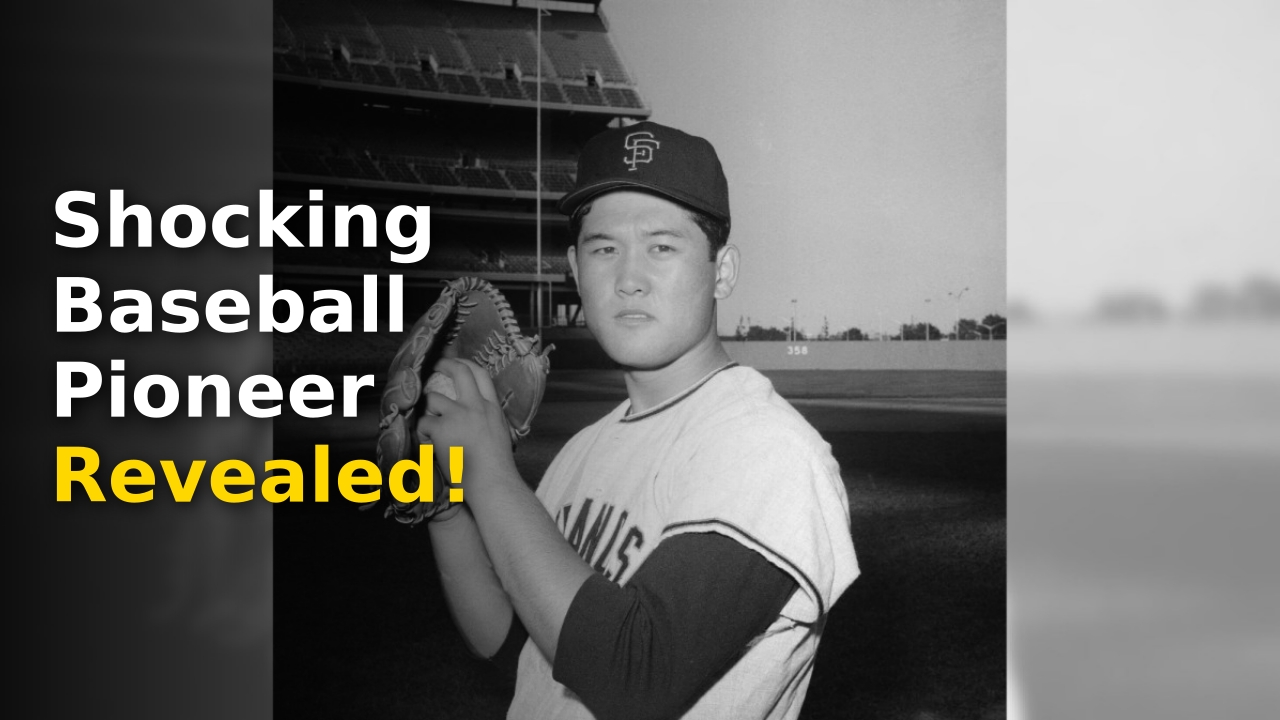
You might think the wave of Japanese talent in Major League Baseball started with the ‘Nomo-mania’ of the 1990s or the two-way dominance of Shohei Ohtani, but the truth is much older. Masanori Murakami stepped onto the mound for the San Francisco Giants on September 1, 1964, shattering a glass ceiling that few even realized existed at the time. This 20-year-old left-handed reliever didn’t just play a game; he initiated a cross-continental cultural exchange that would eventually redefine America’s pastime.
When Masanori Murakami entered the game against the New York Mets at Shea Stadium, he was a long way from his home in Yamanashi Prefecture. Sent to the United States as part of a player exchange program intended for development, no one expected him to reach the big leagues so quickly. His success was immediate, but it sparked a diplomatic firestorm that would effectively freeze Japanese-American baseball relations for three decades.
Masanori Murakami: The Giant Pioneer
The arrival of Masanori Murakami in the Major Leagues was as much an accident of talent as it was a scheduled debut. Originally sent to the Fresno Giants, a minor league affiliate, Murakami dominated his competition with a blistering fastball and a deceptive delivery. The San Francisco Giants, needing bullpen help for the stretch run, called him up on that historic Tuesday in 1964. You can only imagine the nerves of a young man who spoke very little English, facing the bright lights of New York City.
Murakami pitched one inning that day, striking out two batters and allowing only one hit. The fans in San Francisco quickly fell in love with ‘Mashi,’ as he was affectionately called. His presence was a beacon of the changing demographics of California and the sport itself. However, his debut was more than just a box score entry; it was the first time an Asian-born player had proven they could compete at the highest level of professional baseball in the Western world.
The Contract Conflict of 1965
After a successful 1964 stint, the San Francisco Giants attempted to exercise a clause in their agreement with the Nankai Hawks to keep Murakami permanently. The Hawks, realizing they had a burgeoning star, resisted fiercely, claiming the agreement was only for a temporary exchange. This dispute reached the highest levels of baseball governance in both nations. A compromise was eventually reached where Murakami would play one more year in San Francisco in 1965 before returning to Japan for good.
This ‘Working Agreement’ between MLB and NPB (Nippon Professional Baseball) became a cautionary tale. Because the transition was so messy, Japanese teams became extremely protective of their stars. It wasn’t until Hideo Nomo used a ‘retirement’ loophole in 1995 that another Japanese player would follow in the footsteps of Masanori Murakami. During his two seasons, he posted a 3.43 ERA over 89.1 innings, proving he wasn’t just a novelty act but a legitimate Major League talent.
Expert Take: ‘The Murakami situation was the original blueprint for what we now know as the Posting System,’ says veteran sports historian Arthur Miller. ‘It showed that while the talent was there, the infrastructure for international business in sports was woefully underdeveloped in the 1960s. He was a man ahead of his time, caught between two leagues that weren’t ready to share.’ 
Historical Impact By The Numbers
To truly understand the gravity of September 1 and the impact of players like Masanori Murakami, we have to look at the statistical shift in the game. Before 1964, the pipeline from Asia was non-existent. Today, it is a multi-billion dollar corridor of talent and marketing. The following table illustrates the progression of Japanese talent in MLB, highlighting the pioneers who broke specific barriers after Murakami opened the door.
| Player Name | Debut Year | Primary Achievement | MLB Team |
|---|---|---|---|
| Masanori Murakami | 1964 | First Japanese MLB Player | SF Giants |
| Hideo Nomo | 1995 | Modern Era Pioneer / No-Hitter | LA Dodgers |
| Ichiro Suzuki | 2001 | MVP and Rookie of the Year | Seattle Mariners |
| Hideki Matsui | 2003 | World Series MVP (2009) | NY Yankees |
| Shohei Ohtani | 2018 | First Elite Two-Way Player | LA Angels/Dodgers |
By the numbers, the impact of Masanori Murakami is measured not just in his strikeouts, but in the confidence he gave to the next generation. You can find more about these sporting legends at brightcelebrity.com, where we track the net worth and legacies of the world’s most influential athletes. The statistical jump from one player in 1964 to over 60 Japanese-born players in MLB history today is a testament to the trail blazed by Mashi.
The 1964 Giants and the National Context
The 1964 San Francisco Giants were a powerhouse team featuring legends like Willie Mays, Juan Marichal, and Orlando Cepeda. For a young Masanori Murakami to join this roster was a daunting task. The United States in 1964 was also a land of deep social upheaval, with the Civil Rights Act having been signed just months prior. While baseball was integrating, the inclusion of an Asian player was a new frontier for many American fans.
Murakami’s presence helped soften the post-war tensions that still lingered in some parts of the American psyche. Baseball became a bridge. You see this same phenomenon today with international stars who act as ambassadors for their countries. Murakami wasn’t just throwing a baseball; he was throwing a lifeline of communication between two nations that had been at war only 19 years earlier.
September 1: A Day of Global Shift
While Masanori Murakami was making history on the diamond, September 1 has historically been a day of monumental transitions. In 1715, the world saw the end of an era with the death of King Louis XIV of France. Having reigned for 72 years, the ‘Sun King’ left behind a legacy of absolute monarchy and architectural brilliance that defined Europe for a century. His death marked the beginning of a slow decline for the French crown, eventually leading to the revolution.
Fast forward to 1939, and September 1 became a date of infamy. Nazi Germany’s invasion of Poland triggered the start of World War II, a conflict that would claim tens of millions of lives and reshape every border on the planet. The invasion happened at dawn, a brutal display of ‘Blitzkrieg’ tactics that caught the world off guard. This event is widely cited by historians as the single most consequential military action of the 20th century.
By The Numbers: The scale of World War II is almost incomprehensible. Experts estimate that nearly 3% of the 1940 world population perished in the conflict. On this day in 1939, the mobilization of millions began. It remains a somber reminder of how quickly the global order can collapse. Contrast this with the 1923 Great Kanto Earthquake, which struck Tokyo and Yokohama on this same date, killing 140,000 people and showing the devastating power of nature alongside the human capacity for war.
Scientific and Cultural Milestones
Not all September 1 events were characterized by conflict. In 1914, the world lost the passenger pigeon. Once so numerous that their flocks darkened the sky for days, the death of Martha at the Cincinnati Zoo signaled a permanent change in how humans viewed conservation and extinction. This tragedy directly influenced the creation of modern environmental protection laws in North America.
In 1985, the world watched in awe as a U.S.-French expedition located the wreckage of the Titanic. Found 12,500 feet below the surface of the Atlantic, the discovery ended a 73-year mystery. It utilized pioneering deep-sea robotic technology, proving that no part of our planet was beyond the reach of human curiosity. This discovery, much like the debut of Masanori Murakami, was a triumph of persistence and technological advancement.
In 1952, American literature was changed forever when Life magazine published Ernest Hemingway’s ‘The Old Man and the Sea.’ This novella, which would win the Pulitzer Prize, resonated with a post-war audience looking for themes of endurance and dignity. For many, September 1 represents this strange mix of tragic endings—like the passenger pigeon or the Titanic victims—and hopeful new beginnings like Hemingway’s masterpiece or Murakami’s first pitch.
Frequently Asked Questions
Who was the first Japanese player in MLB?
The first Japanese player in Major League Baseball was Masanori Murakami, a left-handed pitcher who debuted for the San Francisco Giants on September 1, 1964. He played two seasons before returning to Japan due to contractual obligations with his original team, the Nankai Hawks.
Why did it take 30 years for another Japanese player to join MLB?
Following the contract dispute over Masanori Murakami between the San Francisco Giants and the Nankai Hawks, a restrictive agreement was placed on player transfers. Japanese teams were reluctant to lose their stars, and it wasn’t until Hideo Nomo’s move to the Dodgers in 1995 that the ‘Posting System’ and other pathways were established.
What other major events happened on September 1?
September 1 is a significant date in history, marking the death of King Louis XIV in 1715, the start of World War II in 1939, the discovery of the Titanic wreckage in 1985, and the extinction of the passenger pigeon in 1914. It is also the date of the 1923 Tokyo earthquake.
Is Masanori Murakami still alive?
Yes, as of recent records, Masanori Murakami remains an active figure in the baseball community. He often participates in events celebrating the bridge between Japanese and American baseball and is highly respected as a pioneer who paved the way for modern stars.
The Lasting Legacy of Masanori Murakami
As we reflect on the history of September 1, the story of Masanori Murakami stands as a testament to the power of breaking barriers. While the geopolitical shifts of World War II and the scientific marvel of the Titanic discovery occupy larger spaces in textbooks, the quiet courage of a 20-year-old pitcher in a foreign land shouldn’t be underestimated. He proved that talent has no nationality and that sports can be the ultimate universal language.
Today, you see the fruits of his labor every time a Japanese star takes the field. From the precision of Ichiro to the power of Ohtani, the lineage is clear. Masanori Murakami wasn’t just a ‘first’; he was a catalyst. His brief time in San Francisco ignited a fascination with Japanese baseball that continues to grow, reminding us that even the smallest moments on a baseball diamond can ripple through history for decades to come. Whether it’s the 1964 debut or the 2026 season, the legacy of ‘Mashi’ remains a cornerstone of the international game.
More Like This
For more updates, check out our latest entertainment and sports news.