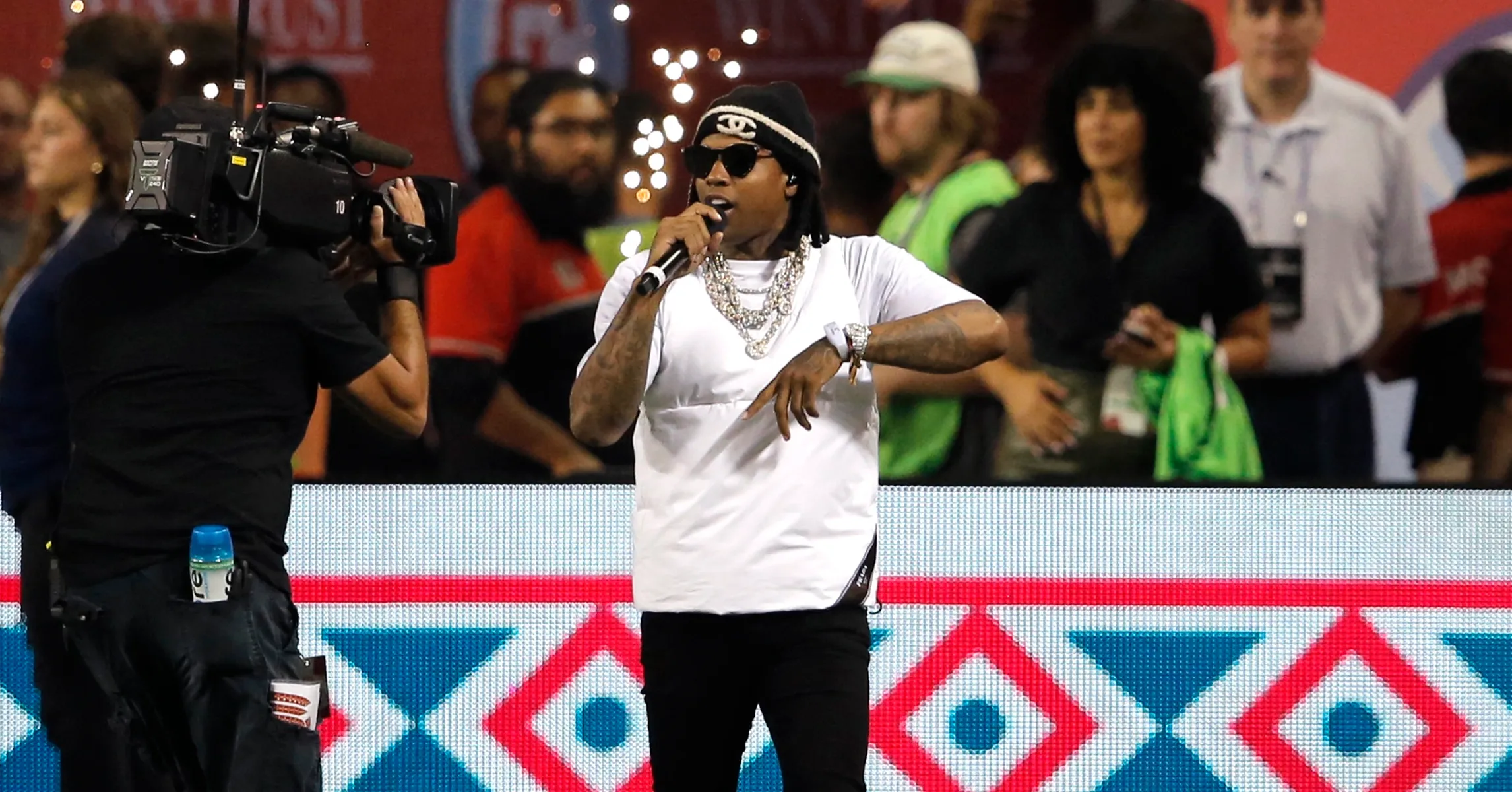
Lil Durk is currently standing at the most dangerous crossroads of his life as his high-profile federal trial officially kicks off in Los Angeles. You might think you know the story of the Chicago drill pioneer, but the legal reality unfolding in a California courtroom is far more complex than any music video could portray. The air in the courtroom was thick with tension as the final 12 jurors and four alternates were seated, signaling the start of a three-week marathon that will determine the rapper’s future. This isn’t just about music; it is about a federal murder-for-hire investigation that has the entire industry on edge.
You are witnessing a historic legal battle where the line between artistic expression and criminal intent is being blurred by federal prosecutors. Judge Michael Fitzgerald presided over a selection process that revealed deep-seated biases against the very genre that made Lil Durk a global superstar. As the trial begins, the world is watching to see if one of hip-hop’s biggest names can beat the formidable weight of the U.S. justice system. The implications for the OTF (Only The Family) collective and the drill music scene at large are truly staggering.
The trial follows a long-standing investigation into a 2022 shooting at a gas station near the Beverly Center, which targeted Quando Rondo and resulted in the tragic death of his cousin, Saviay’a Robinson, known as Lul Pab. Prosecutors allege that the hit was a retaliatory strike for the 2020 killing of King Von in Atlanta. This narrative of a cross-country revenge plot is what the seated jury must now dissect over the coming weeks of testimony and evidence presentation.
Lil Durk Facing Court Bias
The jury selection process for Lil Durk proved to be an uphill battle for the defense as they waded through a sea of potential bias. Out of 80 prospective jurors, the courtroom heard shocking admissions that highlight the cultural divide in America today. One prospective juror explicitly stated that the defendants looked guilty before the trial even began. This level of prejudice is a nightmare for any legal team trying to ensure a fair trial for a high-profile celebrity. You have to wonder how an impartial verdict can be reached when the initial optics are so skewed against the accused.
Lawyers spent hours grilling potential jurors about their perceptions of gangster rap and the drill music subgenre. The responses were telling of a larger societal disconnect. One woman admitted that she associated the music with senseless violence, while another confessed that the genre would likely impact her ability to remain impartial throughout the proceedings. This struggle highlights the recurring theme of the rap music on trial phenomenon, where an artist’s brand is often used against them as a character indictment in front of a jury that may not understand the nuances of the culture.
Interestingly, the defense tried to bridge this gap by asking if jurors could remain fair when listening to music that wasn’t “Peter, Paul and Mary or Karen Carpenter.” The reference to soft folk and pop music of the 1960s and 70s was a strategic move to point out the generational and cultural chasm between the music Lil Durk creates and the backgrounds of those judging him. One juror even requested subtitles for the lyrics, suggesting that the very language of the evidence might be foreign to the people deciding the rapper’s fate. This highlights the vital importance of having a diverse and culturally competent legal defense in 2024.
Juror Demographics and Reactions
- Total Seated: 12 jurors and 4 alternates are now confirmed for the trial.
- Musical Bias: Several prospective jurors admitted to having “negative connotations” regarding hip-hop culture.
- Visual Prejudice: A juror was dismissed after claiming the defendants simply “looked guilty.”
- Trial Duration: The proceedings are expected to last at least three full weeks in Los Angeles.

The prosecution’s win in getting Judge Michael Fitzgerald to allow lyrics as evidence is a massive blow to the defense. The 2021 music video for “Pissed Me Off” is slated to be shown to the jury, with the government arguing that the lyrics and visuals provide a roadmap for the alleged criminal activity. This strategy relies on the idea that the music isn’t just art, but a confession or a set of instructions. This is a controversial tactic that has been criticized by civil rights groups who argue it violates the First Amendment rights of artists.
Beyond the music, the case involves a complex web of digital evidence. Prosecutors have pushed for the inclusion of cell phone data, travel records, and social media activity that they claim links the OTF crew to the shooting in Los Angeles. While the defense has fought to exclude much of this, the judge has largely sided with the prosecution, setting a difficult stage for Lil Durk. You can see more about the legal challenges facing rappers today by visiting Bright Celebrity for in-depth analysis on celebrity court cases.
Trial Data and Statistics
To understand the gravity of the situation, you must look at the technical aspects of the case. Federal murder-for-hire charges carry some of the heaviest penalties in the American legal system. The prosecution is likely to present a mountain of evidence that they have spent years compiling. This isn’t just a local police matter; this is a federal case with the resources of the FBI and the Department of Justice behind it. The conviction rate for federal cases is notoriously high, which adds another layer of pressure to the situation.
| Category | Details | Potential Impact |
|---|---|---|
| Charges | Conspiracy to Commit Murder-for-Hire | Life Imprisonment |
| Timeline | August 2022 Incident | Alleged Revenge Plot |
| Evidence | Lyrics, Videos, Cell Data | Direct Connection Claims |
| Jurisdiction | Federal Court (Los Angeles) | High Conviction Odds |
For more information on the history of the OTF collective and their legal history, you can check out the official Wikipedia page for Lil Durk. Understanding his rise from the streets of Englewood, Chicago to the top of the charts is essential for context. He has long been a symbol of survival and success in a city plagued by violence, but this current trial represents the ultimate test of that survival. The feds are alleging that the violence didn’t stay in Chicago but was exported to California in a calculated, funded operation.
The Only The Family Ties
The OTF label is at the center of this controversy. Federal authorities are painting Only The Family not as a legitimate music business, but as a criminal enterprise. This is a common tactic used in RIC0-style cases, even though Lil Durk is specifically facing murder-for-hire charges. The prosecution claims that the loyalty exhibited within OTF is what facilitated the alleged hit on Quando Rondo. You have to consider the psychological impact on the jury when they hear about the brotherhood and the deep-seated rivalries that have claimed so many lives in the hip-hop community.
During the jury selection, the judge even had to scold a group of supporters who were seen passing out “Free Durk” postcards in the courtroom. This behavior was seen as an attempt to influence the jury or the court’s atmosphere. Judge Michael Fitzgerald warned that such actions could lead to prosecution for contempt of court. This highlights the volatility of the trial and the fanatical support Durk Devontay Banks enjoys. His fans see him as a victim of a system designed to bring down successful Black men, while the government sees him as a high-level orchestrator of street violence.
Key Figures in the Trial
- Judge Michael Fitzgerald: The veteran judge overseeing the complex proceedings.
- The Defendants: Lil Durk and several co-defendants linked to the OTF crew.
- The Victims: Quando Rondo (target) and Saviay’a Robinson (deceased).
- Defense Strategy: Highlighting the difference between art and reality while challenging bias.
The trial’s outcome will likely hinge on the credibility of the government’s witnesses. In cases like this, the prosecution often relies on “cooperating individuals”—members of the inner circle who have flipped to save themselves. If someone from within OTF testifies against Lil Durk, the defense will have to work overtime to discredit them. The narrative of betrayal is a staple in these high-stakes trials, and it often creates the most dramatic moments in the courtroom. You can expect a heavy focus on who knew what and when the alleged payments for the hit were made.
The Defense Strategy Revealed
The legal team for Lil Durk is expected to lean heavily into the “artistic persona” defense. They will argue that the lyrics and videos are part of a curated image designed to sell records, not a confession of guilt. This has been a successful strategy in some cases, but it is difficult to maintain when physical evidence like GPS data and financial transfers are involved. The defense will also likely point to the rapper’s philanthropic work and his role as a father to humanize him to a jury that may only see him as the “Voice of the Trenches.”
Another major pillar of the defense will be the lack of a direct link. While the prosecution claims Lil Durk funded the hit, the defense will challenge the proof of his direct involvement in the planning or execution. In federal murder-for-hire cases, the government must prove beyond a reasonable doubt that the defendant intended for a murder to occur in exchange for something of value. This is a high bar, and the defense will look for any crack in the prosecution’s timeline or evidence chain. You can see how this strategy plays out in real-time as more witnesses take the stand over the next two weeks.
The cultural impact of this trial cannot be overstated. If convicted, Lil Durk faces a mandatory life sentence, which would effectively end one of the most influential careers in modern rap history. For many in the drill scene, he is a survivor who made it out of the most dangerous neighborhoods in America. To see him potentially spend the rest of his life behind bars is a sobering reality for his millions of followers. The trial represents a clash between a subculture that prizes street credibility and a legal system that views that same credibility as a criminal confession.
Final Trial Predictions
As the trial of Lil Durk moves into the testimony phase, the seated jury holds the key to a legacy. You are seeing a case that will likely be cited for years in discussions about rap lyrics in the courtroom and the reach of federal law enforcement into the music industry. The three-week window will be a grueling period of scrutiny for everyone involved. Whether the evidence is enough to convict or if the defense can successfully argue the “art vs. reality” angle remains the biggest question in entertainment news right now.
Ultimately, the impartiality of those 12 jurors is the most critical factor. After a selection process that revealed significant bias, the pressure is on the court to ensure that Lil Durk receives a fair hearing. The world will be watching every update, every witness, and every piece of evidence presented. This trial is more than just a legal proceeding; it is a cultural event that reflects the ongoing tensions between hip-hop culture and the American justice system. Stay tuned for further updates as this massive legal battle continues to unfold in Los Angeles.
More Like This
For more updates, check out our latest entertainment and sports news.