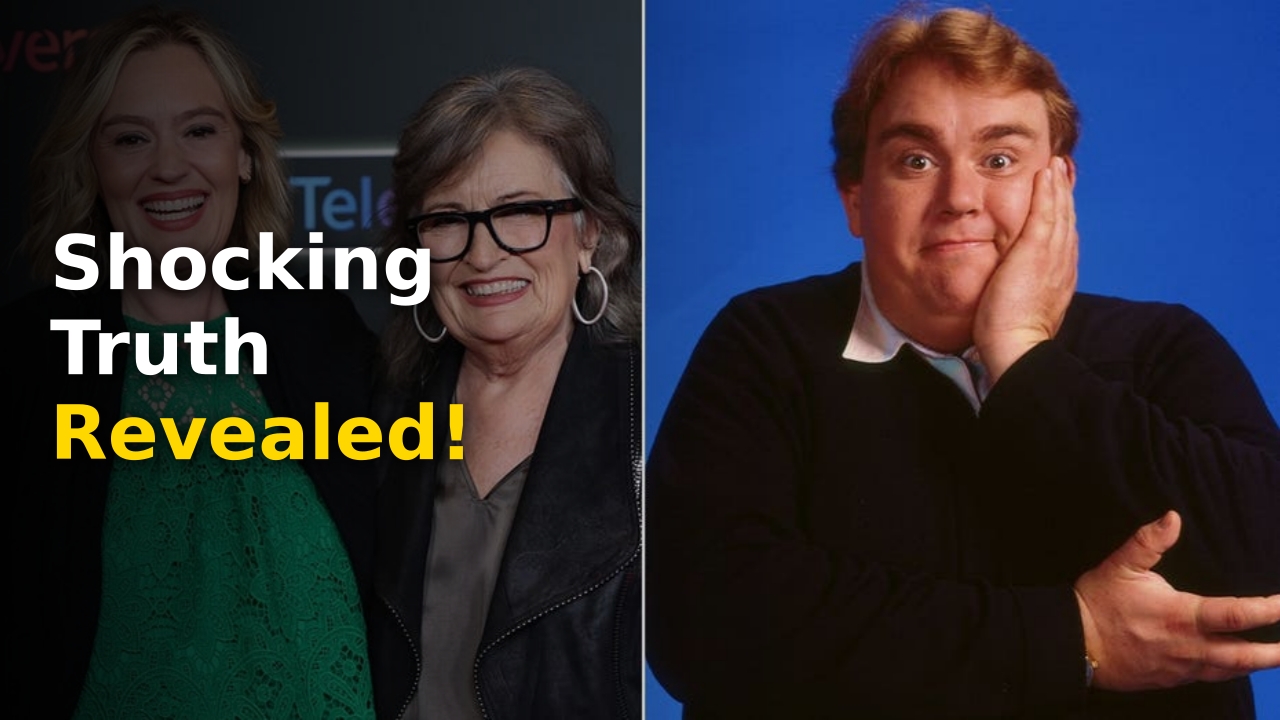
You probably think of John Candy as the ultimate symbol of warmth and laughter, but the heartbreaking reality behind his smile will change how you view show business forever. While he spent decades making the world laugh, he was privately battling a industry that prioritized his physical appearance over his immense talent and humanity. Recently, the family of John Candy decided to break their silence regarding the toxic environment he navigated during the height of his fame.
The direct answer to why his family is speaking out now is simple: they want to humanize a man who was often reduced to a punchline by a ruthless media landscape. During a raw interview at Televerse 26, his daughter Jennifer Candy-Sullivan and widow Rosemary Candy revealed that the relentless focus on his weight was deeply upsetting. Despite the external pressure, the actor famously handled the scrutiny with grace, though it left a lasting impact on his loved ones who saw the vulnerability behind the curtain.
John Candy and the Burden of Fame
John Candy was a man who seemed to belong to everyone, often referred to as the ‘everyday guy’ that audiences felt they could ‘pal around’ with at any moment. This relatability was his greatest strength as an actor, but it also became a shield that Hollywood used to lob insults disguised as jokes. His daughter, Jennifer Candy-Sullivan, noted that because people felt so comfortable with him, they felt they had the permission to joke about his size in ways that were actually ‘not cool.’
Growing up in the spotlight meant that the Candy family had a front-row seat to the magnifying glass placed over any celebrity who looked different. In the 1980s and 1990s, body shaming wasn’t just a tabloid hobby; it was a standard part of the Hollywood marketing machine. For a performer like John Candy, his weight was often treated as a character trait rather than a personal health matter, creating a narrow box for his career to inhabit.
Rosemary, his devoted wife, recalls that this challenge started from the very beginning of his career, long before he was a household name. Even as he rose through the ranks of Second City Television (SCTV), the whispers and critiques followed him. While he took the criticism like a gentleman, the emotional weight of being constantly judged by his physical form was a silent struggle he largely kept away from his children to protect them. 
The Psychological Toll of Public Scrutiny
- The actor felt he had to maintain a certain persona to keep his comedic edge in the eyes of producers.
- Constant media questions about his diet and exercise routines often overshadowed his award-winning writing and acting.
- The industry perpetuated the ‘funny fat man’ trope, which limited the dramatic roles he was offered early on.
- Public interactions often involved strangers making unsolicited comments about his health under the guise of ‘caring.’
The Cruel Reality of Hollywood Criticism
It is easy to assume that things would be different in today’s more ‘woke’ society, but Jennifer Candy-Sullivan remains skeptical. She believes that if John Candy were rising to fame in the current era of social media, the critique would simply morph into a different, perhaps more insidious, form. The pressure to conform to a specific aesthetic remains a pillar of the entertainment industry, regardless of the decade.
Jennifer made a poignant point about the ‘lose-lose’ situation her father faced: if he had lost significant weight, the industry likely would have claimed he was ‘no longer funny.’ This paradox highlights the cruelty of a system that demands performers stay in a specific ‘lane’ to remain marketable. Hollywood has a history of commodifying the insecurities of its stars, and John Candy was one of the most prominent examples of this phenomenon.
The family’s decision to speak out now coincides with a broader cultural conversation about mental health and body image. In the past, these topics were taboo, and actors were expected to just ‘deal with it’ as part of the price of fame. By calling out the past behavior of studios and the press, the Candy family is helping to ensure that future generations of performers don’t have to endure the same silent suffering. You can see more about how modern celebrities handle these pressures by visiting Bright Celebrity for the latest updates.
Exploring the Documentary John Candy I Like Me
The new documentary titled John Candy: I Like Me serves as a definitive look at the man behind the legendary roles. Directed by Colin Hanks, the film premiered to critical acclaim at the Toronto Film Festival. It features an incredible lineup of Hollywood royalty, including Steve Martin, Macaulay Culkin, Bill Murray, and Catherine O’Hara, all of whom share their personal stories of working with the comedy giant.
For the family, seeing John Candy in a vulnerable light on the big screen was a challenging experience. He was a man who compartmentalized his life, keeping the stresses of work separate from the joy of his home life. This documentary pulls back the veil, showing the therapy sessions and the internal dialogues he had about his self-worth and his place in the industry. It provides a 360-degree view of a complex human being.
Colin Hanks noted that while working on the film, he realized just how relatable John Candy truly was. He wasn’t just a caricature of a funny man; he was someone who dealt with the same anxieties and insecurities as anyone else. The documentary emphasizes that his struggles with mental health were just as significant as his physical challenges, yet they were rarely discussed during his lifetime because the culture simply wasn’t ready for that conversation. 
Key Contributors to the Documentary
- Steve Martin: Shared insights into their time filming the classic Planes, Trains and Automobiles.
- Martin Short: Discussed their early days in Canadian comedy and the bond they shared.
- Macaulay Culkin: Offered a perspective on Candy’s kindness toward child actors on the set of Uncle Buck.
- Catherine O’Hara: Reflected on the creative genius Candy brought to the SCTV writers’ room.
Iconic Performances and Unmatched Talent
While the discussion often centers on his weight, it is his talent that truly defines the legacy of John Candy. He was a two-time Emmy Award winner for his writing on Second City Television, proving that his mind was just as sharp as his comedic timing. From his breakout role in Splash to his heart-wrenching performance in Planes, Trains and Automobiles, he possessed a range that few of his contemporaries could match.
Think about the emotional depth he brought to Del Griffith, the lonely shower-ring salesman. That role wasn’t just about physical comedy; it was about the universal desire to be loved and accepted. He infused his characters with a vulnerability that made them feel like real people, not just sketches. This is likely why his films remain staples of family movie nights decades after his passing in 1994. Check out his full career history on IMDb to see the sheer volume of his work.
His work in Cool Runnings and Uncle Buck showcased his ability to lead a film with both humor and heart. He had a unique capability to make you laugh until you cried and then actually make you cry with a single look of sadness. This emotional intelligence is what made the Hollywood criticism so much more painful; he was a sensitive artist being treated as a prop by a superficial industry.
Comparative Data on the Legend
To understand the scope of his career and the impact he had, we can look at the numbers. Despite the constant criticism, John Candy was one of the most bankable stars of his era. His films grossed hundreds of millions of dollars, and his influence can still be seen in the performances of modern comedians today.
| Film Title | Year Released | Key Character | Notable Award/Fact |
|---|---|---|---|
| SCTV | 1976-1984 | Various Characters | 2 Emmy Awards for Writing |
| Splash | 1984 | Freddie Bauer | Major Hollywood Breakthrough |
| Planes, Trains and Automobiles | 1987 | Del Griffith | Considered his best performance |
| Uncle Buck | 1989 | Buck Russell | $79 Million Box Office Success |
| Cool Runnings | 1993 | Irving ‘Irv’ Blitzer | His last film released in his lifetime |
The Legacy of John Candy Today
The tragic passing of John Candy in 1994 at the young age of 43 was a massive loss for the entertainment world. He died in his sleep while on location in Mexico, a victim of a heart attack that many believe was exacerbated by the stress and physical toll of his career. He left behind a mourning family and millions of fans who felt like they had lost a close friend.
Today, the conversation started by Jennifer and Rosemary serves as a reminder that empathy should always come before entertainment. We must look at our favorite stars as whole people, not just commodities. The ‘gentleman’ that John was would likely be proud of his family for standing up for his memory and challenging the industry that didn’t always treat him with the respect he deserved.
Ultimately, John Candy remains a titan of comedy. His ability to navigate the cruel waters of Hollywood while maintaining his kindness is his true greatest achievement. As we revisit his classic films, let us remember the man who was ‘one of us,’ and let his story be a catalyst for a kinder, more inclusive industry where talent is measured by heart and skill, rather than a number on a scale.
More Like This
For more updates, check out our latest entertainment and sports news.