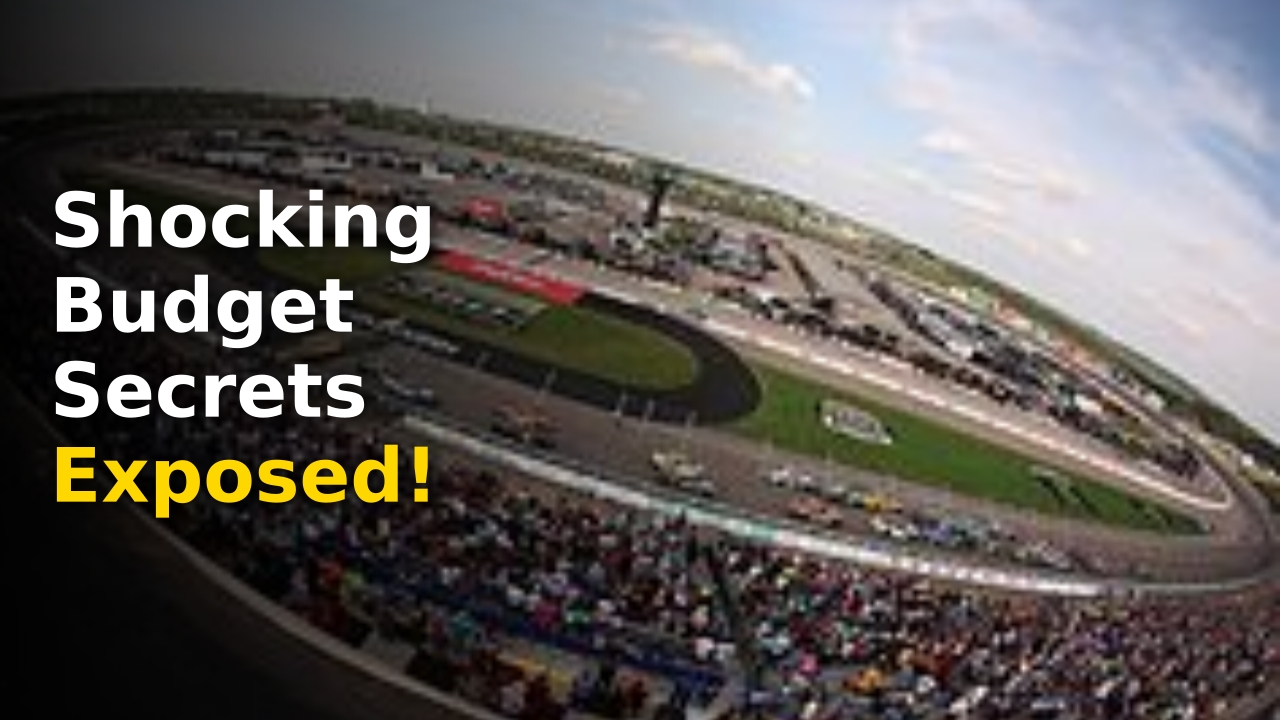
Have you ever wondered what happens when a racing legend gets a blank canvas and millions of dollars in a Midwestern cornfield? The story of Iowa Speedway is one of the most jaw-dropping tales in modern motorsport history, blending runaway construction costs with genius racetrack design. When initial building estimates doubled overnight, critics questioned whether this ambitious short track project in Newton, Iowa would ever see the light of day.
You might be surprised to learn that NASCAR Hall of Famer Rusty Wallace was the visionary mind behind this unique 0.875-mile facility. Today, this high-powered speedway stands as a testament to strategic engineering, hidden stadium features, and sheer Midwestern determination. Here is the untold story of how a small-town racetrack blew past its financial limits to become a premier stop on the racing calendar.
From subterranean steel supports to customized open-wheel banking, every single foot of this oval carries a distinct purpose. Let us break down the wild financial journey and brilliant secrets that created America’s premier seven-eighths-mile short track.
The Iowa Speedway Budget Blowout
Building a top-tier motorsports venue from scratch is never cheap, but early financial estimates for Iowa Speedway dramatically missed the mark. Original blueprints called for a modest $30 million budget to transform former agricultural farmland near Interstate 80 into a motorsports destination.

As earthmovers began reshaping the terrain in 2004, unforeseen soil requirements and expanded scope caused total costs to explode. The ambitious construction project ultimately required a massive $70 million investment before finally opening its gates in 2006.
Local business leaders in Newton, Iowa were navigating massive economic shifts due to the decline of the local Maytag manufacturing plant. Betting heavily on a multi-million-dollar racing stadium was a high-stakes gamble that required immovable community support and massive capital investments.
NASCAR corporate leadership eventually recognized the venue’s massive long-term potential, officially acquiring ownership of the complex in 2013. Race enthusiasts tracking modern driver stats and celebrity racing updates often highlight this facility as one of the smoothest operations on the annual tour.
Despite early financial strain, the finished facility proved that high initial investments yield incredible racing quality. The extra spending created a durable racing surface that continues to produce edge-of-your-seat short track battles across multiple racing disciplines.
Today, drivers and team owners view those early budget overruns as necessary stepping stones toward building a truly world-class stadium.
Rusty Wallace Crafts a Masterpiece
Rusty Wallace did not merely attach his famous name to this venture as a marketing gimmick; he actively drew the blueprints. Working closely with engineers while preparing for his final full-time Cup Series season in 2005, Wallace poured decades of driving knowledge into every turn.
Drawing Inspiration From Richmond
With 34 short-track victories across his hall-of-fame career, Wallace knew exactly what features produced heart-stopping side-by-side action. He specifically modeled the geometry of the new facility after Richmond Raceway, a venue where he celebrated many of his greatest triumphs.
Richmond provided the baseline blueprint, but Wallace wanted to elevate the concept to an entirely new competitive standard.
Solving the Turn One Problem
Despite loving Richmond’s famous layout, Wallace harbored a deep frustration with how stock cars handled entering turn one at that track. He believed the sudden entry angle restricted drivers from using multiple racing lines during frantic restarts.
- He adjusted the turn entries to create smoother transition angles for heavy Cup cars.
- He widened the racing surface to allow trailing drivers room to execute clean pass maneuvers.
- He optimized line sightlines to reduce blind-spot collisions along the inside concrete barrier.
By refining those specific entry angles, Wallace succeeded in capturing the raw intensity of classic Virginia short tracks while removing their worst structural handling limitations.
Engineering Secrets Behind The Oval
The technical geometry of Iowa Speedway required tricky balance to accommodate completely different racing series. Wallace initially wanted a traditional short-track slope featuring 12 degrees of banking along the bottom and 14 degrees near the wall.

Progressive Banking Physics Shift
When open-wheel sanctioning body IndyCar inspected the early track blueprints, their technical directors expressed serious safety concerns. Engineers feared that low-slung open-wheel underbodies would strike the harsh bottom transition at full racing speeds.
Wallace immediately went back to the drawing board to construct a smooth progressive 12-to-13-to-14-degree banking transition across the turns. The frontstretch was contoured with 10 degrees of banking, while the backstretch settled at a sleek 2 degrees.
This custom progressive shape allowed ground-effect open-wheel cars and heavy stock cars to race side-by-side without sacrificing aerodynamic stability.
The Invisible Stadium Infrastructure
For years, casual sports fans assumed this venue would never host premier Cup Series racing because of its visible grandstand seating numbers. However, Wallace had secretly engineered the track as a massive natural bowl carved deep into rolling Iowa hillsides.
Massive concrete support footings for extra grandstands were pre-buried underneath the grassy hills located behind Turns 1 and 4 during early earthwork. Electrical grids, plumbing connections, and concession foundations were built quietly into the surrounding dirt barriers during initial 2005 earthmoving.
According to historical records documented on NASCAR archives, flexible stadium expansion plans save race promoters tens of millions in retrofitting costs. Wallace’s stealth engineering meant the venue kept low daily overhead while keeping full potential to host massive national crowds.
Iowa Speedway Financial Breakdown
Examining the vast differences between original plans and final project execution demonstrates why this short track stands out. The detailed financial and physical metrics highlight how extra spending transformed the ultimate facility layout.
| Metric / Feature | Original Projection | Final Result |
|---|---|---|
| Total Construction Budget | $30 Million | $70 Million |
| Track Distance | 0.750 Mile | 0.875 Mile (7/8ths) |
| Turn Banking Design | 12-14 Flat Degrees | 12-13-14 Progressive |
| Lead Track Architect | Standard Engineering Firm | Rusty Wallace (1989 Champion) |
| Facility Owner | Private Investors Group | NASCAR (Acquired 2013) |
The doubled budget allowed builders to pave high-durability asphalt mixtures designed to age naturally under harsh Midwestern winter conditions. That choice paid massive long-term dividends, creating tire-wearing grooves that challenge crew chiefs and drivers alike.
Investing heavily in underground drainage infrastructure also eliminated costly weather delays during rainy summer race weekends. Track drying crews clear standing water faster here than at almost any other traditional short track venue in North America.
Modern Cup Series Showdowns Return
After years of hosting sold-out Xfinity Series, Craftsman Truck Series, and IndyCar events, top-flight Cup Series racing finally returned to Newton. Fans flocked from across the country to witness elite Cup stars battle on Wallace’s custom-paved masterpiece.
Hendrick Motorsports and Penske Dominance
Defending champion William Byron captured a dominant victory for Hendrick Motorsports, utilizing the high groove to pass competitors with surgical precision. His victory reinforced the belief that multi-groove short tracks produce superior racing strategy.
Driver Ryan Blaney secured the inaugural Cup Series race victory at Newton for Team Penske the previous year. Their dominating performances demonstrated that championship teams must master progressive banking to conquer this technical layout.
What Lies Ahead for Newton
Following a crucial mid-season break, NASCAR action fires back up with an action-packed tripleheader schedule featuring multiple national touring divisions. Thousands of high-octane fans continue filling the natural amphitheater seats each summer night.
- The high-stakes weekend features the Cup Series, O’Reilly Auto Parts Series, and ARCA Menards Series.
- Progressive tire degradation forces drivers to manage rubber wear over long green-flag fuel runs.
- Passing lanes open wide along the outside wall as track temperatures rise during daytime sessions.
Drivers universally acclaim the facility as a top-tier venue that rewards raw driving skill over simple horsepower setup advantage.
Future Legacy of Newton’s Jewel
Looking back at the historic $70 million investment, few motorsport experts question the original financial risk. What began as an expensive endeavor in Newton, Iowa has firmly established itself as a beloved fixture in modern American auto racing.
By putting faith in the architectural instincts of Rusty Wallace, racing executives secured a unique facility that delivers edge-of-your-seat excitement. As automotive technology evolves, this Midwestern oval remains uniquely engineered to produce unforgettable racing moments for generations to come.
Whether you follow stock cars or open-wheel rockets, Iowa Speedway stands tall as a triumph of bold design and enduring racing passion.
More Like This
For more updates, check out our latest entertainment and sports news.