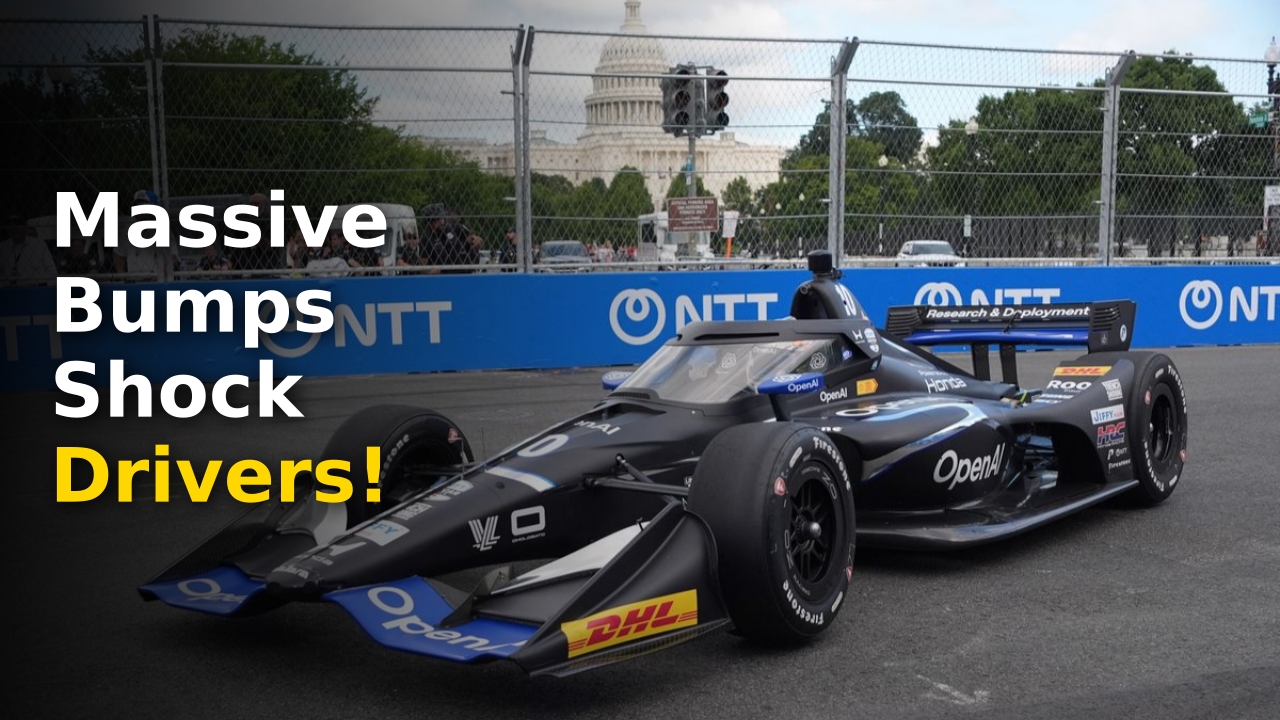
Can you handle the adrenaline of a 200-mile-per-hour dash past the world’s most powerful buildings? Testing the new IndyCar track in Washington D.C. has proven that the scenery is the last thing on a driver’s mind when the pavement starts fighting back.
You might think racing through the capital is a scenic tour, but for elite drivers like Alex Palou, it is a high-speed battle against physics. The Freedom 250 Grand Prix brings the roar of open-wheel racing to the shadows of the Capitol and the Washington Monument.
Drivers are quickly learning that this 1.7-mile circuit is an unpredictable beast that demands total focus. While the visuals are stunning for fans, the cockpit experience is a jarring reminder that street racing is never as smooth as it looks on television.
IndyCar track: Massive Bumps and Chaos
The IndyCar track is currently serving as a wake-up call for the world’s best drivers who expected a polished urban circuit. Series points leader Alex Palou didn’t hold back after his first morning practice session on Saturday morning.
Palou described the experience as a “blast” but noted that the massive bumps heading into Turn 2 and Turn 6 are going to spice things up. These aren’t just minor vibrations; they are suspension-shaking jolts that can send a multi-million dollar machine into the concrete in a heartbeat.

You have to realize that Pennsylvania Avenue isn’t just a road; it is a stage for history that is repaved for presidential inaugurations. However, what feels smooth to a motorcade feels like a mountain range to a car with only millimeters of ground clearance.
Urban Racing Challenges
- The track features seven distinct turns, mostly left-handers, creating a unique directional stress on the tires.
- Street surfaces like those on Independence Avenue lack the specialized grip found on permanent road courses.
- Braking zones are compromised by manhole covers and varying asphalt textures that change lap by lap.
Pato O’Ward, who recently celebrated a victory at Mid-Ohio, echoed the concerns regarding the track’s raw characteristics. He noted that the bumps on the exit of Turn 1 are becoming the defining feature of the entire weekend.
When you are traveling at these speeds, the slightest imperfection in the road becomes a launchpad. Louis Foster discovered this the hard way when his car bottomed out near Turn 6, sending him nose-first into the wall and ending his session early.
Navigating the DC Concrete Jungle
The layout of this IndyCar track was designed to celebrate the country’s 250th birthday, making it a one-of-a-kind sporting monument. Because it is a street course, the margin for error is non-existent, with concrete barriers hugging the racing line at every corner.
Drivers are forced to find a “balance” in the corners while essentially ignoring the fact that their teeth are rattling. Alex Palou suggested that moving lanes might help avoid some of the worst divots, but the bumps aren’t going anywhere before Sunday’s green flag.
The technicality of Turn 2 is expected to be the primary passing zone for the Freedom 250. This severe bend at the end of the Pennsylvania Avenue straightaway allows drivers to use the draft of the car ahead to make a bold move on the inside.
High Speed Passing Zones
- Turn 5 offers a 90-degree left turn from 7th Street onto Independence Avenue, providing ample room for side-by-side action.
- The width of the D.C. streets allows for more overtaking opportunities than narrower tracks like Detroit.
- Defensive driving will be difficult, as a faster car can easily exploit the wide entries into the major braking sectors.
If a driver lacks the necessary pace, they will find themselves quickly overtaken by the aggressive field. This makes qualifying position vital, but not the only factor in determining who will stand on the podium near the National Mall.
You can find the latest celebrity racing news and updates on how these superstars handle the pressure of the spotlight. Staying composed in humid conditions while navigating a vibrating cockpit is what separates the champions from the also-rans.
Data Analysis of the Freedom 250
To understand the sheer scale of the challenge, we have to look at the numbers behind the IndyCar track and the machines. The speed reached on the straights makes the bumps even more dangerous as downforce levels fluctuate wildly.
| Track Segment | Location | Key Feature | Risk Level |
|---|---|---|---|
| Turn 1 | Near Capitol | Exit Bumps | High |
| Turn 2 | Penn. Ave | Severe Bend | Medium |
| Turn 5 | 7th Street | 90-degree Left | Low |
| Turn 6 | Independence Ave | Massive Bumps | Critical |
According to official reports from the Associated Press, the weather is expected to remain humid for the 147-lap event. This heat adds a layer of physical exhaustion to an already grueling race distance of 250 miles.
The technical data from Alex Palou‘s top practice lap of 56.6145 seconds shows just how fast these cars are circulating. Every millisecond counts, and a single bump that upsets the car’s aerodynamics can lead to a disastrous qualifying time or a race-ending crash.
NASCAR Legends Join the Fray
While the focus is on the open-wheel stars, the weekend also featured some of the biggest names in stock car history. Four-time Cup champion Jeff Gordon dominated the IROC event held on the same circuit, sweeping both races on Saturday.
Gordon’s presence added a layer of prestige to the event, proving that the D.C. layout appeals to drivers from all disciplines. Kurt Busch, who finished as the runner-up in both races, was visibly excited about the unique atmosphere of the venue.

Busch compared the experience to being a “kid in a candy store,” distracted by the vibrant colors and the historic buildings. He admitted that finding his braking zones was a challenge when he kept wanting to look at the “cool buildings” lining the track.
IROC Highlights in DC
- Jeff Gordon showcased his timeless skill by navigating the bumpy streets with precision.
- Kurt Busch battled through the field, highlighting the competitive nature of the IROC format.
- The crossover between NASCAR and IndyCar fans has created a massive buzz in the local Washington community.
The combination of these two racing giants in the nation’s capital is a rare occurrence that may never happen again. Fans are flocking to the 1.7-mile course to witness this historic intersection of speed and political landmarks before the barriers are dismantled.
The Physical Toll of Street Racing
You have to wonder how these athletes survive 147 laps of constant jarring and extreme heat. Pato O’Ward described the sensation of sweat pouring inside the helmet while being bounced around like a ragdoll.
It is a highly physical challenge that tests the limits of human endurance and mental fortitude. When you are fighting the steering wheel to keep the IndyCar track from spit-firing you into a wall, your heart rate remains at peak levels for nearly two hours.
Street courses are notorious for being narrow and unforgiving, but the width of the D.C. roads offers a different kind of psychological pressure. Drivers feel they can push harder, but the bumps serve as a constant reminder of the underlying danger.
Endurance Factors for Sunday
- Hydration will be key as the cockpit temperatures rise well above 100 degrees Fahrenheit.
- Neck strength is tested by the G-forces on the bumpy left-hand turns.
- Mental fatigue can lead to missing a braking point at the end of the long Independence Avenue straightaway.
The Freedom 250 isn’t just a race; it’s a test of who can maintain their composure while their equipment is being pushed to the breaking point. The fans in the grandstands will see the glitz, but the drivers will feel the grind of every single inch of the pavement.
Final Thoughts on the IndyCar track
The debut of this spectacular IndyCar track has certainly lived up to the hype, albeit with more bumps than some expected. Washington D.C. has provided a backdrop that is arguably the most prestigious in the history of the sport.
Whether it’s the massive bumps or the high-speed chases past the Washington Monument, this weekend is set to be legendary. Alex Palou and the rest of the grid are ready to turn the “blast” of practice into a historic victory on Sunday afternoon.
As the sun sets over the Capitol, the roar of the engines will remind everyone why we love the sport of racing. It’s the perfect blend of high-tech engineering and raw human courage on an unforgiving IndyCar track that will go down in the history books.
More Like This
For more updates, check out our latest entertainment and sports news.