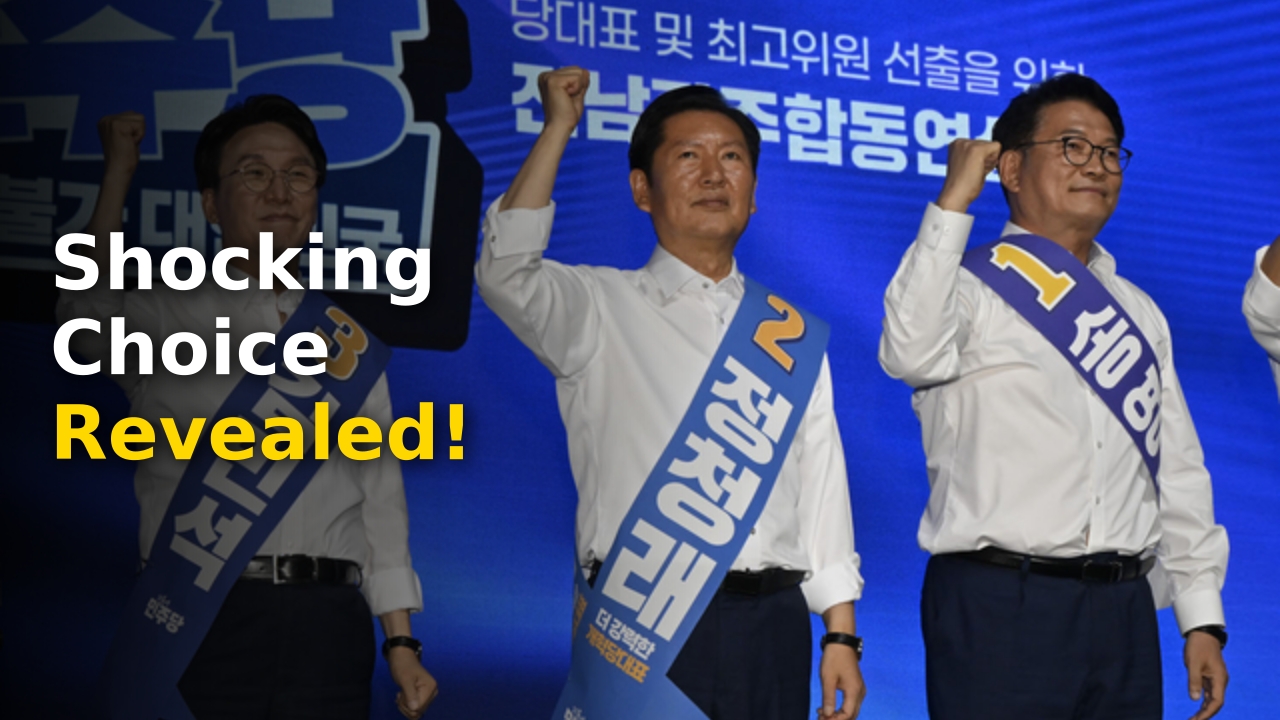
The Honam Battle is the ultimate crucible for any politician dreaming of leading South Korea’s main opposition party, and you can feel the tension in the air. If you think political campaigns are just about dry policy papers, you haven’t seen the emotional warfare unfolding in the heart of Gwangju. This isn’t just a vote; it is a desperate search for the very soul of the Democratic Party of Korea (DPK). Every handshake and every shouted slogan in this region carries the weight of decades of democratic struggle and future economic survival. You are witnessing a high-stakes poker game where the currency is regional pride and historical legacy.
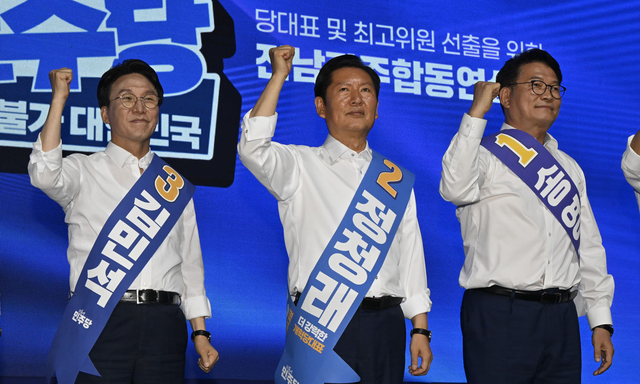
As the primary reaches its fever pitch, the candidates are pulling no punches in the Honam Battle to secure the support of the Jeonnam and Gwangju electorates. On August 15, at the Naju General Sports Park, the atmosphere was electric as the top contenders took the stage. They aren’t just asking for a vote; they are claiming kinship, history, and a shared vision of an industrial revolution. You need to understand that Honam accounts for roughly 33% of the party’s core members, making it the kingmaker of the entire convention. If you lose here, your path to the leadership throne effectively disappears in an instant.
The current race features three heavyweights: Kim Min-seok, Jung Chung-rae, and Song Young-gil. Each candidate has adopted a unique persona to win over the crowd, ranging from the ‘Soul of Gwangju’ to the ‘Son of the Soil.’ To understand the gravity of this situation, we must look at how Gwangju’s historical significance continues to dictate modern political trends in the 21st century. This region is the moral compass of the party, and the candidates know they must align their North Star with the people’s expectations or face political exile.
The Honam Battle Strategy
When you analyze the Honam Battle, the first thing you notice is the heavy reliance on the legacy of former President Kim Dae-jung. Each candidate is trying to position themselves as the true heir to the DJ legacy, which remains the gold standard for leadership in Jeonnam. Kim Min-seok opened his speech by reminding the crowd of his personal sacrifice, noting that he spent 3 years in prison for his involvement in the May 18 Democratization Movement. For Kim, this isn’t just politics; it is a blood pact with the people of Gwangju that started decades ago during the darkest days of the military dictatorship.
Kim’s rhetoric focuses on the concept of ‘Yakmu Honam Simu Gukga,’ a famous phrase meaning ‘without Honam, there is no country.’ You can see how he bridges the gap between history and the future by updating this quote for the Lee Jae-myung era. He argues that in the modern age, without Honam, there is no AI, no new leap forward, and no advanced Republic of Korea. This is a calculated attempt to make the regional voters feel essential not just for the party, but for the entire nation’s technological progress. He is selling a dream of a ‘K-Golden Age’ led by the synergy between himself and a potential Lee Jae-myung presidency.
The AI Mega Project
- Strategic Partnership: Kim claims he co-designed the Honam Mega Project during his time as Prime Minister.
- Industrial Growth: The goal is to transform Gwangju into a global AI hub that rivals Silicon Valley.
- Party Unity: He emphasizes a ‘one-team’ approach with Lee Jae-myung to ensure project success.
- Economic Security: Promises to bring massive infrastructure investment to the Naju and Gwangju corridor.
Jung’s Tactical Marriage Link
In the middle of this Honam Battle, Jung Chung-rae decided to take a more personal and relatable route. Instead of focusing solely on his prison record, he introduced himself as the ‘Son-in-law of Honam.’ His wife hails from Kangjin, a detail he uses to build an immediate, familial bond with the audience. You might find it surprising how effective this ‘family connection’ is in South Korean regional politics, where local ties can often outweigh national policy. Jung is betting that voters will trust a family member over a distant ideological ally any day of the week.
Beyond the family ties, Jung is positioning himself as the man of action and speed. He credits Kim Dae-jung for building the internet infrastructure that made Korea a global power and promises to do the same for the AI and Semiconductor industries in the region. Jung’s pitch is simple: he has the ‘breakthrough power’ and ‘speed’ to turn Gwangju from a sanctuary of democracy into a powerhouse of high-tech production. He wants to turn the ‘City of Light’ into a ‘Semiconductor Outpost,’ ensuring that the next generation of Honam youth doesn’t have to leave for Seoul to find high-paying jobs.
Tech and Tradition
- Semiconductor Cluster: Jung promises to fast-track the development of a massive chip-making hub in Jeonnam.
- Digital Heritage: He plans to use AI to preserve and promote the historical records of the democratic movement.
- Speed of Execution: Jung highlights his reputation for aggressive legislative action as a key asset for regional development.
Song’s Genetic Claim Advantage
While one candidate claims his soul is in Gwangju and another claims his marriage is in Kangjin, Song Young-gil reminds everyone that he was born in Goheung. In the Honam Battle, being a ‘native son’ is a powerful card to play. Song argues that while ‘sons-in-law’ are great, a ‘real son’ should be given the most strength. He presents himself as the ‘young blood’ recruited by Kim Dae-jung, branding himself as the true ‘legitimate root’ of the Democratic Party. This is a direct challenge to his rivals’ claims of authenticity and historical connection.
Song also took the opportunity to land a heavy blow against Jung Chung-rae, criticizing Jung’s previous management of local elections. He used a provocative term, calling Jung’s claims of victory ‘accounting fraud’ or ‘window dressing’ (Bunshik Hoegye). This linguistic choice suggests that the current leadership is hiding failures and that a new management team—led by him—is required to save the party. This level of internal critique shows just how high the stakes are; the candidates are no longer playing nice as the finish line approaches. You can read more about leadership dynamics and public perception at Bright Celebrity, where we track the influence of political stars.
The Fusion Power Vision
- Artificial Sun: Song is proposing to make Gwangju and Naju the center of nuclear fusion research.
- Energy Sovereignty: He envisions Jeonnam as the ‘Indispensable Foundation’ for Korea’s future clean energy needs.
- Innovation Hub: The focus is on long-term, high-tech energy solutions rather than short-term political fixes.
- Leadership Change: Song emphasizes the need for a ‘new board of directors’ to fix the party’s internal structures.
Regional Power Grid Stats
To truly grasp the Honam Battle, you need to see the numbers. The sheer volume of Qualified Party Members in this region means that a landslide here can negate losses in other provinces. The following table illustrates the strategic importance of the Honam region and the specific focus areas each candidate is leveraging to capture the hearts and minds of the local constituency. Notice how the focus shifts from pure historical reverence to modern technological competition as the candidates try to appeal to both the elderly ‘DJ generation’ and the younger tech-focused voters.
| Candidate | Regional Tag | Primary Focus | Key Industrial Promise |
|---|---|---|---|
| Kim Min-seok | The Soul | 5.18 Legacy & Lee Jae-myung Unity | AI Mega Project |
| Jung Chung-rae | The Son-in-law | Family Ties & Action Speed | Semiconductor Cluster |
| Song Young-gil | The Son | Native Roots & Party Reform | Nuclear Fusion / Artificial Sun |

The Final Honam Battle Outcome
As the sun sets on the Naju joint speech, the Honam Battle remains far from over. You can expect the candidates to continue their grueling schedules, visiting every traditional market and community center until the final ballot is cast. The Democratic Party is at a crossroads, and the people of Honam are the ones holding the map. Whether they choose the ‘Soul,’ the ‘Son-in-law,’ or the ‘Son’ will depend on who they believe can best protect their historical pride while delivering on the promise of a high-tech economic future.
Ultimately, the Honam Battle is about more than just a party leader; it is about defining the opposition’s identity for the next general election. Will the party lean into its activist roots or its technocratic future? The candidates’ focus on AI, semiconductors, and nuclear fusion suggests a shift toward the latter, even as they wrap themselves in the mantle of the 5.18 uprising. You should keep a close eye on the final polling numbers coming out of Gwangju, as they will likely predict the next President of the Republic of Korea. The political gravity of this region is undeniable, and the fight for its favor is the most significant drama in Korean politics today.
In the coming weeks, the Honam Battle will move from speech stages to the living rooms of every voter in the southwest. The psychological pressure on these candidates is immense, as a failure to resonate with the Honam base is often a death sentence for a progressive political career. As you watch this unfold, remember that in Korea, history isn’t just in the past—it is a living, breathing force that determines who gets to lead the future. The battle for Honam is, in many ways, the battle for the heart of the nation itself.
More Like This
For more updates, check out our latest entertainment and sports news.