Key Takeaways
| Literary Hybrid: The series ingeniously synthesizes Shirley Jackson’s 1959 gothic classic with the structural DNA and thematic tropes of Stephen King’s horror bibliography. |
| Dual Timeline Architecture: Mirroring King’s IT, the ten-episode narrative explores five adult siblings confronting suppressed childhood horrors. |
| The Shining Connections: Direct nods include the shapeshifting Red Room, psychic sensitivities reminiscent of “the shining,” and a corrupted parent falling victim to a sentient estate. |
| Technical Mastery: Directed entirely by Mike Flanagan, the show features iconic continuous long takes in Episode 6 and dozens of hidden background ghosts. |
| Streaming Dominance: It transformed the prestige horror landscape on Netflix, holding a 93% Rotten Tomatoes critical approval rating. |
You can rarely pinpoint the exact moment a genre undergoes a permanent creative revolution, but the arrival of the Haunting of Hill House on Netflix established an untouchable gold standard for television horror. Released to universal acclaim, creator Mike Flanagan took on an impossible assignment: modernizing Shirley Jackson’s seminal 1959 novel while revitalizing a streaming marketplace then choked with disposable jump scares. What emerged was a sprawling, deeply devastating ten-hour family drama wrapped in the terrifying trappings of an architectural predator.
By seamlessly blending Jackson’s claustrophobic psychological dread with the emotional, multi-generational storytelling trademarks of Stephen King, the series reshaped how modern audiences consume long-form terror. Viewers dissecting the project quickly realized that this was not merely an adaptation of a single book. Instead, it operates as an intricate conversation between two of the most consequential literary voices in horror history, mediated by one of contemporary cinema’s finest genre directors.
Whether you are revisiting the eerie corridors of Hill House or discovering its somber tragedies for the first time through entertainment news and streaming analysis, the series rewards meticulous scrutiny. From its recursive character studies to its jaw-dropping visual trickery, Flanagan crafted an enduring masterpiece. The tragedy of the Crain family resonates far beyond cheap thrills, striking directly at the paralyzing horrors of grief, mental illness, and estrangement.
Haunting of Hill House Literary Architecture: Shirley Jackson Meets Stephen King
To fully understand why the series functions so effectively, you must unpack its unique literary ancestry. The production opens with an immediate tribute to Shirley Jackson’s prose, recited via voiceover by adult author Steven Crain. The camera floats quietly through the shadowy gothic halls as Jackson’s famous cadence sets the stage: “No live organism can continue for long to exist sanely under conditions of absolute reality; even larks and katydids are supposed, by some, to dream. Hill House, not sane, stood by itself against its hills, holding darkness within…” That verbatim homage signals absolute reverence for Jackson’s original exploration of isolation and unhinged reality.
Yet as soon as the Crain family dynamics unfold, the unmistakable thematic footprint of Stephen King takes center stage. In Jackson’s original novel, Dr. John Montague invites a group of unrelated, eccentric individuals to investigate supernatural phenomena at Hill House. Flanagan boldly discarded that premise entirely, replacing the unrelated investigators with a large, fractured nuclear family: parents Hugh and Olivia Crain, alongside their five children, Steven, Shirley, Theodora, Luke, and Eleanor.
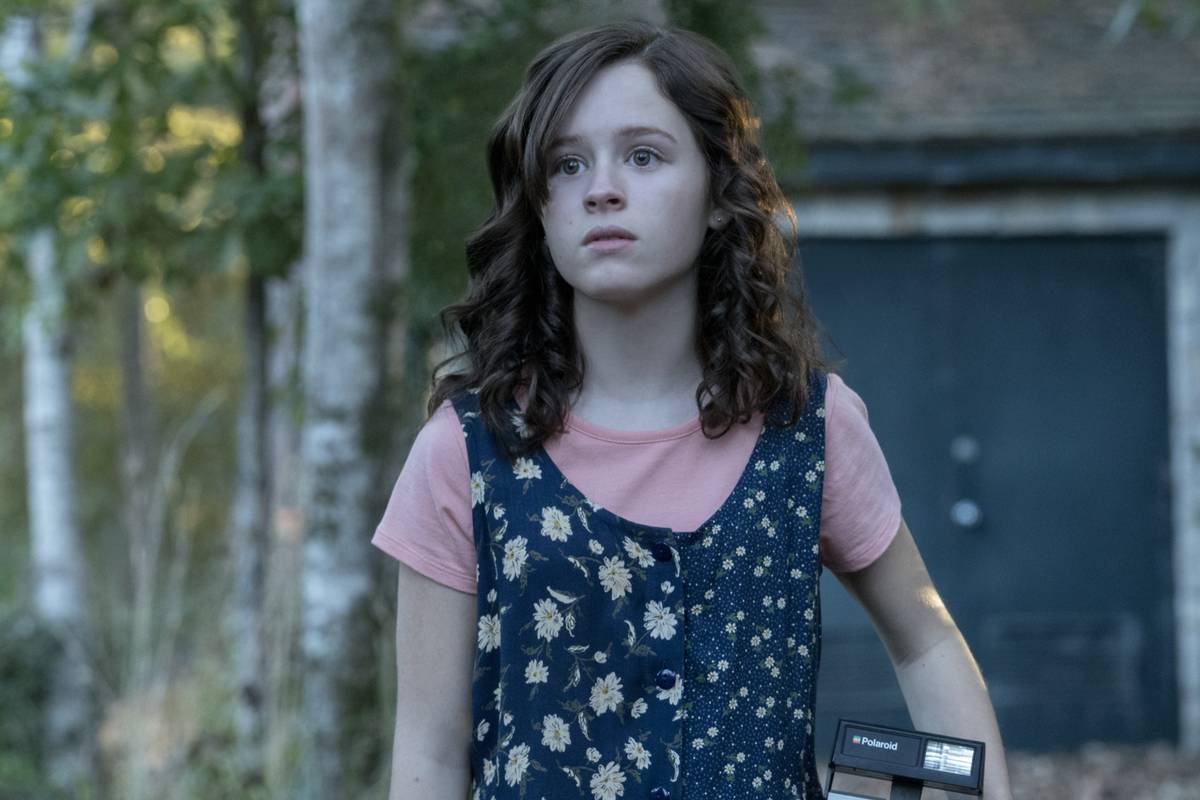
This radical reimagining immediately mirrors the narrative construction of King’s magnum opus, IT. Flanagan deploys a non-linear, dual-timeline framework that toggles fluidly between the summer of 1992 and the haunted adulthood of the Crain siblings decades later. The children do not simply experience supernatural terror; they carry profound developmental wounds into their thirty-something lives, manifesting as substance abuse, emotional frigidity, pathological control, and chronic denial.
The Troubled Author Archetype
The characterization of Steven Crain, played with cold detachment by Michiel Huisman, serves as a direct King archetype. Steven is a bestselling author who achieved monumental fame and fortune by exploiting his own family’s traumatic childhood in a lurid memoir titled The Haunting of Hill House. Much like King’s cynical, creatively blocked, or morally conflicted writers in The Shining, Misery, and The Dark Half, Steven uses cynicism and intellectual arrogance as an emotional shield.
- Cynical Commercialization: Steven converts profound psychological trauma into commercial paperbacks while refusing to believe in the ghosts his siblings saw.
- Estrangement and Exploitation: His royal checks support his siblings’ rehab and mortgage bills, creating a bitter power dynamic of financial reliance and deep moral resentment.
- The Ultimate King Confession: Steven eventually learns that denying the reality of monsters does not protect you from being devoured by them.
Expert Take: Academic horror scholars frequently observe that while Jackson understood how architecture reflects neurosis, King perfected the art of weaponizing childhood memories against adults. Flanagan acts as an alchemist between the two: Jackson supplies the psychological decay and architecture, while King provides the deeply sympathetic character arcs and visceral generational trauma.
Haunting of Hill House and The Shining Parallels: Red Rooms and Sentient Walls
The dialogue between Mike Flanagan and Stephen King deepens exponentially when examining the malevolent consciousness of Hill House itself. Rather than presenting the mansion as a passive container for wandering spirits, the Haunting of Hill House paints the estate as a carnivorous organism that digests its inhabitants from within. This sentient malevolence draws an unmistakable parallel to the Overlook Hotel from King’s 1977 masterpiece, The Shining.
In both stories, the central location identifies the most vulnerable parental figure and systematically breaks down their psychological defenses. In The Shining, the Overlook manipulates Jack Torrance’s alcoholism, professional failures, and suppressed rage until he turns murderous toward Danny and Wendy. In Hill House, the estate preys upon matriarch Olivia Crain, portrayed with exquisite tragedy by Carla Gugino. Suffering from chronic migraines and sensory sensitivities, Olivia is slowly convinced by the resident ghosts that the mortal world is full of horrors, and the only way to “wake her children” from life’s nightmares is through murder-suicide.
The physical spaces within Hill House also echo King’s most famous iconography. Throughout the series, the Crain children are mystified by the locked “Red Room” with its inaccessible brass door handle. When the devastating truth is finally revealed in the finale, viewers learn the Red Room was not an isolated vault, but the “stomach” of the house. It shapeshifted into whatever sanctuary each child required: a treehouse for Luke, a dance studio for Theo, a game room for Steven, a reading room for Olivia. The crimson door and lethal psychological trap serve as a brilliant visual and thematic tribute to King’s iconic “REDRUM” premonition.
Psychic Gifts and the Hereditary Shine
Furthermore, several members of the Crain family possess latent, hereditary sensory gifts that heavily mirror Danny Torrance’s psychic “shining.” Theo Crain, brought to life by Kate Siegel, possesses clairsentience through tactile touch, requiring her to wear heavy velvet gloves to keep overwhelming foreign emotions at bay. Young Nell and Luke share an inseparable “twin thing”—a telepathic tether that causes Luke to feel physical agony and hypothermia whenever Nell is suffering hundreds of miles away.
King himself has never hidden his reverence for Shirley Jackson. In the pages of The Shining, King explicitly references Jackson’s prose: “There was a little boy to terrorize, a man and a woman to set one against the other, and if it played its cards right they could end up fitting through the Overlook’s hall like insubstantial shades in a Shirley Jackson novel…” In his 1980 novel Firestarter, King inscribed a dedication reading: “In Memory of Shirley Jackson, who never needed to raise her voice.” Flanagan effectively closed this literary ouroboros by directing King’s official Shining sequel, IMDb’s production credits for The Haunting of Hill House and Doctor Sleep, shortly after wrapping production on the Netflix series.
Haunting of Hill House Streaming Data, Critical Reception, and Legacy Metrics
When the 10-episode limited series debuted in October 2018, it quickly emerged as one of the most streamed and critically revered original programs in television history. Mainstream critics and horror purists alike praised the meticulous narrative architecture and emotional weight that set it apart from contemporary streaming releases. To quantify its enduring supremacy, the data speaks volumes.
| Category Metric | Official Measurement | Industry Significance |
|---|---|---|
| Rotten Tomatoes Tomatometer | 93% Certified Fresh | Ranks among top 5 highest-rated Netflix original horror series |
| Rotten Tomatoes Audience Score | 91% Positive | Over 10,000 verified audience reviews confirming long-term rewatchability |
| Episode 6 Continuous Long Takes | 5 Extended Sequences | Longest unbroken sequence exceeds 17 minutes without a visible cut |
| Hidden Background Ghosts | 40+ Disguised Specters | Spawned global freeze-frame scavenger hunts across social media |
| Stephen King Endorsement | “Close to a work of genius” | Publicly endorsed via Twitter/X by the master of modern horror himself |

Episode 6, titled “Two Storms,” remains one of the most astounding technical achievements in television history. Shot across interconnected soundstages in Atlanta, the episode consists of five intricate, continuous camera shots that weave between two storms: one battering Hill House during the Crain children’s youth, and another engulfing Shirley’s funeral parlor in the present day. Actors ducked behind walls, switched into aged makeup in real time, and maneuvered around complex crane rigs to pull off an emotionally devastating 57-minute tour de force.
Beyond the technical wizardry, Flanagan salted the frame with over 40 hidden ghosts lurking behind furniture, beneath staircases, and inside dark archways. These apparitions are never acknowledged by dramatic musical stingers or sudden camera pans. They exist purely as ambient fixtures of the house’s oppressive atmosphere, driving unmatched user rewatch value across digital streaming communities covered by television reviews and cultural deep dives.
The Crain Family Trauma and the Evolution of Modern Television Terror
At its heart, the series succeeds because the supernatural entities serve as physical manifestations of psychological collapse. Flanagan mapped the five Crain siblings directly onto the Swiss-American psychiatrist Elisabeth Kübler-Ross’s five stages of grief. This structural brilliance elevates the series far above standard monster stories, ensuring that every haunting represents an internal emotional battlefield.
Steven personifies Denial, refusing to accept the supernatural truth even when confronted with undeniable physical evidence. Shirley, running a high-end mortuary and obsessing over cosmetic perfection, embodies Anger, projecting her rage onto everyone around her to shield her own moral transgressions. Theodora represents Bargaining, living a life of physical detachment, sensual escapism, and emotional walls to avoid suffering the pain of others.
Luke represents Depression, attempting to chemically drown the memory of the terrifying bowler-hat-wearing Tall Man through severe heroin addiction. Finally, young Nell personifies Acceptance. As the most vulnerable and emotionally receptive sibling, Nell is stalked throughout her life by the bent-neck lady, only to discover in the show’s most heartbreaking plot twist that she was haunting herself across the linear timeline all along. Her eventual death at the house is the tragic catalyst that forces her estranged family to stop running from their mutual grief.
By The Numbers: The Flanagan Horror Universe Expansion
The monumental success of the series inaugurated what critics now recognize as the “Flanagan Flanaverse.” Following the series’ global breakout, Flanagan inked an extensive multi-year creative partnership with Netflix, producing a run of ambitious, character-driven horror projects documented across Wikipedia’s comprehensive overview of the Flanagan horror series.
His subsequent limited series—including The Haunting of Bly Manor (2020), Midnight Mass (2021), The Midnight Club (2022), and The Fall of the House of Usher (2023)—utilized an ensemble repertory company featuring recurring stars like Carla Gugino, Kate Siegel, Henry Thomas, and Samantha Sloyan. Yet among this prolific catalog of genre achievements, the Crain family chronicle retains an unrivaled emotional intensity. It proved that mainstream streaming audiences would enthusiastically embrace challenging, literary horror that prioritizes existential heartbreak over empty thrills.
Flanagan’s work demonstrated that the scariest things in any haunted house are not the specters lurking in the shadows, but the words left unsaid between parents and their children. Hugh Crain’s tragic insistence on shielding his children from the painful truth of their mother’s madness ultimately left them defenseless against the world. Through this narrative courage, the production redefined what horror television could accomplish in the golden age of streaming.
People Also Ask
What happened with the Haunting of Hill House ending?
In the series finale, Hugh Crain sacrifices his life by surrendering to Hill House so the ghosts will permit his surviving adult children to escape the Red Room. Steven, Shirley, Theo, and Luke leave the estate to heal their fractured lives, while Hugh remains behind in eternity reunited with the spirits of his wife Olivia and youngest daughter Nell.
Why is the Haunting of Hill House trending right now?
The series is experiencing renewed viral traction across streaming platforms and social media as fans and literary scholars celebrate its brilliant structural synthesis of Shirley Jackson’s classic gothic themes with Stephen King’s dual-timeline trauma tropes.
How does this affect Mike Flanagan’s other horror series?
The critical and commercial dominance of the series established Mike Flanagan as an elite television auteur, directly enabling him to produce celebrated follow-ups like The Haunting of Bly Manor, Midnight Mass, and his feature adaptation of Stephen King’s Doctor Sleep.
When is the next Mike Flanagan horror show releasing?
Following the conclusion of his Netflix output with The Fall of the House of Usher, Flanagan transitioned to Amazon MGM Studios, where he is actively developing an ambitious television adaptation of Stephen King’s legendary magnum opus, The Dark Tower.
Haunting of Hill House Enduring Legacy in Streaming History
Looking back at the trajectory of modern prestige television, the Haunting of Hill House stands tall as an unrepeatable cinematic triumph. By treating the supernatural not as cheap spectacle but as an eloquent metaphor for inherited grief, Mike Flanagan tapped into the universal human condition. The series honors Shirley Jackson’s quiet gothic genius while boldly executing Stephen King’s sprawling, multi-generational storytelling ambitions.
As horror continues to evolve across competing entertainment networks, the story of the doomed Crain family remains the gold standard against which all other limited horror series are measured. It proved that horror can break your heart just as violently as it can terrify your soul. Decades from now, when critics look back on the defining shows of the digital streaming era, Hill House will still be standing, sane or not, holding its darkness—and its quiet, lingering brilliance—within.
More Like This
For more updates, check out our latest entertainment and sports news.