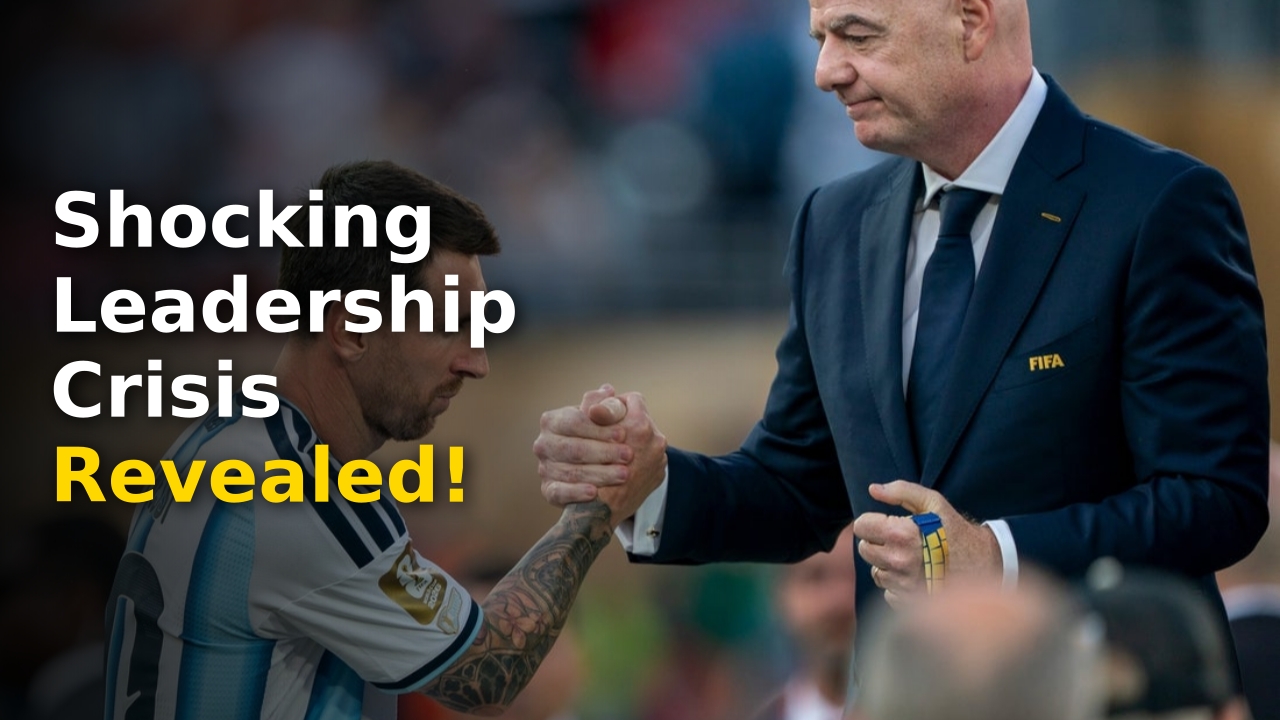
Gianni Infantino remains at the epicenter of a massive governance firestorm as major international soccer bodies publicly announce a total loss of confidence in his leadership. You might wonder how the most powerful man in world football managed to alienate the very organizations he is sworn to serve, but the answer lies in a series of controversial financial proposals and a perceived lack of transparency regarding the future of the World Cup.
The current standoff is not merely a bureaucratic spat but a deep-seated ideological divide over the sanctity of the game versus the lure of private equity. By attempting to monetize the sport’s most prestigious assets, the FIFA president has inadvertently forced a confrontation that could permanently alter the structure of international athletics.
Gianni Infantino Faces Intense Global Backlash
The recent decision by six Nordic football associations to withdraw their support is the latest blow in a string of public rebukes. The unified front from Denmark, Iceland, Finland, Norway, Sweden, and the Faroe Islands signals that the traditional power bases of European football are no longer willing to offer silent compliance. They are specifically targeting his high-level decision-making processes and demanding absolute transparency regarding any future plans to introduce private ownership into the World Cup structure.
The tension escalated when FIFA president Gianni Infantino ignored direct requests from CONCACAF president Victor Montagliani to avoid a youth tournament in the Dominican Republic. Despite being warned that his presence would serve as an unwanted distraction, he chose to attend anyway, framing the visit as an essential dialogue with Caribbean Football Union members. This move was perceived by many analysts as a calculated act of defiance, effectively thumbing his nose at his detractors while continuing his campaign for the upcoming FIFA Congress in Morocco.

Critics argue that his actions demonstrate a dangerous disconnect from the governing bodies that oversee the sport’s growth on a regional level. While he touts the transformative work achieved over the last decade, his opponents see a man operating in a vacuum, prioritizing centralized control over collaborative governance. This narrative is further complicated by his recent comments, which some interpreted as a thinly veiled swipe at larger, wealthier nations that he believes are standing in the way of global equity. The growing friction suggests that the upcoming election cycle will be the most contentious in recent memory, testing whether he can retain his mandate or if the unified opposition will successfully force a change in leadership.
For deeper insights into the complex power dynamics of global sports management, you can visit Bright Celebrity to track the influence of industry moguls. It is clear that the financial stake sale that was once on the table continues to cast a long shadow over every public interaction he has with regional confederations.
The Core Conflict Points
- The attempted monetization of World Cup broadcast and ticketing rights via private equity.
- A blatant refusal to respect the administrative warnings issued by CONCACAF leadership.
- Concerns regarding the lack of transparency in the FIFA Forward Enterprise proposal.
- The growing alienation of UEFA and the potential threat of a mass tournament boycott.
- The perception that he acts as an individualist rather than a collaborative representative.
Key Organizational Stances And Data
The geopolitical landscape of football is currently fragmented, with several confederations taking rigid positions against the current administration’s fiscal strategies. To understand the gravity of the situation, one must look at how these organizations have categorized their grievances. The following table provides a breakdown of the primary opposition groups and their stated concerns regarding current leadership trajectories.
| Organization | Position on Leadership | Primary Objective |
|---|---|---|
| Nordic FAs | Lost Confidence | Governance Reform |
| UEFA | Strong Opposition | Tournament Sovereignty |
| CONCACAF | Operational Friction | Internal Stability |
| AFC | Joint Review Demand | Financial Oversight |
As these organizations demand binding assurances, the pressure on his office only grows. You can verify the long-standing role of these organizations in international governance through records found on Wikipedia, which detail the structural history of the governing body. The demand for a third-party review of the FIFA Forward Enterprise project suggests that the trust deficit may be too wide to bridge before the next major meeting.

This is not just about a single policy; it is about the long-term legacy of the organization. If the opposition from these continental bodies continues to coalesce, the likelihood of a contested election becomes almost a certainty. The challenge of balancing the needs of 211 member countries while keeping the elite leagues satisfied remains his greatest hurdle. Whether he chooses to pivot or double down on his current rhetoric will define his standing for the remainder of his tenure.
The Road To The 2026 World Cup
The path forward is paved with political uncertainty and high-stakes negotiations. As the 2026 World Cup approaches, the need for a stable and universally respected leadership becomes paramount for commercial stakeholders. The proposed commercial venture was designed to generate massive returns, but the execution and potential for external control have scared off key partners. You have to consider how this instability affects sponsors who usually prefer a neutral, predictable environment for their investments.
Behind the scenes, the jockeying for position has already begun, with potential candidates evaluating their chances against the incumbent. The letters written by figures like Victor Montagliani are not merely administrative; they are political manifestos that signal a willingness to challenge the status quo. If he fails to secure the support of the majority in Morocco, the resulting leadership void could cause a seismic shift in how the sport is managed for decades to come.
Furthermore, the reliance on digital platforms and global broadcast deals makes the governance of these rights more important than ever before. Any move that feels like a privatization effort is likely to trigger further backlash from fans and national teams alike. His defense—that he is merely trying to narrow the gap between small and large football nations—resonates with some, but it does not satisfy the demands for structural integrity from larger bodies. The divide is not just geographical but systemic, touching on the very soul of the sport.
Analyzing The Future Of Football
Looking ahead, the tension surrounding Gianni Infantino serves as a case study in the difficulties of managing a global monolithic entity in the modern era. The age of unchallenged presidential authority is effectively over, replaced by a climate of intense scrutiny and accountability. His future will depend entirely on his ability to rebuild bridges with the Nordic FA and other key confederations. However, if the current sentiment is any indicator, the path to re-election will be fraught with significant hurdles.
As you watch these developments unfold, keep an eye on how the CFU members respond to the ongoing pressure. While they may have given him a warm welcome, the political loyalty of such blocs is often fluid depending on the allocation of future developmental funds. The battle for influence within these organizations will be the decisive factor in the upcoming congress. Regardless of the outcome, the events of the last few months have permanently altered the dialogue surrounding the accountability of the world’s governing body for football.
Gianni Infantino: Final Thoughts On Change
In the final analysis, the situation remains fluid and highly unpredictable. The Gianni Infantino saga underscores a fundamental truth about international governance: when you ignore the collective concerns of stakeholders, the foundation of your power inevitably weakens. Whether this leads to a new era of democratic transparency or deeper conflict, one thing is certain: the global football community is demanding more than just growth—they are demanding integrity, accountability, and respect for the traditional values of the sport. We will continue to monitor the FIFA Congress in Morocco closely as these critical decisions shape the next decade of professional football history.
More Like This
For more updates, check out our latest entertainment and sports news.