
Key Takeaways
| Historic Hard-Hit Spike | Cole surrendered a career-worst 14 hard-hit balls (95+ mph) in a single start against the Mets. |
| Fastball Whiff Drought | He threw 39 four-seam fastballs in a game without generating a single swing-and-miss. |
| ABS Debate | Cole blamed the Automated Ball-Strike system, but actual data reveals minor league trials do not back his claims. |
| Rotation Jeopardy | Cole’s recent 5.92 ERA makes him a major risk for the Yankees’ impending postseason run. |
You might look at a respectable 3.67 season ERA and think everything is fine, but the underlying reality reveals a far more terrifying picture for the Bronx Bombers. The ongoing **Gerrit Cole struggles** have sent shockwaves through the New York Yankees front office as the postseason rapidly approaches. With his strikeout numbers plummeting and hard-hit rates soaring to historic highs, the reigning Cy Young winner looks highly vulnerable.
Opposing batters are no longer fearing his legendary high-heat fastball, and the lack of swing-and-miss stuff is turning into an existential crisis. If the Yankees cannot figure out what is wrong with their $324 million ace, their aspirations for a World Series title could vanish in October. Let us break down the metrics, the mechanics, and the psychology behind Cole’s sudden decline on the mound.
Unpacking the Gerrit Cole Struggles This Season
To understand the depth of the current **Gerrit Cole struggles**, one must look at his performance over his last four starts. During this stretch, Cole has posted a worrying 1-3 record alongside a bloated 5.92 ERA. Even more concerning is the sheer volume of hard contact he is allowing to opposing hitters.
The low point came against the cross-town rival Mets, who hit him harder than any opponent in his entire 296-start career tracked by Statcast. The Mets whacked 14 of his pitches at 95 mph or faster, demonstrating that batters are seeing his pitches incredibly well. Until this month, Cole had never allowed more than 11 hard-hit balls in a single outing.
Now, he has set new career-worst milestones in consecutive starts, showcasing a complete breakdown in pitch execution. Fans looking for the dominant force of previous seasons are instead seeing a pitcher constantly fighting from behind. For comprehensive player metrics and historical records, check out Gerrit Cole’s official MLB profile.
The Pitching Mechanics Breakdown
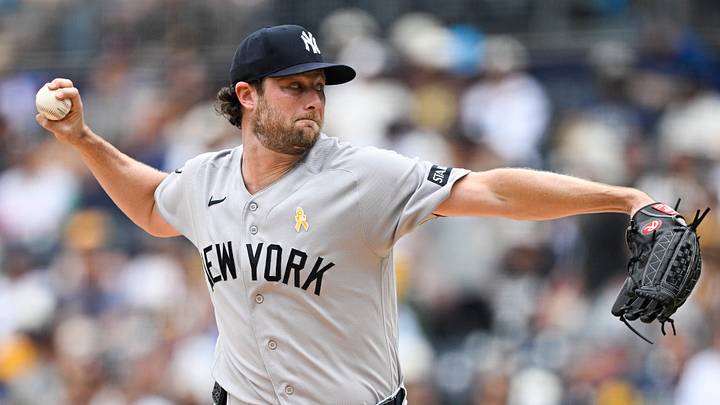
Cole’s delivery has historically been a model of repeatability and power. However, scout reports indicate his release point has fluctuated slightly, leading to poor pitch location. When he misses over the heart of the plate, major league hitters are punishing him instantly.
His four-seam fastball, while still registering at a strong 96.9 mph average velocity, is lacking the late life that used to ride over bats. Without that elite vertical movement, his fastball simply becomes a flat pitch that sits directly in the hitting zone.
The Swing and Miss Crisis in the Bronx
The core of Cole’s issue is a sudden inability to generate swings and misses from elite hitters. In his catastrophic start against the Mets, opposing batters swung 40 times at his pitches and missed only three times. That tied a career-low for Cole, who has built his Hall of Fame-caliber resume on dominant strikeout rates.
Most shockingly, Cole threw 39 four-seam fastballs in that game without recording a single whiff. This marked only the fourth time in his career that he threw so many fastballs without a miss, and the first time in nine long years. When an elite power pitcher cannot get hitters to miss his primary weapon, his entire pitching sequence collapses.
This lack of swing-and-miss has forced Cole to pitch defensively, relying on his defense and hoping for weak contact. Unfortunately, the contact he is giving up is anything but weak, forcing the coaching staff to look for immediate mechanical adjustments.
Why Chase Rates Are Way Down
Hitters are showing extreme discipline against Cole’s breaking balls, refusing to chase sliders and curveballs out of the zone. This forces Cole to throw more strikes, which plays directly into the hitters’ game plans. Without the threat of the high-fastball chase, his secondary pitches lose their effectiveness.
Modern analytics have allowed opposing teams to map out Cole’s tendencies with extreme precision. They are sitting on his fastball in specific counts, confident that they can handle the velocity if it lacks its signature spin characteristics.
Comparing Gerrit Cole Standard vs Recent Metrics
The stark contrast between Cole’s career standards and his recent slide is clearly visible when examining his underlying data. While some of his traditional statistics look acceptable on the surface, his expected metrics paint a much more alarming picture for the Yankees organization.
| Metric / Period | Career Average | Recent 4-Start Stretch |
|---|---|---|
| Earned Run Average (ERA) | 3.18 | 5.92 |
| Strikeouts Per 9 Innings | 11.1 | 7.1 |
| Hard-Hit Percentage Allowed | 34.2% | 48.5% |
| HR / 9 Innings Allowed | 1.0 | 2.3 |
What makes this table so fascinating is that Cole’s raw physical attributes remain intact. His average velocity has not dropped significantly, and his control is statistically better than ever, showing a career-low walk rate. Yet, the quality of contact he is yielding suggests that throwing strikes is actually hurting him because those strikes are too predictable.
Is the ABS Challenge System to Blame?
Following his rough outing against the Mets, Cole pointed to the Automated Ball-Strike (ABS) challenge system as a potential culprit. He suggested that the introduction of ABS in the minor leagues and its looming presence has fundamentally altered how hitters approach the strike zone, leading to lower chase rates across the sport.
However, an in-depth review by senior baseball writers suggests this excuse falls flat. While minor league data shows that walks have increased by 6.7 percent since ABS testing began, strikeout rates have remained completely flat. This means hitters are not suddenly making massive amounts of contact because of the technology.
Instead, Cole seems to be searching for external reasons to explain his internal struggle to deceive batters. For more context on Verducci’s analysis of Cole’s comments, check out Sports Illustrated’s analysis of Gerrit Cole. Placing the blame on league-wide structural changes ignores the specific, localized errors in Cole’s pitch sequencing.
The Psychological Aspect of Pitching
Elite athletes often look for external factors when their natural physical dominance begins to wane. By focusing on the ABS system, Cole may be trying to find a logical explanation for why his pitches are no longer getting the respect they once did. However, sports psychologists note that this displacement of blame can delay critical adjustments.
To get back to his Cy Young form, Cole must accept that hitters have adjusted to his style. He must adapt his game plan rather than waiting for the baseball environment to change back to his liking.

Yankees Postseason Rotation Dilemma
As October baseball nears, Yankees manager Aaron Boone faces a massive tactical dilemma. Historically, Cole would be the undisputed Game 1 starter for any postseason series. But given his current form, starting him in a high-leverage playoff game carries immense risk.
Other starters on the staff, such as Carlos Rodon and Nestor Cortes, have shown superior consistency and better swing-and-miss stuff in recent weeks. Since a fourth starter is rarely needed in short wild-card series, Cole’s spot on a three-man playoff rotation is no longer guaranteed.
Because Cole does not possess the pitch mix or mentality to transition into a bullpen role, the Yankees must either start him with fingers crossed or make the bold decision to push him back in the rotation. For more on how elite athletes navigate high-stress contract and performance crises, check out our exclusive celebrity and athlete profiles.
Exploring Alternative Rotation Scenarios
If Cole is demoted to the third starter spot, it would represent a massive blow to his standing as the team’s undisputed leader. However, the Yankees organization must prioritize winning over hurt feelings. Rodon has shown the ability to dominate lineups with his high-spin slider, making him a prime candidate for Game 1.
Additionally, the emergence of younger arms gives the front office options they did not have in previous seasons. The decision-makers will be monitoring Cole’s final regular-season starts with extreme scrutiny to see if he can make the necessary adjustments in time.
People Also Ask
Why are the Gerrit Cole struggles happening now?
The struggles are primarily driven by a significant drop in his swing-and-miss rate, particularly on his four-seam fastball. Hitters are no longer chasing his pitches out of the zone, forcing him to throw more predictable strikes that are being hit with historic velocity.
Is Gerrit Cole injured or is it a mechanical issue?
While Cole’s velocity remains strong at 96.9 mph, scouts point to subtle inconsistencies in his release point and pitch sequencing. There are no official reports of injury, suggesting his issues are mechanical and psychological rather than physical.
How does the ABS system affect MLB pitchers like Cole?
Cole argued that the Automated Ball-Strike system has reduced chase rates across baseball. However, metrics show that while walks are up slightly, overall strikeout rates have remained flat, meaning the system is not solely responsible for his personal decline.
Will the Yankees bench Gerrit Cole for the playoffs?
It is highly unlikely Cole will be benched entirely, but his role as the undisputed Game 1 starter is in serious jeopardy. Managers may choose to start other in-form pitchers like Carlos Rodon ahead of him to mitigate the risk of early-game blowouts.
Resolving the Gerrit Cole Struggles Before October
The path forward for Gerrit Cole requires a willingness to evolve as a pitcher. The days of simply overpowering hitters with raw velocity at the top of the zone are coming to an end. To combat the current **Gerrit Cole struggles**, he must rely more heavily on pitch sequencing and horizontal movement.
Integrating his cutter and slider more effectively in neutral counts will keep hitters off-balance, preventing them from sitting on his fastball. Furthermore, improving his location on the edges of the plate rather than throwing middle-middle strikes will help reduce the devastating hard-hit rates he has suffered recently.
For continuous updates on professional sports, contract details, and player performances, check out our high-profile sports contract deep dives as well as general major sports updates and analyses. The Yankees’ championship window is wide open, but its hinges rest entirely on whether their ace can reclaim his lost dominance before the first pitch of the postseason is thrown.
More Like This
For more updates, check out our latest entertainment and sports news.