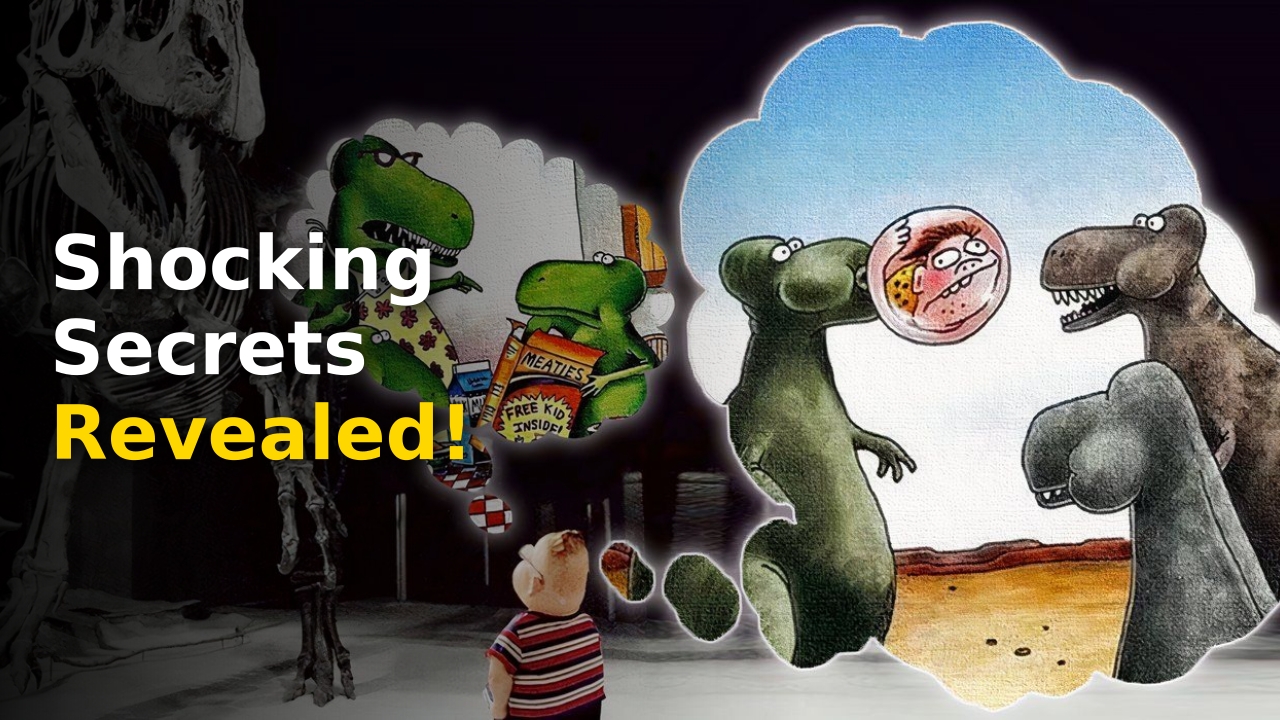
Gary Larson is a name etched into the cultural consciousness, yet the man himself remains an enigma to millions who spent their mornings chuckling at his work. If you have ever wondered about the mysterious brain behind the absurdist panels of The Far Side, you are stepping into a world where science, animals, and dark wit collide in ways few other artists ever dared to explore.
Understanding the legacy of this cartoonist requires peeling back the layers of a life that moved from the corridors of a humane society to the heights of syndication dominance. You might be surprised to learn that his path was never about fame, but about a persistent, almost accidental pursuit of his own unique brand of funny.
The Artistic Journey of Gary Larson
Born in 1950 in the Pacific Northwest, Gary Larson grew up in a world that felt far removed from the glitz of the New York publishing scene. While his peers were fixated on the comic sections of their local newspapers, a young Larson found himself mesmerized by the biological intricacies of the natural world. He did not chase the dream of becoming a professional artist; instead, he studied communications at Washington State University, developing a analytical perspective that would later define his one-panel format.
His transition into cartooning was born not of passion, but of deep-seated career disillusionment. After working as a cashier and, more pivotally, as an investigator for his local humane society, the absurdity of human-animal interaction became his primary muse. The bizarre scenarios we see in his work often reflect the raw, strange interactions he witnessed while dealing with the realities of animal welfare in the 1970s.
Before The Far Side reached global prominence, he tested his concepts through a short-lived project titled Nature’s Way. This period from 1976 to 1980 served as his creative training ground, where the foundational art style and dark, biting humor were meticulously honed. He learned to distill complex, nonsensical narratives into a single, punchy image.
What truly separates him from the cartoonists of his era is his complete lack of interest in the standard “comic strip” formula. While others utilized multiple panels and recurring narrative arcs, he mastered the art of the “stinger”—a punchline that hits you with the force of a brick wrapped in velvet. You can learn more about his influence on the industry by checking out the profiles found at Bright Celebrity.
The creative process for his work was often solitary and grueling, involving thousands of sketches that never saw the light of day. He approached each strip with the precision of a scientist observing an experiment, often discarding dozens of drafts until the timing of the visual joke felt perfectly calibrated. This discipline allowed him to achieve a level of consistency that few modern creators can hope to replicate.

Defining the Absurdist Genre
- Utilizing anthropomorphism to critique human behavior.
- Merging scientific jargon with mundane, everyday situations.
- Maintaining a strict single-panel constraint to heighten focus.
- Avoiding recurring characters to keep the humor fresh and unexpected.
- Focusing on the “mistake” or the “bizarre” as a comedic catalyst.
Impact on Modern Cartooning
His influence is pervasive, reaching far beyond the pages of print media into the very fabric of pop culture. Writers, scientists, and comedians often cite his work as a primary inspiration for their own creative development. He taught a generation that it was perfectly fine to be weird, and more importantly, that the world was often much funnier when viewed through a distorted lens.
While many of his peers struggled with the grueling pressure of daily deadlines, he navigated those demands with a stoic commitment to his own standards. When the pressure became too great, he famously walked away at the height of his success. This move to protect his integrity remains one of the most respected career pivots in the history of the arts.
The Evolution of The Far Side
In 1980, the landscape of American humor shifted when The Far Side hit the syndication market. It was an instant anomaly, challenging the readers who were accustomed to the softer, character-driven strips of the time. The strip flourished for 15 years, becoming a staple of refrigerator doors and cubicle walls across the country.
The mechanics of his success were tied to his ability to capture the essence of human folly through the eyes of farm animals, cows, and cavemen. He managed to turn science into a playground for the masses. His work, which can be found in archives hosted by entities like Reuters, continues to be analyzed for its cultural significance today.
Larson’s decision to retire in 1995 was calculated and necessary for his own sanity. He watched contemporaries like Bill Watterson, the creator of Calvin and Hobbes, refuse to let their creations succumb to the decay of mediocrity. By choosing to step away, he ensured that his work remained a pristine, unblemished legacy.
He did not disappear entirely, however, and his later ventures into the digital realm have proven his adaptability. In 2020, the creator shocked fans by returning to the drawing board to release new content online. This move served as a bridge between the physical newspaper era and the modern digital landscape, proving his concepts are timeless.
His commitment to maintaining control over his brand is legendary in the industry. While other classic strips are licensed out for everything from plush toys to lunchboxes, he keeps a tight rein on how and where his art appears. This exclusivity has only served to increase the demand and value of his original work.
Ultimately, the enduring nature of his craft lies in its simplicity. He never relied on complex dialogue or serialized storylines to carry his message. Instead, he presented the reader with a single moment in time—a snapshot of a world that was both alien and strangely familiar.
Stats and Milestone Achievements
The following table outlines the critical accolades that solidified his status as a titan of the cartooning world throughout his illustrious career.
| Award/Milestone | Year |
|---|---|
| Best Syndicated Panel Cartoonist | 1985, 1988 |
| Reuben Award (Cartoonist of Year) | 1990, 1994 |
| Regents’ Distinguished Alumnus Award | 1990 |
| International Comic Salon Top Strip | 1993 |
Life Beyond the Panel
Beyond his primary strip, he expanded his creative reach into literature and animation. His book, There’s a Hair in My Dirt!: A Worm’s Story, remains a cult favorite that highlights his unique perspective on nature and the cycle of life. It serves as a testament to his ability to translate his signature humor into long-form storytelling.
He has also dabbled in music, finding deep solace in the structure and improvisation of jazz. This hobby offers a direct window into his creative philosophy, as he has often noted the similarities between constructing a musical composition and a short, punchy cartoon panel. Both require rhythm, timing, and an understanding of when to withhold information for maximum impact.
His personal life, largely kept away from the prying eyes of the tabloid press, reflects the same quiet, observational approach he took to his work. He continues to reside in the Pacific Northwest, a region that has served as his creative home for decades. This deep connection to his surroundings is evident in the landscapes that often populate his drawings.
Fans who want to follow his current journey often turn to his official online platform. It is here that he continues to offer a “daily dose” of his work, maintaining a connection with a global audience while strictly adhering to his own rules of engagement. This intentional pace is a lesson for all creatives on how to maintain relevance without sacrificing soul.
While many of his peers have sought to expand their franchises into multi-media empires, he has remained focused on the core product. He understands the value of the original strip and refuses to dilute it with unnecessary spin-offs. This strategy has ensured that his work remains as potent today as it was in the mid-1980s.
As you explore the various collections of his work, you realize that he wasn’t just drawing animals and scientists; he was capturing the human condition. He held up a mirror to our daily anxieties and absurdities, and he did it with a laugh that echoed across decades.
Reflecting on a Legacy
The journey of Gary Larson is a masterclass in creative integrity and the pursuit of original thought. He took the humble medium of the one-panel comic strip and transformed it into a vehicle for philosophical inquiry, all while making us laugh at the silliness of a cow or the awkwardness of a first date between insects. His ability to blend the mundane with the surreal created a space where readers felt smart, seen, and thoroughly entertained.
Whether he is discussing the intricacies of his early career or the quiet joy he finds in retirement, it is clear that he never lost his sense of wonder. The world of The Far Side is not merely a collection of ink on paper; it is a profound reflection of a man who looked at a seemingly normal world and saw the hilarity hiding in the details. You are invited to revisit his work, not just as a trip down memory lane, but as an ongoing investigation into the beautiful, strange, and absolutely absurd life we all share.
In the end, he remains a titan, a reclusive genius who changed the rules of his industry and refused to play by anyone else’s script. Gary Larson successfully built a career that transcended the transitory nature of fame, leaving behind a body of work that continues to influence creators and entertain millions. For those of you who appreciate the intersection of high art and lowbrow humor, his legacy stands as the gold standard of creative genius.
More Like This
For more updates, check out our latest entertainment and sports news.