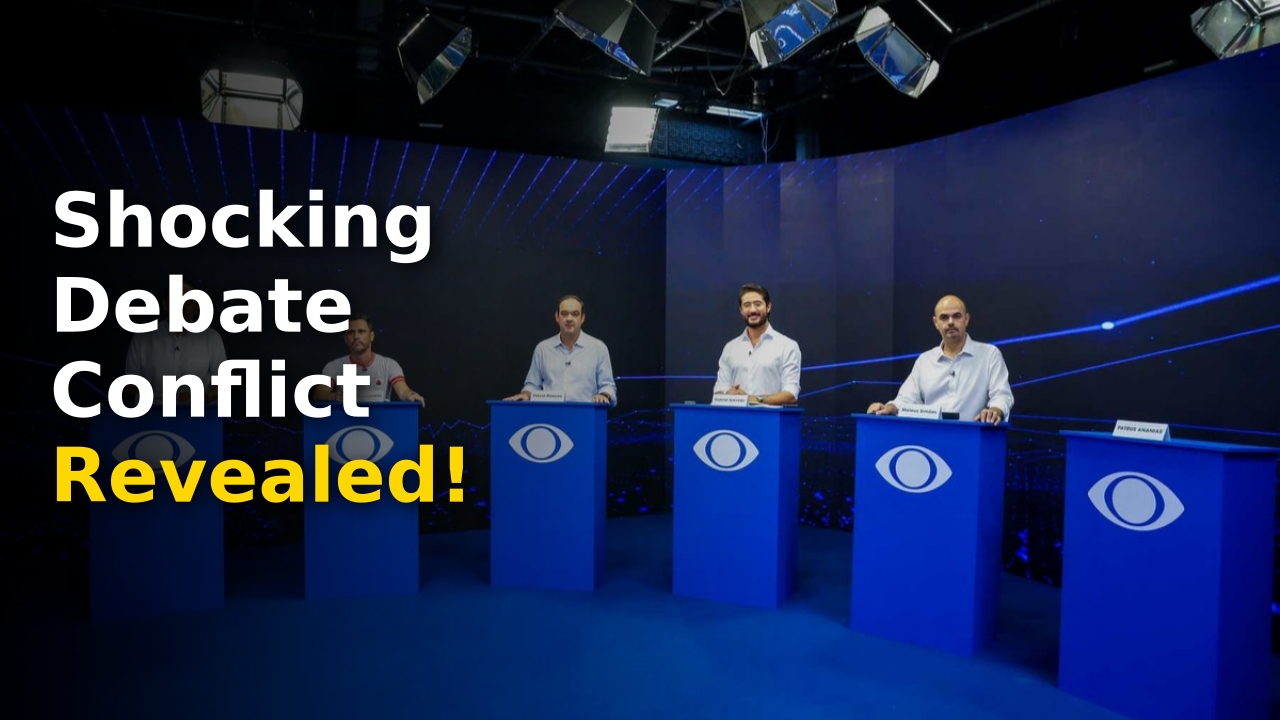
Gabriel Kalil dominated the headlines this Sunday after a tense exchange erupted during the first televised debate for the state government, proving that political tempers in Belo Horizonte are reaching a boiling point. You have likely witnessed public feuds before, but the raw intensity displayed between the former councilman and the former mayor suggests this election cycle will be nothing short of volatile. Gabriel Azevedo did not hold back when he looked his opponent in the eye and delivered a stinging critique regarding his temperament.
The political landscape in Minas Gerais has been fundamentally altered by this confrontation. As a voter, you deserve to know what happens when professional decorum collapses under the pressure of a live broadcast. This wasn’t just a simple disagreement; it was a masterclass in psychological posturing that left spectators stunned. To understand the depth of their rivalry and how public figures manage their brands, you might find it insightful to look at how other notable public figures handle their professional image during high-stakes media appearances.
The Gabriel Kalil Clash Analyzed
The incident occurred during the Band Minas debate, a platform typically reserved for policy discussion but hijacked by personal friction. Gabriel Azevedo, a former president of the Câmara de BH, utilized his background as an educator to frame his opponent’s behavior as volatile. By calling out Alexandre Kalil directly, he forced a reaction that moved beyond the standard scripts of gubernatorial candidates. This move effectively signaled a shift from policy debate to a test of character.
Observers noted that Azevedo kept a notably tranquil demeanor, a stark contrast to the perceived agitation of his opponent. This tactical calmness is a common tool in political theater, designed to make the other person appear reactive or unstable. When Azevedo stated, “todo mundo sabe que você não consegue se controlar,” he wasn’t just talking about a single moment; he was referencing a historical pattern of behavior that has defined Kalil‘s career in both sports and city hall.
The history between these two men is long and filled with bitterness. Their professional relationship deteriorated significantly during their time serving the citizens of Belo Horizonte, creating a rift that has yet to be bridged. This public airing of grievances on August 16, 2026, served as a painful reminder to the public that their past administrative disputes remain unresolved. It raises the question: can they be trusted to govern a state if they cannot govern their own interactions?
We must consider the medium of the debate itself. Televised events are designed to be traps for the unprepared or the emotionally reactive. Kalil attempted to neutralize the attack by dismissing the “professorial air” comment as merely an idiomatic expression, claiming his respect for the teaching profession remains intact. However, the damage was already done. The audience was left questioning the authenticity of his defense.

When you strip away the political posturing, what remains is a struggle for dominance. Both candidates are fighting for the same demographic of voters who value strength and control. Azevedo is positioning himself as the stable, intellectual alternative, while Kalil fights to maintain his reputation as a man of the people, even if that means appearing abrasive. This duality is the core narrative of the 2026 election cycle in Minas Gerais.
The Anatomy of the Debate
- Azevedo utilized the “calmness” strategy to frustrate his opponent.
- Kalil attempted to reframe the “professorial” jab as a linguistic preference.
- The debate covered heavy topics like IPVA, corruption, health, and education.
- The rift between the two dates back to their time as city officials in BH.
Key Debate Metrics and Analysis
| Category | Gabriel Azevedo | Alexandre Kalil |
|---|---|---|
| Political History | Former Councilman | Former Mayor |
| Key Skill | Debate Composure | Public Outreach |
| Platform Core | Education Reform | Infrastructure Focus |
Understanding the context of this debate requires recognizing the stakes. The governor position is one of the most powerful roles in Brazil. Every word spoken on stage is carefully calculated to appeal to millions of viewers. When a candidate loses control, the political cost can be devastating to their campaign trajectory. You are seeing the real-time destruction or construction of a legacy.
The role of the moderator in such events is often diminished by the sheer force of personality from the candidates. Even when the moderator attempts to guide the conversation back to healthcare or infrastructure, the participants often force their own agenda. This specific debate for the 2026 elections will likely be remembered more for the personal sparks than the policy proposals. It is a classic case of identity politics overriding administrative discourse.
As you watch these candidates, keep in mind their past track records. Kalil, as a former president of the Clube Atlético Mineiro, has always had a public persona centered around toughness. This is a double-edged sword. While it attracts supporters who enjoy his no-nonsense approach, it simultaneously repels those who want a more diplomatic leader. Azevedo is banking on the latter group to carry him to the finish line.
The mention of IPVA and public spending suggests that the underlying issues are indeed being discussed, but they are buried under layers of conflict. It is your job as an informed reader to separate the noise from the actual policy proposals. Don’t be fooled by the high-octane drama; look for the numbers, the budgets, and the long-term plans behind the shouting. 
We have seen similar dynamics in international politics, where high-stakes televised debates often descend into personal attacks. Referencing major journalistic standards like those seen at Reuters, it is clear that objective reporting is the only way to sift through the chaos. Stay vigilant and ensure you are getting your news from sources that don’t just amplify the yelling but analyze the implications of these feuds.
Psychological Triggers In Modern Politics
Why do these moments matter so much to the voting public? Psychologically, voters look for leadership cues. When a candidate shows signs of losing control, the brain perceives a threat to stability. Gabriel Azevedo knew exactly what he was doing when he triggered that reaction from his opponent. It was a calculated risk that aimed to define Alexandre Kalil in the eyes of the undecided voter.
The “ar professoral” jab by Kalil was an attempt to paint Azevedo as elitist or out of touch with common concerns. It is a classic ad hominem attack. However, because Azevedo successfully pivoted to the defense of teachers, he effectively flipped the narrative. This demonstrates a high level of media training and crisis management that is essential for any modern politician operating at the state level.
If you think about the power of the word, you realize that debates are won in the phrasing. Azevedo‘s phrasing was specific: “todo mundo sabe que você não consegue se controlar.” This phrase is a psychological hook. It implies universal knowledge and creates an “us vs. him” dynamic. It is a powerful rhetorical device that sticks in the mind of the viewer long after the broadcast ends.
The intensity of this election will only increase as we get closer to the voting date. You should expect to see more of these interpersonal clashes as candidates struggle to distinguish themselves in a crowded field. The psychological battle for the moral high ground is just as important as the battle for the policy high ground. In the end, the person who keeps their head when others are losing theirs often gains the most momentum.
Consider the emotional toll on the candidates as well. Being a public figure in Brazil is incredibly draining. The scrutiny, the constant public speaking, and the relentless pressure of constant media exposure can make even the most seasoned veteran crack. Watching this unfold is a window into the reality of political life, where the line between personal identity and public service is constantly blurred.
Do not underestimate the impact of social media in amplifying these moments. Short clips of this debate have likely been shared thousands of times, edited to make one candidate look worse than the other. This fragmentation of news means that you are often seeing a curated, biased version of reality. Make sure to seek out the full context whenever possible.
Final Thoughts On The Debate
Ultimately, the Gabriel Kalil confrontation during the Band Minas debate is a microcosm of the current state of political discourse. It reflects a society that is deeply divided and a political class that is struggling to maintain professionalism in an era of constant, high-pressure media exposure. Your vote in the upcoming 2026 elections is the most powerful tool you have to signal what kind of leadership you demand for Minas Gerais.
Whether you lean toward the calm, intellectual approach of Azevedo or the bold, abrasive style of Kalil, the important thing is that you continue to hold these candidates accountable. Do not let the personal theatrics distract you from the hard work of governing that lies ahead. The future of Belo Horizonte and the entire state depends on the choices made by voters who look past the noise.
In the coming weeks, keep a close eye on how these campaigns adjust their strategies. Will there be more personal attacks, or will they attempt to refocus on the core issues of the economy and social welfare? Whatever happens, remain a skeptical, informed voter. The Gabriel Kalil debate was just the beginning, and there is much more to come before the ballot boxes are opened.
More Like This
For more updates, check out our latest entertainment and sports news.