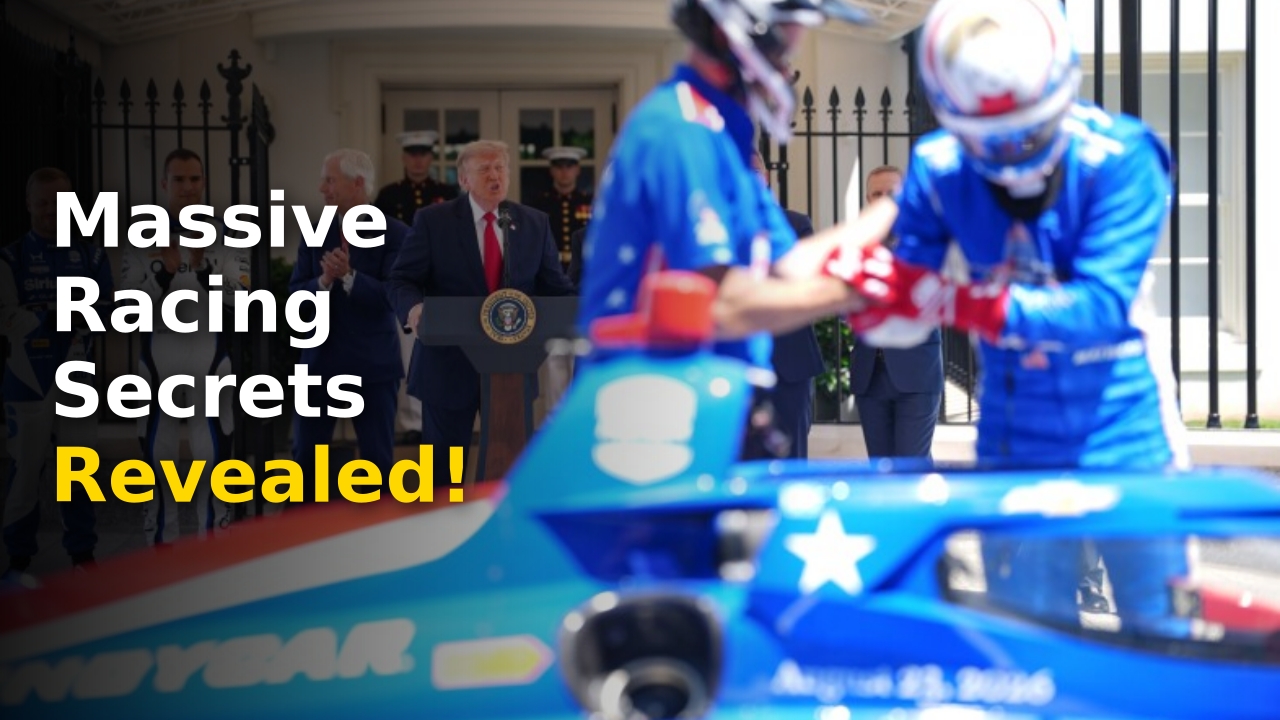
The Freedom 250 Grand Prix is set to transform the historic National Mall into a high-octane battleground this weekend. Imagine the deafening roar of twin-turbocharged engines echoing off the marble of the Lincoln Memorial. Are you ready for the most daring motorsports experiment in American history?
You have never seen Washington, D.C. like this before. This two-day motorsports spectacle marks the first time IndyCar has ever touched the nation’s capital. Organizers are calling it a once-in-a-lifetime celebration of the country’s 250th birthday.
For racing enthusiasts and curious locals alike, the stakes couldn’t be higher. This isn’t just a race; it is a logistical miracle. From welding manholes to protecting priceless artifacts, every detail of the Freedom 250 has been scrutinized.
Freedom 250 Racing Secrets
The event is the brainchild of Bud Denker and Eric Shanks. These two power players sketched out the idea over a beer after a board meeting. It seemed impossible at the time, but their vision is now a reality on the streets of D.C.
The 1.7-mile course is unlike any other on the IndyCar calendar. It features seven sharp, angular turns that demand absolute precision from the drivers. You will see 25 elite athletes fighting for position in the shadow of the U.S. Capitol.
Speeds are expected to reach a staggering 190 miles per hour. President Trump noted that Pennsylvania Avenue was never designed for such velocity. However, the Department of Transportation has worked tirelessly to ensure the asphalt can handle the heat.
Elite Driver Field
- Alex Palou: The reigning series champion looking to dominate the 147-lap marathon.
- Felix Rosenqvist: The Indianapolis 500 winner who thrives on challenging street circuits.
- Will Power: A veteran driver known for his aggressive qualifying runs.
- Pato O’Ward: The fan favorite who brings a high-energy style to every corner.
Journalist Marshall Pruett warns that overtaking will be difficult. With fewer turns than most tracks, drivers must capitalize on every tiny mistake. One slip-up on a sharp corner could end a championship run in seconds.
The race serves as the 15th round of an 18-race championship season. This means every point earned on the National Mall is critical. The pressure on these teams is immense as they navigate the most famous streets in the world.

National Mall Street Physics
Building a racetrack in a historic district presents unique engineering hurdles. Penske Corp is reportedly spending well over $21 million to make this happen. A significant portion of that budget goes toward basic infrastructure that fans might never see.
Did you know that over 200 manhole covers had to be welded shut? This isn’t for security, but for pure physics. The aerodynamic suction created by an IndyCar at high speed is powerful enough to rip a heavy metal lid right out of the ground.
The streets themselves must be at least 40 feet wide to accommodate the field. Bud Denker spent six months and over 100 meetings on Capitol Hill to secure the route. Initially, the plan was even closer to the Capitol, but legislative hurdles forced a slight pivot.
Logistics by the Numbers
- 140,000 Fans: The expected daily attendance for this historic weekend.
- 288,000 Applicants: The massive number of people who entered the free ticket lottery.
- $5,000 Tickets: The price tag for the exclusive Champion’s Club hospitality package.
- 7 Months: The condensed timeline organizers had to plan the entire event.
Security is a top priority for an event of this magnitude. The U.S. Secret Service and U.S. Park Police are working in tandem to manage the crowds. Mayor Muriel Bowser has emphasized that the city is ready for the influx of visitors.
Road closures are a necessary evil for a street race. Some restrictions will remain in place until mid-September. The massive viewing suites, described as being the size of aircraft carriers, take weeks to safely dismantle.
Historic Washington Landmarks
The backdrop for the race is a “who’s who” of American history. Drivers will speed past the National Archives Building and the National Gallery of Art. It is a visual feast that will be broadcast to millions on Fox Sports.
However, not everyone is cheering for the green flag. Some art experts have raised concerns about the structural integrity of museum artifacts. The vibrations from 25 race cars could potentially disturb delicate pieces inside the Smithsonian buildings.
The National Air and Space Museum and the American History Museum are right on the front lines. Engineers have conducted extensive tests to ensure the vibrations remain within safe limits. Organizers insist that the cultural heritage of the mall is being fully respected.
This race is a key component of the nation’s 250th birthday festivities. It follows other major events like the UFC fight outside the White House. The goal is to showcase American greatness through the lens of sport and competition.
For visitors, the viewing areas are divided into two main zones: Stars and Stripes. These designated spots offer the best sightlines of the 1.7-mile loop. If you were lucky enough to win the lottery, you have a front-row seat to history.
The 250-mile race will take approximately two and a half hours to complete. It is a test of endurance and focus under the sweltering August sun. D.C. summers are notoriously humid, adding another layer of difficulty for the drivers.

Massive Financial Impact
The economic footprint of the race is truly staggering. While the federal government is covering $90 million in security costs for the anniversary year, the race itself is largely privately funded. Penske Entertainment Corp is footing the bill for the majority of the construction.
Local businesses are expecting a massive windfall during a normally quiet month. August in D.C. is typically slow as Congress goes on recess. The arrival of 140,000 spectators per day is a welcome boost for hotels and restaurants.
You can find more details on how major events impact local economies at Bright Celebrity news. The influx of tourism dollars helps fund vital city services and infrastructure. For Mayor Bowser, this is a strategic win for the city’s bottom line.
The cost of doing business in Washington, D.C. is “exponentially” higher than in other cities. Bud Denker noted that the $21 million spent in Detroit doesn’t even come close to the D.C. budget. Everything from labor to permits carries a premium price tag in the capital.
| Expense Item | Estimated Cost | Funding Source |
|---|---|---|
| Track Construction | $21 Million+ | Penske Corp |
| Security & Policing | $90 Million (Annual) | Federal Grant |
| Manhole Welding | $250,000+ | Penske Corp |
| VIP Hospitality | $5,000 per person | Private Sales |
While the race isn’t a direct moneymaker for the series right now, it is a growth play. The exposure gained from racing on the National Mall is priceless. It elevates the IndyCar brand to a global audience that may not follow traditional racing.
The long-term goal is to attract new sponsors and fans to the sport. By proving they can pull off an event in the heart of D.C., IndyCar demonstrates its logistical prowess. This opens the door for future high-profile street races in other major world capitals.
Political Controversy Explained
No event in Washington is free from politics. The race was authorized by an executive order signed on January 30. Titled “Celebrating American Greatness with American Motor Racing,” it streamlined the permitting process for the Department of the Interior.
However, the name “Freedom 250” has caused some confusion. A group with a similar name has been accused of politicizing the anniversary. Congressional Democrats have raised questions about fundraising practices and security reimbursements.
Bud Denker has been quick to clarify that the race is not affiliated with that specific organization. “We’re using the name, but there is no money changing hands between us and the committee,” he told reporters. The racing event aims to remain a bipartisan celebration of speed.
The conflict highlights the tensions surrounding the 250th anniversary. A decade ago, a bipartisan task force was created to plan the festivities. The current administration bypassed that task force, leading to friction on the Hill.
Despite the noise, the race has moved forward with efficiency. Transportation Secretary Sean Duffy has been a key advocate for the event. He worked closely with racing officials to identify a route that satisfied both safety and aesthetic requirements.
Critics remain skeptical about the long-term impact on the National Mall. They worry about the wear and tear on historic infrastructure. However, the city has promised to restore the area to its original condition by mid-September.
Final Freedom 250 Prep
As the green flag nears, the excitement in D.C. is palpable. The two-day schedule begins with practice runs and qualifying on Saturday. This is the first chance for drivers to test the grip of the city streets under racing conditions.
The main event kicks off just after 1 p.m. ET on Sunday. Fans without tickets can watch the full broadcast on Fox. The post-race ceremonies are expected to be a patriotic spectacle featuring flyovers and military fanfare.
This is likely the last time you will see IndyCars on the National Mall. Organizers have emphasized that this is a one-off event designed specifically for the 250th anniversary. The logistical hurdles are simply too high to make this an annual fixture.
So, take it all in while you can. The sight of Felix Rosenqvist and Alex Palou trading paint near the Smithsonian is a rare gift. It is a moment where the future of technology meets the pillars of the American past.
The Freedom 250 will leave a lasting legacy on the city. Long after the barriers are gone and the manholes are unwelded, people will talk about the weekend the engines roared in D.C. It is a bold statement about what is possible when sport and history collide.
Make sure you stay tuned for the results. In a race with seven sharp turns and 147 laps, anything can happen. The winner of the Freedom 250 won’t just get a trophy; they will secure a permanent spot in the history books of the nation’s capital.
More Like This
For more updates, check out our latest entertainment and sports news.