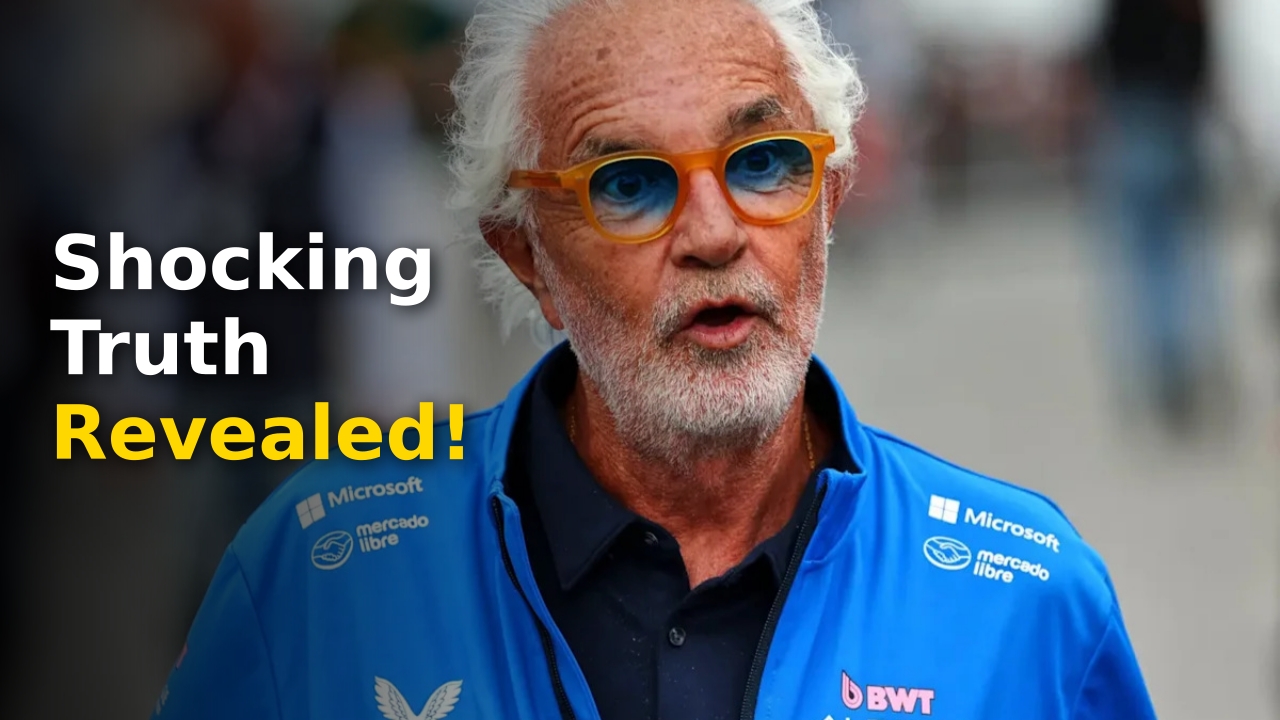
Are you ready to witness the complete destruction of traditional Grand Prix weekends as F1 Sprints take over the global racing landscape? You might think that the current format is already saturated, but the sport’s power brokers want to push things even further. A polarizing figure has just proposed an ultimate schedule overhaul that is sending shockwaves through the paddock.
While some purists reject F1 Sprints, others crave the non-stop action. Imagine a world where every single race weekend features two competitive races instead of one. For long-time purists, this is a nightmare scenario that threatens to dilute the prestige of a Grand Prix victory. But for promoters and modern fans, it might be the ultimate solution to boring practice sessions.
The controversial mastermind behind this radical proposal is none other than Flavio Briatore. His recent statements have ignited a massive debate that pit traditional racing values against corporate entertainment demands. Let’s dive deep into the chaotic reality of this proposed shift.
The Threat of F1 Sprints
The introduction of F1 Sprints back in 2021 was meant to be a minor experiment. The sport started with just three of these short-form Saturday races to test the waters. By 2023, that number doubled to six, creating a highly congested and demanding calendar.
Now, the push for more racing action is threatening to displace historical practices entirely. Traditionalists argue that the Friday practice sessions are critical for engineering development. Without these practice windows, teams must rely entirely on simulations, which dramatically increases the risk of mechanical failures.
You have to ask yourself if the sport is prioritizing quick cash over technical excellence. When drivers are pushed directly into competitive sessions, the margin for error disappears. This high-stress environment leaves teams scrambling to rebuild wrecked machinery with limited budget-cap resources.
Evaluating the commercial impact of F1 Sprints shows a sharp divide. Under the current financial regulations, a single crash during a Saturday sprint can ruin a team’s developmental budget for the entire quarter. Consequently, many team bosses are quietly lobbying against further expansion.
Yet, the commercial rights holders see a golden opportunity to maximize television revenue. Broadcasting networks pay premium figures for competitive sessions, whereas free practice sessions draw minimal global viewership. This stark economic reality is driving the relentless push for format changes.
Ultimately, the tension between sporting integrity and raw entertainment value has never been higher. If the calendar continues to shift toward this format, the very definition of a Grand Prix could change forever. The paddock remains fiercely divided on whether this evolution is healthy.
The Fast Evolution
- 2021 Season: Formula 1 introduced three sprint events at Silverstone, Monza, and Interlagos to test the concept.
- 2023 Expansion: The number of Saturday sprints doubled to six events to capture more weekend viewers globally.
- Format Tweaks: Shootout qualifying was separated to make Saturday a completely standalone racing spectacle.
- Future Outlook: Industry rumors suggest the calendar could host up to ten sprint weekends by the highly anticipated 2026 season.
The Radical Briatore Vision

To understand the sudden rise of F1 Sprints, you must look at global television metrics. When Flavio Briatore speaks, the entire motorsport community stops to listen. The legendary former Renault team boss is never one to shy away from controversy. In a stunning interview with The Race, the Italian manager demanded that every single weekend should host a sprint.
Briatore believes that the traditional Friday schedule does absolutely nothing for the paying spectator. You spend thousands of dollars on grandstand tickets only to watch drivers complete installation laps. To him, this technical-focused exercise is a massive disservice to the loyal fanbase.
His proposal is incredibly straightforward: twenty-four rounds, twenty-four sprints. This would guarantee two dramatic race starts every single weekend, doubling the competitive action. Briatore argues that drivers should always be racing for points, not just gathering data for engineering laptops.
This radical stance has reignited discussions about the core identity of the historical Formula One championship history that fans have loved for decades. Critics argue that doubling the number of race starts will make individual victories feel less special. However, Briatore insists that the spectacle must always come first to secure the sport’s future.
Audiences have responded positively to F1 Sprints because they eliminate quiet periods. You cannot deny the psychological impact of his words on the modern grid. Younger fans who grew up on short-form digital content are highly receptive to this fast-paced idea. They prefer instant gratification over the slow, strategic burn of a traditional 300-kilometer Grand Prix.
As Formula 1 continues to expand into new markets like Miami and Las Vegas, the pressure to deliver constant entertainment grows. Briatore’s bold vision aligns perfectly with the goals of Liberty Media. They want to ensure that every single ticket sold delivers high-stakes drama from Friday to Sunday.
Why Teams Are Terrified
While the commercial benefits of F1 Sprints are obvious, the human cost is immense. Formula 1 team members already endure a brutal travel schedule across twenty-four global destinations. Adding more competitive sessions increases the physical and mental toll on mechanics and engineers.
When a car crashes during a sprint, mechanics must work through the night to rebuild it for Sunday. This leaves the crew completely exhausted before the main event even begins. You must consider the safety implications of sleep-deprived personnel working on high-voltage hybrid machinery.
Furthermore, the strict cost cap means teams have zero financial safety net for extra damage. A massive crash can cost upwards of a million dollars in replacement carbon fiber. If a team exhausts its crash budget, they are forced to halt development on their main aerodynamic packages.
Many drivers have expressed concern that F1 Sprints create excessive engine wear. If drivers are told to play it safe to protect the car, the sprint becomes a boring procession. This completely defeats the purpose of introducing more competitive action in the first place.
There is also the critical issue of engine wear and power unit allocation. Current regulations strictly limit the number of internal combustion engines a driver can use per season. Running more high-speed races will inevitably trigger grid penalties, ruining the championship battle.
The top-tier teams with deeper resource pools might adapt, but smaller outfits will suffer immensely. The competitive gap between the frontrunners and the midfield could widen even further. This potential disparity has many team principals warning against Briatore’s extreme vision.
Paddock Pain Points
- Personnel Burnout: Mechanics face unprecedented fatigue with continuous triple-headers and late-night rebuilds.
- Cost Cap Crises: High-speed accidents directly impact a team’s ability to bring performance upgrades.
- Engine Lifespans: More race-pace laps accelerate internal combustion engine degradation.
- Sporting Integrity: Purists argue that too many races dilute the prestige of the main Sunday Grand Prix.
F1 Sprints By The Numbers
Analyzing the rapid growth of F1 Sprints highlights a staggering financial and operational trajectory. The television ratings for Friday qualifying sessions during sprint weekends show a massive spike. Promoters are reporting record-breaking Friday ticket sales whenever the sprint format is active.
However, the logistical complexity of managing these weekends is reaching a breaking point. The transport of spare parts across continents must be streamlined to support the intense schedule. You can check out the latest brightcelebrity.com entertainment and lifestyle updates to see how drivers manage their frantic off-track schedules amidst this chaos.
| Format Style | Total Sprints | Total Race Starts | Friday Fan Value |
|---|---|---|---|
| Traditional Weekend | 0 | 24 | Low (Practice Only) |
| Current F1 Model | 6 | 30 | Medium (Mixed) |
| Proposed Expansion | 9 to 10 | 34 | High (Frequent Action) |
| The Briatore Plan | 24 | 48 | Ultimate (Sprint Qualifying) |

This data demonstrates the extreme scale of Briatore’s radical vision compared to reality. While F1 CEO Stefano Domenicali has ruled out a 24-sprint calendar immediately, he confirmed that expansion is coming. The sport is actively looking to increase the number of sprint events to nine or ten in the near future.
Promoters in different regions view F1 Sprints as a massive ticket selling point. This middle-ground approach aims to satisfy hungry broadcasters without causing a full-scale mutiny among team staff. However, even a minor increase to ten sprints will push the grid to its absolute limits. The logistical headache of moving tons of specialized freight between double and triple-headers is already a nightmare.
You have to wonder if the endless pursuit of growth will eventually cause the entire system to collapse. If key staff members begin to resign due to burnout, the quality of the engineering will suffer. Finding the perfect equilibrium between entertainment and sustainability remains the sport’s greatest challenge.
Equally important is the environmental impact of shipping additional spare parts. Formula 1 has committed to a net-zero carbon footprint by 2030, a goal that feels increasingly hypocritical as the calendar expands. Balancing these contradictory ambitions will test the leadership skills of the sport’s executives.
The Great Racing Dilemma
The ongoing debate surrounding F1 Sprints will shape the next decade of motorsport. You are watching a historic transition period where traditional sports values are being tested by modern media consumption habits. The outcome of this battle will determine if Formula 1 remains the pinnacle of engineering or becomes a pure reality TV show.
While Flavio Briatore may have presented an extreme solution, his underlying critique of Friday practice is highly accurate. Fans deserve value for their hard-earned money when they attend a Grand Prix. The sport must find innovative ways to keep spectators engaged without breaking the spirits of the teams.
Integrating more of these F1 Sprints during a regulatory transition is highly risky. As the 2026 engine regulations approach, the demands on power units and team budgets will only intensify. Introducing more sprint races during a massive regulatory transition could trigger unprecedented technical chaos.
You should expect an official announcement regarding the future calendar expansion in the coming months. Whether the sport settles on nine, ten, or eventually twenty-four sprints, change is absolutely inevitable. The traditional race weekend format that dominated the twentieth century is slowly becoming a relic of the past.
Ultimately, the destiny of F1 Sprints lies in the hands of the fans. In the end, Formula 1 must walk a very fine line to keep everyone happy. The drivers want competitive cars, the teams want manageable workloads, the fans want endless action, and the owners want record-breaking profits. It is a complex puzzle with no easy answers.
Keep your eyes glued to the track as this dramatic political saga unfolds behind the scenes. The decisions made today will redefine what it means to be a champion tomorrow. Only time will tell if Briatore’s radical dream will become our weekly reality.
More Like This
For more updates, check out our latest entertainment and sports news.