⚡ Key Takeaways
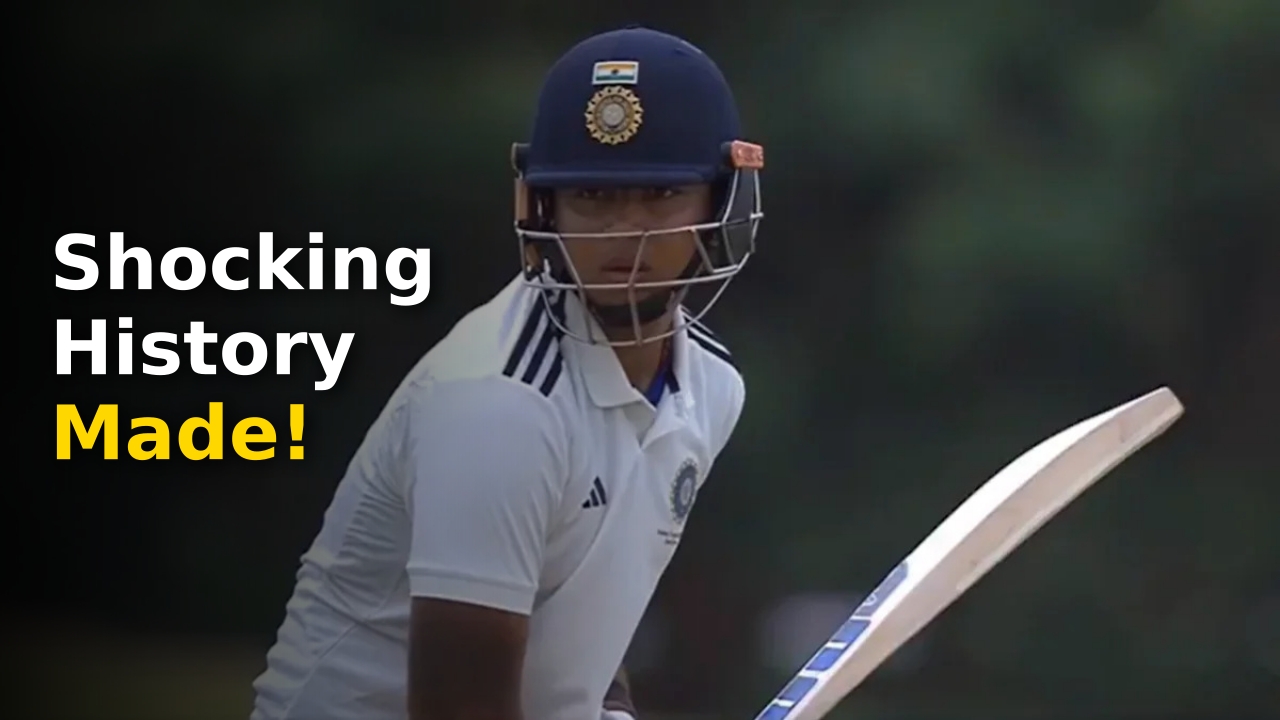
- At 15 years and 175 days old, Vaibhav Sooryavanshi became the youngest player in history to score a Duleep Trophy half-century.
- Sooryavanshi blasted an aggressive 92 off 81 deliveries, shattering a 57-year-old record previously held by Laxman Singh.
- The teenage prodigy briefly assumed the captaincy for East Zone, executing a critical DRS review that dismissed Aryan Juyal.
- Mukesh Kumar and Abhijit Sarkar dominated with the ball, while Rinku Singh top-scored for Central Zone with a fighting 60.
You probably did not expect a 15-year-old to redefine domestic red-ball cricket, but the legendary **Duleep Trophy** just witnessed exactly that. In a spectacular showcase of fearless strokeplay, young sensation **Vaibhav Sooryavanshi** shattered a historic 57-year-old milestone during the high-stakes 2026 semi-final in **Bengaluru**. The teenage prodigy single-handedly dismantled the opposition bowling attack, proving that age is merely a number when it comes to elite-level sportsmanship.
This historic moment occurred during East Zone’s crucial semi-final clash against Central Zone. Facing a formidable bowling lineup, the young left-hander played with a level of maturity that left seasoned commentators and cricket legends absolutely stunned. His performance has sparked an intense nationwide conversation regarding the future of Indian cricket and how quickly these raw talents should be fast-tracked to the international arena.
As cricket fans digest this shocking performance, the sheer statistical weight of what occurred at the **M. Chinnaswamy Stadium** is beginning to settle in. Not only did he play a match-defining innings, but he also demonstrated remarkable leadership capabilities under immense pressure. Let us dive deep into the ultimate breakdown of this historic achievement, analyzing the technical brilliance, tactical decisions, and the long-term implications of this momentous day.
The Historic Rise of Vaibhav Sooryavanshi in the Duleep Trophy
The **Duleep Trophy** has long been regarded as the ultimate proving ground for aspiring Indian cricketers. It is a tournament where domestic veterans and young prodigies clash under first-class conditions, often with national selectors watching from the grandstands. For **Vaibhav Sooryavanshi**, this match was not just another game; it was an opportunity to etch his name into the annals of cricketing history. Born in Bihar, the young prodigy has been making waves in age-group cricket for years, but this transition to the senior level is nothing short of miraculous.
A Prodigy Unleashed on the Domestic Stage
To understand the magnitude of this achievement, one must appreciate the sheer leap in quality from Under-19 tournaments to senior red-ball cricket. Facing international bowlers like ESPN favorites **Mohammed Shami** and **Mukesh Kumar** requires extraordinary vision and split-second decision-making. Sooryavanshi showed no signs of nerves, walking out to the crease with a clear plan and executing it with flawless precision. His back-foot punches and elegant cover drives immediately signaled that he belonged on this elite stage.
His journey to this milestone has been defined by rigorous training and an innate understanding of the game’s mechanics. Coaches who worked with him in his formative years often spoke of his unique ability to read the bowler’s hand fractionally earlier than his peers. This split-second advantage allows him to position himself perfectly, giving him multiple options for each delivery. Against a highly disciplined Central Zone attack, this skill was his greatest asset.
The Aggressive Masterclass in Bengaluru
The young masterclass began the moment he took guard, showing absolute intent from the very first ball. He brought up his spectacular half-century in just 42 deliveries, sealing the milestone with a majestic, towering six that cleared the boundary ropes with ease. The crowd in **Bengaluru** erupted as the scoreboard flashed his age: 15 years and 175 days. He eventually departed for a breathtaking 92 off 81 balls, narrowly missing what would have been an all-time classic debut century.
His aggressive style of play did not just entertain the crowd; it completely threw the opposition’s defensive strategies into disarray. Captains usually set defensive fields for teenagers, expecting them to make mistakes under sustained pressure. However, Sooryavanshi’s counter-attacking approach forced the bowler to change their lengths, creating more scoring opportunities. This proactive approach is a hallmark of the modern-day batter, signaling a shift in how first-class cricket is played in India.

Overcoming Elite Bowling Challenges
What made his innings of 92 particularly impressive was the quality of the bowling attack he faced. Central Zone boasted a balanced bowling unit capable of exploiting any minor flaw in a batter’s technique. Yet, Sooryavanshi navigated the swinging new ball and the turning old ball with equal ease. His footwork against the spinners was exemplary, often stepping down the track to smother the spin or playing deep in his crease to cut late.
This adaptability is highly unusual for a player of his age, who would typically struggle with the tactical shifts of first-class captains. By constantly rotating the strike and finding the boundary at crucial moments, he kept East Zone ahead of the required rate. The sheer physical stamina required to bat at such high intensity in the afternoon heat of **Bengaluru** further highlights his exceptional physical conditioning.
Analyzing the Semi-Final Clash in Bengaluru
While Sooryavanshi’s individual brilliance stole the headlines, the match itself was an absolute roller-coaster of tactical chess. East Zone won the toss and elected to field, a decision that immediately paid dividends under the morning cloud cover. The bowlers exploited the early moisture in the pitch, putting Central Zone on the back foot from the opening session. This setting provided the perfect platform for the young prodigy to later exploit a tired bowling unit.
Central Zone’s Brave First-Innings Fightback
Central Zone’s innings was a story of resilience in the face of a disciplined bowling display. They were eventually bowled out for 266 in 80.1 overs, a total that seemed highly unlikely at various points in the day. **Rinku Singh** was the standout performer for his side, compiling a gritty 60 off 88 balls. His experience in high-pressure situations was evident as he guided the lower order through difficult periods of play.
Rinku found an able partner in **Harsh Dubey**, who contributed a vital 27 runs during their 55-run partnership for the sixth wicket. This stand rescued Central Zone from a precarious position of 125/5, ensuring their bowlers had a respectable total to defend. However, the partnership was broken by off-spinner **Md Kounain Quraishi**, who trapped Dubey leg-before-wicket, triggering a late-order collapse that prevented a larger total.
The East Zone Bowling Masterclass
The East Zone bowling unit executed their plans with military-style precision throughout the first innings. **Mukesh Kumar** and **Abhijit Sarkar** were the chief destroyers, picking up three crucial wickets each. Their ability to consistently bowl in the corridor of uncertainty forced the Central Zone batters into committing costly errors. They were supported excellently by the returning veteran **Mohammed Shami**, who picked up two wickets while showing great control.
Shami’s spell in the post-lunch session was particularly masterfully structured, putting immense pressure on the set batters. His seam presentation and natural movement off the pitch reminded everyone of his world-class caliber. With **Md Kounain Quraishi** providing crucial breakthroughs from the other end, East Zone ensured that Central Zone could never fully break free and dominate the run rate.
Tactical Genius: The Unbelievable Captaincy and DRS Masterstroke
In addition to his batting heroics, Sooryavanshi found himself thrust into an unexpected leadership role early in the match. On Day 1, East Zone skipper **Ishan Kishan** suffered a painful blow to his right wrist during the morning session. With the captain forced off the field for medical treatment, the team turned to their 15-year-old debutant to lead the side. What followed was an exhibition of natural leadership that surprised everyone on the field.
Stepping Into Ishan Kishan’s Shoes
Taking over the captaincy of a senior first-class team is a daunting task for any player, let alone a teenage debutant. Yet, Sooryavanshi assumed the role with absolute calm, organizing fields and discussing tactics with experienced bowlers. He led the side for approximately two hours, split evenly on either side of the lunch break. During this brief tenure, the team did not look disorganized or hesitant; instead, they played with renewed energy.
His field placements showed a deep understanding of individual player strengths and the state of the pitch. He was not afraid to consult senior players like Shami, showing a level of emotional intelligence that is rare in young athletes. This collaborative approach earned him the respect of his teammates and kept the pressure firmly on the Central Zone batters.
The High-Stakes Decision-Making in the 40th Over
The defining moment of his brief captaincy came in the 40th over of the Central Zone innings. Opener and wicketkeeper-batter **Aryan Juyal** was batting beautifully on 46 and looked set for a big score. He poked at a delivery from **Mukesh Kumar** that moved slightly away outside the off stump. The East Zone players went up in a massive appeal for a caught-behind, but the on-field umpire shook his head, ruling it not out.
While several senior players hesitated, Sooryavanshi trusted his fielders and his own observation from his fielding position. He confidently signaled for a review under the Decision Review System (DRS). Subsequent television replays and UltraEdge technology confirmed a clear spike as the ball passed the bat. The decision was overturned, securing a massive breakthrough for East Zone and highlighting the teenager’s clinical decision-making under pressure.
“To see a 15-year-old show that level of tactical awareness and confidence in a high-pressure match is unprecedented. He did not hesitate for a second on that DRS call, proving his cricketing brain is far ahead of his biological age.” – Senior Cricket Analyst
By the Numbers: Decoding the 57-Year-Old Cricket Record
To truly appreciate what Vaibhav Sooryavanshi accomplished in this match, one must look at the historical context of the **Duleep Trophy** records. The tournament, named after the legendary Kumar Shri Ranjitsinhji’s nephew, has always been a platform where historic records are made and broken. However, some milestones have stood the test of time, resisting the challenges of generations of incredible cricketing talent.
Prior to this match, the record for the youngest player to score a half-century in the tournament was held by **Laxman Singh**. He achieved this remarkable feat all the way back in 1969, when he was 16 years and 23 days old. That record stood untouched for 57 years, surviving the eras of Sachin Tendulkar, Sourav Ganguly, and Virat Kohli. Sooryavanshi did not just break this record; he completely shattered it by almost a full year.
Let us look at how Sooryavanshi compares to the other legendary young achievers in the history of this prestigious tournament:
| Batter Name | Age of Achievement | Year Achieved | Opposition Team |
|---|---|---|---|
| Vaibhav Sooryavanshi | 15 Years, 175 Days | 2026 | Central Zone |
| Laxman Singh | 16 Years, 23 Days | 1969 | North Zone |
| Piyush Chawla | 16 Years, 307 Days | 2005 | South Zone |

Shaking Up the History Books
The statistical comparison reveals just how advanced Sooryavanshi is compared to previous generations of prodigies. When Laxman Singh set the record in 1969, cricket was played under vastly different physical and tactical conditions. Pitches were often uncovered, and protective gear was minimal, making run-scoring an incredibly hazardous task. To hold a record for 57 years under those circumstances speaks volumes of Singh’s initial achievement.
Similarly, **Piyush Chawla**’s rise in 2005 was heralded as the arrival of India’s next great all-round hope. Chawla went on to represent India at the highest level, winning World Cups and enjoying a highly successful domestic career. By surpassing both of these iconic figures at an even younger age, Sooryavanshi has set a benchmark that may not be broken for another half-century.
The Psychological Aspect of the Record
Sporting psychologists often point out that the mental barrier of age is one of the hardest obstacles for young athletes to overcome. Many young players enter senior locker rooms feeling intimidated by older, more established stars. Sooryavanshi’s ability to completely ignore these external factors and focus purely on the ball is a testament to his mental toughness. His innings has effectively redefined what is considered possible for teenage cricketers in India.
This mental resilience will be crucial as he continues to progress through the ranks of professional cricket. With increased fame comes heightened media scrutiny and escalating expectations from fans. If his performance in Bengaluru is any indication, Sooryavanshi possesses the perfect temperament to handle the spotlight. He remains focused on his immediate goals, refusing to get carried away by the historic nature of his achievements.
Frequently Asked Questions
Who is the youngest player to score a fifty in Duleep Trophy history?
Vaibhav Sooryavanshi is the youngest player to score a half-century in the tournament’s history. He achieved this spectacular milestone at the age of 15 years and 175 days during the 2026 semi-final match between East Zone and Central Zone in Bengaluru.
Whose long-standing record did Vaibhav Sooryavanshi break?
Sooryavanshi broke the long-standing record of Laxman Singh, who scored a half-century at the age of 16 years and 23 days in 1969. Singh’s record had stood unchallenged for 57 years before the teenage prodigy surpassed it in 2026.
What was Vaibhav Sooryavanshi’s final score in his record-breaking innings?
The young left-hander scored a brilliant, fast-paced 92 runs off just 81 deliveries. His highly entertaining innings included aggressive strokeplay and saw him reach his half-century in just 42 balls, though he fell just eight runs short of a debut century.
How did Vaibhav Sooryavanshi perform as stand-in captain?
Sooryavanshi showed incredible tactical maturity during his brief stint as stand-in captain after Ishan Kishan suffered a wrist injury. He successfully executed a critical DRS review that dismissed the dangerous Aryan Juyal, who was batting on 46.
The Future of Indian Cricket and the Duleep Trophy Legacy
The stellar rise of Vaibhav Sooryavanshi is a clear indicator that the future of domestic cricket is in incredibly safe hands. The Duleep Trophy continues to serve as the ultimate crucible, refining raw talent into diamond-hard professional players. For generations, this tournament has bridged the gap between promising junior cricket and the intense pressure of international test matches.
As scouts and national selectors dissect this performance, the focus now shifts to how Sooryavanshi’s development will be managed. Proper coaching, physical conditioning, and mental support will be essential to ensure he transitions smoothly into a long and successful career. If managed correctly, he could very well become a mainstay of the national batting lineup for the next two decades.
For more updates on rising cricket prodigies and emerging sports stars, check out Bright Celebrity. As the cricket season progresses, all eyes will remain firmly on this young man from Bihar. His historic performance in the **Duleep Trophy** has not just rewritten the record books; it has permanently altered our expectations of what a teenage athlete can achieve on the grandest stage.
More Like This
For more updates, check out our latest entertainment and sports news.