Key Takeaways
| Historic Victory | East Zone defied massive odds to secure only their third-ever title in Chennai. |
| Kishan’s Masterclass | Captain Ishan Kishan led the charge with a monumental first-innings 270 and a crucial second-innings 80. |
| Emerging Stars | Young talents Kumar Kushagra, Mohammed Kounain Quraishi, and Shikhar Mohan powered the middle order. |
| Regional Shift | The triumph marks a major structural shift, with Bihar and Jharkhand players forming the new team core. |
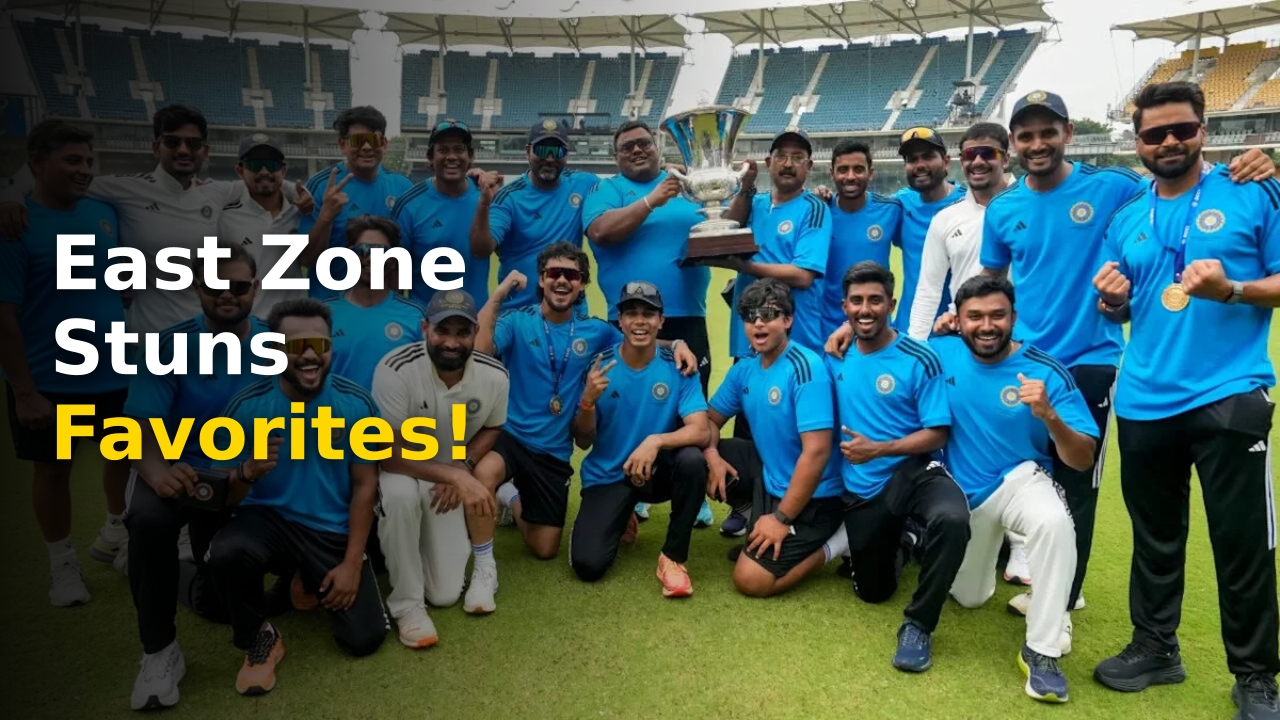
You might not have expected the underdogs to lift the silverware, but the Duleep Trophy 2026 Results are officially in, and East Zone has pulled off an absolute masterclass to stun the powerhouse South Zone. Playing on the turning tracks of Chennai, the visiting side dismantled a star-studded home team that entered the final as overwhelming favorites. This landmark triumph in the domestic cricket calendar marks a historic shift in the regional balance of power across the Board of Control for Cricket in India landscape.
For decades, the eastern region struggled to match the depth of the western and southern zones in red-ball tournaments. This final rewrote that narrative entirely as the visitors dominated from the opening session. By outplaying their hosts in every department, they proved that administrative challenges and lack of historical pedigree are no match for pure hunger and clinical execution on the pitch.
You can find more detailed analyses of the domestic season by visiting the exclusive sports coverage at BrightCelebrity, where we track the rising stars of Indian cricket. This particular victory will go down as a turning point, especially given the incredible individual performances that shaped the four-day battle.
East Zone Duleep Trophy 2026 Results
The matchup between South Zone and East Zone was billed as a battle of David versus Goliath. South Zone boasted a remarkable legacy with 19 previous titles, while East Zone had only hoisted the trophy twice since the inception of the tournament in the 1961-62 season. Adding to the disparity, South Zone added Test regular Mohammed Siraj and the in-form Devdutt Padikkal to an already formidable lineup led by captain Tilak Varma.
Despite the star-studded opposition, East Zone played with an aggressive intent that left the hosts searching for answers. The match showcased the depth of India’s domestic structure, highlighting how lesser-known regional players can rise to the occasion when given a national platform. The final scorecards confirmed a resounding victory that surprised even the most seasoned pundits.
This performance has set a new benchmark for the team, signaling that they are no longer just competitors but genuine title contenders. The triumph was built on disciplined bowling, incredible catching in the outfield, and a batting lineup that refused to buckle under pressure. It was a complete team performance that will be studied by domestic coaches for years to come.
Ishan Kishan Redeems Career with Double Century
At the center of this incredible triumph was captain Ishan Kishan, who played like a reborn cricketer throughout the match. His monumental first-innings knock of 270 runs set an uphill task for South Zone, demanding absolute focus and immense physical endurance under the scorching Chennai sun. He combined defensive discipline with his trademark explosive strokeplay to dismantle the opposition’s bowling attack.

When South Zone threatened a brief comeback on the third day, Kishan stepped up yet again in the second innings. His feisty, counter-attacking 80 runs completely shut the door on any hopes of a home-side revival. His tactical leadership behind the stumps also drew high praise from commentators and fans alike.
This performance is particularly significant for Kishan as he aims to reclaim his spot in the national setup. After facing administrative hurdles and losing his central contract, this high-stakes performance serves as a loud statement to the national selectors. For a deeper look into his journey and career updates, check out the BrightCelebrity’s sports news desk.
The Bihar and Jharkhand Talent Revolution
The defining storyline of this tournament is the undeniable rise of cricketing talent from the states of Bihar and Jharkhand. Historically, the East Zone squad was heavily dominated by established players from Bengal. However, this championship team featured a core group of players born and bred in the smaller, mineral-rich states of the east, signaling a massive demographic shift in the region’s sports development.
Jharkhand has steadily built a reputation as a domestic powerhouse, culminating in their first-ever Syed Mushtaq Ali T20 Trophy victory in late 2025. This success is not an overnight miracle but the result of years of grassroots investment and improved academy structures. The modern crop of players displays a distinct brand of fearless cricket, reminiscent of Ranchi’s most famous son, MS Dhoni.
The administrative separation of Jharkhand from Bihar in 2000 initially created complex challenges for local cricket associations. While Bihar’s local body remained mired in political controversies for years, Jharkhand established stable pathways that are now bearing fruit. Today, players from both states are uniting to form the unstoppable fulcrum of the eastern region’s cricket revolution.
Emerging Stars: Kushagra, Quraishi, and Mohan
Among the standout performers was the 21-year-old wicketkeeper-batter Kumar Kushagra. Born in the steel city of Bokaro, Kushagra showed maturity far beyond his years, stroking a masterclass 101 in the first innings and backing it up with a vital 46 in the second. Currently a member of the India ‘A’ squad, his clean glovework and calm composure make him a bright prospect for the national team’s future transition phase.
Dhanbad-born off-spinner Mohammed Kounain Quraishi also enjoyed a breakthrough final. The 23-year-old played a crucial role with the bat, cruising to a brilliant 116 in the second innings to stretch the lead past South Zone’s reach. He followed this up with the ball by claiming the prized wicket of South Zone captain Tilak Varma, breaking the back of their run chase.
Ranchi-born Shikhar Mohan was the breakout star of the match. The 21-year-old left-hander contributed crucial scores of 85 and 52, displaying immense grit under pressure. Mohan also showcased his versatility by stepping up as a left-arm spinner, taking two critical wickets after senior bowler Anukul Roy suffered a finger injury during the match.
Vaibhav Sooryavanshi and the Red-Ball Test
The final was also a major test of red-ball credentials for young batting sensation Vaibhav Sooryavanshi. The teenager demonstrated his immense potential by adjusting his aggressive game to match the demands of the longer format. While he remains a work in progress against high-quality spin, his ability to dominate pacers early in the innings gave East Zone crucial momentum.
Coaches and scouts emphasize that Sooryavanshi must be evaluated on his technique and adaptability rather than raw run aggregates. His development will be crucial for the region as they look to maintain their dominance in upcoming multi-day tournaments. With proper mentoring, he has the potential to become a mainstay in first-class cricket.
Duleep Trophy 2026 Results Scorecard Analysis
To fully appreciate the magnitude of this achievement, you have to look closely at the statistical breakdown of the four-day final. East Zone dominated almost every session, building massive partnerships and bowling disciplined lines that starved the South Zone batters of easy runs. This analytical overview highlights the key individual contributions that decided the match.
The victory was not merely about individual brilliance but tactical execution. While the batters set up massive totals, the bowling unit rotated intelligently to keep the pressure on South Zone’s star players. This balanced contribution is reflected in the complete match statistics.
You can follow detailed player tracking and career milestones by visiting BrightCelebrity profiles, where we cover the rising stars of domestic leagues. The following data table illustrates how East Zone outclassed their highly-favored opponents in Chennai.
| Player | State of Origin | First Innings Performance | Second Innings Performance | Key Match Impact |
|---|---|---|---|---|
| Ishan Kishan | Bihar / Jharkhand | 270 Runs | 80 Runs | Set massive target; controlled game tempo |
| Kumar Kushagra | Jharkhand (Bokaro) | 101 Runs | 46 Runs | Anchored middle-order; flawless wicketkeeping |
| M. Kounain Quraishi | Jharkhand (Dhanbad) | 15 Runs / 1 Wicket | 116 Runs | Dismissed Tilak Varma; historic century |
| Shikhar Mohan | Jharkhand (Ranchi) | 85 Runs | 52 Runs / 2 Wickets | Stood out as emergency spinner under pressure |
Historical Shifts in East Zone Cricket
To put this championship in context, one must look back at the historical performance of the East Zone team. For decades, the team was viewed as an easy opponent in the inter-zonal system. From the tournament’s establishment in 1961, it took half a century for the eastern side to capture its maiden title during the 2011-12 season, driven by future international stars like Wriddhiman Saha and paceman Mohammed Shami.
Their second title came the very next year in 2012-13, thanks to a match-winning century from Jharkhand’s underappreciated batsman Ishank Jaggi. Since then, the team went on a long title drought, often struggling to find the right balance of experience and youth. This 2026 victory represents a true renaissance, built on a highly sustainable foundation of local academy products.
Historically, the regional squad was dominated by homegrown players representing Bengal, which possesses the most advanced club cricket infrastructure in the region. However, the current squad reflects a diverse demographic shift. With the exception of batsman Sudeep Gharami, every other player representing Bengal in the final playing XI was actually a cricket migrant born outside the state, highlighting the talent drain from neighboring regions.
By The Numbers: The Rise of Jharkhand Cricket
The transformation of Jharkhand into a domestic powerhouse is backed by impressive data. Between 2015 and 2025, the state saw a 150% increase in turf pitches across districts like Bokaro, Dhanbad, and Ranchi. This massive infrastructure upgrade allowed young players to practice on high-quality surfaces from an early age, preparing them directly for the challenges of first-class cricket.
This grassroots development culminated in their historic Syed Mushtaq Ali Trophy victory in late 2025. The state association’s focus on structured tournaments, professional coaching, and physical conditioning has successfully created a sustainable pipeline of talent. Players like Kushagra and Quraishi are the direct beneficiaries of this modern system, proving that systematic investment yields elite championship results.

This shift has had a massive impact on the national team as well. Indian selectors are increasingly looking beyond traditional urban centers to find players with high mental resilience. The tough upbringing and competitive pathways of these eastern regions produce cricketers who thrive under intense pressure on the international stage.
The Role of Senior Bengal Pacers
While the young batters from Bihar and Jharkhand grabbed the headlines, the victory was anchored by senior pacers from Bengal. Veteran speedster Mohammed Shami and reliable swing bowler Mukesh Kumar proved far superior to their South Zone counterparts in both the semifinal and the final. Their ability to extract movement from unresponsive Chennai pitches kept the opposition on the back foot.
Their presence in the dressing room provided invaluable guidance to the young spinners and batters. Shami’s tactical advice on line and length helped the spinners exploit the dry patches on the track, while Mukesh’s relentless accuracy built immense pressure during the middle overs. This perfect blend of youthful energy and veteran experience was the ultimate recipe for success.
The pacers proved that experience is invaluable in multi-day cricket, where patience and physical durability are tested to the limit. By delivering breakthroughs at crucial moments, they ensured that the massive totals set by the batters were never threatened. This balanced attack made them the most complete bowling unit in the tournament.
People Also Ask
What were the final Duleep Trophy 2026 results for the championship match?
East Zone defeated South Zone in Chennai to win the title. The victory was secured through dominant batting displays, led by Ishan Kishan’s 270 and strong performances from Kumar Kushagra and Kounain Quraishi.
How did Ishan Kishan perform in the final match?
Captain Ishan Kishan was named Player of the Match after scoring a brilliant 270 runs in the first innings and a crucial, fast-paced 80 runs in the second innings to seal the victory.
Which young players stood out for East Zone in the tournament?
Young stars Kumar Kushagra (101 and 46), Mohammed Kounain Quraishi (116 runs and a key wicket), and all-rounder Shikhar Mohan (85, 52, and 2 wickets) were the standout young performers.
Why is this victory significant for Bihar and Jharkhand cricket?
This win marks a major shift as players born in Bihar and Jharkhand formed the core of the team, proving that grassroots development in these states has successfully challenged the traditional dominance of Bengal cricket.
Legacy of the 2026 Championship
This tournament victory will be remembered as a historic milestone for cricket in eastern India. It proved that systemic development can overcome historical disadvantages and administrative hurdles. The incredible talent emerging from Bihar and Jharkhand has established a new core that will dominate domestic cricket for the next decade.
For players like Ishan Kishan, this victory is a powerful reminder of their quality and resilience. It shows that domestic tournaments remain the ultimate proving ground for national team aspirations. The final Duleep Trophy 2026 Results will serve as a source of inspiration for thousands of young players practicing in the small towns of Bokaro, Dhanbad, and Ranchi.
As these young stars continue to progress, they will undoubtedly attract interest from national selectors and IPL franchises. The future of cricket in the region looks incredibly bright, and this championship is just the beginning of a golden era. You can keep up with all their future career updates and domestic statistics by staying tuned to our ongoing sports coverage.
Ultimately, this championship was won through belief, clinical execution, and a refuse-to-lose attitude. By defeating a heavily-favored South Zone side on their own turf, East Zone has earned their place at the high table of Indian cricket. The new era of domestic dominance has officially arrived, and it is powered by the raw, unstoppable talent of the east.
More Like This
For more updates, check out our latest entertainment and sports news.