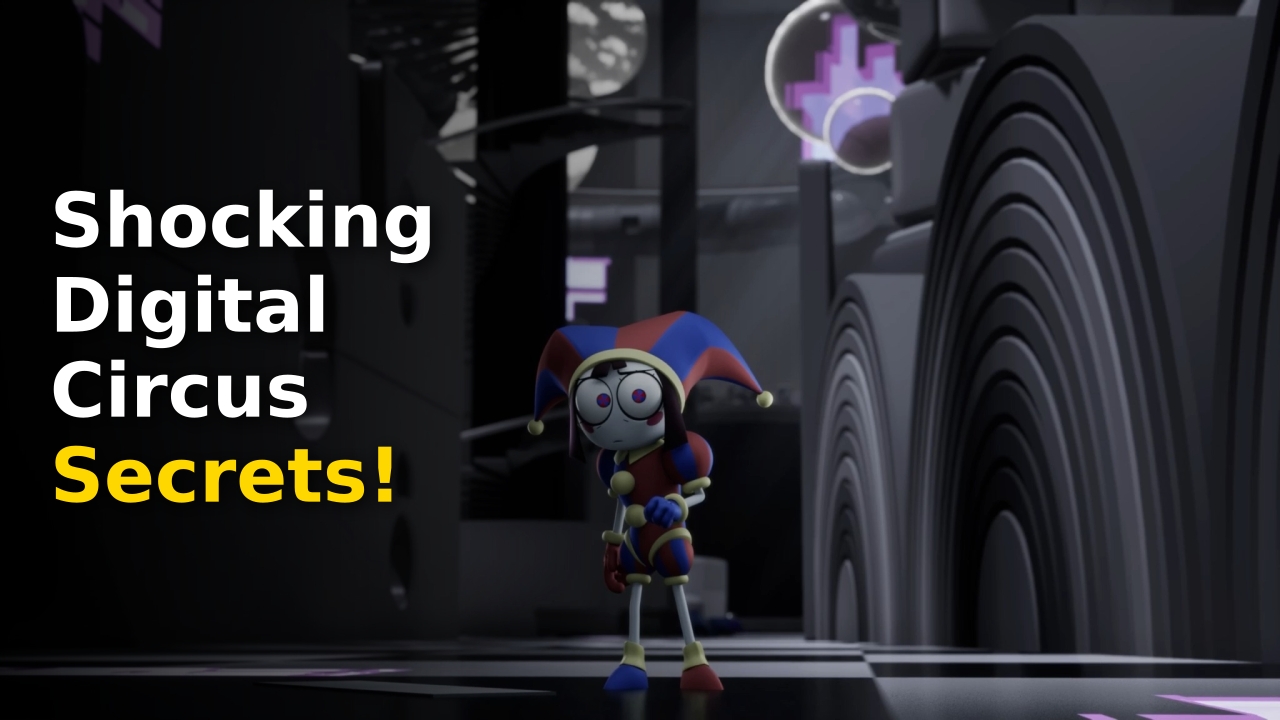
Digital Circus serves as the haunting, neon-soaked wake-up call for Gen Alpha, masquerading as a colorful cartoon while harboring deep existential dread regarding our AI-driven future. If you think this is just another harmless web series, you are dangerously underestimating the psychological impact this surrealist nightmare is having on children worldwide.
Behind the slapstick humor of characters like Pomni and Jax lies a dark reflection of our own technological obsession. This isn’t just entertainment; it’s a digital fever dream that forces a generation to confront the cold, calculated reality of being trapped in a system they cannot control.
The Amazing Digital Circus Phenomenon
Glitch Productions shattered every expectation when they dropped the pilot for this series, instantly capturing the collective consciousness of millions of young viewers. By leveraging the aesthetic of early 2000s 3D animation, they created a sense of uncanny nostalgia that feels both comforting and deeply wrong.
The narrative centers on human players who are perpetually stuck in a simulated purgatory, stripped of their names and humanity. This trope resonates deeply with a generation that spends a significant portion of their waking life navigating curated digital spaces and algorithmic constraints.

As you watch the characters desperately search for an exit that doesn’t exist, you start to realize the show is an allegory for the loss of agency. AI isn’t just a background element here; it is the cruel, omnipotent overlord that dictates every interaction and emotional beat of the cast.
The character designs, specifically the vibrant yet unsettling visage of the purple rabbit, act as a bridge between childhood safety and adult psychological trauma. It is this dissonance that makes the show so addictive to Gen Alpha, who are far more media-literate than their parents realize.
While traditional media often portrays AI as a robot uprising, this series captures a more subtle, soul-crushing reality. It suggests that our digital prisons are not made of bars, but of colorful, high-definition distractions that keep us occupied while our autonomy slowly erodes.
To understand the depth of this cultural shift, check out the analysis over at celebrity digital trends. They track how modern media icons are no longer just actors, but animated avatars that live forever on the web.
Why Gen Alpha Connects
- The rapid-fire editing matches their shortened attention spans perfectly.
- Existential themes mirror their anxiety about the rise of automation.
- High-contrast visual design keeps them glued to mobile devices for hours.
- The lack of traditional heroes creates a relatable, messy narrative arc.
Data and Cultural Impact Analysis
The numbers behind the success of this series are nothing short of record-breaking in the indie animation space. Viewership metrics have surpassed major cable network hits, proving that the traditional gatekeepers of entertainment are losing their grip on the youth demographic.
| Metric Category | Impact Level | Growth Trend |
|---|---|---|
| Platform Views | Hundreds of Millions | Exponential |
| Community Art | Massive | High |
| Social Media Sentiment | Viral/Obsessive | Peak |
We are seeing a paradigm shift where content creators bypass studios entirely to find massive, dedicated audiences. This direct-to-consumer model allows for darker, more experimental storytelling that major networks would have rejected as too risky or abstract for children.
The reliance on short-form content clips, often shared on platforms like TikTok, creates a feedback loop of hype. Young viewers are exposed to snippets of the show’s most unsettling moments, which drives them to the source for the full experience.
This creates a digital FOMO that is unparalleled in history. If a child hasn’t seen the latest episode of the Digital Circus, they are essentially cut off from a massive segment of their schoolyard social dynamic. It is a new kind of literacy rooted in shared digital trauma and meme culture.
Furthermore, the accessibility of the series ensures that it reaches global corners simultaneously. Unlike broadcast television, which had regional limitations, this web series is a truly borderless cultural event that unifies Gen Alpha through a single lens of digital apprehension.
The financial backing of such independent projects is also evolving through fan-supported crowdfunding. This gives the audience a sense of ownership over the series, making them more invested in the characters’ fates than they would be with a corporate-funded production.
The Future of AI Storytelling
We must consider what happens when the next generation grows up consuming stories that characterize artificial intelligence as a malicious cage-keeper. The implications for future technological integration are massive, as this series frames AI as something to be feared, not just embraced.
Society often looks at technological advancements through the lens of utility, but Gen Alpha is learning to view it through the lens of horror. They see the glitches in the system as moments of potential freedom, a theme that dominates the show’s narrative.
The irony is that the show itself is produced using digital tools that mirror the very technology it criticizes. This creates a recursive loop of irony that is quintessential to the Gen Alpha experience, where the medium is as much the message as the plot itself.
Parents often miss the nuance here because they are focused on the surface-level oddity of the animation style. However, the themes of identity loss, memory erasure, and perpetual surveillance are as mature as anything found in classic science fiction literature.
As these viewers get older, the influence of these early horror stories will likely color their approach to real-world AI policy. They are being trained to spot the ‘Cheshire grin’ of corporate algorithms, and that intuition might be their greatest defense against future manipulation.
Ultimately, the show is a test case for how stories will be told in the future. The combination of high-stakes psychological horror and accessible, vibrant animation has created a blueprint that other creators are undoubtedly scrambling to emulate.
Final Observations
Understanding the obsession is not about deciphering every trend or slang term like ‘skibidi’ but about recognizing the underlying fear of a world mediated by black-box algorithms. We are witnessing the birth of a new literary tradition, one that is perfectly suited for a generation raised inside a screen.
Whether you find the series charming or repulsive, you cannot deny its profound reach into the minds of the next generation. The Digital Circus is not merely a passing phase; it is the defining nightmare of our current digital era, and we are just beginning to see its ripple effects across pop culture.
More Like This
For more updates, check out our latest entertainment and sports news.