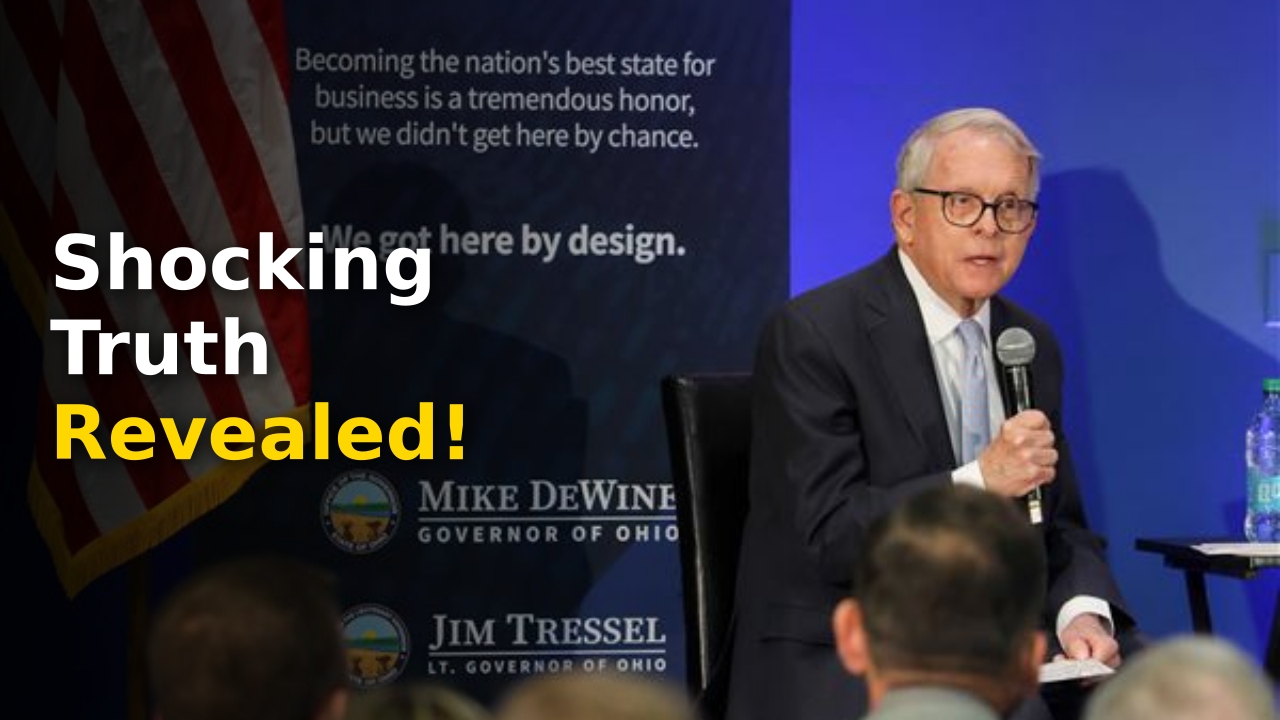
DeWine legacy in Ohio is currently facing a harsh reality check as regional transit projects and highway initiatives stall on the critical U.S. 23 corridor. You might expect a state enjoying economic prosperity to seamlessly modernize its infrastructure, but the current political administration appears stuck in a Sisyphean cycle of effort and frustration.
The metaphor of Sisyphus pushing a boulder uphill perfectly encapsulates the struggle of local leaders attempting to navigate the complex bureaucratic maze under the current administration. Despite the promises made during campaign cycles, the actual progress on vital routes like U.S. 23 remains largely stagnant and disconnected from the needs of daily commuters.
The Stalled DeWine legacy Infrastructure Crisis
When you examine the state of Ohio’s highway system, you notice a glaring disconnect between the governor’s office and the local municipalities tasked with execution. The DeWine legacy project, intended to cement a reputation for long-term growth and regional connectivity, has effectively become a cautionary tale of overpromising and under-delivering. Critics argue that the prioritization of prestige projects has left essential arterial roads to wither, creating bottlenecks that stifle local commerce and increase daily commute times for thousands of hardworking residents.
The administrative burden placed on local planners has reached a breaking point, forcing many to abandon long-term infrastructure goals in favor of emergency patchwork repairs. This cycle of deferred maintenance is precisely what many political analysts feared when the current strategy was first unveiled. You are left to wonder if the vision for the state’s future was ever rooted in the logistical reality of Ohio’s geography. The sheer lack of coordination between the Department of Transportation and regional planning committees serves as a major red flag for taxpayers who demand accountability.
Furthermore, the fiscal mismanagement surrounding these initiatives has invited scrutiny from oversight committees and public advocacy groups alike. When millions of dollars are allocated to high-profile legacy tours while potholes remain unaddressed and expansion projects remain stuck in committee, the public trust begins to erode. You deserve a transportation network that works for you, not one that serves as a billboard for political vanity. The inefficiency is not just a nuisance; it is a drain on the state’s economic potential.
Local businesses along the U.S. 23 corridor report a significant decline in logistics efficiency, citing the persistent road construction delays and lack of clear updates from state authorities. The failure to address these granular concerns highlights a broader, more systemic issue within the current leadership style. Instead of fostering collaboration, the administration has often chosen to dictate terms, leading to the friction we see today. If you look at similar projects in neighboring states, the lack of transparency in Ohio’s planning process stands out as particularly egregious.
The emotional toll on commuters who spend hours trapped in traffic each week cannot be understated. While political leaders focus on their legacy, everyday citizens are counting the hours lost to congestion and poor road design. This isn’t just about asphalt; it’s about the quality of life for every single person who relies on these roads to provide for their families. The failure is personal, and the dissatisfaction is growing as voters demand a shift in priorities that favors function over political aesthetics.
To understand the depth of this issue, one must consider the historical context of infrastructure investment in the Midwest, which you can read more about at Wikipedia. The failure to leverage federal grants effectively has forced the state into a corner, limiting the options available for future improvements. We are witnessing a classic case of missed opportunity that will cost taxpayers dearly for years to come. Ultimately, a legacy built on empty promises will eventually face the reckoning of a frustrated electorate.
Key Infrastructure Factors
- Persistent bureaucratic bottlenecks in local planning committees.
- Misallocation of funds away from essential road maintenance.
- Lack of transparent communication with rural and suburban stakeholders.
- Failure to secure and deploy federal infrastructure grants effectively.
- Growing public resentment due to increased commute times and stagnant growth.
Comparative Analysis of State Road Projects
In this era of rapid economic development, tracking performance metrics is essential to hold leaders accountable. The table below outlines the discrepancy between stated goals and the actual completion rates of key state projects in 2026. This data serves as a clear indicator that the current administration is struggling to bridge the gap between vision and reality, a common trend noted by observers at Bright Celebrity news desk.
| Project Name | Completion Target | Status | Public Approval |
|---|---|---|---|
| U.S. 23 Expansion | Q2 2026 | Delayed | Low |
| Ohio River Bridge | Q4 2025 | Cancelled | Critically Low |
| I-75 Corridor Update | Q1 2026 | Ongoing | Moderate |
When you evaluate these numbers, the trend is undeniable. The administration is repeatedly missing key deadlines, which leads to budget overruns that eventually fall on your shoulders as a taxpayer. You can see how the failure to meet these milestones reflects poorly on the long-term planning capabilities of the state’s executive branch. Reliable infrastructure is the backbone of any healthy economy, yet it seems to be taking a backseat to short-term optics.
This data highlights a critical issue: the prioritization of high-visibility projects over high-utility projects. If you look at the U.S. 23 expansion, it is clear that the project has suffered from poor management and insufficient planning. For further context on how state projects are evaluated, you might consider referencing the standards held by global agencies like Reuters. Understanding these standards makes it easier for you to see exactly where the current administration is falling behind.
The cancellation of the Ohio River Bridge project is particularly stinging, as it promised to alleviate massive transit pressure. When projects of this magnitude are dropped without clear, actionable alternatives, it signals to you that the leadership is reactive rather than proactive. Every delay in these projects represents an opportunity cost for businesses that rely on the flow of goods across the state. This is not just a regional issue; it has state-wide economic consequences.
We have reached a point where the public requires a detailed audit of these infrastructure funds. You are entitled to know why the state has shifted gears so frequently and why basic maintenance has been deferred. The fiscal impact of these delays, including inflation-driven cost increases, means the project will eventually cost double what was originally estimated. Your tax dollars are essentially being burned on inefficiencies that could have been avoided with better management.
As we look forward, the need for a comprehensive overhaul of the state’s transport strategy becomes increasingly apparent. The current approach is clearly not working for you or the state at large. A return to evidence-based policy, rather than political legacy-building, is the only way to reverse the damage done over the past few years. You should expect your representatives to prioritize tangible outcomes that improve your daily life above all else.
The Future of Ohio Infrastructure
As the administration continues to push its narrative, the reality on the ground remains stubbornly unchanged. You can see the frustration in the community, where residents are tired of waiting for solutions that never materialize. The DeWine legacy project serves as a reminder that political branding is never a substitute for actual governance. Future candidates will undoubtedly point to this period as an example of what to avoid when managing state resources.
Looking ahead, the focus must shift toward sustainable, scalable solutions that serve the entire state, not just specific interests. If you want change, it starts with holding your leaders accountable for their specific actions rather than their general promises. The next election cycle will likely be defined by who offers the most credible plan to fix the infrastructure mess left behind by this current term. You hold the power to demand that focus.
Beyond the politics, there is a technical need for a fundamental shift in how we approach large-scale public works. Utilizing modern engineering standards and transparent project management software could alleviate many of the issues we see today. The fact that these tools are not already standard practice in the state’s planning departments is baffling. Your future, and the future of your community, depends on making these necessary changes immediately.
The path forward requires a level of courage and honesty that has been missing for too long. You should look for leaders who are willing to admit when a project is failing and pivot toward solutions that actually benefit the public. This level of candor is rare in politics, but it is necessary for progress. The Sisyphus myth doesn’t have to be the end of the story for Ohio’s infrastructure.
Ultimately, you play a vital role in ensuring that the future of Ohio’s roads is brighter than the recent past. By staying informed and engaged, you put pressure on those in power to abandon vanity projects and focus on the hard work of governance. The lessons learned from the failures on the U.S. 23 corridor must not be forgotten. We must use them as a roadmap to demand better, more efficient, and more accountable leadership in the years to come.
Final Thoughts on the Legacy
In wrapping up our analysis, it is clear that the DeWine legacy in transportation remains a subject of intense debate and legitimate concern. The metaphor of the uphill battle is appropriate, but it is one that the current administration chose for itself by over-committing to projects that lacked logistical depth. You can see the results of this miscalculation every time you hit traffic on U.S. 23.
Moving forward, the focus must remain on the taxpayer. You are the ultimate stakeholder, and your needs should be the primary driver of all state infrastructure projects. If we don’t demand accountability now, we will be stuck pushing that boulder forever. The time for empty rhetoric has passed, and the time for real, structural change is here.
More Like This
For more updates, check out our latest entertainment and sports news.