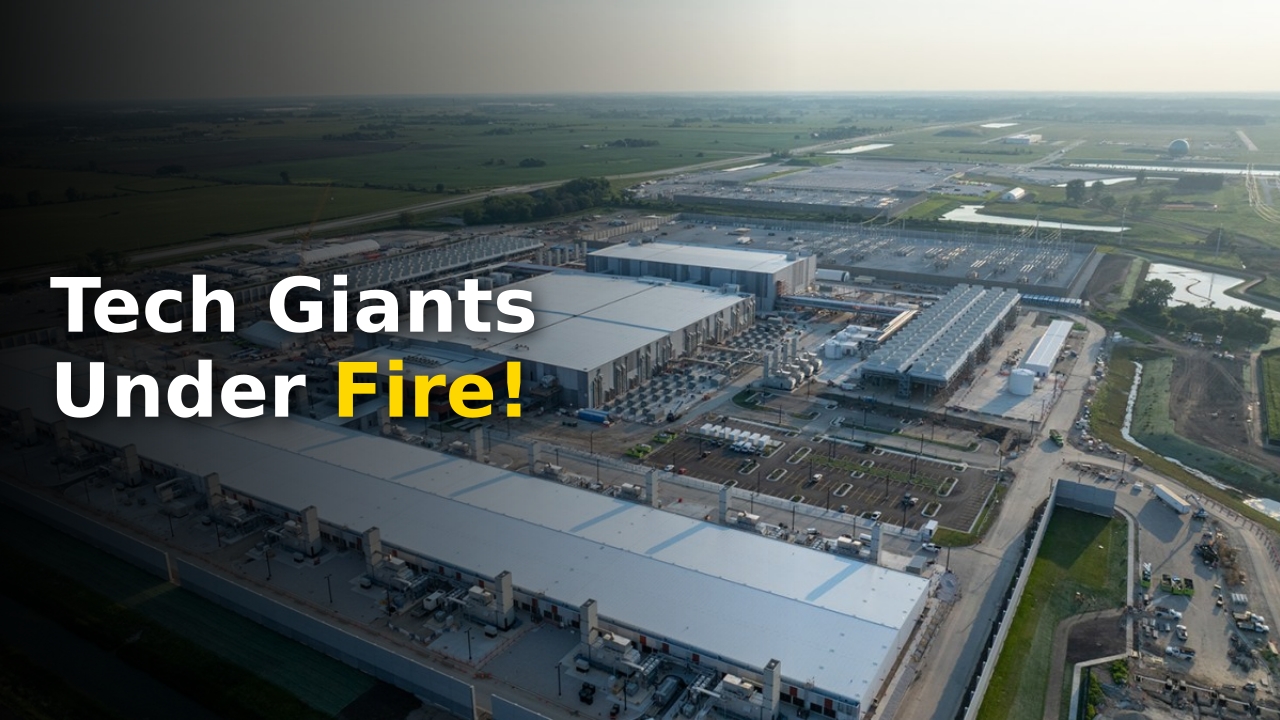
The **Data Center** expansion across America is no longer just a tech story; it is a political nightmare. Have you ever wondered why your local representatives are suddenly obsessed with giant grey warehouses? You might be living in a state where the hum of cooling fans is drowning out the voices of voters.
Voters are demanding answers about land use and energy consumption. This shift is catching incumbents by surprise. Politicians are now forced to choose between big tech money and local community approval.
Data Center Backlash Exploding
The rise of the **Data Center** industry has hit a massive wall of public resistance. In states like **Virginia**, the world’s hub for internet traffic, residents are finally fighting back. You are seeing grassroots movements organize faster than a fiber-optic connection.
Noise pollution is the primary complaint for many families. These facilities operate **24/7**, creating a low-frequency hum that never stops. Imagine trying to sleep while a thousand industrial air conditioners run next door.
Visual blight is another major factor for the average homeowner. Beautiful rolling hills and forests are being flattened for steel boxes. This destruction of local character is fueling a massive wave of political anger.
Local zoning boards are now the front lines of a cultural war. What used to be a routine approval process is now a packed town hall meeting. You can hear the frustration in every public comment session lately.
Tax breaks are also coming under heavy fire from local activists. Many people feel that **Amazon** and **Google** do not need public handouts. This resentment is turning into a powerful weapon for political challengers.
The scale of these buildings is simply hard to comprehend. Some facilities cover over a million square feet of ground. They represent a permanent change to the landscape that many are not ready to accept.

Loudoun County Resistance
- Thousands of residents signed petitions against new power lines.
- Local candidates are running on strictly anti-tech platforms.
- Property values near major hubs are becoming a hot-button issue.
- Historic sites are being protected from industrial encroachment.
Hidden Costs of Technology
You might think the internet is invisible, but it requires a massive physical footprint. Every email you send and every video you stream lives in a **Data Center** somewhere. These facilities require an incredible amount of electricity to stay operational.
Power grids are struggling to keep up with the new demand. In some regions, utilities are warning of potential blackouts during peak hours. This risk is making voters very nervous about their own home comfort.
Water usage is a hidden environmental cost that many overlook. These servers generate intense heat and require millions of gallons for cooling. In areas facing drought, this is a recipe for a political explosion.
The jobs created by these facilities are often fewer than expected. While construction creates temporary work, the permanent staff is usually small. You are seeing a shift in the narrative about economic benefits.
Infrastructure upgrades are often paid for by the general public. New substations and transmission lines are appearing in residential backyards. This physical intrusion is making the tech industry very unpopular.
Local ecosystems are being disrupted by massive concrete pads. Stormwater runoff is becoming a major concern for nearby farmers. The environmental impact is much broader than just energy use.
Resource Consumption Facts
- Cooling a single site can use as much water as a small city.
- Electrical demand can require reopening old coal-fired power plants.
- Land clearing removes critical carbon sinks from the local area.
- Noise levels often exceed local ordinances during peak summer heat.
Politicians Fleeing Tech Giants
Candidates in the **2024** and **2026** cycles are distancing themselves from big tech. It is no longer a winning strategy to brag about bringing a **Data Center** to town. In fact, it might be a political death sentence in some districts.
Campaign contributions from tech executives are being scrutinized like never before. Opponents are using these donations to paint incumbents as “bought and paid for.” This tactic is proving highly effective in recent primary races.
Bipartisan agreement is rare, but both sides hate these facilities. Conservative rural voters and liberal environmentalists are forming unlikely alliances. This unity is a nightmare for traditional political strategists.
Endorsements now often come with strings attached regarding land use. You see governors who once welcomed the industry now calling for strict moratoriums. The political winds have shifted with incredible speed this year.
Public town halls are becoming increasingly hostile for tech-friendly leaders. Candidates are being filmed struggling to answer questions about power grid stability. These clips are going viral on social media and hurting poll numbers.
The industry’s lobbyist group is finding fewer doors open on **Capitol Hill**. Even federal lawmakers are starting to question the long-term sustainability of this growth. The era of unchecked expansion is officially over.
Political Strategy Shifts
- Candidates are refusing donations from major infrastructure developers.
- Legislators are proposing new taxes on high-density energy users.
- Local mayors are vetoing projects that were previously fast-tracked.
- Voters are prioritizing “quality of life” over industrial growth.
Swing State Voter Fury
In states like **Georgia** and **Arizona**, the **Data Center** debate is deciding elections. These are states where every single vote counts toward the national balance of power. A few angry neighborhoods can flip an entire district.
In **Georgia**, the massive energy demand is threatening to raise utility bills. You are seeing families struggle with inflation while tech companies get cheap power. This economic disparity is a major talking point for challengers.
The **Arizona** heat makes cooling these facilities an even bigger challenge. Residents are worried about their water supply being diverted to cool servers. This is a visceral fear that drives people to the polls.
In **Pennsylvania**, the repurposing of old industrial sites is causing friction. While some want the investment, others fear the long-term environmental consequences. The debate is splitting communities right down the middle.
Swing state voters are looking for leaders who protect their local environment. They are tired of seeing their towns turned into industrial parks. This sentiment is transcending traditional party lines in **2024**.
The impact on local schools and services is also being questioned. While tech companies pay taxes, they don’t always cover the cost of new infrastructure. Residents are tired of picking up the tab for multi-billion dollar firms.
Critical Battleground Concerns
- Grid reliability is a top concern for voters in **North Carolina**.
- Agricultural preservation is the main issue in rural **Ohio** districts.
- Tax transparency is being demanded by citizens in **Nevada** today.
- Zoning autonomy is the rallying cry for local councils in **Michigan**.
Shocking Power Demand Stats
The sheer amount of energy a **Data Center** consumes is staggering for the average person. We are talking about levels of power that can rival entire nations. Check out the latest reports for the latest political news and tech impact.
As AI technology expands, the need for processing power is doubling every few months. This is placing a permanent strain on the American electrical grid. You are likely to see this reflected in your own energy costs soon.
The transition to renewable energy is being slowed down by this massive demand. Utilities are forced to keep old, dirty plants running just to meet the needs of big tech. This irony is not lost on environmental voters.
Legislators are now considering specific energy quotas for industrial users. They want to ensure that residential homes are prioritized over server farms. This is a massive shift in how we manage public utilities.
Private power deals are also coming under intense public scrutiny. Some companies are building their own small nuclear reactors to stay online. This brings a whole new set of safety and environmental concerns to the table.
The battle for the grid is just beginning in most parts of the country. You can expect energy policy to be the central theme of the next decade. Technology is moving faster than our ability to power it safely.
| Region | Power Usage (MW) | Growth Rate |
|---|---|---|
| Northern Virginia | 2,500+ | High |
| Dallas, Texas | 800+ | Medium |
| Silicon Valley | 600+ | Steady |
| Atlanta, Georgia | 500+ | Very High |
Future of Digital Growth
The future of the **Data Center** industry depends on finding a compromise with the public. We cannot simply keep building without regard for the local community. Tech companies must learn to be better neighbors if they want to survive.
Innovations in cooling technology could help reduce water and energy waste. Liquid cooling and better architectural designs are being tested right now. You might see more “hidden” facilities built underground or in remote areas.
Public-private partnerships need to become more transparent and accountable. Local residents deserve a seat at the table when these massive projects are planned. The days of backroom deals are quickly coming to an end.
According to Reuters, the tech sector is facing unprecedented regulatory pressure globally. This isn’t just a local issue; it’s a global movement toward sustainable technology. You are part of a massive shift in how humanity manages its digital footprint.
The midterm elections will serve as a bellwether for the industry’s future. If anti-tech candidates win big, the expansion will hit a massive slowdown. The power is truly in the hands of the voters this year.
In the end, the **Data Center** debate is about more than just buildings. It is about what we value as a society: progress or preservation. You have the chance to decide which path we take by staying informed and active.
More Like This
For more updates, check out our latest entertainment and sports news.