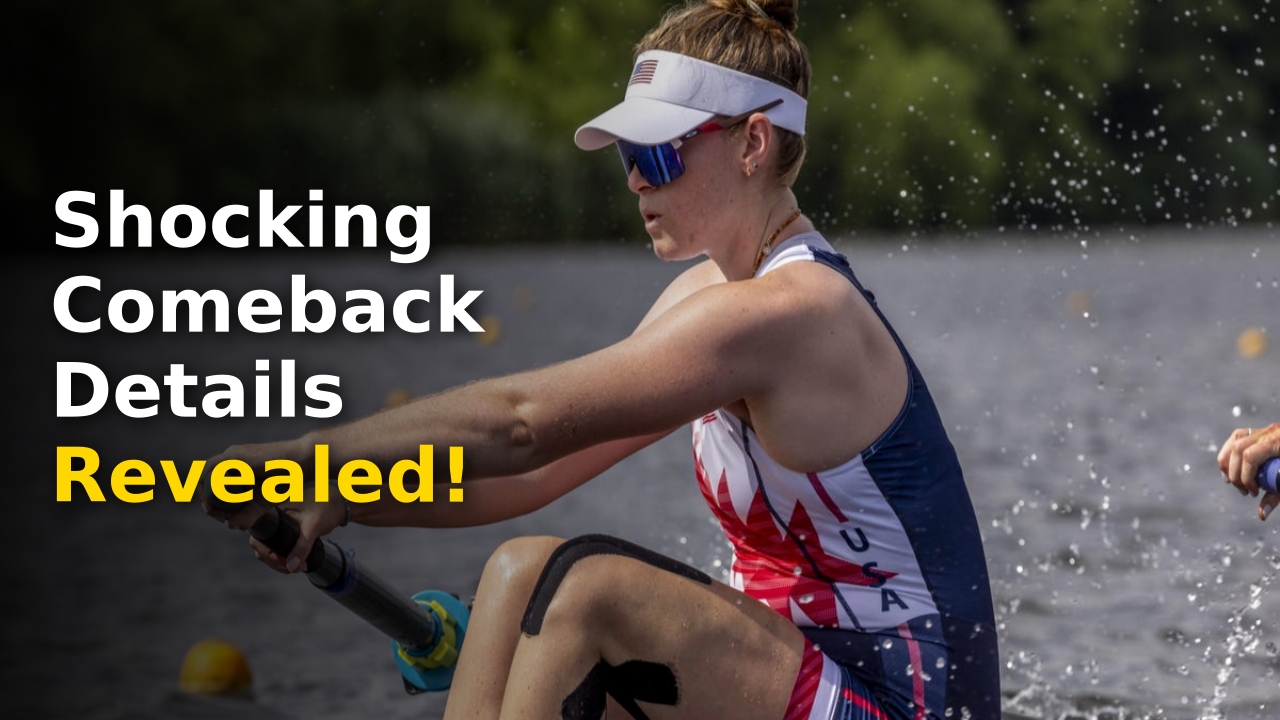
Daisy Mazzio-Manson is currently orchestrating one of the most remarkable athletic comebacks in recent history as she targets a second Olympic appearance following a debilitating back injury. You might think that a championship-level career would be derailed by such a physical setback, but this Wellesley native is proving that resilience is the ultimate competitive advantage.
Success in professional athletics is rarely a straight line, and for elite rowers, the toll on the spine is a silent, constant threat. As you read about her journey to the 2026 LA Games, consider the intense psychological discipline required to pivot from rehabilitation to peak performance. She has turned her recovery into a new training regimen, effectively redesigning her body for the global stage.
The Daisy Mazzio-Manson Comeback Strategy
Returning to the water after a severe injury is not merely about physical therapy; it is a total lifestyle overhaul. Daisy Mazzio-Manson has spent the last year meticulously auditing her training sessions, sleep hygiene, and nutritional intake to accommodate her healing back. You should recognize that her ability to adapt under pressure distinguishes her from the rest of the pack.
The recovery process involved moving away from high-impact, repetitive strain patterns that defined her earlier NCAA career. Instead, she now prioritizes spinal health through low-impact cross-training and specialized core stabilization exercises. This shift isn’t just a concession to her injury; it is a calculated upgrade to her rowing mechanics.
Observers often mistake silence for inactivity, but during her time away from major competition, she was studying the bio-mechanics of her stroke. By working with world-class physical therapists, she has refined her leverage points, ensuring that every push against the foot stretcher is balanced and efficient. This newfound technical precision is exactly what she needs to climb back onto the podium.
Mental toughness is the invisible engine that drives her physical output. When pain signals flare, she employs visualization techniques to keep her focus on the rhythm of the water rather than the limitation of her muscles. You can see this mental maturity in how she handles interviews and manages her public profile, maintaining an aura of quiet confidence.
The rowing community is notoriously unforgiving, yet she has managed to maintain her status as a top-tier contender. Her recent training logs suggest that she is hitting power benchmarks that exceed her pre-injury levels. This trajectory is a testament to her work ethic and the effectiveness of her modified recovery protocols.
By leveraging her background as a Wellesley College star, she brings a unique blend of intellectual rigor and athletic grit to the sport. She understands that the path to the LA Games is paved with thousands of unseen hours in the boat. You are witnessing the evolution of an athlete who has moved beyond mere talent to absolute mastery.

Key Elements of Her Training Routine
- Daily sessions of Pilates-based core strengthening to protect the lumbar spine.
- Bi-weekly adjustments to rowing intensity based on real-time physiological data tracking.
- Strict adherence to an anti-inflammatory diet designed to accelerate tissue repair.
- Integration of advanced recovery technologies like cryotherapy and deep tissue massage.
- Regular mental coaching sessions to sustain long-term competitive motivation.
Competitive Rowing Stats and Timeline
Understanding the difficulty of her return requires looking at the raw data behind competitive rowing. The physical demands of the sport are immense, often requiring athletes to maintain 95% of their maximum heart rate for extended periods. When you look at the latest news regarding elite sports recovery, you see that athletes who utilize data-driven approaches significantly lower their risk of re-injury.
At Bright Celebrity, we track how stars manage their professional transitions, and her discipline stands out as a benchmark for others. Below is a breakdown of her milestones and the physical demands she faces as she pushes toward the next Olympic cycle.
| Category | Metric / Detail |
|---|---|
| Primary Focus | LA Games Qualification |
| Injury Recovery | Lumbar Stabilization Phase |
| Training Location | Wellesley / National Training Center |
| Peak Age Advantage | Experience & Tactical Maturity |
The Psychology of Elite Recovery
Recovering from a back injury is as much a mental hurdle as it is a physical one. You have to realize that for an Olympian, their identity is inextricably linked to their ability to perform at the highest level. When that identity is threatened by injury, the psychological fallout can be just as devastating as the physical pain.
She has navigated this uncertainty by breaking her long-term goal into micro-victories. Each day she completes without a flare-up is a win, and each successful ergometer test builds the foundation for her ultimate goal. This incremental progress prevents the feeling of being overwhelmed by the enormity of the task.
Support systems play a vital role in her success, involving family, trainers, and specialized medical professionals. You see her leaning on her local community for support, which keeps her grounded despite the high stakes of her career. A strong support network is often the difference between those who quit and those who persevere.
Her approach also involves a healthy dose of perspective. She understands that her value as an athlete and a person is not solely defined by a medal count or a finishing position. This freedom from the fear of failure allows her to row with a looseness and confidence that is often missing in hyper-anxious competitors.
As she gears up for the 2026 season, you can observe a change in her temperament. She is more deliberate, more precise, and far less prone to the external distractions that plague younger athletes. She has mastered the art of tunnel vision, focusing exclusively on the things she can control.
This mental resilience will be her secret weapon when she hits the water in LA. When the pressure peaks, the ability to maintain internal calm is what separates the gold medalists from the rest of the field. She is building that calm, one day at a time, in her home town of Wellesley.
The Road to LA Games
Qualifying for the Olympic Games is an ordeal that requires extreme travel, strict scheduling, and constant competition. For Daisy Mazzio-Manson, the logistical challenge of managing her recovery while traveling to qualifiers is a testament to her dedication. She has had to become her own project manager, ensuring that her recovery equipment is available wherever she travels.
The competition pool for the upcoming Games is deeper than ever. Younger rowers are pushing the limits, and the veterans are holding the line. By maintaining her health, she keeps herself in the conversation, proving that experience in the boat is worth more than raw speed alone.
Success for her would not just be a win for her athletic record; it would be a triumph for every athlete battling chronic injury. She is setting a new standard for how to handle long-term rehabilitation without sacrificing competitive ambition. Her story is becoming a blueprint for others.
You should keep an eye on her performance at the national regattas leading up to the qualification trials. These events will provide the final litmus test for her back health and her current speed. If she can replicate her training numbers under race-day pressure, she will be a formidable presence in LA.
The narrative of her return is gaining momentum, attracting interest from sports psychologists and fitness experts alike. They are intrigued by the specific protocols she has used to stabilize her spine. Her legacy may ultimately be defined by how she managed this injury as much as her actual race results.
Every stroke she takes is a narrative thread in a larger story about overcoming adversity. The resilience she shows today is the same resilience that will carry her to the starting line in 2026. You are not just watching an athlete; you are watching a comeback story written in real time.
Final Thoughts on the Journey
In the high-stakes world of international rowing, Daisy Mazzio-Manson continues to represent the pinnacle of professional discipline. Her path back to the global stage proves that with the right combination of expert care and stubborn determination, even the most daunting injuries can be conquered. By focusing on smart training rather than just raw volume, she has ensured that her body remains an asset rather than a liability as she prepares for the glory of the LA Games.
As she advances toward her ultimate goal, her story reminds you that the biggest obstacles often provide the most significant opportunities for growth. Whether she ultimately takes home the gold or simply makes it to the starting line, her journey serves as an inspiration for anyone facing their own physical or professional setbacks. Stay tuned to the latest updates as Daisy Mazzio-Manson makes her final push for Olympic history.
More Like This
For more updates, check out our latest entertainment and sports news.