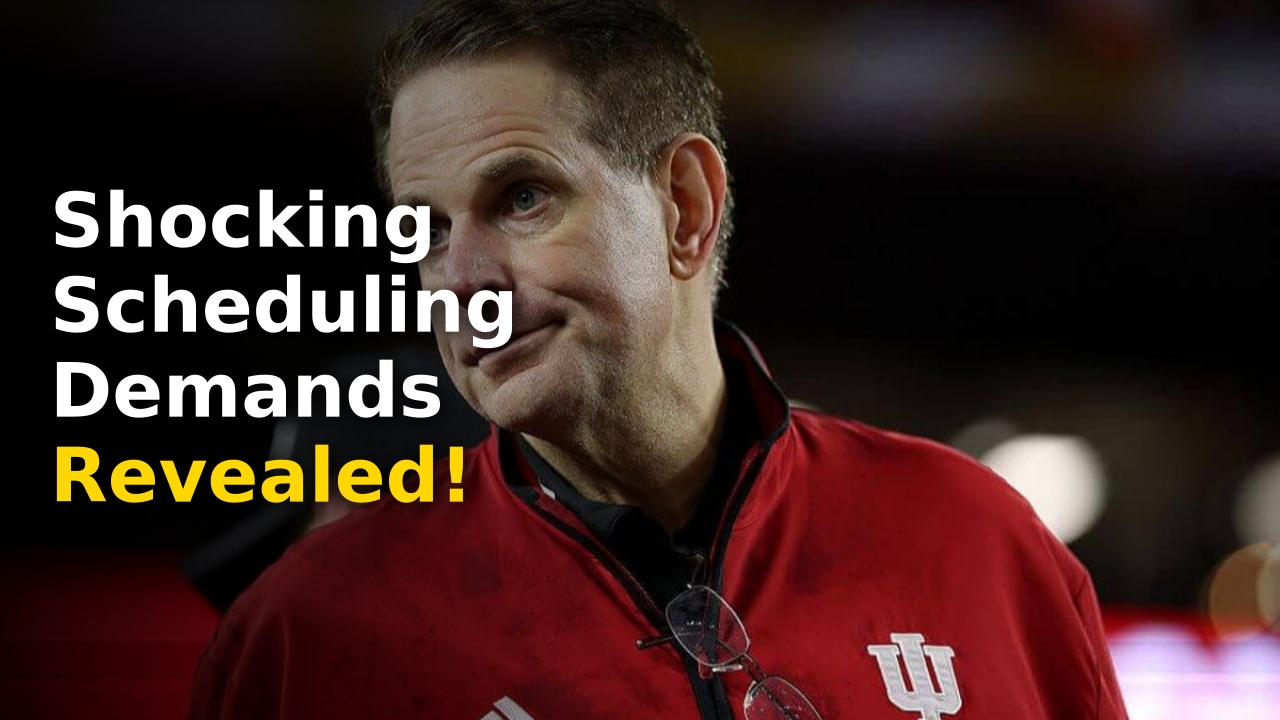
Curt Cignetti is not just a head coach; he is an agent of chaos in the modern era of college football, and his latest stance on scheduling has sent shockwaves through the sport. Whether you love his brash, no-nonsense attitude or find it polarizing, there is no denying that he is shifting the power dynamics of how programs like Indiana approach their non-conference slates. When you look at the landscape of the Big Ten and the looming presence of independent giants like Notre Dame, the question of who plays whom has never been more contentious.
You might wonder why a coach would actively seek to put a powerhouse on the schedule after previously moving to remove them, but Curt Cignetti operates on his own terms. His demand is simple yet staggering: if the Fighting Irish want to step onto the turf in Bloomington, they should be prepared to do it on the Hoosiers’ schedule, not their own. This is a bold gamble, testing the limits of what a rising program can demand from a historical brand.
Curt Cignetti: The Scheduling Strategy
The coaching philosophy at Indiana has undergone a seismic shift since Curt Cignetti took the helm. You see a man who refuses to be intimidated by history or pedigree, prioritizing the strategic advantage of his own program over traditional matchups that might offer clout but little tactical benefit. This calculated approach is what critics call arrogance and what supporters call the necessary evolution of a program that has spent too long in the shadows.
By demanding that Notre Dame visit Indiana twice for every one time the Hoosiers travel to South Bend, he is highlighting a glaring discrepancy in how independent teams navigate their seasons compared to conference-bound powerhouses. He points to the lack of a conference home for the Irish as a reason why they should play by different rules. If you are going to operate outside the system, you must be willing to bend for those who are locked into the grueling grind of the Big Ten schedule.
The backstory to these scheduling decisions is filled with corporate maneuvering and institutional ego. Cignetti is savvy enough to know that every interview, every press conference, and every tweet from the Big Ten Network is a chance to build the brand of his team. When he speaks, he is not just talking to the media; he is sending a message to athletic directors across the country that Indiana is no longer a soft touch.
This is a masterclass in psychological posturing. By setting an absurd condition, he effectively shifts the narrative. If Notre Dame refuses, he looks like the guy who stood his ground; if they agree, he secures a massive home-field advantage for his team. You can see why his players rally behind this. It instills a sense of superiority that is essential for winning championships in the high-stakes world of modern college football.
The history between these two teams is deep and often painful for Indiana supporters. With the Fighting Irish holding a dominant 24-5-1 series record, the appetite for a revenge match is high. However, Cignetti is not interested in nostalgia; he is interested in winning seasons and maximizing his team’s path to the College Football Playoff. 
The reality of the situation is that Cignetti is betting on his own momentum. After back-to-back stellar seasons in the Big Ten, the Hoosiers have the leverage they lacked a decade ago. If you want to understand the economics of the sport, you have to follow the path carved by coaches like him who treat their schedule like a chess match. For more insights on how these high-stakes negotiations impact the future of collegiate athletics, check out the latest industry analysis on elite athletic management.
The Power 4 Dilemma
- The shrinking non-conference calendar for elite programs.
- Why SEC-style scheduling is the new gold standard for success.
- The pressure of maintaining a 9-game conference schedule while chasing national titles.
- The financial implications of dropping home-and-home series against programs like Louisville and Virginia.
- The role of the College Football Playoff expansion in discouraging tough early-season games.
- Why independent status like Notre Dame‘s is becoming a liability in a landscape dominated by super-conferences.
The Math Behind the Momentum
When you break down the numbers, the intensity of Cignetti‘s demand starts to make logical sense. He is looking at a world where every single win counts toward a playoff berth, and playing a dangerous Notre Dame squad is a high-risk, high-reward endeavor. His comparison to the SEC scheduling model—where teams have traditionally opted for fewer high-profile non-conference clashes—shows that he is laser-focused on efficiency rather than pure tradition.
| Team/Conference | Avg. Strength of Schedule | Power 4 Non-Conf Games |
|---|---|---|
| Big Ten (Indiana) | 8.4/10 | 0 (current trend) |
| SEC (Post-Expansion) | 9.1/10 | 1+ |
| Notre Dame (Indie) | 7.8/10 | Varies |
The numbers reveal a coach who is acutely aware of the statistical advantages inherent in modern college football scheduling. You can see how the shift toward 9-game conference slates makes every extra game a liability. If you play at the level of the Big Ten, your schedule is already taxing enough to jeopardize your season; adding a high-profile, non-conference matchup requires a serious incentive.
It is important to remember that this isn’t just about football; it is about prestige and power. When Curt Cignetti talks about an ‘SEC philosophy,’ he is acknowledging that the game has changed from a ‘whoever, whenever’ mentality to a ‘how can we win the title’ mentality. The fans may want the big games, but the coaches want the path of least resistance to the national championship stage.
Historically, the Hoosiers have not been a program to dictate terms to a giant like the Fighting Irish. However, the last two years under Cignetti have fundamentally altered expectations in Bloomington. With a 17-1 record in Big Ten regular-season play during his tenure, he has the pedigree to back up his talk.
If you look at the 2030 and 2031 seasons, the decision to replace top-tier programs with teams like North Texas or Western Kentucky shows a clear prioritization of wins over hype. It is a controversial move, yet it is hard to argue with a winning percentage that puts Indiana in the national conversation. The strategy is clear: win the games you are supposed to win, dominate your conference, and let the playoff selection committee worry about your non-conference resume.
You might argue that this hurts the sport by diminishing the frequency of high-profile matchups. But from the perspective of an athletic director or a head coach, the risk of a single loss is far too great. This trend of insulating programs is likely here to stay as long as the College Football Playoff remains the ultimate measure of a season’s success.
The Future of Hoosier Football
Looking ahead, the tension between Curt Cignetti and programs like Notre Dame will likely remain a background story that flares up whenever scheduling announcements are made. You can expect more of these ‘demands’ as he continues to build his brand of Hoosier football. The culture he has created is one of defiance and confidence, two traits that are often in short supply for programs trying to break through the traditional glass ceiling.
He has made it clear that he isn’t afraid to walk away from a deal if the terms don’t favor his team. That kind of leverage is exactly what a program needs to elevate itself from a ‘good’ team to a ‘championship’ contender. You will likely see this pattern continue: bold statements, strategic scheduling, and a relentless focus on the results that matter most.
As we monitor the developments, keep an eye on how other Big Ten programs respond. The pressure to match this level of intensity is mounting, and the era of easy, non-conference road games may be coming to an end. It is a new day in college football, and Curt Cignetti is clearly leading the way, whether the rest of the country likes it or not.
Ultimately, the saga between Indiana and the Fighting Irish is a perfect microcosm of where the sport currently stands. It is a clash of old-school tradition versus the cutthroat, data-driven reality of the playoff era. You don’t have to agree with his methods, but you have to admire the clarity of his vision for the future.
Whether or not the game actually happens remains to be seen. But one thing is certain: Curt Cignetti will continue to be a voice that commands attention, regardless of who he is playing or where the game is held. He has ensured that Indiana is no longer just a participant in the college football world—they are a player in the game of influence.
As you watch the upcoming season, remember that every game on the schedule is part of a larger plan. For Curt Cignetti, the goal is simple: win, build, and demand the respect that the Hoosiers have earned through their dominance on the field. The path to glory is rarely easy, but it is certainly more interesting with a coach who refuses to play by anyone else’s rules.
For those interested in the deep history of the rivalry, you can read more about the Indiana-Notre Dame historical matchups to see how far the teams have evolved since the early days. It is a fascinating look at how the sport has changed over the decades to arrive at the current stalemate between Cignetti and the powers that be. We will keep you updated as more details emerge on this unfolding story of ambition and negotiation.
More Like This
For more updates, check out our latest entertainment and sports news.