Key Takeaways
| Late-Game Collapse: A devastating two-run homer by Jackson Chourio in the ninth inning secured a 4-3 extra-innings win for the Milwaukee Brewers. |
| Playoff Implications: The defeat leaves the Chicago Cubs at an 81-65 record, trailing the Philadelphia Phillies by a half-game for the top NL Wild Card spot. |
| Webb’s Recent Struggles: Reliever Jacob Webb has surrendered three crucial late-game home runs since late August, casting doubt on his high-leverage reliability. |
| Managerial Dilemma: Craig Counsell refuses to search for outside answers at Triple-A Iowa, insisting that the current eight-man bullpen must find its form. |
You might think the road to October is paved with tactical certainty, but the recent **Cubs bullpen meltdown** on September 8, 2026, proves that manager Craig Counsell’s squad is skating on dangerously thin ice. As the late-season pressure of the National League playoff race intensifies, the Chicago Cubs found themselves on the wrong side of a 4-3 extra-innings defeat against the division-rival Milwaukee Brewers. In a contest that carried the unmistakable atmosphere of playoff baseball, a late-inning lead evaporated in a matter of pitches, leaving fans and analysts questioning the structural integrity of the Cubs’ relief options.
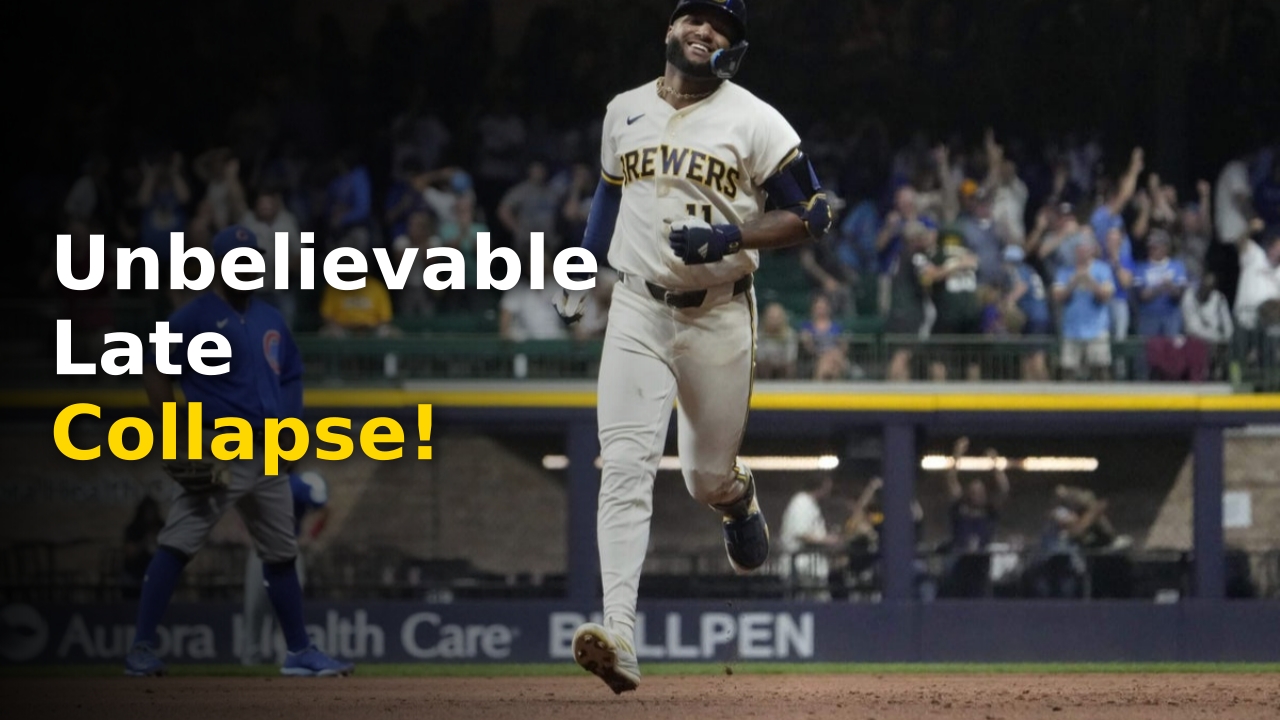
With a crucial lead in hand, Chicago seemed poised to secure a pivotal victory at Wrigley Field. Carson Kelly delivered a massive two-run double in the top of the ninth to grant the Cubs a 3-1 advantage, putting the team just three outs away from celebrating. However, the ninth inning quickly transformed into a baseball nightmare as reliever Jacob Webb struggled to find his location against a relentless Brewers lineup. After retiring the first two batters, Webb allowed a single to Christian Yelich, setting the stage for rookie sensation Jackson Chourio to launch a game-tying, two-run home run at 109.8 mph into the left-field seats.
The physical and emotional toll of this defeat cannot be overstated for a franchise targeting a deep postseason run. By dropping this tightly contested game, the Chicago Cubs fell to 81-65 on the 2026 campaign, maintaining their position just a half-game behind the Philadelphia Phillies for the coveted top wild-card spot. If you want to keep up with the latest postseason developments, you can check out MLB’s official coverage of the National League Wild Card race. To understand how the team got here, we must closely analyze the strategic fractures within the Cubs’ late-inning pitching staff.
Analyzing the Cubs bullpen meltdown in Chicago
The devastating nature of the **Cubs bullpen meltdown** highlights a deeper systemic problem that has plagued the team throughout September. For weeks, the relief corps appeared to be a functional, if not spectacular, unit that could protect slim leads. However, the recent series of failures against elite National League competition suggests that the workload and high-stress situations are finally catching up to Chicago’s arms.

When manager Craig Counsell took over the managerial duties in Chicago, he brought a reputation for masterclass bullpen optimization. Unfortunately, even the most brilliant tactical minds cannot overcome executing poor pitches in critical moments. Let us explore the individual breakdowns and regional dynamics that are currently threatening the Cubs’ postseason aspirations.
This latest **Cubs bullpen meltdown** has shifted the momentum of the Wild Card race dramatically. Every **Cubs bullpen meltdown** this season has followed a similar trajectory where lack of velocity or missing locations leaves the team highly vulnerable in late frames.
The Crashing Momentum of Jacob Webb
For nearly two months, Jacob Webb was the absolute bedrock of the Chicago Cubs relief efforts. From late June through mid-August, the veteran right-hander put together an extraordinary stretch of 24.2 consecutive scoreless innings. During this dominant run, he routinely escaped high-leverage jams and earned the complete trust of his coaching staff.
That trust has been severely tested over the last three weeks of the season. The downward spiral began on August 22 in Seattle when Webb surrendered a walk-off home run to Randy Arozarena. Just three days later in Arizona, he gave up another crushing two-run, walk-off blast to Ryan Waldschmidt. The latest blow from Jackson Chourio marks the third time in less than a month that Webb has failed to close out a victory when positioned one out away from glory.
Webb did not shy away from his struggles when speaking with reporters after the game. He admitted that poor location with his changeup—previously his absolute best pitch—has repeatedly betrayed him. The frustration was palpable as he stated he was tired of letting down his teammates, calling his recent outings completely unacceptable.
To avoid another **Cubs bullpen meltdown**, Craig Counsell must adapt his bullpen management strategy before the postseason begins. Fans are growing increasingly vocal about the frequent **Cubs bullpen meltdown** events that have cost the team crucial wins.
Assessing the Supporting Cast
Webb is far from the only arm struggling to maintain stability in the late innings. The Cubs bullpen has suffered from a collective drop-off in production, with several key acquisitions failing to deliver when it matters most. For instance, rookie reliever Ryan Zeferjahn has hit a significant wall since arriving via trade from the Los Angeles Angels.
Before the trade deadline, Zeferjahn boasted an impressive 3.66 ERA and a dominant 33.5% strikeout rate over 51.2 innings of work. Since donning the Cubs uniform, however, those numbers have dramatically worsened to a 6.23 ERA and a meager 22% strikeout rate in just 13 innings. His struggle to adjust to high-pressure situations in the National League Central has left Counsell with fewer reliable options in the seventh and eighth innings.
Similarly, Daniel Palencia has failed to reclaim his dominant form since returning from the injured list. Palencia was supposed to act as a major stabilizing force, drawing on his success during the 2025 postseason. Instead, the hard-throwing righty has surrendered runs at an alarming rate, posting an 11.81 ERA over his last 5.1 innings of work.
When we look at the root causes of the **Cubs bullpen meltdown**, it becomes clear that a lack of swing-and-miss stuff is a major issue. The front office knows that each subsequent **Cubs bullpen meltdown** decreases their playoff odds in an increasingly crowded National League field.
Regional Pressure and High Stakes in Chicago
Playing baseball in Chicago during a pennant race brings a unique level of media scrutiny and fan expectation. Every pitch is micro-analyzed by a passionate fan base that has waited to see this team return to championship caliber. You can find more comprehensive analyses on how this pressure affects players by exploring BrightCelebrity sports analysis and similar media outlets.
The organizational transition from division-leading dominance to wild-card survival has amplified the tension inside the clubhouse. Craig Counsell was signed to the richest managerial contract in Major League history specifically to win games of this magnitude. When the bullpen fails to execute, the spotlight shines directly on his strategic decisions and bullpen management.
With only 16 games remaining on the regular-season schedule, there is absolutely no margin for error. The Cubs must quickly find a way to patch the holes in their late-inning bridge, or they risk falling out of the playoff picture entirely. The psychological impact of consecutive blown leads against a division rival like the Brewers could linger long into the offseason if left unaddressed.
Chicago Cubs Bullpen Performance Metrics
To fully comprehend the extent of the relief pitching crisis, we must dive deep into the statistical reality of the current roster. The drop-off in performance from key relievers has been sudden and severe, as illustrated by their recent statistical trends. Many of these pitchers are executing identical pitch mixes as they did during their successful summer runs, but their location has dramatically suffered.
By analyzing the comparative data of the primary bullpen options, we can identify which arms are still viable for high-leverage situations. The following table highlights the stark contrast between pre-collapse metrics and current performance levels for the Cubs’ key relief pitchers during the 2026 season.
| Pitcher Name | ERA (Last 30 Days) | Strikeout Rate (%) | HR/9 Rate | High-Leverage FIP |
|---|---|---|---|---|
| Jacob Webb | 5.79 | 24.5% | 2.10 | 4.85 |
| Ryan Zeferjahn | 6.23 | 22.0% | 1.85 | 5.12 |
| Daniel Palencia | 11.81 | 18.5% | 3.15 | 7.40 |
| Aaron Civale | 1.27 | 26.8% | 0.32 | 2.15 |
Analyzing these numbers reveals a massive discrepancy between Aaron Civale’s relief work and the rest of the high-leverage unit. While Civale has excelled in a multi-inning relief role since his transition, he has not yet been consistently deployed in true save situations. Many baseball experts suggest that Counsell must immediately pivot to Civale for the ninth inning, despite his traditional starting background.
Conversely, the underlying metrics for Palencia and Zeferjahn indicate that their struggles are not merely bad luck. Their elevated FIP (Fielding Independent Pitching) scores and skyrocketing home run rates point to significant command issues. When pitches leak over the middle of the plate in late-game scenarios, modern Major League hitters will almost always punish them.
To get a broader sense of where the Cubs rank league-wide after this series of unfortunate outings, you can visit ESPN’s Chicago Cubs team hub. The collective data shows a bullpen that has dropped from the top ten in ERA down to the bottom tier over the span of just three weeks. It is clear that a single **Cubs bullpen meltdown** can ruin weeks of good starting pitching, which makes preventing another **Cubs bullpen meltdown** our top strategic priority.
Evaluating Craig Counsell Late Game Strategy
To understand the current crisis, one must evaluate the strategic blueprint of manager Craig Counsell. Known throughout baseball as a master chess player with his pitching staff during his tenure with the Brewers, Counsell has faced unique challenges in Chicago. His tactical decisions are heavily dependent on the quality of his available pieces, which have been diminished by injuries and inconsistent performances.

Counsell’s post-game press conferences have reflected a mixture of frustration and stubborn realism. He has repeatedly emphasized that the answers to the bullpen’s problems must come from within the current roster. This philosophy has sparked intense debate among sports radio hosts and analysts across Illinois, who argue that keeping the status quo is a recipe for disaster.
The strategic decisions during the actual games have also drawn intense scrutiny from analytical experts. In Monday’s loss, starting pitcher Matthew Boyd was left in the eighth inning with two runners on, only for Ryan Zeferjahn to immediately surrender the lead. In Tuesday’s loss, Webb was left on the mound to face Chourio despite showing clear signs of struggle, highlighting a potentially rigid tactical approach.
The Tactical Philosophy of Counsell
Craig Counsell has always been a manager who relies heavily on historical matchup data and modern sabermetrics. In Milwaukee, he successfully constructed “super-bullpens” by deploying unconventional pitching bridges to get the ball to elite closers. In Chicago, however, the lack of a true, dominant shutdown closer has forced him to mix and match throughout the late frames.
This committee approach works wonderfully when multiple relievers are pitching at the top of their game. But when trusted veterans like Jacob Webb hit a mental and physical wall, the entire structure collapses like a house of cards. Counsell’s current dilemma is that he has too many similar arms with high-risk profiles, leaving him with very few tactical escape routes.
Rather than panic-managing, Counsell has attempted to project a sense of calm and confidence to his players. He believes that pushing through these high-stress failures can build the essential character required for a deep postseason run. However, with the postseason just sixteen games away, some wonder if this patient approach is costing the team invaluable wins in the standings.
Behind the Numbers: The Leverage Index Fallacy
A closer look at the leverage index of Chicago’s late-inning appearances reveals a critical strategic pattern. Webb has been repeatedly placed in situations where the game’s outcome hangs entirely on a single pitch. While he succeeded in these scenarios earlier in the season, his recent physical fatigue has made him highly vulnerable to elite power hitters like Jackson Chourio.
Sports analytics tell us that relievers who rely heavily on offspeed offerings, like Webb’s signature changeup, suffer dramatically when their arm speed slows down due to late-season wear. Without the threat of an upper-90s fastball, hitters can easily sit on the changeup and generate high exit velocities. Chourio’s 109.8 mph home run is a perfect example of a hitter anticipating a soft-tossing reliever’s mistake and capitalizing on it, which contributes to a high-leverage **Cubs bullpen meltdown**.
For fans who monitor these analytical trends, trending sports updates on BrightCelebrity offer excellent breakdowns of pitch design and late-season velocity drops. If the Cubs’ coaching staff cannot help Webb regain his arm speed or adjust his pitch mix, continuing to use him in high-leverage situations is highly problematic. The statistical reality suggests that a temporary demotion to lower-leverage innings might be the only way to rebuild his confidence.
Internal Upgrades and the Iowa Pipeline
Despite Craig Counsell’s public insistence that the answers are already in the clubhouse, the front office is undoubtedly looking at Triple-A Iowa for potential reinforcements. Several intriguing options exist that could inject life into a tired pitching staff. The most notable name is veteran reliever Shelby Miller, who is currently completing his rehabilitation program following Tommy John surgery.
Miller possesses the veteran poise and postseason experience that this young Cubs bullpen desperately lacks. If his velocity and command have recovered sufficiently, he could immediately slide into a high-leverage setup role. Additionally, there are ongoing internal discussions about converting starting pitcher Edward Cabrera into a short-burst reliever for the stretch run.
Cabrera’s explosive fastball and devastating slider could play up beautifully in single-inning stints, offering the Cubs the raw power they currently lack. Furthermore, if ace Justin Steele can build up enough stamina, his presence in the late innings could provide a massive emotional and tactical boost. While Counsell downplays these minor league options to protect the confidence of his current roster, practical baseball logic suggests that help must arrive soon.
Historical Context of Chicago Bullpen Failures
This is not the first time that the passionate fans of the Chicago Cubs have experienced late-season anxiety due to a relief pitching crisis. Historically, the franchise has endured several monumental collapses down the stretch that were directly caused by a fatigued bullpen. To understand the gravity of the current situation, we must examine how past teams handled similar late-season adversity.
During the historic 2016 championship season, the Cubs faced similar questions regarding their bullpen stability before acquiring elite closer Aroldis Chapman. The heavy reliance on Chapman during the World Series showcased how a single dominant arm could mask other relief deficiencies. Without a similar elite presence on the 2026 roster, Counsell must rely on a collective group effort to secure the final nine outs of each game.Conversely, older Cubs fans will painfully remember the late-season collapses of 1969 and 2003, where relief pitching and defensive miscues derailed promising campaigns. While those eras were entirely different in terms of strategy and player usage, the emotional toll on the fan base remains identical. Modern analytics have changed how managers deploy their pitchers, but the fundamental requirement of executing high-pressure pitches remains unchanged.By comparing the current struggles of Jacob Webb to past late-inning meltdowns, we see that fatigue is almost always the common denominator. Relievers are asked to perform at peak physical levels for six consecutive months, making physical regression almost inevitable for some. The challenge for Craig Counsell is to identify this regression early enough to prevent it from completely tanking the team’s playoff aspirations, and comparing them to this season’s **Cubs bullpen meltdown** offers deep insight into modern bullpen building flaws.
People Also Ask
What happened with the Chicago Cubs game today?
The Chicago Cubs suffered a devastating 4-3 extra-innings loss to the Milwaukee Brewers after reliever Jacob Webb surrendered a game-tying, two-run home run to Jackson Chourio in the bottom of the ninth inning with two outs.
Why is the Cubs bullpen meltdown trending right now?
The Cubs bullpen meltdown is trending because it marks the third major late-game blown save for reliever Jacob Webb since late August, severely threatening the Cubs’ chances of securing the top wild-card spot in the National League postseason race.
How does this loss affect the Cubs wild-card standings?
Following the extra-innings defeat, the Cubs fell to an 81-65 record. They remain just a half-game behind the Philadelphia Phillies for the top wild-card seed, but their lead over lower-seeded wild-card contenders has shrunk significantly.
Who are the potential bullpen call-ups for the Cubs from Triple-A Iowa?
Potential options include veteran reliever Shelby Miller, who is finishing his Tommy John surgery rehabilitation, as well as a potential bullpen conversion for starting pitcher Edward Cabrera and additional depth from the minor league roster.
Overcoming the Cubs bullpen meltdown Crisis
Ultimately, the path forward for the Chicago Cubs requires a delicate balance of emotional resilience and tactical flexibility. While the sting of consecutive blown saves against division rivals is incredibly painful, the postseason race is far from over. If you want to keep up with more exclusive insights into how the front office plans to navigate this critical stretch, check out exclusive baseball features on BrightCelebrity for inside team coverage.
Craig Counsell’s belief that these difficult moments can serve as a powerful catalyst for growth will be put to the ultimate test over the next two weeks. For veterans like Jacob Webb, finding the physical adjustments necessary to locate his changeup is paramount. For the rest of the pitching staff, stepping up to fill the void left by struggling teammates will define their 2026 legacy.
The talent within this Cubs roster is undeniable, but talent alone does not win high-stakes games in late September. It is time for the coaching staff to make the hard, necessary decisions regarding pitcher roles and usage. If they can successfully navigate this sudden and frustrating **Cubs bullpen meltdown**, the lessons learned in these agonizing defeats could be the very fuel that drives a deep, successful postseason run in October.
More Like This
For more updates, check out our latest entertainment and sports news.