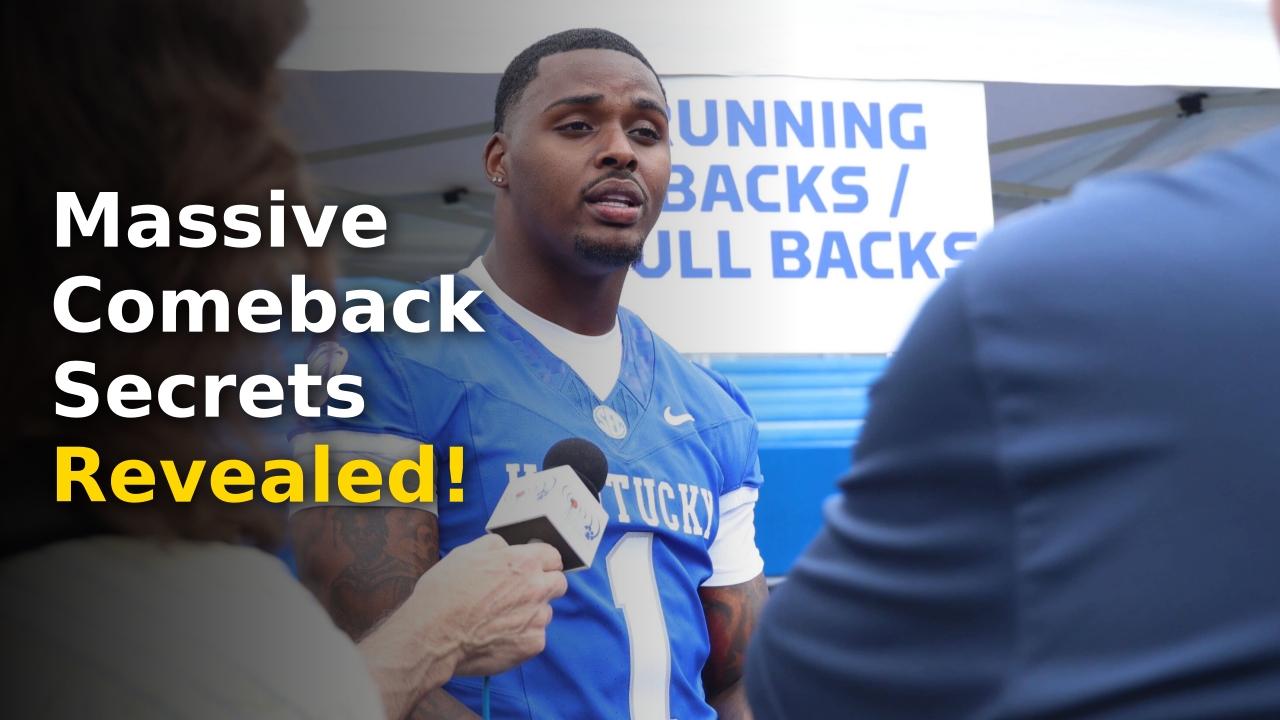
Comeback Player lists often fly under the radar, but for the 2026 Kentucky Wildcats, three specific athletes represent the grit and determination required to transform a program overnight. You are looking at a pivotal moment in SEC history where injury-plagued stars are not just returning to the gridiron—they are hunting for redemption and hardware.
When you consider the volatility of college football, few things are as inspiring as a player refusing to let a season-ending injury define their legacy. Whether it is a torn ACL or a devastating shoulder surgery, these men have spent more time in the training room than in the spotlight, and their hunger is reaching a fever pitch.
Understanding The Comeback Player Mission
The Comeback Player of the Year Award is more than just a trophy; it is a testament to the resilience of the human spirit in high-stakes athletics. Established in 2018, this honor recognizes those who battle through the physical and psychological toll of major injuries. You have to realize that for these Kentucky Wildcats, the road back to the field involved grueling rehab sessions that most fans never see.
For players like CJ Baxter Jr., the struggle began with a multi-ligament disaster in 2024. Losing an entire year of development is a psychological blow that forces a player to re-evaluate their entire career trajectory. Aaron Gates faced a similar uphill battle, enduring multiple shoulder surgeries that threatened to derail his transition to a new defensive system. When you look at these players, you aren’t just seeing stats; you are seeing survivors.
The selection process itself is a rigorous gauntlet managed by the College Sports Communicators and the Associated Press. Because the panel consists of seasoned writers and sports directors, they don’t just look at yardage or tackles; they look at the narrative of the return. To win this, a player must impact their team’s success in a way that is statistically measurable and emotionally resonant.
This award serves as a beacon of hope for younger recruits who suffer setbacks early in their careers. When an athlete like Sam Greene recovers from a torn ACL to become a top-tier SEC edge rusher, he sets a standard for the entire locker room. His 75.8 grade from Pro Football Focus proves that recovery is possible if you maintain an elite level of discipline.
You must understand that the modern game is faster and more physical than ever before. For a defensive back like Aaron Gates, playing the “star” position requires incredible burst and lateral agility. To perform that role after a torn labrum and previous ACL history is essentially defying medical expectations. It’s a level of athleticism that borders on the superhuman.
If you want to track the latest movements in the NIL space or follow high-profile athletes, keep an eye on sports career updates to see how these stars translate their on-field success into long-term branding. The intersection of sports science and athlete rehabilitation is becoming a massive industry. These three players represent the bleeding edge of that evolution, proving that the right support system and mental fortitude can override even the most severe physical trauma.

The Psychological Advantage Of Returning
- Mental Toughness: Overcoming the fear of re-injury during high-impact plays.
- Film Study: Utilizing downtime to master the playbook from the sidelines.
- Mentorship: Using the recovery period to provide leadership to younger teammates.
- Adaptability: Learning new defensive schemes like the “star” position while limited physically.
Statistical Breakdown Of The Trio
Data tells the story that the eye test sometimes misses, especially when dealing with players who have missed significant time. Below is a snapshot of the career performance metrics for our three Comeback Player contenders. You can see the trajectory they are on, even with the setbacks that interrupted their development over the last few seasons.
| Player Name | Primary Position | Key Career Metric | Status |
|---|---|---|---|
| CJ Baxter Jr. | Running Back | 855 Rushing Yards | Starter Hopeful |
| Aaron Gates | Defensive Back | 34 Career Tackles | Star Position |
| Sam Greene | Outside Linebacker | 6.0 Tackles for Loss | Edge Mainstay |
These numbers highlight the raw potential held by each athlete. CJ Baxter Jr., despite his injury, maintains an impressive 4.5 yards per carry average. If he hits his stride in 2026, he could easily eclipse his previous career marks. For Sam Greene, his 2.0 sacks and consistent pressure metrics make him an invaluable asset for the Kentucky front seven.
When you look at the SEC landscape, these players are not just fighting for an award; they are fighting for a chance at professional opportunities. The NFL draft scouts keep a close eye on the Comeback Player lists as a proxy for evaluating a prospect’s ceiling when things go wrong. Resilience is a highly sought-after intangible in the pro ranks.
The role of the “star” position for Aaron Gates is particularly interesting because it requires a hybrid skill set. You need the coverage ability of a cornerback and the tackling power of a linebacker. Having the physical tools is one thing, but having the mental capacity to process that position while having just returned from surgery is elite.
We have to appreciate the medical advancements in modern surgery. Just ten years ago, a multi-ligament knee tear for CJ Baxter Jr. might have been a career-ender. Today, with state-of-the-art orthopedics and specialized nutrition, athletes are coming back stronger and faster than before.
The competition is fierce. Other schools across the nation are also nominating their own athletes who have faced adversity. However, having three players from the same program on the watch list says a lot about the culture at Kentucky. They aren’t just recruiting talent; they are recruiting high-character individuals who refuse to quit.
As the season progresses, you will want to track the “Total Yards from Scrimmage” for Baxter and the “QB Hurries” for Greene. These will be the primary metrics that catch the attention of the media panel. If Kentucky continues to win, their chances of securing another winner—following J.J. Weaver and Kenneth Horsey—increase significantly.

The Impact Of Elite Training
You might wonder how these athletes maintain their explosive speed after months of stationary rehab. It comes down to a sophisticated blend of biomechanics and neuromuscular training. Athletes are now working with specialists who focus on “returning to play” by emphasizing movement patterns that protect the surgical site while maximizing output.
The Kentucky Wildcats training facility has become a hub for high-performance recovery. By integrating cryotherapy, advanced physical therapy, and mental health resources, they have created a sanctuary for injured stars. This environment is likely why you see so many players successfully returning to their previous form.
For a player like Sam Greene, his training involves a heavy emphasis on explosive lower-body movements that allow him to fire off the edge. If he can maintain that 75.8 PFF grade, he will likely be the most impactful defensive player on the squad. The science behind his recovery is likely a major talking point in the locker room.
The nutritional side cannot be overstated. Modern players are monitored for inflammatory markers that can prolong recovery times. They are eating for cellular repair and hormonal balance to ensure that the muscles surrounding their joints stay engaged and supportive of the reconstructed ligaments. This is a game of marginal gains.
Beyond the physical, there is the social aspect. Being part of a team allows these players to stay grounded during the most frustrating parts of their recovery. When you see your teammates grinding on the field every day, it pushes you to work even harder in the training room. This camaraderie is the secret sauce that fuels many of these historic comebacks.
If you are a fan of high-level college football, you are watching history unfold this season. The 2026 season could be defined by which players successfully return to their peak form. We are rooting for these Kentucky legends as they look to secure the ultimate recognition of their journey.
Refining Your Perspective On Talent
We often treat athletes like commodities, forgetting the human cost of the sport they play. When we analyze a Comeback Player, we are forced to see them as individuals. Their stories are a reminder that success is rarely a straight line; it is a series of pivots and recovery cycles.
For the 2026 Wildcats, the message is clear: adversity is inevitable, but failure is optional. By keeping three players in the conversation for this award, Kentucky is setting a tone for the rest of the conference. They are saying that they don’t just win with talent—they win with iron-willed determination.
You should keep a close eye on their performance during high-pressure games. This is where the mental training meets the reality of the gridiron. Can CJ Baxter Jr. make that cut at full speed? Can Aaron Gates wrap up in the open field? These are the moments that will ultimately define their comeback stories.
Whatever the outcome, these men have already achieved something special by making the list. They have proven that their resolve is just as strong as their physical skills. This is the essence of college football in the modern era.
The future looks bright for these three, and regardless of who takes home the trophy at the Vrbo Fiesta Bowl, their impact on the program is cemented. They are true examples of the Comeback Player spirit that keeps fans coming back year after year.
Finally, as we look toward the conclusion of the 2026 season, remember that every tackle, every yard, and every snap represents a victory against the odds. Keep supporting these athletes, as their journey through the 2026 season promises to be one of the most compelling narratives in recent sports history.
More Like This
For more updates, check out our latest entertainment and sports news.