Key Takeaways
| NFL games have a ‘show to conclusion’ rule that college football currently lacks. |
| The 1968 ‘Heidi Game’ remains the foundational trauma for US sports broadcasting. |
| Weather delays are the #1 cause of broadcasting shifts to lower-carriage networks like ESPNEWS. |
| Contractual obligations for international events, like the US Open, often override football games. |
You are sitting on your couch, heart racing as your team enters the final minutes of a nail-biter, when suddenly the screen flickers and a completely different game appears. **College Football Overruns** are the ultimate nightmare for die-hard fans, representing a chaotic intersection of rigid television schedules and the unpredictable nature of live sports. While you might assume network executives are simply out of touch, the reality behind these sudden channel switches involves a complex web of multi-million dollar contracts, distribution limits, and decades-old protocols. In the fast-paced world of sports media, every minute of airtime is a commodity, and when games stretch beyond their allotted windows, the fallout can lead to national outrage and viral social media backlash.
The frustration felt by fans is palpable, especially when a high-stakes, competitive match is relegated to a secondary channel with significantly lower distribution. For many, the switch feels like a betrayal of the emotional and time investment made over the course of three and a half hours. However, as industry veterans point out, these decisions are rarely made on a whim. They are the result of calculated contingency plans designed to balance the needs of multiple fanbases, advertisers, and contractual partners. Understanding why your favorite game was moved requires a deep dive into the history of sports television and the logistical hurdles that networks face every Saturday during the fall.
The Evolution of College Football Overruns
The history of sports broadcasting is littered with incidents where timing went horribly wrong, but none are more infamous than the ‘Heidi Game’ of 1968. On November 16, the **New York Jets** and the **Oakland Raiders** were locked in a fierce AFL battle that ran longer than NBC anticipated. At exactly 7:00 p.m. ET, the network cut away from the game to air the children’s movie *Heidi*. In the final minute that viewers missed, the Raiders scored two touchdowns in nine seconds to win 43-32. The ensuing public outcry was so severe that it permanently changed how professional sports are broadcast in the United States. It led to the ‘show to conclusion’ rule, ensuring NFL fans would never again miss the end of a game for scheduled programming.
Unfortunately for fans of the amateur ranks, **College Football Overruns** are not governed by the same ironclad rules. Unlike the NFL, which maintains centralized control over its broadcasting standards, college football involves a fragmented landscape of conferences, networks, and localized agreements. This lack of a universal ‘show to conclusion’ mandate means that networks like ESPN, Fox, and CBS must make real-time triage decisions when a game’s duration threatens the start of the next scheduled event. These decisions often involve shifting games to ‘overflow’ channels like ESPNEWS, ESPN2, or the network’s digital app, much to the chagrin of viewers who may not have access to those specific platforms.
Former network executives, including Bob Thompson, the former President of Fox Sports Networks, explain that these moves are rarely about ‘disliking’ a particular team. Instead, they are about maximizing the ‘start-of-game’ experience for the next audience. When a network has a marquee matchup scheduled for a 3:30 p.m. or 7:30 p.m. window, they are under immense pressure to ensure that game starts on the primary feed. If an earlier game is delayed by lightning or high-scoring offenses, the network must choose between making the new audience wait or moving the finishing game to a smaller platform. In the world of high-stakes media, the ‘new’ audience often wins out, especially if they represent a larger market or a more lucrative advertising demographic.
The Role of Weather and Timing
Weather is the most common disruptor of the college football Saturday schedule. Lightning delays, which are frequent during the early weeks of the season in the South and Midwest, can push a three-hour window into a five-hour ordeal. When a game like Oregon State vs. Houston suffers a 30-minute lightning delay in the third quarter, it creates a domino effect that impacts every subsequent game on that channel. Networks must then decide whether to delay the kickoff of a major brand like the Texas Longhorns or move the tail end of the current game to a secondary network. The logistical nightmare only compounds as the day progresses, much like flight delays at a major airport hub.
Inside the Control Room Decision Process
Who actually makes the call to pull the plug on a broadcast? It isn’t a single person hiding behind a curtain, but rather a collaborative effort between the Coordinating Producer and Senior Programming executives. These individuals are tasked with monitoring game clocks across all network feeds and assessing the ‘relative importance’ of the events. During his tenure at Fox Sports, Bob Thompson noted that networks use preset parameters to guide these decisions. For example, a blowout game is almost always moved to an overflow channel, whereas a one-score game in the final two minutes might be allowed to finish on the main feed, even if it delays the next kickoff by a few minutes.
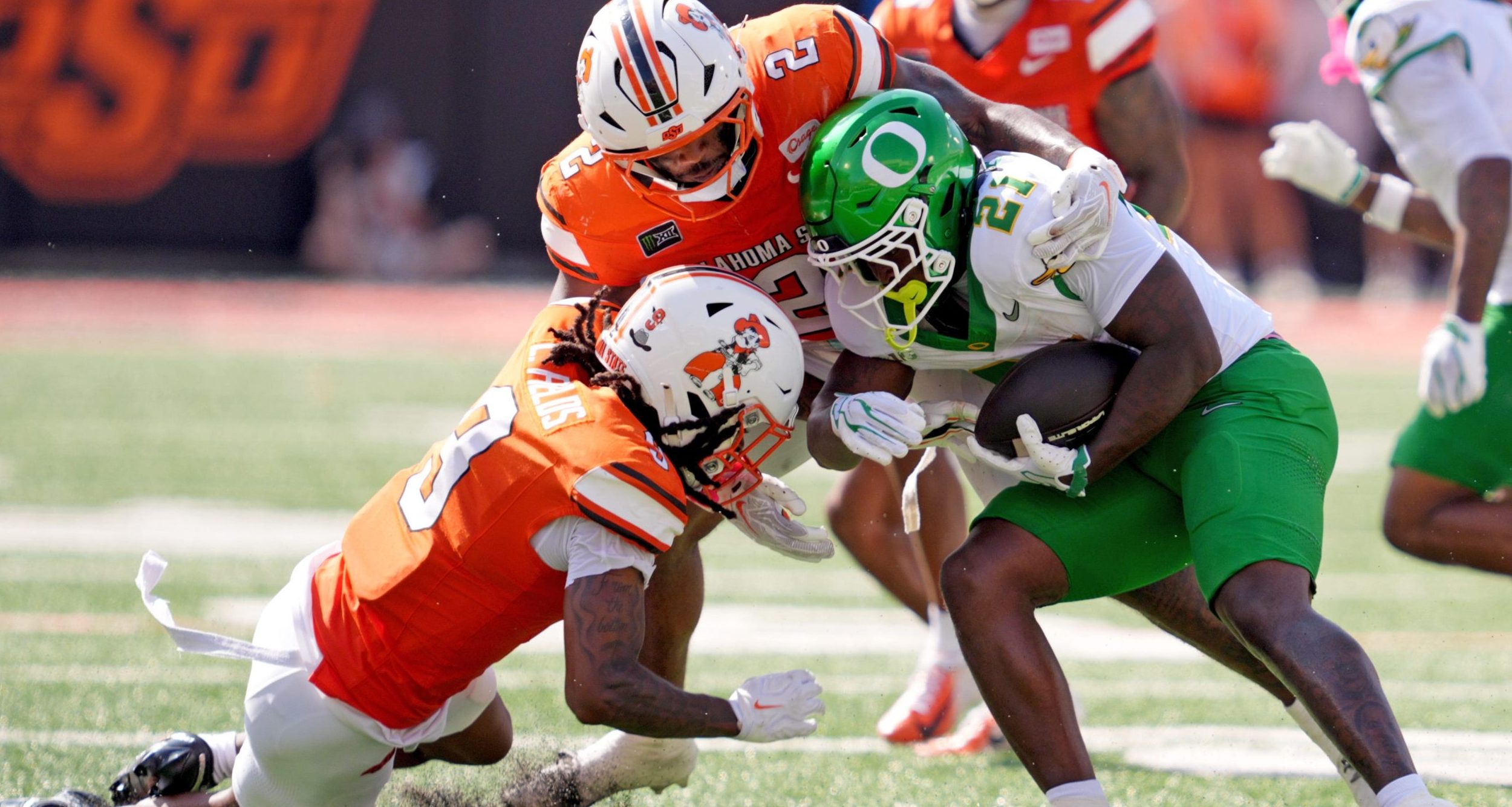
However, the calculation changes when a ‘hard-start’ event is involved. Events like the US Open women’s singles final or Wimbledon are distributed internationally and have rigid start times that a domestic sports network cannot easily alter. This was the case during a recent Oregon vs. Oklahoma State game, which was shifted to ESPN2 and then ESPNEWS because ESPN was contractually obligated to begin its tennis coverage at a precise time. In these scenarios, the network’s hands are tied by global media rights agreements that supersede the local interest in a college football game. Fans may feel the network is ‘stupid,’ but from a legal and financial standpoint, the network is often fulfilling a mandatory contractual obligation.
The digital age has introduced a new layer to this decision-making process. Networks now point to their streaming apps as a universal solution for fans who lose access to a game on linear TV. While the ESPN App or Fox Sports App allows fans to continue watching, this assumes the viewer has a stable internet connection, a compatible device, and the technical savvy to switch platforms mid-game. For many older fans or those in rural areas with limited broadband, the ‘move to the app’ is effectively a blackout. This technological gap remains a significant point of contention between sports media giants and their loyal customer bases.
Programming Moves and Distribution Data
To understand the impact of these shifts, we must look at the carriage numbers for various sports networks. When a game moves from a flagship station to an overflow channel, it loses millions of potential viewers instantly. This is why the ‘outrage’ is so localized to the fanbases of the teams involved. Below is a breakdown of how recent high-profile **College Football Overruns** were handled by major broadcasters and the platforms involved.
| Primary Game | Reason for Delay | Destination Channel | Replacement Event |
|---|---|---|---|
| Oregon State vs. Houston | 30-min Weather Delay | ESPNEWS / App | Texas vs. Texas State |
| Oregon vs. Oklahoma State | 90-min Weather Delay | ESPN2 / ESPNEWS | US Open Finals |
| Texas A&M vs. Arkansas | General Overrun | ESPNEWS | Texas vs. Kentucky |
| UCF vs. Pitt | 65-min Weather Delay | ESPNEWS / App | ESPN2 Overflow |
As the table illustrates, ESPNEWS is the most frequent ‘dumping ground’ for games that run long. The problem is that ESPNEWS is available in roughly one-third fewer homes than the main ESPN feed. When a network moves a competitive game there, they are knowingly cutting off a massive portion of their audience. This is often a calculated risk based on the popularity of the ‘incoming’ game. For instance, the **Texas Longhorns** and the emergence of stars like Arch Manning drive massive ratings, making them a higher priority for the network’s primary real estate than a mid-tier non-conference game between two smaller brands.

The Financial and Contractual Moat
In the world of high-level exclusive sports media insights, money and contracts dictate every frame of video. The US Open tennis tournament, for example, provides over 170 hours of live linear programming for ESPN. The financial investment required to secure these rights is astronomical, and the network must protect that investment by adhering to strict broadcast windows. When a football game runs long, the network faces a choice: upset 500,000 football fans or violate a multi-million dollar contract with the USTA that impacts global advertisers. The choice, while frustrating for the fan, is obvious for the executive.
Expert Take: The Logistics of the ‘Flip’
By the numbers, the complexity of a Saturday ‘flip’ is staggering. A network like ESPN might be managing a dozen games simultaneously across ESPN, ESPN2, ABC, ESPNU, and the SEC Network. When one game hits a 90-minute delay, it doesn’t just affect that one channel; it affects the crew’s travel, the local affiliate commercial breaks, and the lead-in ratings for the next six hours of programming. The ‘Expert Take’ here is that networks are increasingly prioritizing the ‘clean start’ over the ‘clean finish.’ Research shows that viewers are more likely to tune in at the exact scheduled start time of a game than they are to stick around for the end of a game they weren’t originally watching. Therefore, protecting the 4:00 p.m. kickoff of a major brand is statistically more valuable than letting a 1:00 p.m. game conclude its final four minutes on the same channel.
Background and Historical Context of Game Overruns
To truly understand the modern frustration with **College Football Overruns**, one must look back at how the sports landscape has shifted since the 1960s. During the era of the ‘Heidi Game,’ there were only three major networks and no cable. If a game was cut, it was gone forever. Today, we live in an era of ‘infinite’ shelf space thanks to digital streaming. Paradoxically, this has made networks bolder in their decision to cut away from games, as they can claim the game is still ‘available’ elsewhere. However, this ignores the fragmentation of the audience and the differing carriage rates between premium and basic cable tiers.
Moreover, the length of college football games has increased significantly over the last two decades. Changes in clock rules, the proliferation of the ‘hurry-up’ offense, and the increased frequency of replay reviews have pushed the average game length from three hours to nearly three and a half hours. This creeping duration makes it nearly impossible for networks to fit back-to-back games into a three-and-a-half-hour window without a high risk of overlap. Despite various NCAA attempts to shorten games—such as the 2023 rule change where the clock continues to run after first downs (except in the final two minutes)—the sheer number of commercial breaks required to pay for massive television rights deals ensures that games remain longer than ever.
The ‘Arch Manning Effect’ is another modern variable. In today’s college football’s biggest brands, certain individuals or programs command such high social media engagement and ‘hate-watching’ numbers that networks will move mountains to ensure they are on the main screen. When Texas A&M and Arkansas—two traditional powerhouses—were moved to ESPNEWS to make room for a Texas vs. Kentucky blowout, it signaled a shift in priorities. Networks are now leaning into ‘star power’ and ‘brand value’ more than the competitive integrity of the game currently in progress. This trend is likely to continue as media rights fees for the SEC and Big Ten continue to skyrocket, forcing networks to cater to their biggest ‘investments.’
People Also Ask
What happens when college football games run long?
When a game exceeds its allotted time, networks typically move the remaining minutes to an overflow channel like ESPNEWS or a digital app to ensure the next scheduled game can start on the primary feed. This decision is based on contractual obligations and the ratings potential of the upcoming matchup.
Why does the NFL have a Heidi rule but college football does not?
The NFL ‘show to conclusion’ rule was established after the 1968 Heidi Game outrage to ensure fans never miss the end of a game. College football lacks a single governing body for TV rights, meaning each network operates under its own flexible contingency plans rather than a universal mandate.
How do networks decide which game to prioritize during a delay?
Executives analyze the game’s competitive status, the brands involved, and the contractual requirements of the next event. High-draw programs like Texas or Arch Manning are often given priority on the main channel over smaller-market games, especially during weather-related scheduling conflicts.
Where can I watch a game if it is moved from ESPN?
Games moved due to overruns usually migrate to ESPNEWS, ESPN2, or the ESPN App. Networks generally provide on-screen tickers and social media updates to inform fans of the new channel location during the transition.
The Future of College Football Overruns and Fan Experience
As we look toward the future of trending media controversies, the issue of game overruns remains a significant hurdle for traditional linear television. The tension between the rigid schedule of a cable grid and the fluid nature of live sports is reaching a breaking point. Some industry analysts suggest that the eventual move toward full-scale streaming of all major sports could solve the problem. In a world where every game is an individual ‘stream’ rather than a ‘channel slot,’ the concept of an overrun becomes obsolete. You simply watch your game until it ends, regardless of what other games are doing.
However, we are not there yet. For now, fans must contend with the ‘whiplash’ of switching channels and navigating apps. Networks would be wise to adopt more consistent contingency plans, such as those used by the NFL, to preserve the integrity of the viewing experience. As Bob Thompson suggested, if a major brand like Texas is scheduled to follow a delayed game, the smarter move might be to start the Texas game on a secondary channel and keep the finishing competitive game on the main feed. This would reward the fans who have already ‘invested’ hours in the broadcast while only mildly inconveniencing those just tuning in.
Ultimately, the problem of **College Football Overruns** is a byproduct of the sport’s massive success and the billions of dollars flowing through it. As long as advertisers are willing to pay premium prices for ‘start-of-game’ windows and networks are juggling dozens of games at once, the ‘Heidi’ risk will remain. For the fan, the best defense is a fast internet connection and a pre-downloaded streaming app, as the era of the ‘hard-switch’ is far from over. Whether it’s a lightning strike in Houston or a five-overtime thriller in the Big Ten, the chaos of the college football clock continues to be the most unpredictable opponent on the field.
More Like This
For more updates, check out our latest entertainment and sports news.