Club Survival seemed like a distant dream when the 21-day deadline was first announced, but the resilience of Durham WFC proved everyone wrong. You might wonder how a club on the absolute brink of total collapse manages to turn the tide in just a few weeks. The story of Durham’s rescue is not just about money; it is about the heart of North East football and the unwavering loyalty of its leaders. Imagine being Sarah Wilson, a captain who has dedicated 12 years to one badge, only to be told the doors might close forever.
You can feel the weight of that uncertainty, the kind of ‘horrendous’ pressure that keeps athletes awake at night. This wasn’t just a threat; it was a public declaration that the club would ‘cease operations’ if a savior didn’t emerge. But in a plot twist worthy of a Hollywood script, the club found its footing. This resurgence marks a significant chapter for the Women’s Super League and its secondary tier, showing that the sport’s infrastructure is both fragile and fiercely protected.
As you dive into the details of this rescue, you’ll see how Geoff Thompson stepped in to change the trajectory of an entire community. The local businessman and South Shields FC co-owner didn’t just bring funds; he brought a sense of stability. This article breaks down exactly how the Club Survival was achieved and what the future looks like under a high-profile new manager. It is a tale of grit, local pride, and the professionalization of women’s sports in England.
Club Survival: A 21-Day Miracle
The Club Survival of Durham WFC began with a chilling statement on June 8. The board was transparent: find fresh investment within 21 days or fold. For a club that has been ever-present in WSL2 since 2014, this was a doomsday clock. You have to understand the impact of such an announcement on the players. They weren’t just playing for points; they were suddenly playing for their livelihoods and their professional identities.
Sarah Wilson, the veteran captain, described the period as ‘horrendous.’ For two weeks, the squad was left in a state of limbo, not knowing if they were ‘coming or going.’ This is where the psychological aspect of the 7 C’s of communication comes into play. The club had to remain clear and concise with the little information they had. Wilson notes that information was shared when possible, which helped keep the squad from splintering under the pressure.
The turnaround was swift. By the end of June, Geoff Thompson and his co-investors stepped in to acquire a majority stake. This wasn’t just a financial transaction; it was a lifeline for the entire North East. The Club Survival was solidified when the deal was signed, allowing the team to shift focus from bankruptcy to the transfer market. You can almost feel the ‘huge weight’ being lifted off the shoulders of everyone involved in the organization.
Beyond the immediate financial injection, this rescue preserved dozens of jobs. It wasn’t just the starting eleven at risk. Think about the coaching staff, the physios, the administrative workers, and the young girls in the academy. If Durham had folded, the pathway for talent in the region would have been severed. The success of this Club Survival effort ensures that the next generation still has a pinnacle to aim for in their own backyard.
What makes this even more impressive is the speed of the transition. Within weeks of being saved, the club was already announcing a new manager. This proactive approach shows that the new ownership isn’t just looking to exist; they are looking to compete. You see a club that went from the ‘awful time’ of mid-June to the ‘breath of fresh air’ that is the current pre-season atmosphere.
Now, as the club prepares for the 2026 campaign, the focus has shifted entirely. The trauma of the summer has been replaced by a clinical, professional outlook. Wilson’s assertion that it feels like ‘nothing’s ever happened’ is a testament to the seamless integration of the new investment. This is the gold standard for how to handle a financial crisis in modern football.
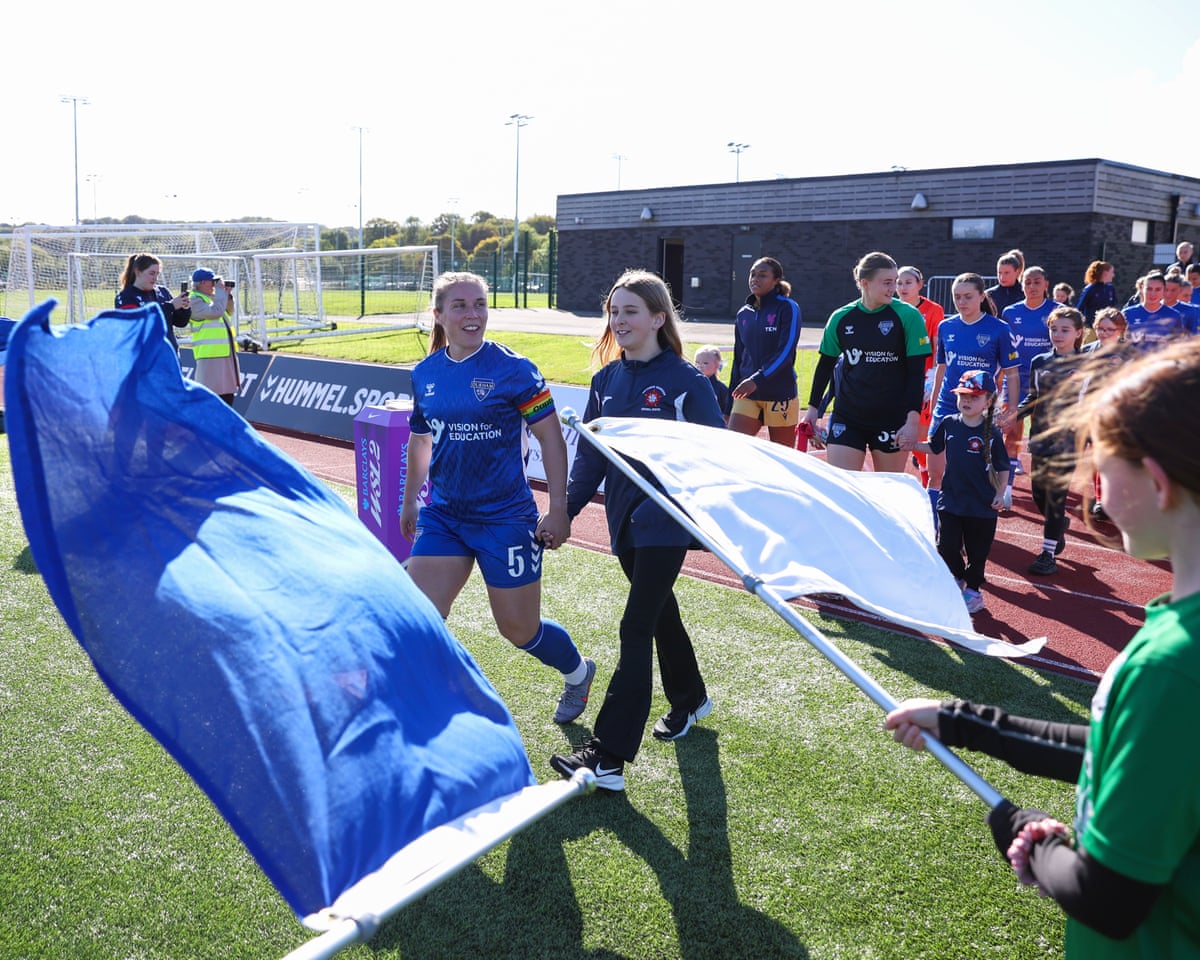
The Ticking Clock
- June 8: The club issues a public warning regarding its future operations.
- June 15: Anxiety peaks as no lead investor is publicly confirmed.
- June 29: The official rescue by Geoff Thompson is finalized.
- July: Willie Kirk is appointed as the new head coach.
- September 6: The new season officially kicks off against Southampton.
The Captain’s Loyal Heart
Sarah Wilson is more than just a captain; she is the soul of Durham WFC. Having played for the club for 12 years, she has seen the highs of promotion battles and the lows of financial instability. When you think about Club Survival, you have to think about the individuals who refuse to let the fire go out. Wilson spent her summer not just training, but acting as a support system for her teammates.
She recalls the ‘uncertainty’ as the hardest part to stomach. As a leader, you are expected to have answers, but in June, there were none. Wilson’s role shifted from tactical leader to emotional anchor. She stayed in constant contact with the squad, offering reassurance even when she was personally worried. This level of dedication is why she remains one of the most respected figures in the Women’s Super League 2.
The relief she expressed wasn’t just for her own career. She spoke passionately about the ‘young kids coming through’ who would have been affected. For Wilson, the Club Survival means that the 12 years she invested in the club weren’t in vain. It means the culture she helped build—one of grit and North East toughness—gets to continue for another generation.
When the news finally broke that the club was safe, the shift in energy was instantaneous. Wilson described it as an ‘incredible’ feeling. You can see how the ‘horrendous’ period served as a crucible, forging a stronger bond between the players and the badge. They aren’t just a team anymore; they are survivors who know exactly what it’s like to nearly lose everything.
Her praise for the new ownership is telling. She credits the club for the ‘absolute credit’ of moving from a difficult position to a position of strength so quickly. This isn’t just PR talk; it’s the genuine gratitude of a player who saw the abyss and was pulled back at the last second. Wilson’s leadership will be crucial as they navigate the higher standards set by the new regime.
As they look toward the Southampton match, Wilson is leading with a ‘really positive’ outlook. The ‘huge weight’ is gone, and in its place is a hunger to prove that Durham belongs at the top. You can check out more about the personal lives and careers of players like Sarah at bright celebrity profiles, where the stories behind the athletes come to life.
The Willie Kirk Era
The appointment of Willie Kirk is perhaps the clearest sign that Durham is entering a new, elite phase. Kirk is a name synonymous with high-level coaching in the UK. His resume includes stints at Everton, Leicester City, and Bristol City. He even served as an assistant at Manchester United. This is not the profile of a manager you hire if you are just looking to survive the drop.
Kirk’s arrival has brought a ‘completely different new standard’ to the club, according to Sarah Wilson. When you bring in someone from an elite background, they don’t just change the drills on the training pitch; they change the entire culture. From nutrition to video analysis, every aspect of the club is being leveled up. This is the byproduct of a successful Club Survival strategy—bringing in the best to ensure the crisis never repeats.
After being sacked by Leicester in March 2024, Kirk spent time in Sweden managing Linköping and Djurgårdens IF. This international experience has likely broadened his tactical horizon. His return to English football with Durham is a fascinating subplot for the 2026 season. You have to wonder how his ‘incredible experience’ with ‘top players’ will translate to a Durham side that is hungry to climb the WSL2 table.
The players’ reaction to Kirk has been overwhelmingly positive. The moment the news of his appointment was shared, the mindset shifted to: ‘Right, OK, when do we start?’ This immediate buy-in is rare and speaks to Kirk’s reputation. He isn’t just a coach; he’s a statement of intent. The Club Survival has effectively paved the way for a professional revolution at Maiden Castle.
Kirk’s first big test comes on September 6 against Southampton. This isn’t just a game; it’s a showcase of the ‘new Durham.’ With a manager who understands the intricacies of the women’s game at the highest level, the tactical preparation is expected to be leagues ahead of previous seasons. You should expect a more disciplined, aggressive, and technically proficient Durham side under his guidance.
For Kirk, this is a chance at redemption in the English leagues. For Durham, it’s a chance to shed the ‘underdog’ tag and become a powerhouse. The synergy between a hungry manager and a club that just escaped death is a dangerous combination for any opponent. The Club Survival was the spark; Willie Kirk is the fuel that could turn Durham into a legitimate contender for promotion.

Kirk’s Managerial Milestones
- Bristol City: Established himself as a top-tier tactical mind.
- Everton: Led the Toffees through a period of significant growth.
- Manchester United: Gained elite experience as an assistant coach.
- Leicester City: Managed in the top flight before moving to Sweden.
- Durham WFC: His first major English role since returning from Djurgårdens IF.
Economic Impact of Survival
The financial side of the Club Survival story is equally compelling. Geoff Thompson’s intervention was not just a charitable act; it was a strategic investment. By acquiring a majority stake, Thompson has integrated Durham WFC into a broader sporting vision for the North East. His experience with South Shields FC provides a blueprint for sustainable growth and community engagement.
The ‘horrendous’ period of June was essentially a market correction. The club realized it could no longer operate on its previous model if it wanted to stay in the WSL2. The entry of professional investors means more rigorous financial oversight. This is good news for the league as a whole, as it stabilizes one of its most consistent members. You are witnessing the ‘big business’ era of women’s football taking hold even in the second tier.
Consider the ‘massively affected’ jobs Wilson mentioned. When a club survives, the local economy breathes a sigh of relief. Matchday revenue, local sponsorships, and hospitality all rely on the club’s existence. The Club Survival of Durham WFC ensures that local businesses around Maiden Castle continue to benefit from the bi-weekly influx of fans and visiting teams.
Moreover, the investment allows the club to improve its facilities. To attract a manager like Willie Kirk, the infrastructure must be up to par. This means better pitches, better medical rooms, and better scouting networks. All of this costs money, and the new investment group seems prepared to provide it. The Club Survival was the first step; the second is building an empire.
The North East has always been a hotbed for football talent, but often that talent migrates south or to the US. With a stable and ambitious Durham WFC, more local girls can stay close to home while playing at an elite level. This social impact is immeasurable but vital for the region’s identity. The Club Survival is, in many ways, a victory for the entire community.
As you look at the figures, the investment from Thompson and his partners represents one of the most significant private injections into a WSL2 club this year. It sets a precedent for other clubs facing similar ‘horrendous’ struggles. Survival is possible, but it requires a clear vision and a willing partner. Durham found both just in time.
Vital Statistics and Data
Understanding the context of this Club Survival requires a look at the hard data. The following table highlights the key metrics that define the club’s current standing and its path forward. From historical performance to the new leadership structure, these figures tell the story of a club reborn.
| Category | Detail | Significance |
|---|---|---|
| Club Name | Durham WFC | North East powerhouse since 2014. |
| Captain | Sarah Wilson | 12 years of loyalty and leadership. |
| New Owner | Geoff Thompson | Lead investor for club survival. |
| Head Coach | Willie Kirk | Elite experience (Everton, Leicester). |
| Home Opener | vs Southampton | Scheduled for September 6, 2026. |
| Previous Rank | 10th (WSL2) | Foundation for the new management. |
Club Survival: Future Growth Prospects
The journey from ‘horrendous’ uncertainty to Club Survival is complete, but the real work is only beginning. You are now looking at a Durham WFC that is better funded and better coached than perhaps any other time in its 12-year history. The focus is no longer on simply remaining in the division; it’s about pushing the boundaries of what a community club can achieve in the professional era.
With Willie Kirk at the helm, the tactical expectations are sky-high. He is known for building teams that are hard to beat but also exciting to watch. The integration of his ‘elite background’ will likely lead to a surge in season ticket sales and local interest. This is the positive feedback loop that Club Survival creates—stability leads to quality, which leads to growth.
Sarah Wilson’s role will continue to be vital as the bridge between the old Durham and the new. Her ability to mentor younger players and maintain the club’s core values will ensure that the fresh investment doesn’t dilute the team’s identity. She is the living proof that loyalty pays off in the end. As the squad prepares for Southampton, the atmosphere is ‘really exciting’ and ‘really positive.’
Looking at the broader landscape, Durham’s story is a wake-up call for the WSL2. It highlights the need for sustainable investment and the risks of a precarious financial model. However, it also proves that there are investors like Geoff Thompson who see the intrinsic and commercial value of women’s football. This Club Survival saga will likely be studied by other clubs looking to professionalize.
As you watch the new campaign unfold, keep an eye on the ‘breath of fresh air’ that Wilson described. The team is playing for more than just victory; they are playing for the future of their club. The nightmare of June is a fading memory, replaced by the elite standards of the present. Durham WFC didn’t just survive; they evolved.
In the end, the Club Survival of Durham WFC is a testament to the people who refuse to give up. From the captain who stayed to the owner who stepped in, it was a collective effort. The North East remains a bastion of football, and on September 6, the world will see a club that is stronger, faster, and more resilient than ever before.
More Like This
For more updates, check out our latest entertainment and sports news.