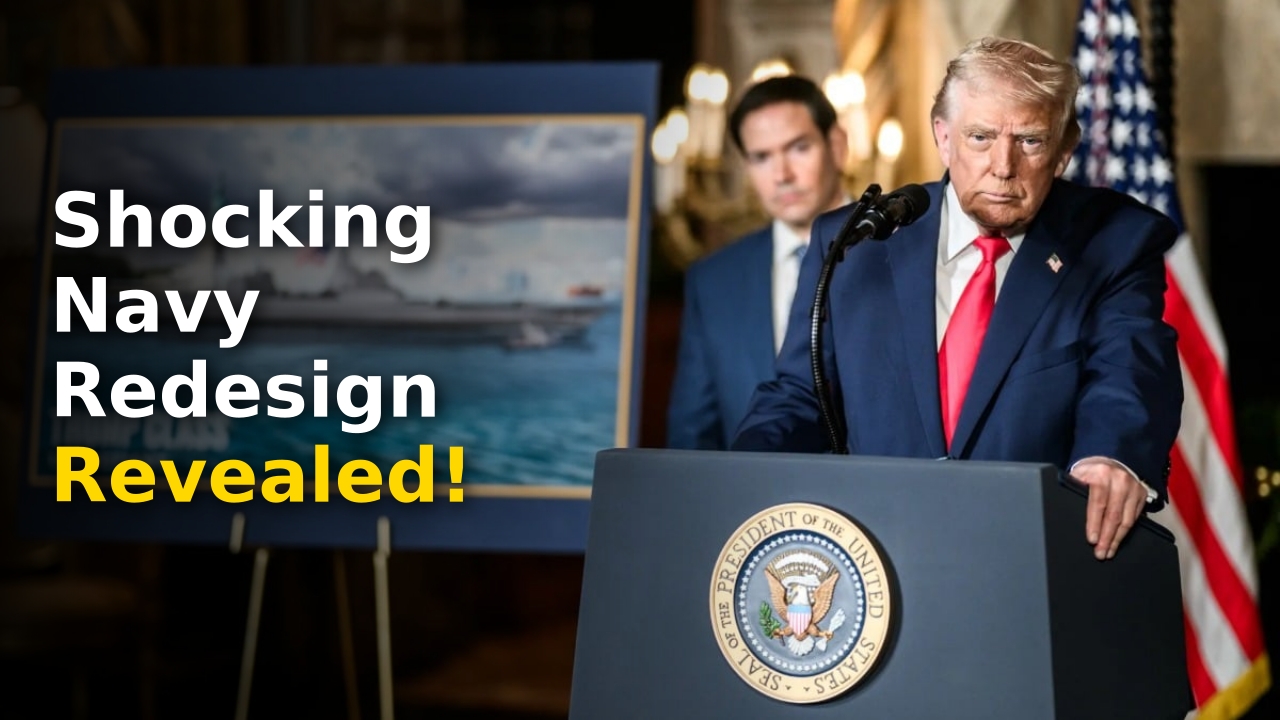
Carrier Design is currently facing a massive, multibillion-dollar overhaul that has sparked a heated debate between the White House and the Pentagon. Would you spend $22 billion on a warship just to change how it looks? You might find yourself questioning the logic behind the latest internal review by the U.S. Navy, which aims to satisfy the aesthetic preferences of President Trump. This isn’t just about a fresh coat of paint; it is a fundamental shift in the architecture of the world’s most powerful naval vessels.
The core of this controversy revolves around the “island,” the multistory command center that sits on the flight deck. In modern Ford-class carriers, this tower is positioned toward the rear to maximize space for aircraft. However, the Washington Post reports that the administration wants this tower moved back to the center of the ship to mirror the iconic look of World War II era warships. While the President envisions a classic silhouette, naval engineers are sounding the alarm about the practical consequences of such a move.
As the Navy conducts this review, the stakes could not be higher for the USS Enterprise and the USS Doris Miller. These ships are already in various stages of construction, and a sudden pivot in Carrier Design could lead to catastrophic delays. For those following the latest political shifts at Bright Celebrity, it’s clear that the intersection of government and military engineering is becoming increasingly complex. You have to wonder if the pursuit of a specific look is worth the potential loss in combat efficiency.
Carrier Design Controversy

The decision to revisit Carrier Design stems from a desire to return to a more traditional naval aesthetic. President Trump has reportedly expressed concern that the current Ford-class vessels don’t look “right.” This aesthetic preference has prompted the Navy to evaluate the feasibility of moving the island tower toward the middle of the vessel. While this might seem like a simple move, the island is the nerve center for flight-deck operations, navigation, and tactical command. It is the brain of the ship, and moving it is a massive undertaking.
Bryan Clark, a former Navy officer now at the Hudson Institute, warns that this change is far from easy. He noted that altering the layout of a 100,000-ton ship would significantly impact its buoyancy and weight distribution. You can’t just slide a skyscraper across a deck and expect the ship to float perfectly. Such a change is described as “very disruptive” to the ongoing engineering work. The physics of Carrier Design are meticulously balanced, and shifting the center of gravity could require a total redesign of the hull.
The island’s current placement on the starboard side, further aft, was a deliberate choice. It was designed to create more “parking” space for aircraft near the catapults. This allows crews to reduce the time it takes to launch jets, which is critical during high-intensity combat operations. By moving the island forward, the Navy would be cutting into the efficiency that sailors rely on to win battles. It is a classic battle between form and function, where the form is being prioritized by the highest office in the land.
Former maritime strategist Hunter Stires didn’t hold back his criticism of the proposal. He argued that these ships are built to win in combat rather than to win a “beauty pageant.” Stires described the effort as “wasteful and abusive,” suggesting that it indulges “aesthetic whims” at the expense of taxpayer dollars. According to The Hill, he even went so far as to say this move exemplifies a contempt for the sailors who actually operate these massive machines. For the men and women on the USS Gerald R. Ford, the layout is a matter of safety and speed.
The timeline for this review is tight, with results expected in just several weeks. This fast-tracked evaluation suggests that the White House is serious about seeing these changes implemented quickly. However, Navy engineering organizations are already stretched thin. Redesigning a capital ship that costs more than some small countries’ GDP is a task that usually takes years, not weeks. The pressure to conform to a vision of the past is creating a rift in current naval planning.
You also have to consider the ripple effect on the shipbuilding industry. Trump has promised to resurrect American shipbuilding and has issued executive orders to that effect. But if the Navy is constantly redesigning its core ships, the yards may face even more delays. Consistency in Carrier Design is usually the key to keeping costs down and production schedules on track. Shifting gears now could send shockwaves through the entire defense industrial base.
Key Structural Concerns
- Buoyancy Balance: Shifting the island affects the ship’s stability in heavy seas.
- Flight Deck Workflow: Moving the command tower reduces aircraft parking space near the catapults.
- Landing Safety: Current placement reduces air turbulence for incoming fighter jets.
- Engineering Redundancy: Rerouting cables and pipes for a moved island costs billions.
- Weight Distribution: The hull must be reinforced to handle the shift in massive weight.
- Construction Delays: Ships like the USS Enterprise would need significant rework.
- Resource Drain: Engineering hours are diverted from modernization to aesthetic changes.
Cost of Aesthetics
The financial implications of changing the Carrier Design are staggering. According to the Congressional Budget Office in August 2026, each Ford-class carrier is already estimated to cost around $22 billion. That is before any major redesigns are factored in. When you account for the engineering hours and the physical rework required to move an island tower, those costs could skyrocket by billions more. It is a heavy price to pay for a ship to look more like a 1940s warship.
This isn’t the first time this change has been considered. During the President’s first term, a similar study found that the cost and time required were “extraordinary.” The Navy essentially shelved the idea because it was deemed impractical. Now, the idea has returned with renewed vigor. You are seeing a direct clash between the fiscal reality of the Pentagon and the visual branding of the White House. Every dollar spent on aesthetics is a dollar not spent on advanced weaponry or sailor training.
Beyond the island, the President has also directed the Navy to ditch the new electromagnetic catapult system (EMALS). A national security memorandum issued on a recent Thursday mandated a return to steam catapult systems. While steam is a proven technology used for decades, EMALS was designed to be more reliable and easier on the airframes. Reverting to steam involves ripping out high-tech systems and reinstalling massive steam pipes and boilers, a move that officials say could cost another billions of dollars.
The Navy has already begun “moving out” on options to meet the President’s intent. This means that despite the internal pushback, the gears of bureaucracy are turning to accommodate these changes. It’s a complex dance where the Navy must try to fulfill the Commander-in-Chief’s vision while maintaining a functional fleet. The risk is that the fleet of the future becomes a collection of expensive, under-performing hybrids that look great in a parade but struggle in a conflict.
Rear Adm. Paul Lanzilotta, a former captain of the USS Gerald R. Ford, has previously explained the benefits of the current layout. He noted that the extra room in front of the island allows aircraft more space to line up before taking off. If a pilot needs to troubleshoot a system, they have the space to do it without blocking the entire flight deck. This operational flexibility is a direct result of the modern Carrier Design. Taking that away means pilots have less margin for error during critical missions.
The push for these changes is also part of a larger plan to introduce new classes of ships. Last year, the administration unveiled plans for Trump Class battleships. These vessels are intended to project American power in a way that feels traditional and imposing. However, military analysts remain skeptical. They argue that in an era of long-range missiles and drone swarms, the “look” of a ship matters far less than its stealth and defensive capabilities. The focus on Carrier Design aesthetics may be a distraction from the evolving nature of maritime warfare.
Naval Design Comparison
| Design Feature | Modern Ford-Class | Proposed WWII-Style |
|---|---|---|
| Island Location | Aft (Rear) Starboard | Midships (Center) |
| Catapult Tech | Electromagnetic (EMALS) | Traditional Steam |
| Parking Space | Maximized near bow | Reduced by 15-20% |
| Landing Deck | Low turbulence zone | Increased wind swirl |
| Estimated Cost | $22 Billion (Current) | $25+ Billion (Projected) |
Combat Power Analysis

When you look at the primary mission of an aircraft carrier, it is all about “sortie generation.” This is the speed at which a ship can launch and recover aircraft. Every minute saved on the deck translates to more firepower in the air. The modern Carrier Design was engineered specifically to increase this rate. By moving the island and reverting to steam, the Navy risks slowing down its most potent weapon. In a real-world conflict, that extra time could be the difference between victory and defeat.
The current placement of the island also improves landing safety. Pilots coming in for a landing face less turbulence when the tower is further back. If the tower is in the middle, it creates a “burble” of air that can toss a landing jet around. Modern Carrier Design has spent decades refining the aerodynamics of the flight deck to protect pilots and their $100 million aircraft. Sacrificing this safety for a “classic look” is a gamble that many in the Pentagon are unwilling to take.
As defined by major historical records, these vessels serve as mobile airbases that must be optimized for the most advanced jets in the world, like the F-35C. These planes have specific requirements for deck space and electronic support. Shifting back to a WWII layout might not just be an aesthetic change; it could make it impossible to operate the next generation of stealth fighters effectively. The ship’s internal infrastructure, from data cables to fuel lines, is all mapped to the current layout.
There is also the human element to consider. The crews of these ships train for years based on the current configuration. Changing the layout of the flight deck mid-stream means thousands of sailors would need to be retrained. It creates a chaotic environment where deck handlers and pilots must learn a new rhythm on a ship that was supposed to be a standardized class. This instability is what led Hunter Stires to call the move “abusive” to the fighting sailors of America.
The White House, however, maintains that its vision will lead to a more robust and intimidating fleet. By focusing on “proven, reliable, and affordable technologies,” the administration argues it is protecting the American taxpayer from the “boondoggles” of high-tech experimentation. They see the EMALS system and the aft-island as examples of over-engineering that has led to cost overruns and delays. In their view, a return to basics is the only way to get the Navy back on track.
As the debate rages, the Navy remains concerned about the potential for significant delays. If the USS Enterprise or USS Doris Miller are forced into a redesign, they might not enter the fleet until the 2030s. This leaves a gap in American power projection at a time when global tensions are high. The Carrier Design controversy is more than just a disagreement over style; it is a fundamental debate about the future of U.S. national security and the role of the President in military engineering.
Future Carrier Design
The path forward for Carrier Design remains uncertain as the Navy concludes its internal review. Will the service stand its ground on the current operational benefits, or will it bend to the aesthetic desires of the White House? You can expect the final report to be a landmark document that defines the U.S. fleet for the next fifty years. If the changes are implemented, we will see a literal throwback to the era of the Greatest Generation, brought to life with 21st-century technology.
Ultimately, the Carrier Design of the Ford-class represents the peak of modern engineering. Every inch of the USS Gerald R. Ford was planned with combat efficiency in mind. While the “look” of a ship is a powerful symbol of national pride, the ability of that ship to protect its sailors and launch its aircraft is what truly matters in a crisis. As August 18, 2026 marks a turning point in naval history, the world will be watching to see if the U.S. Navy prioritizes the beauty of the past or the power of the future.
Whether you agree with the President’s vision or side with the Navy’s engineers, the cost of this transition will be felt for generations. The Carrier Design of the next decade is being written today in the halls of the Pentagon and the White House. As we move closer to the completion of the USS Enterprise, the final shape of American naval power hangs in the balance. One thing is certain: the debate over how our warships look is just getting started, and the price tag is only going up.
More Like This
For more updates, check out our latest entertainment and sports news.