
Brink War: The Diplomatic Tension of the Cold War
Brink War remains a defining narrative of the 20th century, capturing the intense psychological maneuvering between Ronald Reagan and Mikhail Gorbachev. You will find that these high-stakes discussions were not merely political; they were deeply human exchanges occurring at a time when the world stood on the edge of destruction. Understanding the context of this Brink War era is essential for anyone interested in how global superpowers once navigated their mutual distrust.
As you explore the history of the Reagan-Gorbachev meetings, you see that the threat of nuclear annihilation created a unique pressure cooker for leadership. The Brink War period was defined by the relentless buildup of ballistic missiles and the terrifying reality of potential global fallout. Consequently, the upcoming film sheds light on how these two individuals managed to pierce through the rhetoric of their respective regimes.
You are likely aware that modern politics often feels polarized, making the history of the Brink War even more relevant today. By examining how Reagan and Gorbachev found common ground, the film seeks to offer a template for contemporary leaders. Therefore, this story is not just about the past; it is a vital exploration of the necessity of diplomatic courage in the face of insurmountable odds.
The narrative of the Brink War provides a lens through which we can view the current geopolitical shifts. With China pursuing an unprecedented military buildup, the lessons learned in the 1980s are more critical than ever. As you read further, consider how the Brink War influenced the eventual de-escalation that defined the late twentieth century.
The Reykjavik Summit: A Moment of Frozen Diplomacy
The Reykjavik summit stands as the pivotal event within the Brink War timeline, where both leaders pushed their diplomatic boundaries to the extreme. You might imagine the freezing Icelandic air mirroring the icy relationship between the Soviet Union and the United States at that time. It was here, inside a modest building, that the Brink War narrative shifted from pure hostility toward a cautious, fragile curiosity.
Director Michael Gunn emphasizes that the Brink War story is fundamentally about two men choosing to talk despite the overwhelming pressure to strike. For you, this serves as a reminder that human connection can occasionally triumph over ideological rigidity. The Brink War was ultimately a struggle for the soul of the international order, and Reykjavik was its most intense trial.
If you look closely at the declassified transcripts, the Brink War details become startlingly clear. These documents, provided by Secretary George Schultz, reveal that the two leaders were often closer to total agreement than history previously suggested. Thus, the Brink War was defined by near-misses and significant emotional breakthroughs that reshaped the global landscape.
Throughout this Brink War drama, you see Reagan fighting his internal doubts while Schultz acts as a grounding force. This dynamic adds layers of complexity to the Brink War film, elevating it from a standard biopic to an character study. Through this [Internal Link: Cold War History], you gain a broader perspective on the specific policies that were on the table during those fateful days in Iceland.
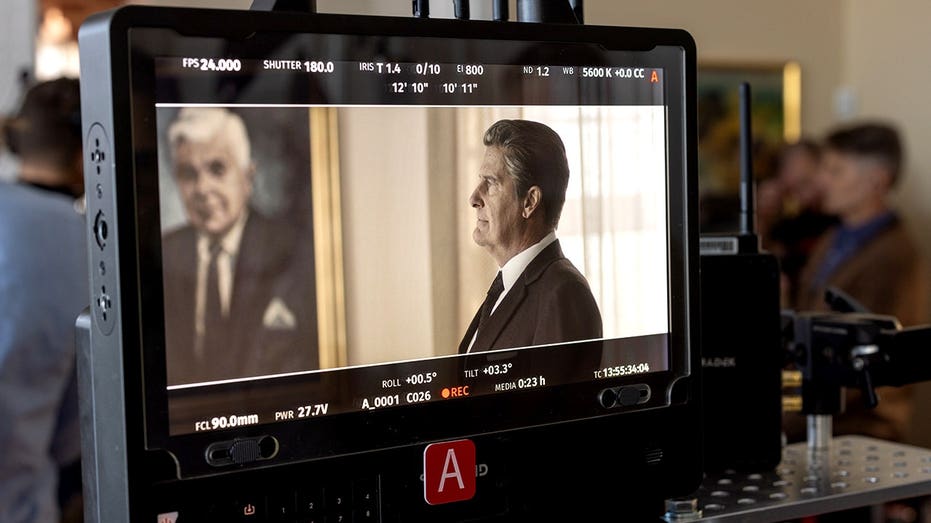
Jeff Daniels and the Portrayal of President Reagan
Jeff Daniels takes on the monumental task of portraying Reagan during the peak of the Brink War era. You will notice his performance captures the quiet intensity required to navigate the complexities of international nuclear policy. Portraying a figure as iconic as Reagan during a Brink War crisis requires a delicate balance of strength and vulnerability, which Daniels seems to deliver in the footage seen so far.
Jared Harris, playing Gorbachev, provides the necessary foil to Daniels, making their onscreen interaction the heartbeat of the Brink War film. The chemistry between them highlights the friction that defined the Brink War, yet hints at the emerging trust that eventually led to historic treaties. For viewers, this interaction is the key to understanding the human side of nuclear disarmament.
Behind these performances is a rigorous commitment to historical accuracy, fueled by the Brink War production team’s access to original materials. Every line of dialogue in the film is meant to echo the actual intensity experienced during the Brink War summits. Consequently, you are witnessing an attempt to recreate a pivotal historical chapter with unprecedented authenticity.
As you watch the film, remember that the Brink War was fought not just on paper, but in the minds of these leaders. The actors have studied the body language and temperament of their counterparts to bring the Brink War to life. This dedication ensures that the audience feels the weight of the decisions made during these intense, hours-long negotiations.
The Role of George Schultz in Historical Diplomacy
Secretary of State George Schultz was perhaps the most influential figure behind the scenes of the Brink War, acting as the architect of the diplomatic thaw. You can see his impact in the way he coached Reagan through the intense negotiations of the Brink War meetings. Without his strategic vision, it is highly probable that the Brink War would have continued toward a far more catastrophic conclusion.
His interviews with director Michael Gunn provided the film with its most intimate details regarding the Brink War discussions. By sharing these personal accounts, Schultz ensures that the truth about the Brink War is preserved for future generations. You should appreciate how his public service, even decades later, continues to provide insights into modern statecraft.
The Brink War film is dedicated to Schultz, a testament to his role in facilitating the first arms reduction agreement in human history. His legacy is deeply intertwined with the Brink War, as he advocated for direct communication even when the political tide was against it. Thus, his story is as much a part of the Brink War as the summit itself.
For those interested in how history is recorded, the Brink War narrative serves as a masterclass in diplomacy. By tracking his advice, you learn how critical it is for leaders to have trusted advisors during a Brink War crisis. His influence remains a gold standard for international relations experts studying the period.
Comparing the Brink War Era to Modern Conflicts
Today, as we analyze current global tensions, the Brink War serves as a cautionary tale and a guide. You might wonder if modern leaders have the same capacity to sit in a room and seek common ground, as was done during the Brink War. The film argues that if they could talk in the 1980s, then surely leaders today can find a path to peace in the midst of a new Brink War.
However, the differences between the Cold War and our current era are significant, which is why the Brink War perspective is so valuable. We live in a world where information spreads instantaneously, unlike the slower, more deliberate pace of the Brink War years. Yet, the core requirement—the courage to engage—remains a constant across all eras of conflict.
The film suggests that the Brink War teaches us that strength and peace are not mutually exclusive. If we remain strong but seek genuine partnership, we can avoid the escalation that leads to a modern Brink War. This lesson is intended for you to take out of the theater and apply to how you view today’s headlines.
By highlighting the disappointments Reagan faced, the Brink War film shows that peace is not an easy or linear process. It requires persistent effort even when progress seems impossible. Therefore, the Brink War acts as an inspiration, proving that even at the edge of the abyss, dialogue is the best weapon available.
Key Summits: A Historical Breakdown
To fully grasp the magnitude of the Brink War, one must look at the progression of meetings that occurred throughout the 1980s. The following table outlines the critical steps that led to de-escalation, effectively tempering the immediate threat of a Brink War breakout.
| Meeting Location | Year | Key Outcome |
|---|---|---|
| Geneva | 1985 | Establishment of initial trust |
| Reykjavik | 1986 | Serious arms reduction discussions |
| Washington | 1987 | Signing of the INF Treaty |
You can see that the road to peace was long, with many stops between the start of the Brink War and the ultimate resolution. Each meeting brought Reagan and Gorbachev closer to understanding their opponent’s motivations during the Brink War. By viewing these events sequentially, you gain a better appreciation for the slow, grinding nature of high-level diplomacy.
The INF Treaty was a major turning point, liquidating a whole class of weapons that had fueled the Brink War anxiety for decades. Without the persistence shown during the Brink War, this historic agreement would likely never have come to fruition. It serves as evidence that even in the most toxic environments, progress can occur.
As you study this table, consider the immense preparation that went into each Brink War summit. These were not casual meetings; they were carefully choreographed events involving thousands of staffers and researchers. The Brink War was a massive logistical challenge that ultimately pivoted on the personal chemistry of two individuals.
The Significance of the INF Treaty
The INF Treaty represents the most tangible success to emerge from the Brink War discussions. For you, it is vital to understand that this treaty was the first time two powers voluntarily destroyed an entire class of nuclear weapons. This effectively turned back the clock on the Brink War and provided a roadmap for future arms control.
Before this, the Brink War had seen an endless expansion of arsenals on both sides. The treaty changed the logic of the Brink War, shifting it from an race of accumulation to one of reduction. Even today, the principles established by the INF Treaty remain relevant to the security architecture of the Western world.
You might be surprised to learn that the treaty was not universally popular at the time. Many hardliners argued that the Brink War necessitated more weapons, not fewer. However, Reagan and Gorbachev stood firm, prioritizing the long-term stability of the globe over the short-term demands of the Brink War hawks.
The success of the treaty proved that the Brink War could be managed through smart, targeted diplomacy. By eliminating intermediate-range weapons, the leaders reduced the chances of a sudden, accidental Brink War outbreak. It remains a hallmark achievement in the history of international safety and cooperation.
The Cultural Impact of Cold War Documentaries
The release of films about the Brink War reflects a growing public interest in historical transparency. You are likely interested in these stories because they bridge the gap between abstract politics and human reality. By bringing the Brink War to the screen, creators allow you to experience history as a personal journey rather than just a dry lecture.
Furthermore, these documentaries are vital for educating the younger generation about the reality of the Brink War. They ensure that the sacrifices made during the 1980s are not forgotten in the shuffle of modern news cycles. The Brink War story serves as a foundation for our understanding of contemporary power dynamics.
You may also appreciate the trend toward declassifying Brink War-era documents for public consumption. This transparency allows for a more honest assessment of what happened behind closed doors. As more secrets of the Brink War are revealed, we can better appreciate the complexities involved in maintaining world peace.
If you enjoy learning about this period, many similar films and books are available that cover different facets of the Brink War. Each contribution adds to our collective memory, ensuring that the lessons of the past remain fresh. The Brink War continues to influence modern filmmakers who see it as a goldmine for dramatic tension and historical value.
The Psychology of Power: A Lesson for Leaders
At its core, the Brink War teaches us about the psychology of power and the burden of global responsibility. Reagan and Gorbachev, despite their vast ideological differences, had to overcome deep-seated prejudices to address the Brink War. This internal psychological struggle is perhaps the most fascinating element for you to consider as you watch their story unfold.
The Brink War forced these men to realize that a ‘winner’ in a nuclear conflict would be an empty title. Once they understood this fundamental truth, the Brink War dynamic began to change in earnest. For any leader, this is the most crucial realization: the preservation of humanity must outweigh the pursuit of political victory during a Brink War.
You might find it interesting that the most productive moments of the Brink War were often the quiet ones. When the press was locked out, and the cameras stopped rolling, real progress occurred in the small, private rooms. This highlights that the most important aspects of the Brink War were those that happened away from the public gaze.
Ultimately, the Brink War serves as a psychological model for conflict resolution. It demonstrates that empathy—not just strategy—is required to bridge the widest divides. As you navigate your own life and challenges, the story of the Brink War stands as a powerful testament to the influence of honest engagement.
Conclusion: Why the Brink War Story Still Matters
In conclusion, the story of the Brink War is an enduring epic that demands our attention. As we face new challenges, the lessons from the Reagan-Gorbachev meetings provide a necessary sense of hope. You can walk out of the theater believing that even if we are currently at a metaphorical edge, dialogue can still pull us back from the Brink War.
We have explored the history, the actors, and the geopolitical context that made the Brink War such a defining moment. By keeping this history alive, we ensure that we do not repeat the mistakes that initially brought the world to the Brink War. Your engagement with these stories is the final piece of the puzzle.
The upcoming film about the Brink War is more than just entertainment; it is an educational experience. It asks you to consider your own role in seeking peace and understanding in your community. When you look at the world today, keep the memory of the Brink War in mind as a benchmark for what diplomacy can achieve.
Finally, thank you for exploring this fascinating historical chapter. As you prepare to watch the film, remember that the Brink War was won not on the battlefield, but through the hard, often painful work of talking. May we always find the courage to keep that conversation going, no matter how close to the Brink War we may feel.
More Like This
For more updates, check out our latest entertainment and sports news.