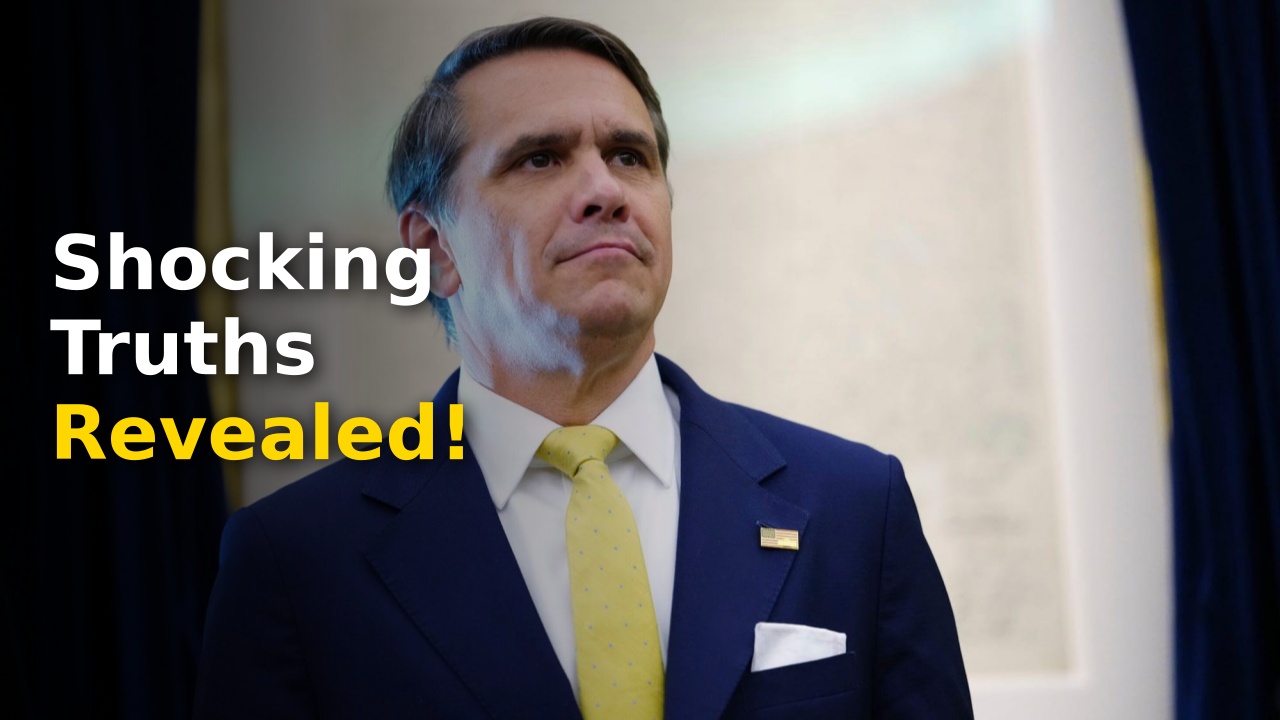
The upcoming Blanche confirmation vote is sending massive shockwaves through the halls of Congress as lawmakers prepare for a historic showdown. You are witnessing one of the most intense political battles of the decade, with the future leadership of the nation’s justice system hanging in the balance. Will the Senate confirm Donald Trump’s controversial nominee, or will a handful of defectors derail the entire plan?
As political insiders scramble to secure votes, the intense debate surrounding this crucial Blanche confirmation has captured the undivided attention of millions. Legal analysts and party strategists are working overtime behind closed doors to calculate the exact numbers needed to cross the finish line.
With tension mounting on Capitol Hill, every public statement from undecided moderate senators is being parsed for clues. Here is everything you need to know about this highly anticipated political event and how it will reshape the American legal landscape.
Political Firestorm Erupts
The nomination of Todd Blanche to serve as Attorney General of the United States has ignited a fierce debate across the entire political spectrum. Critics point to his history representing prominent figures in high-stakes trials, while supporters champion his courtroom expertise and unwavering grit.
The stakes could not be higher as federal agencies await their new leadership directives. Activist groups are launching multi-million dollar ad campaigns to influence public opinion in key swing states before the roll call begins.
Capitol Hill is buzzed with rumors about backroom deals and shifting alliances as the historic voting date approaches. Let us examine the deep institutional arguments driving this massive legislative showdown.

The Attorney General Battle
Under the direct oversight of the executive branch, the position of Attorney General wields unprecedented influence over national law enforcement and federal prosecutions. Nominees typically face intense scrutiny, but the current political climate has amplified this vetting process tenfold.
On March 4, 2025, the political landscape will shift permanently as the Senate convenes to debate the nomination. Lawmakers are preparing for long hours of heated arguments and procedural maneuvering on the Senate floor.
According to a Reuters legislative tracker, early public announcements suggest a razor-thin margin for error. Both parties are enforcing strict voting discipline to ensure their members vote exactly as planned.
Legal scholars point out that the Attorney General serves as the chief law enforcement officer of the federal government. This means the nominee will have direct authority over thousands of federal prosecutors across the nation.
Civil rights organizations have also weighed in, releasing detailed reports outlining their concerns regarding future policy priorities. These reports are being heavily cited by opponents during committee debates.
Supporters, however, counter that a fresh perspective is precisely what the Department of Justice needs to address modern challenges. They argue that traditional insiders have failed to adapt to changing legal demands.
Tracking the Blanche confirmation
The momentum behind the Blanche confirmation has shifted multiple times over the past several weeks. Early predictions suggested a smooth path to victory, but fresh controversies have complicated the math for Senate leadership.
Public sentiment regarding the Blanche confirmation remains split down the middle as local constituents flood Senate phone lines with demands. Some view the nomination as a necessary disruption to federal bureaucracy, while others worry about institutional norms.
Despite the external noise, the White House remains confident that they have secured enough commitments to guarantee a successful outcome. Let us look closely at how the numbers are shaking out behind the scenes.

The Path to 51 Votes
Under current Senate rules, securing the Blanche confirmation requires a simple majority of voting senators. With a closely divided chamber, party whip counts are more critical than ever before.
According to several political insider reports, three key senators are still refusing to publicly declare their voting intentions. These holdouts are using their leverage to extract policy concessions for their home states.
The pressure on these individuals is immense, with both local advocacy groups and presidential allies demanding their loyalty. The final tally leading up to the expected Blanche confirmation date will likely go down to the absolute wire.
Whip counts are being updated hourly as party leaders coordinate their final floor strategy. Veteran strategists suggest that the final vote could result in a dramatic tie-breaker scenario.
Vice President JD Vance is expected to remain close to the Senate floor to cast any necessary tie-breaking vote. This dramatic possibility has elevated the political theater surrounding the entire process.
The administration’s legislative liaison team is leaving absolutely nothing to chance as they execute their final outreach plan. Every moderate office has been visited multiple times over the last forty-eight hours.
Crucial Senate Swing Votes
Identifying the swing votes is the most critical task for any political observer tracking the Blanche confirmation progress. Moderate Republicans and conservative Democrats are finding themselves in the direct crosshairs of nationwide lobbying efforts.
Political action committees are spending millions of dollars on targeted television ads to influence the Blanche confirmation outcome in states like Maine, Alaska, and West Virginia. These ads aim to sway the public and pressure senators to reject or support the nomination.
Let us take a closer look at the specific lawmakers who will ultimately decide the outcome of this national debate.
National advocacy groups are organizing grassroots calling campaigns targeting these key swing offices. The volume of incoming calls has occasionally overwhelmed Capitol Hill switchboards this week.
This public pressure highlights how contentious cabinet-level appointments have become in the modern political era. Every single senator is keenly aware of the electoral consequences of their final decision.
Party leadership is working behind the scenes to address the specific concerns of these crucial holdouts. This includes discussions around regional priorities and potential judicial appointments in their home states.
Moderates Under Pressure
The following lawmakers are considered the ultimate decision-makers in this high-stakes political chess match:
- Senator Susan Collins of Maine, who has historically demanded strict adherence to institutional norms.
- Senator Lisa Murkowski of Alaska, known for her independent streak and thorough vetting of judicial nominees.
- Senator Joe Manchin, whose independent stance often keeps both parties guessing until the very last second.
These key figures have expressed deep reservations but are keeping their final decisions extremely close to their chests. Their votes will determine the trajectory of the Department of Justice for years to come.
Behind closed doors, party leaders are offering committee assignments and state funding projects to secure these vital votes. This intense maneuvering highlights the transactional nature of modern federal appointments.
Political campaigns are already preparing to use these voting records in the upcoming midterm elections. A vote for or against the nominee will undoubtedly become a central theme in key Senate races.
Historical Confirmation Statistics
To fully comprehend the gravity of the current situation, we must look at how previous nominations compare to this current battle. Historically, Attorney General confirmations have varied wildly from unanimous consents to historic nail-biters.
Modern political polarization has made narrow votes the norm rather than the exception for high-profile cabinet positions. The current administration is prepared for a fight that resembles the tightest confirmation battles in American history.
Let us examine the historical data of past Attorney General confirmations to understand where the current vote stands.
| Nominee | Year Nominated | Senate Yes Votes | Senate No Votes | Result |
|---|---|---|---|---|
| William Barr | 2019 | 54 | 45 | Confirmed |
| Jeff Sessions | 2017 | 52 | 47 | Confirmed |
| Loretta Lynch | 2015 | 56 | 43 | Confirmed |
| Eric Holder | 2009 | 75 | 21 | Confirmed |
| John Ashcroft | 2001 | 58 | 42 | Confirmed |

As the table shows, margins have grown significantly tighter over the last two decades. The current climate points to a margin that could be even narrower than the historic 2017 vote.
This statistical breakdown highlights the escalating nature of federal confirmation processes in modern Washington politics. Both parties are preparing for a long-drawn battle of political survival.
Experts believe that these tight margins will make it harder for the incoming Attorney General to claim a broad mandate. This could affect the administration’s ability to implement sweeping legal policy changes smoothly.
Historical precedents suggest that narrow confirmations often lead to increased congressional oversight in the subsequent months. Oversight committees are already drafting lists of questions for the incoming leadership team.
Furthermore, career employees within federal agencies are watching these developments closely to gauge future institutional stability. The relationship between career staff and political appointees will be critical.
Understanding these historical numbers helps provide context of the current Blanche confirmation battle that is unfolding today. Every vote cast will echo through the halls of justice for generations to come.
Department of Justice Reforms
A successful vote will trigger an immediate wave of policy shifts across federal law enforcement bureaus. Insiders suggest that the new leadership plans to audit several high-profile investigation divisions.
Federal prosecutors are reportedly preparing for new structural guidelines aimed at streamlining operations in major metropolitan areas. These proposed changes are already drawing both praise and sharp criticism from career officials.
The balance of power between local jurisdictions and federal authorities could undergo a dramatic transformation. Let us look at the specific areas targeted for reform.

Reshaping Federal Law Enforcement
Proposed initiatives include restructuring key task forces dedicated to national security, cybersecurity, and financial fraud. These changes aim to reallocate resources toward pressing border security challenges and local police support.
Advocates argue these steps will modernize a stagnant bureaucracy and restore trust in federal institutions. Opponents express deep concern over potential political interference in traditionally independent investigative bodies.
The implementation of these reforms will require strong, decisive leadership and a clear mandate from the Senate. The pending vote will decide if the agency moves forward with these ambitious plans.
Supporters emphasize that administrative efficiency is the core goal of the proposed changes. They point to outdated technological infrastructures that hinder rapid federal response times.
Opponents, however, caution that quick structural changes can inadvertently disrupt ongoing international investigations. They urge a more cautious, measured approach to reform.
Regardless of your stance, the upcoming reorganization immediately following the Blanche confirmation victory will set a new precedent. This legal shift will be monitored closely by international partners and domestic organizations alike.
The final framework of these policies will likely be debated in committee hearings for months to come. This ensures that the conversation around judicial reform will continue long after the initial vote is complete.
Many legal experts believe that some structural changes could begin immediately following the Blanche confirmation takes place. This has led to a flurry of preparation inside major federal offices in Washington.
Preparing for Blanche confirmation
As the scheduled voting hour approaches, legislative offices are working around the clock to finalize their strategies. You are witnessing a defining moment that will shape the legal landscape for years to come after the Blanche confirmation is finalized.
Securing a victory in this highly polarized environment will require flawless execution from the administration’s legislative liaison team. Even a minor scheduling delay could give opponents more time to rally public opposition.
Regardless of the final outcome, the intense national debate surrounding this nomination has highlighted the deep divisions in Washington. The battle for the future of the Justice Department is officially underway.
Transition teams have already finalized their initial organizational charts to ensure a seamless leadership handoff. Key appointments to sub-cabinet positions are being drafted in anticipation of a positive outcome.
These transition plans are designed to minimize any operational downtime during the leadership transition period. Career officials are being briefed on the expected timeline to ensure continuous operations.
The ultimate success of this transition will depend on clear communication and defined objectives from day one. This makes the preparation process just as important as the vote itself.
What Lies Ahead
Should the Senate approve the nomination, the new Attorney General will immediately take the oath of office in a private ceremony. Transition teams are already prepared to move into the main headquarters on Constitution Avenue.
If the vote fails, the administration will be forced to quickly locate an alternative candidate, risking months of administrative gridlock. This high-risk political gamble keeps everyone in the nation’s capital on high alert.
Stay tuned as this fast-moving story continues to develop in real-time on Capitol Hill, keeping the entire country on the edge of its seat.
The final roll call is expected to attract record television viewership and heavy social media engagement worldwide. This massive public interest underscores the significance of the position in modern governance.
Lawmakers on both sides of the aisle are preparing their final speeches for the Senate floor debate. These addresses will serve as the final arguments before the historic voting board is opened.
Ultimately, this vote represents a critical turning point for the federal judiciary, ensuring the Blanche confirmation remains a focal point of discussion for political analysts for years to come.
More Like This
For more updates, check out our latest entertainment and sports news.